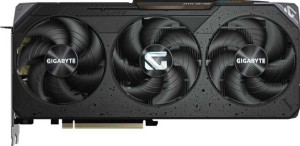
Gigabyte Radeon RX 9070 Gaming OC
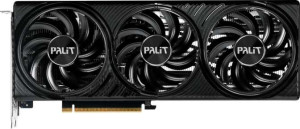
Palit GeForce RTX 5060 Ti Infinity 3 16GB

Gigabyte Radeon RX 9070 Gaming OC Palit GeForce RTX 5060 Ti Infinity 3 16GB

Overview

Welcome to our in-depth specification face-off between the Gigabyte Radeon RX 9070 Gaming OC and the Palit GeForce RTX 5060 Ti Infinity 3 16GB. These two mid-to-high-range graphics cards represent AMD and NVIDIA's latest architectures — RDNA 4.0 and Blackwell respectively — and both pack 16GB of VRAM. We examine the key battlegrounds of raw compute performance, memory configuration, feature sets, and power efficiency to help you decide which card fits your needs.

Common Features

  • Both products support Double Precision Floating Point (DPFP).
  • Both cards come with 16GB of VRAM.
  • ECC memory is supported on both products.
  • Both products are compatible with DirectX 12 Ultimate.
  • Both cards support OpenGL version 4.6.
  • Multi-display technology is supported on both products.
  • Ray tracing is supported on both products.
  • 3D support is available on both products.
  • XeSS (XMX) is not available on either product.
  • Neither product features LHR (Lite Hash Rate) limiting.
  • Both cards include an HDMI output with HDMI version 2.1b.
  • Neither product has any USB-C ports.
  • Neither product includes DVI outputs.
  • Neither product includes mini DisplayPort outputs.
  • Both cards use PCI Express (PCIe) version 5.
  • Both products are manufactured on a 5 nm semiconductor process.
  • Neither product supports air-water cooling.
  • Intel Resizable BAR is supported on both products.

Main Differences

  • GPU base clock speed is 1440 MHz on Gigabyte Radeon RX 9070 Gaming OC and 2407 MHz on Palit GeForce RTX 5060 Ti Infinity 3 16GB.
  • GPU turbo clock speed is 2700 MHz on Gigabyte Radeon RX 9070 Gaming OC and 2572 MHz on Palit GeForce RTX 5060 Ti Infinity 3 16GB.
  • Pixel rate is 345.6 GPixel/s on Gigabyte Radeon RX 9070 Gaming OC and 123.5 GPixel/s on Palit GeForce RTX 5060 Ti Infinity 3 16GB.
  • Floating-point performance is 38.71 TFLOPS on Gigabyte Radeon RX 9070 Gaming OC and 23.7 TFLOPS on Palit GeForce RTX 5060 Ti Infinity 3 16GB.
  • Texture rate is 604.8 GTexels/s on Gigabyte Radeon RX 9070 Gaming OC and 370.4 GTexels/s on Palit GeForce RTX 5060 Ti Infinity 3 16GB.
  • GPU memory speed is 2518 MHz on Gigabyte Radeon RX 9070 Gaming OC and 1750 MHz on Palit GeForce RTX 5060 Ti Infinity 3 16GB.
  • Shading units total 3584 on Gigabyte Radeon RX 9070 Gaming OC and 4608 on Palit GeForce RTX 5060 Ti Infinity 3 16GB.
  • Texture mapping units (TMUs) number 224 on Gigabyte Radeon RX 9070 Gaming OC and 144 on Palit GeForce RTX 5060 Ti Infinity 3 16GB.
  • Render output units (ROPs) total 128 on Gigabyte Radeon RX 9070 Gaming OC and 48 on Palit GeForce RTX 5060 Ti Infinity 3 16GB.
  • Effective memory speed is 20000 MHz on Gigabyte Radeon RX 9070 Gaming OC and 28000 MHz on Palit GeForce RTX 5060 Ti Infinity 3 16GB.
  • Maximum memory bandwidth is 644.6 GB/s on Gigabyte Radeon RX 9070 Gaming OC and 448 GB/s on Palit GeForce RTX 5060 Ti Infinity 3 16GB.
  • GDDR version is GDDR6 on Gigabyte Radeon RX 9070 Gaming OC and GDDR7 on Palit GeForce RTX 5060 Ti Infinity 3 16GB.
  • Memory bus width is 256-bit on Gigabyte Radeon RX 9070 Gaming OC and 128-bit on Palit GeForce RTX 5060 Ti Infinity 3 16GB.
  • OpenCL version is 2.2 on Gigabyte Radeon RX 9070 Gaming OC and 3 on Palit GeForce RTX 5060 Ti Infinity 3 16GB.
  • DLSS support is present on Palit GeForce RTX 5060 Ti Infinity 3 16GB but not available on Gigabyte Radeon RX 9070 Gaming OC.
  • RGB lighting is featured on Gigabyte Radeon RX 9070 Gaming OC but not present on Palit GeForce RTX 5060 Ti Infinity 3 16GB.
  • HDMI port count is 2 on Gigabyte Radeon RX 9070 Gaming OC and 1 on Palit GeForce RTX 5060 Ti Infinity 3 16GB.
  • DisplayPort outputs number 2 on Gigabyte Radeon RX 9070 Gaming OC and 3 on Palit GeForce RTX 5060 Ti Infinity 3 16GB.
  • GPU architecture is RDNA 4.0 on Gigabyte Radeon RX 9070 Gaming OC and Blackwell on Palit GeForce RTX 5060 Ti Infinity 3 16GB.
  • Thermal Design Power (TDP) is 220W on Gigabyte Radeon RX 9070 Gaming OC and 180W on Palit GeForce RTX 5060 Ti Infinity 3 16GB.
  • Transistor count is 53900 million on Gigabyte Radeon RX 9070 Gaming OC and 21900 million on Palit GeForce RTX 5060 Ti Infinity 3 16GB.
  • Card width is 288 mm on Gigabyte Radeon RX 9070 Gaming OC and 291.9 mm on Palit GeForce RTX 5060 Ti Infinity 3 16GB.
  • Card height is 132 mm on Gigabyte Radeon RX 9070 Gaming OC and 116.6 mm on Palit GeForce RTX 5060 Ti Infinity 3 16GB.
Specs Comparison
Gigabyte Radeon RX 9070 Gaming OC

Gigabyte Radeon RX 9070 Gaming OC

Palit GeForce RTX 5060 Ti Infinity 3 16GB

Palit GeForce RTX 5060 Ti Infinity 3 16GB

Performance:
GPU clock speed 1440 MHz 2407 MHz
GPU turbo 2700 MHz 2572 MHz
pixel rate 345.6 GPixel/s 123.5 GPixel/s
floating-point performance 38.71 TFLOPS 23.7 TFLOPS
texture rate 604.8 GTexels/s 370.4 GTexels/s
GPU memory speed 2518 MHz 1750 MHz
shading units 3584 4608
texture mapping units (TMUs) 224 144
render output units (ROPs) 128 48
Has Double Precision Floating Point (DPFP)

At first glance, the Palit RTX 5060 Ti appears competitive thanks to its higher base clock of 2407 MHz and a larger shading unit count of 4608. However, these numbers can be misleading without context. A high base clock matters little if the architecture cannot sustain throughput across the full rendering pipeline, and raw shader count only translates to performance when the rest of the pipeline — ROPs, TMUs, and memory bandwidth — can keep those shaders fed.

That is precisely where the Gigabyte RX 9070 Gaming OC pulls decisively ahead. Its 128 ROPs versus the 5060 Ti's 48 ROPs means it can write nearly three times as many pixels to the framebuffer per clock cycle — a critical bottleneck at higher resolutions. Similarly, its 224 TMUs versus 144 deliver substantially higher texture throughput (604.8 GTexels/s vs 370.4 GTexels/s), and its floating-point performance of 38.71 TFLOPS dwarfs the 5060 Ti's 23.7 TFLOPS. The RX 9070 also pairs this with a significantly faster memory bus speed of 2518 MHz vs 1750 MHz, helping ensure its shader array and output units are rarely starved for data.

The verdict for this group is clear: the RX 9070 Gaming OC holds a substantial performance advantage across every major throughput metric. The 5060 Ti's higher shader count is bottlenecked by its narrow ROP and TMU configuration, leaving significant compute potential on the table. Unless the RTX 5060 Ti benefits from architectural features not captured in these specs, the RX 9070 is the stronger raw-performance card here by a wide margin.

Memory:
effective memory speed 20000 MHz 28000 MHz
maximum memory bandwidth 644.6 GB/s 448 GB/s
VRAM 16GB 16GB
GDDR version GDDR6 GDDR7
memory bus width 256-bit 128-bit
Supports ECC memory

Both cards ship with 16GB of VRAM, which is a genuine point of parity for content creators and gamers running memory-hungry workloads. The more revealing story, however, lies in how each card moves that data. The RTX 5060 Ti uses the newer GDDR7 standard, achieving an impressive effective memory speed of 28000 MHz — meaningfully faster per pin than the RX 9070's GDDR6 at 20000 MHz. On paper, GDDR7 represents a generational leap in memory technology.

In practice, though, memory speed per pin is only half the equation. Bandwidth — the actual volume of data the GPU can access per second — is determined by both speed and bus width. The RX 9070 Gaming OC uses a 256-bit memory interface, which more than compensates for its lower per-pin speed, resulting in a total bandwidth of 644.6 GB/s. The 5060 Ti's 128-bit bus narrows that advantage dramatically, capping its bandwidth at 448 GB/s despite the faster GDDR7 chips. That gap of nearly 200 GB/s is substantial — it directly affects how quickly the GPU can feed its shaders with texture data, frame buffer reads, and geometry, especially at higher resolutions or with large texture packs loaded.

The memory edge clearly belongs to the RX 9070. While the 5060 Ti's GDDR7 is the more modern technology, the severely constrained bus width prevents it from realizing that potential. For memory-bandwidth-sensitive workloads — high-resolution gaming, complex shading, or GPU compute — the RX 9070's wider pipeline delivers a concrete, real-world advantage that the 5060 Ti's faster memory chips cannot overcome.
Features:
DirectX version DirectX 12 Ultimate DirectX 12 Ultimate
OpenGL version 4.6 4.6
OpenCL version 2.2 3
Supports multi-display technology
supports ray tracing
Supports 3D
supports DLSS
has XeSS (XMX)
AMD SAM / Intel Resizable BAR Intel Resizable BAR Intel Resizable BAR
has LHR
has RGB lighting
supported displays 4 4

Much of this feature set is shared territory: both cards support DirectX 12 Ultimate, ray tracing, OpenGL 4.6, multi-display output across up to 4 screens, and Resizable BAR — a solid, modern baseline for any gaming or prosumer workload. The meaningful divergence comes down to two features that sit on opposite ends of the practicality spectrum.

The most impactful differentiator is DLSS support on the RTX 5060 Ti. DLSS (Deep Learning Super Sampling) uses AI-driven upscaling to render frames at a lower internal resolution and reconstruct them at a higher output resolution, delivering significant frame rate gains with minimal visual quality loss. For gamers, this translates directly into smoother gameplay at higher settings or resolutions — it is one of the most broadly supported and genuinely useful GPU features in modern titles. The RX 9070 lacks DLSS and, per these specs, has no XeSS support either, leaving it reliant on native rendering or AMD's own upscaling solutions, which are not reflected in the provided data. The 5060 Ti also edges ahead on OpenCL 3 versus the RX 9070's OpenCL 2.2, which can matter for GPU-accelerated compute applications that target the newer API. On the flip side, the RX 9070 includes RGB lighting, which the 5060 Ti lacks — a cosmetic distinction with no performance relevance.

For this group, the RTX 5060 Ti holds the more meaningful feature advantage. DLSS alone is a significant real-world benefit for gamers, and the newer OpenCL version adds value for compute users. The RX 9070's RGB lighting does nothing to close that gap functionally.

Ports:
has an HDMI output
HDMI ports 2 1
HDMI version HDMI 2.1b HDMI 2.1b
DisplayPort outputs 2 3
USB-C ports 0 0
DVI outputs 0 0
mini DisplayPort outputs 0 0

Both cards offer a total of four display outputs, support the same HDMI 2.1b standard, and max out at four simultaneous displays — so the overall connectivity ceiling is identical. The difference lies entirely in how those four ports are distributed between HDMI and DisplayPort.

The RX 9070 Gaming OC leans toward HDMI with 2 HDMI ports and 2 DisplayPort outputs, while the RTX 5060 Ti flips that ratio — 1 HDMI port and 3 DisplayPort outputs. In practical terms, this means the RX 9070 is better suited for users who rely heavily on HDMI, such as those connecting TVs, AV receivers, or consumer displays that lack DisplayPort. The 5060 Ti, by contrast, caters more to users with multiple high-refresh-rate monitors, since DisplayPort is the preferred connection for gaming monitors, especially those running at 144Hz or above with adaptive sync.

Neither configuration is objectively superior — the right choice depends entirely on the user's display setup. Those in a TV-centric or mixed consumer environment will appreciate the RX 9070's dual HDMI, while multi-monitor PC gaming setups will find the 5060 Ti's three DisplayPort outputs more convenient. For most single-monitor users, the distinction is irrelevant.

General info:
GPU architecture RDNA 4.0 Blackwell
release date March 2025 April 2025
Thermal Design Power (TDP) 220W 180W
PCI Express (PCIe) version 5 5
semiconductor size 5 nm 5 nm
number of transistors 53900 million 21900 million
Has air-water cooling
width 288 mm 291.9 mm
height 132 mm 116.6 mm

Sharing both a 5nm fabrication process and PCIe 5.0 interface, these two cards start from a common technological foundation — yet their underlying architectures tell very different stories. The RX 9070 Gaming OC (RDNA 4.0) packs a remarkable 53,900 million transistors compared to the RTX 5060 Ti's (Blackwell) 21,900 million. That is more than double the transistor count on the same node, which explains how AMD is able to achieve such substantially higher throughput metrics — more transistors mean more functional units, wider datapaths, and greater parallelism baked directly into the silicon.

The trade-off is power consumption. The RX 9070 carries a 220W TDP versus the 5060 Ti's notably lower 180W. That 40W difference is meaningful for system builders — it affects PSU headroom requirements, case airflow demands, and long-term electricity costs. Users in thermally constrained or compact builds will find the 5060 Ti easier to accommodate. Both cards are similarly sized physically, with the 5060 Ti being marginally longer but slightly shorter in height, making them broadly comparable in terms of chassis compatibility.

The general info picture reflects a clear design philosophy split: the RX 9070 prioritizes raw silicon scale at the cost of higher power draw, while the RTX 5060 Ti trades die size for efficiency. Neither approach is universally superior — the right fit depends on whether the user prioritizes maximum hardware throughput or a leaner, more power-friendly build.

Comparison Summary & Verdict

After a thorough comparison, both cards deliver strong but distinctly different propositions. The Gigabyte Radeon RX 9070 Gaming OC leads decisively in raw throughput metrics — including floating-point performance at 38.71 TFLOPS, pixel rate, texture rate, and memory bandwidth at 644.6 GB/s thanks to its wider 256-bit bus — making it the stronger choice for workloads that demand sheer computational muscle. The Palit GeForce RTX 5060 Ti Infinity 3 16GB, on the other hand, counters with DLSS support, faster GDDR7 memory at 28000 MHz effective speed, a higher shader unit count of 4608, and a notably lower 180W TDP, making it appealing for gamers who prioritize AI-upscaling features and power efficiency. Both share DirectX 12 Ultimate, ray tracing, and 16GB VRAM, so neither lacks modern feature parity at a fundamental level.

Gigabyte Radeon RX 9070 Gaming OC
Buy Gigabyte Radeon RX 9070 Gaming OC if...

Buy the Gigabyte Radeon RX 9070 Gaming OC if you want maximum raw compute performance, higher memory bandwidth, and broader display connectivity with 2 HDMI ports and RGB lighting.

Palit GeForce RTX 5060 Ti Infinity 3 16GB
Buy Palit GeForce RTX 5060 Ti Infinity 3 16GB if...

Buy the Palit GeForce RTX 5060 Ti Infinity 3 16GB if you prioritize DLSS support, faster GDDR7 memory, a lower 180W power draw, and a three DisplayPort output configuration.