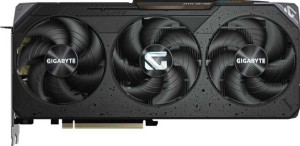
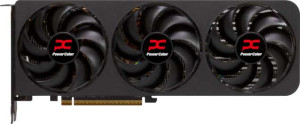
The most technically significant split in this group is the DirectX version. The Gigabyte Gaming OC lists DirectX 12 Ultimate, while the PowerColor Reaper is spec'd at DirectX 12. This distinction matters: DirectX 12 Ultimate is a superset that formally certifies support for hardware-accelerated ray tracing tiers, variable rate shading, mesh shaders, and sampler feedback — features that game developers are increasingly targeting. In practice, this could affect the Gaming OC's forward compatibility with titles that explicitly leverage these capabilities at the API level.
On the upscaling and resizeable BAR front, both cards support FSR4 and neither supports DLSS or XeSS with XMX acceleration, so their AI-upscaling options are equivalent. The SAM/BAR difference — Intel Resizable BAR on the Gigabyte versus AMD SAM on the PowerColor — is a platform pairing distinction rather than a feature gap; both technologies allow the CPU to access the full GPU frame buffer and deliver similar performance benefits, they are simply optimized for their respective platform ecosystems. Neither card has LHR restrictions, which is a shared positive for compute and mining workloads.
The Gigabyte Gaming OC also adds RGB lighting, which the PowerColor Reaper lacks — a purely aesthetic difference that may matter to system builders focused on visual theming. On balance, the Gigabyte Gaming OC holds a modest but real edge in this group, primarily driven by its DirectX 12 Ultimate certification, which offers stronger future-proofing at the API level.