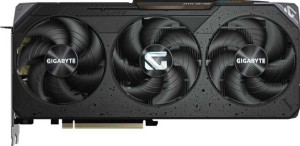
Gigabyte Radeon RX 9070 Gaming OC
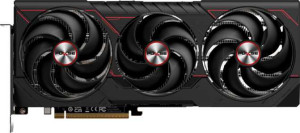
Sapphire Pulse Radeon RX 9070 XT

Gigabyte Radeon RX 9070 Gaming OC Sapphire Pulse Radeon RX 9070 XT

Overview

Welcome to our in-depth specification comparison between the Gigabyte Radeon RX 9070 Gaming OC and the Sapphire Pulse Radeon RX 9070 XT. Both cards share the same RDNA 4.0 architecture and 16GB GDDR6 memory pool, yet they diverge significantly when it comes to raw compute performance, power consumption, and physical dimensions. Read on to discover which card best fits your needs.

Common Features

  • GPU memory speed is 2518 MHz on both products.
  • Both products have 128 render output units (ROPs).
  • Double Precision Floating Point (DPFP) is supported on both products.
  • Effective memory speed is 20000 MHz on both products.
  • Maximum memory bandwidth is 644.6 GB/s on both products.
  • Both products feature 16GB of VRAM.
  • Both products use GDDR6 memory.
  • Memory bus width is 256-bit on both products.
  • ECC memory is supported on both products.
  • Both products support DirectX 12 Ultimate.
  • OpenGL version 4.6 is supported on both products.
  • OpenCL version 2.2 is supported on both products.
  • Multi-display technology is supported on both products.
  • Ray tracing is supported on both products.
  • 3D support is available on both products.
  • DLSS is not supported on either product.
  • FSR4 is available on both products.
  • Both products have 2 HDMI ports with HDMI 2.1b.
  • Both products have 2 DisplayPort outputs and no USB-C or DVI outputs.
  • Both products are built on the RDNA 4.0 GPU architecture.
  • Both products use PCIe version 5.
  • Both products feature 53900 million transistors.
  • Neither product has air-water cooling.

Main Differences

  • GPU base clock speed is 1440 MHz on Gigabyte Radeon RX 9070 Gaming OC and 1660 MHz on Sapphire Pulse Radeon RX 9070 XT.
  • GPU turbo clock speed is 2700 MHz on Gigabyte Radeon RX 9070 Gaming OC and 2970 MHz on Sapphire Pulse Radeon RX 9070 XT.
  • Pixel rate is 345.6 GPixel/s on Gigabyte Radeon RX 9070 Gaming OC and 380.2 GPixel/s on Sapphire Pulse Radeon RX 9070 XT.
  • Floating-point performance is 38.71 TFLOPS on Gigabyte Radeon RX 9070 Gaming OC and 48.66 TFLOPS on Sapphire Pulse Radeon RX 9070 XT.
  • Texture rate is 604.8 GTexels/s on Gigabyte Radeon RX 9070 Gaming OC and 760.3 GTexels/s on Sapphire Pulse Radeon RX 9070 XT.
  • Shading units count is 3584 on Gigabyte Radeon RX 9070 Gaming OC and 4096 on Sapphire Pulse Radeon RX 9070 XT.
  • Texture mapping units (TMUs) number 224 on Gigabyte Radeon RX 9070 Gaming OC and 256 on Sapphire Pulse Radeon RX 9070 XT.
  • Resizable BAR technology is Intel Resizable BAR on Gigabyte Radeon RX 9070 Gaming OC and AMD SAM on Sapphire Pulse Radeon RX 9070 XT.
  • RGB lighting is present on Gigabyte Radeon RX 9070 Gaming OC but not available on Sapphire Pulse Radeon RX 9070 XT.
  • Thermal Design Power (TDP) is 220W on Gigabyte Radeon RX 9070 Gaming OC and 304W on Sapphire Pulse Radeon RX 9070 XT.
  • Semiconductor size is 5 nm on Gigabyte Radeon RX 9070 Gaming OC and 4 nm on Sapphire Pulse Radeon RX 9070 XT.
  • Card width is 288 mm on Gigabyte Radeon RX 9070 Gaming OC and 320 mm on Sapphire Pulse Radeon RX 9070 XT.
  • Card height is 132 mm on Gigabyte Radeon RX 9070 Gaming OC and 120.3 mm on Sapphire Pulse Radeon RX 9070 XT.
Specs Comparison
Gigabyte Radeon RX 9070 Gaming OC

Gigabyte Radeon RX 9070 Gaming OC

Sapphire Pulse Radeon RX 9070 XT

Sapphire Pulse Radeon RX 9070 XT

Performance:
GPU clock speed 1440 MHz 1660 MHz
GPU turbo 2700 MHz 2970 MHz
pixel rate 345.6 GPixel/s 380.2 GPixel/s
floating-point performance 38.71 TFLOPS 48.66 TFLOPS
texture rate 604.8 GTexels/s 760.3 GTexels/s
GPU memory speed 2518 MHz 2518 MHz
shading units 3584 4096
texture mapping units (TMUs) 224 256
render output units (ROPs) 128 128
Has Double Precision Floating Point (DPFP)

The performance gap between these two cards is consistent and significant across every compute metric. The Sapphire Pulse RX 9070 XT holds a clear advantage in raw GPU horsepower: its 4096 shading units versus 3584 on the Gigabyte RX 9070 Gaming OC represent a 14% wider shader array, and that advantage compounds through the pipeline. The XT′s 48.66 TFLOPS of floating-point performance dwarfs the 9070′s 38.71 TFLOPS — a roughly 26% lead that directly translates to faster frame generation, better headroom in compute-heavy workloads, and more sustained performance at higher resolutions or with ray tracing enabled.

Clock speeds reinforce this picture. The 9070 XT boosts to 2970 MHz at peak versus 2700 MHz for the 9070 OC — and since the XT also starts from a higher base clock of 1660 MHz, it sustains elevated frequencies across a broader operating range, not just at burst peaks. The downstream effect is visible in the texture throughput numbers: 760.3 GTexels/s on the XT versus 604.8 GTexels/s, meaning more texture detail can be resolved per second, which matters most in open-world and high-density geometry scenarios. The one area where both cards are evenly matched is render output units (128 ROPs each) and memory bus speed (2518 MHz on both), so pixel fill rate differences are narrower and memory latency characteristics should be comparable.

The conclusion here is unambiguous: the Sapphire Pulse RX 9070 XT holds a decisive performance edge in this group. The 9070 Gaming OC is not a slow card, but the XT outpaces it in every compute and throughput metric that determines gaming and workload performance. Buyers choosing the 9070 OC are trading peak performance for what is likely a lower price point — if raw GPU performance is the priority, the XT wins this comparison outright.

Memory:
effective memory speed 20000 MHz 20000 MHz
maximum memory bandwidth 644.6 GB/s 644.6 GB/s
VRAM 16GB 16GB
GDDR version GDDR6 GDDR6
memory bus width 256-bit 256-bit
Supports ECC memory

Across every memory specification provided, the Gigabyte RX 9070 Gaming OC and the Sapphire Pulse RX 9070 XT are a perfect match. Both carry 16GB of GDDR6 over a 256-bit bus, running at an effective speed of 20000 MHz and delivering identical peak bandwidth of 644.6 GB/s. That bandwidth figure is substantial — enough to feed even demanding 4K textures and large model workloads without the memory subsystem becoming a bottleneck.

Both cards also support ECC memory, which enables error-correcting functionality useful in professional and compute contexts where data integrity matters. This is not a differentiating factor between the two, but it is worth noting as a shared capability that broadens their appeal beyond pure gaming use cases.

From a memory standpoint, this comparison is a dead heat. Neither card holds any advantage here — a buyer prioritizing VRAM capacity, bandwidth, or memory reliability will find no reason to choose one over the other on these specs alone. The differentiation between these two products lies entirely in other specification groups.

Features:
DirectX version DirectX 12 Ultimate DirectX 12 Ultimate
OpenGL version 4.6 4.6
OpenCL version 2.2 2.2
Supports multi-display technology
supports ray tracing
Supports 3D
supports DLSS
has FSR4
has XeSS (XMX)
AMD SAM / Intel Resizable BAR Intel Resizable BAR AMD SAM
has LHR
has RGB lighting
supported displays 4 4

For the most part, these two cards share an identical software and API feature set. Both support DirectX 12 Ultimate, ray tracing, FSR4, and can drive up to 4 displays simultaneously — and neither supports DLSS or XeSS, which is expected for AMD hardware. FSR4 is worth highlighting as a meaningful shared asset: it is AMD′s most advanced upscaling generation and provides a tangible image quality and performance uplift in supported titles, giving both cards a competitive upscaling option.

The one technically meaningful divergence is in the resizable BAR implementation. The Gigabyte RX 9070 Gaming OC lists Intel Resizable BAR, while the Sapphire Pulse RX 9070 XT lists AMD SAM (Smart Access Memory). Both are implementations of the same PCIe specification that allows the CPU to access the full GPU framebuffer, improving CPU-to-GPU data throughput in supported configurations. The practical implication is platform alignment: AMD SAM is optimized for AMD CPU and motherboard pairings, while Intel Resizable BAR targets Intel platforms. Users on mixed or Intel-based systems may find the Gigabyte′s labeling more directly relevant, though real-world performance deltas from this distinction are typically modest.

The only lifestyle differentiator is RGB lighting, present on the Gigabyte 9070 Gaming OC and absent on the Sapphire Pulse 9070 XT. This has no bearing on performance but matters to builders prioritizing aesthetics. Overall, this group is essentially a tie on meaningful features — the SAM vs. Resizable BAR distinction is the only functional split, and its impact depends entirely on the user′s platform.
Ports:
has an HDMI output
HDMI ports 2 2
HDMI version HDMI 2.1b HDMI 2.1b
DisplayPort outputs 2 2
USB-C ports 0 0
DVI outputs 0 0
mini DisplayPort outputs 0 0

Port configurations on both cards are identical: 2x HDMI 2.1b and 2x DisplayPort, totaling four outputs — consistent with the four-display limit noted in the Features group. HDMI 2.1b is the latest revision of the standard, supporting up to 4K at high refresh rates and 8K output, which means both cards are well-equipped for modern high-resolution and high-refresh monitor setups without any need for adapters.

The dual-HDMI configuration is a practical convenience that stands out — most cards in this class offer only one HDMI port alongside DisplayPort outputs. Having two HDMI ports makes it easier to connect a mix of HDMI-native devices, such as a TV and a monitor, without relying on adapters or a hub. Neither card includes USB-C or legacy DVI outputs, which is expected at this tier and generation.

This is a complete tie. Port selection is spec-for-spec identical between the Gigabyte RX 9070 Gaming OC and the Sapphire Pulse RX 9070 XT, and neither holds any connectivity advantage over the other.

General info:
GPU architecture RDNA 4.0 RDNA 4.0
release date March 2025 March 2025
Thermal Design Power (TDP) 220W 304W
PCI Express (PCIe) version 5 5
semiconductor size 5 nm 4 nm
number of transistors 53900 million 53900 million
Has air-water cooling
width 288 mm 320 mm
height 132 mm 120.3 mm

Both cards are built on AMD′s RDNA 4.0 architecture with PCIe 5.0 and an identical transistor count of 53,900 million, confirming they share the same fundamental silicon design. The notable divergence is process node: the Sapphire Pulse RX 9070 XT is fabbed at 4 nm versus 5 nm for the Gigabyte RX 9070 Gaming OC. A smaller node generally enables better power efficiency and higher transistor density — which contextualizes how the XT achieves its significantly higher clock speeds and compute throughput despite sharing the same transistor count.

Power consumption is where these two cards diverge most sharply in practical terms. The 9070 XT carries a 304W TDP compared to 220W for the 9070 Gaming OC — an 84W difference that is anything but trivial. That gap demands a more capable PSU, generates more heat under sustained load, and will reflect noticeably in long-term energy costs. Builders working with tighter PSU headroom or smaller chassis with limited airflow should weigh this carefully. The 9070 OC′s lower thermal envelope makes it the friendlier option for constrained builds.

Physical dimensions add another wrinkle: the 9070 XT is longer at 320 mm while the 9070 OC is shorter at 288 mm but slightly taller at 132 mm. Neither is universally easier to fit — case compatibility will depend on individual chassis clearance specs. On balance, the 9070 OC holds a meaningful advantage for efficiency-focused and space-conscious builds, while the 9070 XT′s process node edge helps justify its higher power draw in the context of its greater performance output.

Comparison Summary & Verdict

After examining all the evidence, the two cards occupy distinct positions in AMD's lineup. The Gigabyte Radeon RX 9070 Gaming OC stands out for its lower 220W TDP, more compact footprint, and RGB lighting, making it a strong pick for users who value energy efficiency and system aesthetics. On the other hand, the Sapphire Pulse Radeon RX 9070 XT pulls ahead with a higher 2970 MHz turbo clock, 4096 shading units, and a notably superior 48.66 TFLOPS floating-point performance, giving it a clear edge in demanding workloads and gaming at higher settings. Both cards share identical memory bandwidth, ports, and feature support including ray tracing and FSR4, so your decision ultimately hinges on whether you prioritize performance headroom or a more power-efficient and compact solution.

Gigabyte Radeon RX 9070 Gaming OC
Buy Gigabyte Radeon RX 9070 Gaming OC if...

Buy the Gigabyte Radeon RX 9070 Gaming OC if you want a more power-efficient card with a smaller form factor and RGB lighting, without sacrificing the RDNA 4.0 feature set.

Sapphire Pulse Radeon RX 9070 XT
Buy Sapphire Pulse Radeon RX 9070 XT if...

Buy the Sapphire Pulse Radeon RX 9070 XT if you demand maximum GPU performance, with higher clock speeds, more shading units, and significantly greater floating-point throughput for demanding games and workloads.