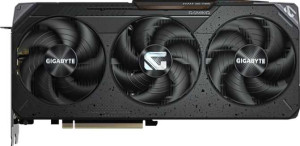
Gigabyte Radeon RX 9070 XT Gaming OC
MSI GeForce RTX 5070 Ti Inspire 3X OC Plus

Gigabyte Radeon RX 9070 XT Gaming OC MSI GeForce RTX 5070 Ti Inspire 3X OC Plus

Overview

Choosing between AMD and Nvidia's latest high-end contenders is never simple. In this head-to-head, we compare the Gigabyte Radeon RX 9070 XT Gaming OC and the MSI GeForce RTX 5070 Ti Inspire 3X OC Plus, exploring their differences in clock speeds and compute throughput, memory technology, feature ecosystems, and physical design to help you find the right card for your next build.

Common Features

  • Both cards support Double Precision Floating Point (DPFP).
  • Both cards feature 16GB of VRAM.
  • Both cards use a 256-bit memory bus width.
  • ECC memory support is available on both cards.
  • Both cards support DirectX 12 Ultimate.
  • Both cards support OpenGL version 4.6.
  • Multi-display technology is supported on both cards.
  • Ray tracing support is present on both cards.
  • 3D support is available on both cards.
  • XeSS (XMX) is not available on either card.
  • Neither card has LHR (Lite Hash Rate) limiting.
  • Both cards support up to 4 simultaneous displays.
  • Both cards include an HDMI output.
  • Both cards use HDMI version 2.1b.
  • Neither card includes USB-C ports.
  • Neither card includes DVI outputs.
  • Neither card includes mini DisplayPort outputs.
  • Both cards use PCI Express version 5.
  • Air-water cooling is not present on either card.
  • Both cards share the same width of 288 mm.

Main Differences

  • GPU base clock speed is 1660 MHz on the Gigabyte Radeon RX 9070 XT Gaming OC and 2295 MHz on the MSI GeForce RTX 5070 Ti Inspire 3X OC Plus.
  • GPU turbo clock speed is 3060 MHz on the Gigabyte Radeon RX 9070 XT Gaming OC and 2482 MHz on the MSI GeForce RTX 5070 Ti Inspire 3X OC Plus.
  • Pixel rate is 391.7 GPixel/s on the Gigabyte Radeon RX 9070 XT Gaming OC and 238.3 GPixel/s on the MSI GeForce RTX 5070 Ti Inspire 3X OC Plus.
  • Floating-point performance is 50.14 TFLOPS on the Gigabyte Radeon RX 9070 XT Gaming OC and 44.48 TFLOPS on the MSI GeForce RTX 5070 Ti Inspire 3X OC Plus.
  • Texture rate is 783.4 GTexels/s on the Gigabyte Radeon RX 9070 XT Gaming OC and 695 GTexels/s on the MSI GeForce RTX 5070 Ti Inspire 3X OC Plus.
  • GPU memory speed is 2518 MHz on the Gigabyte Radeon RX 9070 XT Gaming OC and 1750 MHz on the MSI GeForce RTX 5070 Ti Inspire 3X OC Plus.
  • Shading units total 4096 on the Gigabyte Radeon RX 9070 XT Gaming OC and 8960 on the MSI GeForce RTX 5070 Ti Inspire 3X OC Plus.
  • Texture mapping units (TMUs) number 256 on the Gigabyte Radeon RX 9070 XT Gaming OC and 280 on the MSI GeForce RTX 5070 Ti Inspire 3X OC Plus.
  • Render output units (ROPs) number 128 on the Gigabyte Radeon RX 9070 XT Gaming OC and 96 on the MSI GeForce RTX 5070 Ti Inspire 3X OC Plus.
  • Effective memory speed is 20000 MHz on the Gigabyte Radeon RX 9070 XT Gaming OC and 28000 MHz on the MSI GeForce RTX 5070 Ti Inspire 3X OC Plus.
  • Maximum memory bandwidth is 644.6 GB/s on the Gigabyte Radeon RX 9070 XT Gaming OC and 896 GB/s on the MSI GeForce RTX 5070 Ti Inspire 3X OC Plus.
  • The Gigabyte Radeon RX 9070 XT Gaming OC uses GDDR6 memory, while the MSI GeForce RTX 5070 Ti Inspire 3X OC Plus uses GDDR7.
  • OpenCL version is 2.2 on the Gigabyte Radeon RX 9070 XT Gaming OC and 3 on the MSI GeForce RTX 5070 Ti Inspire 3X OC Plus.
  • DLSS support is present on the MSI GeForce RTX 5070 Ti Inspire 3X OC Plus but not available on the Gigabyte Radeon RX 9070 XT Gaming OC.
  • The Gigabyte Radeon RX 9070 XT Gaming OC uses AMD SAM, while the MSI GeForce RTX 5070 Ti Inspire 3X OC Plus uses Intel Resizable BAR.
  • RGB lighting is present on the Gigabyte Radeon RX 9070 XT Gaming OC but not available on the MSI GeForce RTX 5070 Ti Inspire 3X OC Plus.
  • HDMI port count is 2 on the Gigabyte Radeon RX 9070 XT Gaming OC and 1 on the MSI GeForce RTX 5070 Ti Inspire 3X OC Plus.
  • DisplayPort outputs number 2 on the Gigabyte Radeon RX 9070 XT Gaming OC and 3 on the MSI GeForce RTX 5070 Ti Inspire 3X OC Plus.
  • GPU architecture is RDNA 4.0 on the Gigabyte Radeon RX 9070 XT Gaming OC and Blackwell on the MSI GeForce RTX 5070 Ti Inspire 3X OC Plus.
  • Thermal Design Power (TDP) is 304W on the Gigabyte Radeon RX 9070 XT Gaming OC and 300W on the MSI GeForce RTX 5070 Ti Inspire 3X OC Plus.
  • Semiconductor size is 4 nm on the Gigabyte Radeon RX 9070 XT Gaming OC and 5 nm on the MSI GeForce RTX 5070 Ti Inspire 3X OC Plus.
  • Transistor count is 53900 million on the Gigabyte Radeon RX 9070 XT Gaming OC and 45600 million on the MSI GeForce RTX 5070 Ti Inspire 3X OC Plus.
  • Card height is 132 mm on the Gigabyte Radeon RX 9070 XT Gaming OC and 112 mm on the MSI GeForce RTX 5070 Ti Inspire 3X OC Plus.
Specs Comparison
Gigabyte Radeon RX 9070 XT Gaming OC

Gigabyte Radeon RX 9070 XT Gaming OC

MSI GeForce RTX 5070 Ti Inspire 3X OC Plus

MSI GeForce RTX 5070 Ti Inspire 3X OC Plus

Performance:
GPU clock speed 1660 MHz 2295 MHz
GPU turbo 3060 MHz 2482 MHz
pixel rate 391.7 GPixel/s 238.3 GPixel/s
floating-point performance 50.14 TFLOPS 44.48 TFLOPS
texture rate 783.4 GTexels/s 695 GTexels/s
GPU memory speed 2518 MHz 1750 MHz
shading units 4096 8960
texture mapping units (TMUs) 256 280
render output units (ROPs) 128 96
Has Double Precision Floating Point (DPFP)

The clock speed story here is more nuanced than it first appears. The MSI RTX 5070 Ti operates at a higher base clock (2295 MHz vs 1660 MHz), meaning it sustains a strong frequency floor under sustained load. However, the Gigabyte RX 9070 XT delivers a dramatically higher turbo peak of 3060 MHz — nearly 600 MHz above the 5070 Ti's 2482 MHz ceiling. This reflects RDNA 4's architectural tendency to scale aggressively in short bursts, which in practice translates to sharp responsiveness in frame-time-sensitive scenarios.

When looking at the throughput metrics that directly govern rendering output, the RX 9070 XT pulls ahead across the board. Its pixel rate of 391.7 GPixel/s is nearly 65% higher than the 5070 Ti's 238.3 GPixel/s, a difference driven both by its higher ROP count (128 vs 96) and that turbo clock advantage. Similarly, its floating-point performance of 50.14 TFLOPS edges out the 5070 Ti's 44.48 TFLOPS, and its texture rate (783.4 GTexels/s vs 695 GTexels/s) follows the same pattern. Notably, the RX 9070 XT also benefits from significantly faster memory at 2518 MHz vs 1750 MHz, which helps feed its pipeline more efficiently. The 5070 Ti counters with a far larger shading unit count (8960 vs 4096), but this is largely an artifact of architectural differences in how NVIDIA and AMD count and group compute units — the real-world throughput numbers tell the more honest story.

On the raw performance specs provided, the Gigabyte RX 9070 XT Gaming OC holds a clear edge: it leads in pixel rate, floating-point throughput, texture rate, memory speed, and ROP count. The MSI 5070 Ti's higher base clock and shading unit tally are architectural footnotes that don't translate into throughput wins in this dataset. Buyers prioritizing peak rendering horsepower based strictly on these figures should favor the RX 9070 XT.

Memory:
effective memory speed 20000 MHz 28000 MHz
maximum memory bandwidth 644.6 GB/s 896 GB/s
VRAM 16GB 16GB
GDDR version GDDR6 GDDR7
memory bus width 256-bit 256-bit
Supports ECC memory

Both cards arrive with an identical 16GB frame buffer over a 256-bit bus — a tie in capacity and bus width that shifts the comparison entirely to memory technology and the speed advantage it confers. This is where a meaningful gap opens up: the MSI RTX 5070 Ti uses GDDR7, while the Gigabyte RX 9070 XT is equipped with GDDR6. That generational difference is not cosmetic — GDDR7 operates at a substantially higher effective speed (28000 MHz vs 20000 MHz), and the downstream impact is a 896 GB/s memory bandwidth ceiling for the 5070 Ti versus 644.6 GB/s for the RX 9070 XT, a ~39% bandwidth advantage.

Memory bandwidth is the pipeline that feeds the GPU's compute units with texture data, frame buffer reads, and render targets. At higher resolutions — particularly 4K — or in scenarios involving large textures, ray tracing workloads, or AI-driven upscaling, a wider bandwidth ceiling allows the GPU to avoid stalls where shaders are waiting on data. The 5070 Ti's GDDR7 advantage is therefore most consequential precisely in the demanding workloads these cards are built for. The RX 9070 XT's GDDR6 is no bottleneck in moderate scenarios, but the headroom gap becomes harder to ignore as resolution and visual fidelity scale up.

Both cards support ECC memory, which is a shared baseline of reliability rather than a differentiator. On memory specs alone, the MSI RTX 5070 Ti holds a clear and practically significant edge, driven entirely by its GDDR7 implementation delivering substantially higher bandwidth despite running the same bus width and capacity as its competitor.

Features:
DirectX version DirectX 12 Ultimate DirectX 12 Ultimate
OpenGL version 4.6 4.6
OpenCL version 2.2 3
Supports multi-display technology
supports ray tracing
Supports 3D
supports DLSS
has XeSS (XMX)
AMD SAM / Intel Resizable BAR AMD SAM Intel Resizable BAR
has LHR
has RGB lighting
supported displays 4 4

Shared foundations dominate much of this category — both cards support DirectX 12 Ultimate, OpenGL 4.6, ray tracing, 3D, and up to four simultaneous displays. These are table-stakes features for modern high-end GPUs, so the real comparison narrows to a handful of meaningful divergences. The most impactful is DLSS support: the MSI RTX 5070 Ti has it, the Gigabyte RX 9070 XT does not. DLSS is NVIDIA's AI-driven upscaling and frame generation suite, and its absence on the RX 9070 XT is not a minor footnote — in supported titles, DLSS can dramatically boost effective frame rates at high resolutions with minimal perceptible quality loss, a capability the RX 9070 XT cannot replicate through this technology.

The RTX 5070 Ti also carries a newer OpenCL 3 implementation versus the RX 9070 XT's OpenCL 2.2, which matters for GPU-accelerated compute workloads outside of gaming — video processing, scientific computation, and similar tasks that leverage the OpenCL standard. Meanwhile, the resizable BAR implementations differ by vendor branding (AMD SAM vs Intel Resizable BAR), but both serve the same functional purpose of allowing the CPU full access to GPU VRAM, so this is effectively a tie in practice.

The RX 9070 XT's sole exclusive in this group is RGB lighting — relevant for aesthetics-focused builders but inconsequential to performance. On features that actually affect gaming and compute outcomes, the MSI RTX 5070 Ti holds the clearer advantage, with DLSS support being the decisive factor for users who play in titles where that technology is available.
Ports:
has an HDMI output
HDMI ports 2 1
HDMI version HDMI 2.1b HDMI 2.1b
DisplayPort outputs 2 3
USB-C ports 0 0
DVI outputs 0 0
mini DisplayPort outputs 0 0

Both cards top out at four total display outputs and share the same HDMI 2.1b standard, so the version-level capability for high-refresh 4K and 8K signaling is identical. The difference lies in how that output budget is divided. The Gigabyte RX 9070 XT allocates it as 2 HDMI + 2 DisplayPort, while the MSI RTX 5070 Ti goes 1 HDMI + 3 DisplayPort. Neither configuration is objectively superior — the right choice depends entirely on the user's display setup.

The RX 9070 XT's dual HDMI layout is the more convenient option for anyone running a TV alongside a monitor, or connecting to two HDMI-native devices such as capture cards or projectors without needing adapters. The RTX 5070 Ti's three DisplayPort outputs, on the other hand, suit a multi-monitor desktop environment more naturally, since most PC monitors — especially high-refresh gaming panels — favor DisplayPort for its higher bandwidth ceiling and better support for variable refresh rate technologies.

With no USB-C on either card and the same total port count and HDMI version, this group is effectively a draw in capability, with preference coming down purely to the user's peripheral mix. Neither card has a structural advantage; the RX 9070 XT edges ahead only for HDMI-heavy setups, and the RTX 5070 Ti for DisplayPort-centric multi-monitor configurations.

General info:
GPU architecture RDNA 4.0 Blackwell
release date March 2025 February 2025
Thermal Design Power (TDP) 304W 300W
PCI Express (PCIe) version 5 5
semiconductor size 4 nm 5 nm
number of transistors 53900 million 45600 million
Has air-water cooling
width 288 mm 288 mm
height 132 mm 112 mm

Manufactured on a 4 nm process node, the Gigabyte RX 9070 XT holds a fabrication advantage over the MSI RTX 5070 Ti's 5 nm node. Smaller process nodes generally allow for greater transistor density, improved power efficiency, or both — and the RX 9070 XT's transistor count of 53.9 billion versus the RTX 5070 Ti's 45.6 billion reflects exactly that: more transistors packed into a die built on a more advanced process. This is a notable silicon-level advantage for AMD's RDNA 4 architecture in this comparison.

Despite that complexity gap, the thermal envelopes are virtually identical — 304W for the RX 9070 XT versus 300W for the RTX 5070 Ti. In practice, a 4W difference is indistinguishable in terms of system power planning, cooling requirements, or electricity consumption. Both cards share PCIe 5.0 connectivity and air cooling, so neither has an integration or cooling-method advantage. Where the cards do differ physically is in height: the RX 9070 XT measures 132 mm tall versus the RTX 5070 Ti's more compact 112 mm, while width is identical at 288 mm. The 20 mm height difference could matter in tighter cases with restricted vertical clearance near the motherboard.

Overall, the RX 9070 XT edges ahead in this group on the strength of its more advanced process node and higher transistor count — both indicators of a more dense and architecturally modern die. The RTX 5070 Ti counters with a slightly smaller physical footprint, which is a real advantage only for users with constrained case geometry. On the foundational hardware metrics, AMD holds the lead here.

Comparison Summary & Verdict

Both cards share 16 GB of VRAM, a 256-bit memory bus, and full DirectX 12 Ultimate support, but they serve distinct audiences. The Gigabyte Radeon RX 9070 XT Gaming OC wins on raw throughput with a turbo clock of 3060 MHz, a higher pixel rate, and 50.14 TFLOPS of floating-point performance on a refined 4nm process, all complemented by RGB lighting and dual HDMI outputs for flexible display setups. It is the stronger choice for gamers who prioritize rasterization horsepower above all else. The MSI GeForce RTX 5070 Ti Inspire 3X OC Plus counters with a massive 8960 shading units, the speed advantage of GDDR7 memory at 896 GB/s bandwidth, and the critical inclusion of DLSS support, making it the preferred pick for users deeply invested in Nvidia's AI upscaling ecosystem and workloads that scale with shader count.

Gigabyte Radeon RX 9070 XT Gaming OC
Buy Gigabyte Radeon RX 9070 XT Gaming OC if...

Buy the Gigabyte Radeon RX 9070 XT Gaming OC if you want superior raw rasterization performance, a higher turbo clock, and RGB lighting without depending on AI upscaling features.

MSI GeForce RTX 5070 Ti Inspire 3X OC Plus
Buy MSI GeForce RTX 5070 Ti Inspire 3X OC Plus if...

Buy the MSI GeForce RTX 5070 Ti Inspire 3X OC Plus if you prioritize DLSS support, faster GDDR7 memory bandwidth, and a larger shader count for workloads that benefit from Nvidia's AI-driven pipeline.