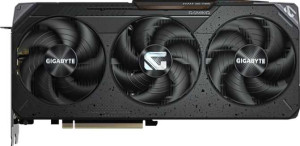
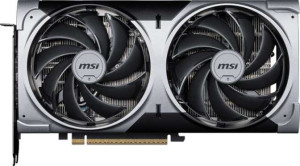
At first glance, the RTX 5070 Ventus 2X OC appears competitive with its higher base clock of 2325 MHz versus the RX 9070 XT's 1660 MHz, and its larger shading unit count of 6144 compared to 4096. However, these figures are misleading without context. The Gigabyte RX 9070 XT Gaming OC surges to a turbo clock of 3060 MHz — over 500 MHz higher than the RTX 5070's peak of 2542 MHz — which fundamentally changes the performance picture. In GPU architecture, sustained peak frequency multiplied across execution units is what drives real throughput, and that is precisely where the RX 9070 XT pulls ahead.
The downstream impact of those clocks is unambiguous in the throughput metrics. The RX 9070 XT delivers 50.14 TFLOPS of floating-point performance versus just 31.24 TFLOPS for the RTX 5070 — a gap of roughly 60%. Similarly, its texture fill rate of 783.4 GTexels/s and pixel rate of 391.7 GPixel/s nearly double the MSI card's 488.1 GTexels/s and 203.4 GPixel/s respectively. Higher texture rates translate to sharper, more detailed surfaces in complex scenes, while a higher pixel rate means the GPU can resolve and output more pixels per second — directly relevant to high-resolution and high-refresh-rate gaming. The RX 9070 XT also has a faster memory bus operating at 2518 MHz versus 1750 MHz, which feeds its wider rendering pipeline more efficiently. Its advantages in TMU count (256 vs. 192) and ROP count (128 vs. 80) further reinforce this.
Based strictly on the provided performance specs, the Gigabyte Radeon RX 9070 XT Gaming OC holds a clear and substantial advantage in every major throughput category. The RTX 5070 Ventus 2X OC's higher shading unit count does not compensate for its significantly lower peak clocks, resulting in considerably lower compute, texture, and pixel output. Both cards support Double Precision Floating Point, making that a non-differentiator. For users prioritizing raw rasterization horsepower based on these metrics alone, the RX 9070 XT is the stronger performer.