Gigabyte Radeon RX 9070 XT Gaming OC
PowerColor Hellhound Radeon RX 9070 XT

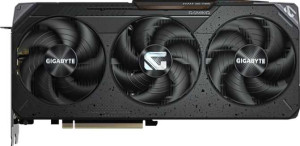
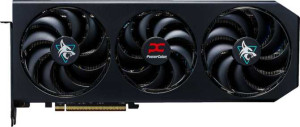
Gigabyte Radeon RX 9070 XT Gaming OC PowerColor Hellhound Radeon RX 9070 XT

Overview

Choosing between the Gigabyte Radeon RX 9070 XT Gaming OC and the PowerColor Hellhound Radeon RX 9070 XT means navigating subtle yet meaningful trade-offs on a shared RDNA 4.0 foundation. Both cards deliver 16GB GDDR6 memory and a 304W TDP, but they diverge in boost clock speeds, DirectX feature levels, port configurations, and physical dimensions — making the right choice dependent on your rig, monitor setup, and performance priorities.

Common Features

  • Both cards share a base GPU clock speed of 1660 MHz.
  • Both cards have a GPU memory speed of 2518 MHz.
  • Both cards include 4096 shading units.
  • Both cards feature 256 texture mapping units (TMUs).
  • Both cards have 128 render output units (ROPs).
  • Double Precision Floating Point (DPFP) is supported on both cards.
  • Both cards have an effective memory speed of 20000 MHz.
  • Both cards offer a maximum memory bandwidth of 644.6 GB/s.
  • Both cards come equipped with 16GB of VRAM.
  • Both cards use GDDR6 memory.
  • Both cards feature a 256-bit memory bus width.
  • ECC memory is supported on both cards.
  • Both cards support OpenGL version 4.6.
  • Both cards support OpenCL version 2.2.
  • Multi-display technology is supported on both cards.
  • Ray tracing is supported on both cards.
  • 3D support is available on both cards.
  • DLSS support is not available on either card.
  • FSR4 is available on both cards.
  • XeSS (XMX) support is not available on either card.
  • Both cards include an HDMI 2.1b output.
  • Neither card includes USB-C ports, DVI outputs, or mini DisplayPort outputs.
  • Both cards are built on the RDNA 4.0 GPU architecture.
  • Both cards have a Thermal Design Power (TDP) of 304W.
  • Both cards use PCIe version 5.
  • Both cards are manufactured on a 4 nm semiconductor process.
  • Both cards contain 53,900 million transistors.
  • Air-water cooling is not available on either card.

Main Differences

  • GPU turbo clock speed is 3060 MHz on Gigabyte Radeon RX 9070 XT Gaming OC and 3010 MHz on PowerColor Hellhound Radeon RX 9070 XT.
  • Pixel rate is 391.7 GPixel/s on Gigabyte Radeon RX 9070 XT Gaming OC and 385.3 GPixel/s on PowerColor Hellhound Radeon RX 9070 XT.
  • Floating-point performance is 50.14 TFLOPS on Gigabyte Radeon RX 9070 XT Gaming OC and 49.32 TFLOPS on PowerColor Hellhound Radeon RX 9070 XT.
  • Texture rate is 783.4 GTexels/s on Gigabyte Radeon RX 9070 XT Gaming OC and 770.6 GTexels/s on PowerColor Hellhound Radeon RX 9070 XT.
  • DirectX 12 Ultimate is supported on Gigabyte Radeon RX 9070 XT Gaming OC, while PowerColor Hellhound Radeon RX 9070 XT supports DirectX 12.
  • HDMI port count is 2 on Gigabyte Radeon RX 9070 XT Gaming OC and 1 on PowerColor Hellhound Radeon RX 9070 XT.
  • DisplayPort output count is 2 on Gigabyte Radeon RX 9070 XT Gaming OC and 3 on PowerColor Hellhound Radeon RX 9070 XT.
  • Card width is 288 mm on Gigabyte Radeon RX 9070 XT Gaming OC and 340 mm on PowerColor Hellhound Radeon RX 9070 XT.
  • Card height is 132 mm on Gigabyte Radeon RX 9070 XT Gaming OC and 142 mm on PowerColor Hellhound Radeon RX 9070 XT.
Specs Comparison
Gigabyte Radeon RX 9070 XT Gaming OC

Gigabyte Radeon RX 9070 XT Gaming OC

PowerColor Hellhound Radeon RX 9070 XT

PowerColor Hellhound Radeon RX 9070 XT

Performance:
GPU clock speed 1660 MHz 1660 MHz
GPU turbo 3060 MHz 3010 MHz
pixel rate 391.7 GPixel/s 385.3 GPixel/s
floating-point performance 50.14 TFLOPS 49.32 TFLOPS
texture rate 783.4 GTexels/s 770.6 GTexels/s
GPU memory speed 2518 MHz 2518 MHz
shading units 4096 4096
texture mapping units (TMUs) 256 256
render output units (ROPs) 128 128
Has Double Precision Floating Point (DPFP)

Both cards share an identical foundation: the same 1660 MHz base clock, 4096 shading units, 256 TMUs, 128 ROPs, and 2518 MHz memory speed. This means their theoretical throughput ceilings are governed almost entirely by how aggressively each manufacturer boosts the GPU under load — making the turbo clock the single most important differentiator in this group.

The Gigabyte Gaming OC pulls ahead here with a 3060 MHz turbo versus the PowerColor Hellhound's 3010 MHz — a 50 MHz advantage that cascades into measurable gaps across every derived metric. The Gigabyte delivers 50.14 TFLOPS of floating-point throughput against 49.32 TFLOPS, a 783.4 GTexels/s texture rate versus 770.6 GTexels/s, and a pixel fill rate of 391.7 GPixel/s compared to 385.3 GPixel/s. In practice, these roughly 1.6% gaps are unlikely to produce frame-rate differences a benchmark can reliably reproduce — but they do confirm the Gigabyte is factory-tuned more aggressively out of the box.

In conclusion, the Gigabyte Radeon RX 9070 XT Gaming OC holds a narrow but consistent performance edge in this group, courtesy of its higher boost clock. The PowerColor Hellhound is not meaningfully slower in real-world terms, but if peak theoretical throughput is the deciding factor, the Gigabyte is the objective winner here.

Memory:
effective memory speed 20000 MHz 20000 MHz
maximum memory bandwidth 644.6 GB/s 644.6 GB/s
VRAM 16GB 16GB
GDDR version GDDR6 GDDR6
memory bus width 256-bit 256-bit
Supports ECC memory

Memory is where any differentiation between these two cards completely disappears. The Gigabyte Gaming OC and the PowerColor Hellhound share an identical memory configuration across every measurable dimension: 16GB of GDDR6 on a 256-bit bus, running at an effective 20000 MHz for a peak bandwidth of 644.6 GB/s. There is nothing to separate them here.

The practical significance of this shared setup is still worth understanding. A 256-bit bus paired with fast GDDR6 delivers bandwidth that keeps the GPU well-fed even at high resolutions and with memory-intensive workloads like 4K textures or ray tracing. The 16GB VRAM capacity is also a forward-looking asset — it comfortably exceeds what most current titles demand and provides headroom for upcoming games and creative workloads that are beginning to push past the 12GB ceiling found on competing cards. ECC memory support adds a layer of data integrity relevant to professional or compute use cases, though it has no bearing on gaming performance.

This group is an unambiguous dead heat. Buyers choosing between these two cards cannot use memory specifications as a tiebreaker — the decision will need to rest entirely on other factors such as performance clocks, cooling, pricing, or physical design.

Features:
DirectX version DirectX 12 Ultimate DirectX 12
OpenGL version 4.6 4.6
OpenCL version 2.2 2.2
Supports multi-display technology
supports ray tracing
Supports 3D
supports DLSS
has FSR4
has XeSS (XMX)
AMD SAM / Intel Resizable BAR AMD SAM AMD SAM
has LHR
has RGB lighting
supported displays 4 4

Across most of this feature set, the two cards are mirror images — both support ray tracing, FSR4, AMD SAM, OpenGL 4.6, OpenCL 2.2, up to 4 displays, and RGB lighting. The one spec that breaks the symmetry is the DirectX version: the Gigabyte Gaming OC lists DirectX 12 Ultimate, while the PowerColor Hellhound lists only DirectX 12. DirectX 12 Ultimate is a superset that formally certifies support for hardware ray tracing tiers, mesh shaders, sampler feedback, and variable rate shading — features that are increasingly leveraged by modern titles. Whether this reflects a genuine hardware or driver difference, or simply a documentation gap on PowerColor's part, cannot be determined from the specs alone, but as listed it gives the Gigabyte a stronger feature declaration on paper.

The shared inclusion of FSR4 is worth highlighting as a practical win for both cards. AMD's latest upscaling generation uses a machine-learning-based approach to deliver image quality improvements over prior FSR iterations, making it a meaningful asset for high-resolution gaming. Neither card supports DLSS, which is expected given their AMD architecture, and XeSS (XMX) is absent on both as well — so FSR4 is the primary upscaling tool available to owners of either product.

The Gigabyte Gaming OC holds a narrow edge in this group strictly due to its DirectX 12 Ultimate listing. For users who prioritize future-facing API compatibility and the advanced rendering features that come with it, this distinction matters. That said, if the PowerColor Hellhound's DirectX 12 listing is a documentation omission rather than a hardware limitation, the gap closes entirely — making this the one area where prospective buyers may want to verify before drawing firm conclusions.
Ports:
has an HDMI output
HDMI ports 2 1
HDMI version HDMI 2.1b HDMI 2.1b
DisplayPort outputs 2 3
USB-C ports 0 0
DVI outputs 0 0
mini DisplayPort outputs 0 0

Both cards top out at four total display outputs and share the same HDMI 2.1b standard — capable of driving 4K at 144Hz or 8K at 60Hz without a bandwidth bottleneck. Where they diverge is in how those four slots are divided. The Gigabyte Gaming OC goes with 2 HDMI + 2 DisplayPort, while the PowerColor Hellhound opts for 1 HDMI + 3 DisplayPort. Neither layout is objectively superior — it comes down entirely to the user's display setup.

The Gigabyte's dual-HDMI configuration is the more practical choice for users who rely on HDMI-native devices such as TVs, consoles used as secondary displays, or capture cards — allowing two such devices to be connected simultaneously without adapters. The PowerColor's triple-DisplayPort layout, on the other hand, suits users with a monitor-centric multi-display setup, since most high-refresh-rate and high-resolution PC monitors still favor DisplayPort for its superior bandwidth and daisy-chaining capabilities.

This group comes down to a use-case tie with a layout preference split. Neither card has a fundamental connectivity advantage — the Gigabyte edges ahead for HDMI-heavy environments, while the Hellhound is the stronger pick for all-DisplayPort desktop arrays. Buyers should map their current and planned display connections before treating this as a differentiator.

General info:
GPU architecture RDNA 4.0 RDNA 4.0
release date March 2025 March 2025
Thermal Design Power (TDP) 304W 304W
PCI Express (PCIe) version 5 5
semiconductor size 4 nm 4 nm
number of transistors 53900 million 53900 million
Has air-water cooling
width 288 mm 340 mm
height 132 mm 142 mm

At the silicon level, these two cards are identical twins. Both are built on the same RDNA 4.0 architecture, fabbed on a 4nm process with 53.9 billion transistors, connected via PCIe 5.0, and rated at the same 304W TDP. That shared power envelope means neither card has a thermal or efficiency advantage over the other on paper — system builders can plan PSU and airflow requirements without distinguishing between the two.

Where this group does produce a meaningful difference is physical size. The Gigabyte Gaming OC measures 288mm × 132mm, while the PowerColor Hellhound is notably larger at 340mm × 142mm — a 52mm length difference that is far from trivial. In compact or mid-tower cases with tight GPU clearance, the Gigabyte's shorter footprint could be the deciding factor for fitment. The Hellhound's larger dimensions typically suggest a more expansive cooler, which may contribute to thermal headroom or acoustic performance under load, but since TDP and cooling type are identical in the provided data, that remains speculative.

The Gigabyte Gaming OC takes the clear edge in this group for case compatibility, being significantly more compact without any stated trade-off in TDP or architecture. For users with smaller chassis or limited GPU clearance, this distinction is practical and immediate. Those with full-tower builds and ample space will find the size gap irrelevant, making the physical footprint the sole differentiator worth weighing here.

Comparison Summary & Verdict

Both the Gigabyte Radeon RX 9070 XT Gaming OC and the PowerColor Hellhound Radeon RX 9070 XT share the same RDNA 4.0 core, identical 16GB GDDR6 memory, and a 304W TDP, making them closely matched at their foundation. However, the Gigabyte card pulls ahead with a higher GPU turbo clock of 3060 MHz, greater floating-point performance at 50.14 TFLOPS, DirectX 12 Ultimate support, two HDMI ports, and a significantly more compact body at 288 x 132 mm — a strong choice for enthusiasts seeking peak performance headroom and easier case fitment. The PowerColor Hellhound counters with three DisplayPort outputs, making it the better match for users running multi-monitor DisplayPort-driven setups, though its larger 340 x 142 mm footprint requires more case clearance. Neither card supports DLSS, but both offer FSR4 and ray tracing parity.

Gigabyte Radeon RX 9070 XT Gaming OC
Buy Gigabyte Radeon RX 9070 XT Gaming OC if...

Buy the Gigabyte Radeon RX 9070 XT Gaming OC if you want higher boost clocks, DirectX 12 Ultimate support, dual HDMI outputs, and a more compact card that fits tighter builds.

PowerColor Hellhound Radeon RX 9070 XT
Buy PowerColor Hellhound Radeon RX 9070 XT if...

Buy the PowerColor Hellhound Radeon RX 9070 XT if your setup depends on three DisplayPort monitors, as it offers one additional DisplayPort output over the Gigabyte card.