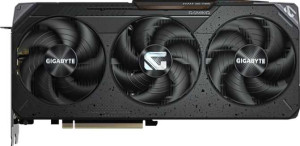
Gigabyte Radeon RX 9070 XT Gaming OC
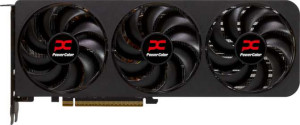
PowerColor Reaper Radeon RX 9070 XT

Gigabyte Radeon RX 9070 XT Gaming OC PowerColor Reaper Radeon RX 9070 XT

Overview

Welcome to our in-depth spec comparison between the Gigabyte Radeon RX 9070 XT Gaming OC and the PowerColor Reaper Radeon RX 9070 XT. Both cards are built on the same RDNA 4.0 architecture, share identical memory configurations, and carry the same 304W TDP, making this a fascinating head-to-head. The real battlegrounds lie in boost clock speeds and raw performance figures, connectivity options, and a handful of feature-level distinctions that could tip the scales depending on your priorities.

Common Features

  • Both cards share a base GPU clock speed of 1660 MHz.
  • Both cards have a GPU memory speed of 2518 MHz.
  • Both cards feature 4096 shading units.
  • Both cards include 256 texture mapping units (TMUs).
  • Both cards have 128 render output units (ROPs).
  • Double Precision Floating Point (DPFP) is supported on both cards.
  • Both cards have an effective memory speed of 20000 MHz.
  • Both cards offer a maximum memory bandwidth of 644.6 GB/s.
  • Both cards come equipped with 16GB of VRAM.
  • Both cards use GDDR6 memory.
  • Both cards feature a 256-bit memory bus width.
  • ECC memory is supported on both cards.
  • Both cards support OpenGL version 4.6.
  • Both cards support OpenCL version 2.2.
  • Multi-display technology is supported on both cards.
  • Ray tracing is supported on both cards.
  • 3D support is available on both cards.
  • DLSS is not supported on either card.
  • FSR4 is available on both cards.
  • XeSS (XMX) is not available on either card.
  • Both cards include an HDMI 2.1b output.
  • Neither card features USB-C ports, DVI outputs, or mini DisplayPort outputs.
  • Both cards are built on the RDNA 4.0 GPU architecture.
  • Both cards have a Thermal Design Power (TDP) of 304W.
  • Both cards use PCIe version 5.
  • Both cards are manufactured on a 4 nm semiconductor process.
  • Both cards contain 53,900 million transistors.
  • Neither card features air-water cooling.

Main Differences

  • GPU turbo clock speed is 3060 MHz on Gigabyte Radeon RX 9070 XT Gaming OC and 2970 MHz on PowerColor Reaper Radeon RX 9070 XT.
  • Pixel rate is 391.7 GPixel/s on Gigabyte Radeon RX 9070 XT Gaming OC and 380.2 GPixel/s on PowerColor Reaper Radeon RX 9070 XT.
  • Floating-point performance is 50.14 TFLOPS on Gigabyte Radeon RX 9070 XT Gaming OC and 48.66 TFLOPS on PowerColor Reaper Radeon RX 9070 XT.
  • Texture rate is 783.4 GTexels/s on Gigabyte Radeon RX 9070 XT Gaming OC and 760.3 GTexels/s on PowerColor Reaper Radeon RX 9070 XT.
  • DirectX 12 Ultimate is supported on Gigabyte Radeon RX 9070 XT Gaming OC, while PowerColor Reaper Radeon RX 9070 XT supports DirectX 12.
  • RGB lighting is present on Gigabyte Radeon RX 9070 XT Gaming OC but not available on PowerColor Reaper Radeon RX 9070 XT.
  • The Gigabyte Radeon RX 9070 XT Gaming OC has 2 HDMI ports, while the PowerColor Reaper Radeon RX 9070 XT has 1 HDMI port.
  • The Gigabyte Radeon RX 9070 XT Gaming OC has 2 DisplayPort outputs, while the PowerColor Reaper Radeon RX 9070 XT has 3 DisplayPort outputs.
  • Card width is 288 mm on Gigabyte Radeon RX 9070 XT Gaming OC and 304 mm on PowerColor Reaper Radeon RX 9070 XT.
  • Card height is 132 mm on Gigabyte Radeon RX 9070 XT Gaming OC and 127 mm on PowerColor Reaper Radeon RX 9070 XT.
Specs Comparison
Gigabyte Radeon RX 9070 XT Gaming OC

Gigabyte Radeon RX 9070 XT Gaming OC

PowerColor Reaper Radeon RX 9070 XT

PowerColor Reaper Radeon RX 9070 XT

Performance:
GPU clock speed 1660 MHz 1660 MHz
GPU turbo 3060 MHz 2970 MHz
pixel rate 391.7 GPixel/s 380.2 GPixel/s
floating-point performance 50.14 TFLOPS 48.66 TFLOPS
texture rate 783.4 GTexels/s 760.3 GTexels/s
GPU memory speed 2518 MHz 2518 MHz
shading units 4096 4096
texture mapping units (TMUs) 256 256
render output units (ROPs) 128 128
Has Double Precision Floating Point (DPFP)

Both cards share the same architectural foundation: identical base clocks of 1660 MHz, the same 4096 shading units, 256 TMUs, 128 ROPs, and matching memory speeds of 2518 MHz. This means the two GPUs are essentially the same silicon running at the same starting point, and any performance gap between them comes down entirely to how aggressively each card boosts.

That gap centers on the GPU turbo clock: the Gigabyte Gaming OC reaches 3060 MHz versus the PowerColor Reaper's 2970 MHz — a difference of 90 MHz, or roughly 3%. This directly flows into every derived throughput figure. The Gigabyte pulls ahead with 50.14 TFLOPS of floating-point performance versus 48.66 TFLOPS, a 783.4 GTexels/s texture rate against 760.3 GTexels/s, and a pixel fill rate of 391.7 GPixel/s compared to 380.2 GPixel/s. In practice, a ~3% clock advantage rarely translates into a perceptible difference in everyday gaming framerates, but it can matter at the margin in compute-heavy or heavily shader-bound workloads.

The edge in this group belongs to the Gigabyte Radeon RX 9070 XT Gaming OC, strictly on the basis of its higher boost clock and the resulting throughput gains across all peak performance metrics. Both cards support Double Precision Floating Point, so neither holds an advantage there. For users prioritizing raw peak compute headroom, the Gigabyte's factory overclock gives it a measurable, if modest, lead.

Memory:
effective memory speed 20000 MHz 20000 MHz
maximum memory bandwidth 644.6 GB/s 644.6 GB/s
VRAM 16GB 16GB
GDDR version GDDR6 GDDR6
memory bus width 256-bit 256-bit
Supports ECC memory

Across every memory specification, these two cards are in complete lockstep. Both carry 16GB of GDDR6 on a 256-bit bus, running at an effective speed of 20000 MHz and delivering a maximum bandwidth of 644.6 GB/s. That bandwidth figure is substantial — enough to keep the GPU fed even in high-resolution, texture-heavy scenes where memory throughput often becomes the bottleneck before raw compute does.

The 256-bit bus width paired with 16GB of capacity is a well-balanced configuration for this performance tier. It comfortably handles 4K gaming assets and large texture packs without the memory pressure that narrower-bus or lower-capacity cards can exhibit. ECC memory support is present on both, which is a minor but notable bonus for anyone doing compute or content-creation workloads alongside gaming, as it adds a layer of data integrity protection.

This group is a complete tie. There is no differentiator to speak of — every figure is identical. Memory performance will be indistinguishable between the Gigabyte Gaming OC and the PowerColor Reaper in any real-world scenario, and neither card holds any advantage here.

Features:
DirectX version DirectX 12 Ultimate DirectX 12
OpenGL version 4.6 4.6
OpenCL version 2.2 2.2
Supports multi-display technology
supports ray tracing
Supports 3D
supports DLSS
has FSR4
has XeSS (XMX)
AMD SAM / Intel Resizable BAR AMD SAM AMD SAM
has LHR
has RGB lighting
supported displays 4 4

The shared feature set between these two cards is strong: both support ray tracing, FSR4, AMD SAM, up to 4 displays, and identical API coverage through OpenGL 4.6 and OpenCL 2.2. Neither supports DLSS, which is expected for AMD hardware, and FSR4 serves as the upscaling answer on this platform. These fundamentals mean both cards will behave identically in terms of software compatibility and gaming feature support for the vast majority of use cases.

Two differences stand out, however. The more technically meaningful one is the DirectX version: the Gigabyte Gaming OC lists DirectX 12 Ultimate, while the PowerColor Reaper lists only DirectX 12. DirectX 12 Ultimate is a superset that formally certifies support for hardware ray tracing, mesh shaders, sampler feedback, and variable-rate shading — features increasingly used by modern titles. The practical gap may be limited given both cards already claim ray tracing support, but the Gigabyte's explicit DX12 Ultimate certification signals broader forward compatibility. The second difference is purely aesthetic: the Gigabyte includes RGB lighting, while the PowerColor Reaper does not.

The Gigabyte Radeon RX 9070 XT Gaming OC holds a narrow but real edge in this group, primarily due to its DirectX 12 Ultimate designation. RGB lighting is a secondary consideration that will matter only to users building a themed system. For anyone focused purely on feature compatibility and future-proofing, the Gigabyte is the stronger choice here.

Ports:
has an HDMI output
HDMI ports 2 1
HDMI version HDMI 2.1b HDMI 2.1b
DisplayPort outputs 2 3
USB-C ports 0 0
DVI outputs 0 0
mini DisplayPort outputs 0 0

Both cards top out at four total display outputs and share the same HDMI 2.1b standard, which supports 4K at high refresh rates and 8K output. The distinction lies in how that total is split: the Gigabyte Gaming OC offers 2 HDMI + 2 DisplayPort, while the PowerColor Reaper goes the other direction with 1 HDMI + 3 DisplayPort.

This difference is more meaningful than it might first appear. A second HDMI port on the Gigabyte is a practical convenience for users who mix a primary gaming monitor with a TV, projector, or a console-style secondary display — devices that commonly rely on HDMI rather than DisplayPort. The PowerColor's three DisplayPort outputs, on the other hand, cater directly to multi-monitor desktop setups, where DisplayPort daisy-chaining and higher-refresh-rate panels are the norm. Neither layout is objectively superior; they simply reflect different use-case priorities.

This group comes down to personal setup. The Gigabyte Gaming OC has a practical edge for mixed HDMI/DisplayPort environments, while the PowerColor Reaper is the stronger fit for triple-DisplayPort workstation or multi-monitor gaming rigs. Neither card holds a universal advantage here — the right choice depends entirely on what you are plugging in.

General info:
GPU architecture RDNA 4.0 RDNA 4.0
release date March 2025 March 2025
Thermal Design Power (TDP) 304W 304W
PCI Express (PCIe) version 5 5
semiconductor size 4 nm 4 nm
number of transistors 53900 million 53900 million
Has air-water cooling
width 288 mm 304 mm
height 132 mm 127 mm

At the architectural level, these two cards are indistinguishable. Both are built on the RDNA 4.0 architecture using a 4nm process node with an identical transistor count of 53.9 billion, share a 304W TDP, and use PCIe 5.0. The 304W power envelope is worth noting — it is a meaningful ask from the system and requires a capable PSU and good case airflow, but it is consistent with this performance tier and applies equally to both cards.

The only differentiator in this group is physical dimensions. The Gigabyte Gaming OC measures 288mm long and 132mm tall, while the PowerColor Reaper is slightly longer at 304mm but marginally shorter at 127mm. The 16mm length difference is the more practically relevant figure: in compact or mid-tower cases with tight GPU clearance, the Reaper's additional length could be a genuine fitment concern, whereas the Gigabyte's shorter footprint is more accommodating. The height difference of 5mm is unlikely to matter in any real installation.

For this group, the Gigabyte Gaming OC holds a minor but concrete advantage for space-constrained builds thanks to its shorter length. In a full-size case where clearance is not an issue, this group is effectively a tie — the underlying hardware is identical in every substantive respect.

Comparison Summary & Verdict

After examining all the evidence, both cards are closely matched at their core, sharing the same RDNA 4.0 foundation, 16GB GDDR6 memory, and 644.6 GB/s bandwidth. However, meaningful differences emerge under the hood and at the back panel. The Gigabyte Radeon RX 9070 XT Gaming OC pulls ahead with a higher GPU turbo clock of 3060 MHz, superior floating-point performance at 50.14 TFLOPS, DirectX 12 Ultimate support, RGB lighting, and dual HDMI outputs. The PowerColor Reaper Radeon RX 9070 XT counters with a slightly more compact profile and three DisplayPort outputs, making it better suited for multi-monitor desktop setups that rely on DisplayPort. Neither card is a clear-cut winner for every user, but your ideal choice comes down to whether you value peak clock performance and richer feature support, or a cleaner, display-port-focused connectivity layout.

Gigabyte Radeon RX 9070 XT Gaming OC
Buy Gigabyte Radeon RX 9070 XT Gaming OC if...

Buy the Gigabyte Radeon RX 9070 XT Gaming OC if you want the higher boost clock, better raw performance figures, DirectX 12 Ultimate support, RGB lighting, and dual HDMI outputs for a feature-rich gaming setup.

PowerColor Reaper Radeon RX 9070 XT
Buy PowerColor Reaper Radeon RX 9070 XT if...

Buy the PowerColor Reaper Radeon RX 9070 XT if your setup revolves around multiple DisplayPort monitors and you prefer a slightly more compact card without RGB lighting.