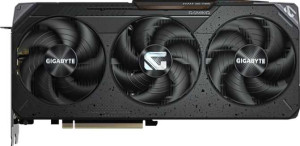
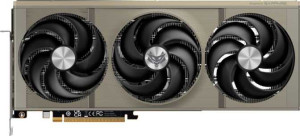
In the Performance category, the Gigabyte Radeon RX 9070 XT Gaming OC and the Sapphire Nitro+ Radeon RX 9070 XT are built on an identical hardware foundation. Both cards share the same 1660 MHz base clock and 3060 MHz boost clock, the same 4096 shading units, 256 TMUs, and 128 ROPs, and both operate their GDDR6 memory at 2518 MHz. This means their theoretical throughput figures — 50.14 TFLOPS of floating-point performance, 783.4 GTexels/s texture rate, and 391.7 GPixel/s pixel rate — are perfectly matched on paper.
What do these numbers mean in practice? The 50+ TFLOPS compute figure places both cards firmly in high-performance territory for rasterized workloads, capable of driving demanding titles at 1440p and competitive at 4K. The 3060 MHz boost clock is notably high and translates to strong per-frame efficiency. The 128 ROPs are particularly relevant for fill-rate-heavy scenarios like high-resolution rendering or high refresh-rate gaming, while the 256 TMUs ensure texture-heavy scenes are handled without bottlenecks. Both cards also support Double Precision Floating Point (DPFP), which has limited gaming relevance but adds value for compute or professional workloads.
Based strictly on the provided specs, this group is a complete tie. Every single performance metric is identical between the two cards. Any real-world performance difference between them would have to come from factors outside this spec group — such as cooling efficiency affecting sustained boost clock behavior, or power delivery headroom. Neither card holds a performance edge on paper.