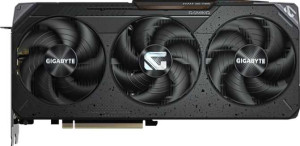
Gigabyte Radeon RX 9070 XT Gaming OC
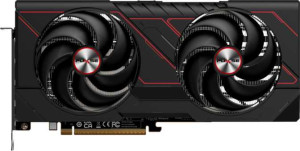
Sapphire Pulse Radeon RX 9070

Gigabyte Radeon RX 9070 XT Gaming OC Sapphire Pulse Radeon RX 9070

Overview

When choosing between the Gigabyte Radeon RX 9070 XT Gaming OC and the Sapphire Pulse Radeon RX 9070, the decision comes down to more than just raw performance. These two RDNA 4.0-based graphics cards share a solid foundation of features, but diverge noticeably in areas like compute throughput, power consumption, and physical design. Whether you are chasing maximum frame rates or a quieter, more power-efficient build, this side-by-side comparison has you covered.

Common Features

  • GPU memory speed is 2518 MHz on both products.
  • Both products have 128 render output units (ROPs).
  • Double Precision Floating Point (DPFP) is supported on both products.
  • Effective memory speed is 20000 MHz on both products.
  • Maximum memory bandwidth is 644.6 GB/s on both products.
  • Both products feature 16GB of VRAM.
  • Both products use GDDR6 memory.
  • Memory bus width is 256-bit on both products.
  • ECC memory is supported on both products.
  • Both products support DirectX 12 Ultimate.
  • OpenGL version 4.6 is supported on both products.
  • OpenCL version 2.2 is supported on both products.
  • Multi-display technology is supported on both products.
  • Ray tracing is supported on both products.
  • 3D support is available on both products.
  • DLSS is not supported on either product.
  • FSR4 is available on both products.
  • Both products have an HDMI output with 2 HDMI 2.1b ports.
  • Both products have 2 DisplayPort outputs and no USB-C, DVI, or mini DisplayPort outputs.
  • Both products are built on the RDNA 4.0 GPU architecture.
  • Both products use PCIe version 5.
  • Both products feature 53900 million transistors.
  • Neither product has air-water cooling.

Main Differences

  • GPU clock speed is 1660 MHz on Gigabyte Radeon RX 9070 XT Gaming OC and 1330 MHz on Sapphire Pulse Radeon RX 9070.
  • GPU turbo clock is 3060 MHz on Gigabyte Radeon RX 9070 XT Gaming OC and 2520 MHz on Sapphire Pulse Radeon RX 9070.
  • Pixel rate is 391.7 GPixel/s on Gigabyte Radeon RX 9070 XT Gaming OC and 322.6 GPixel/s on Sapphire Pulse Radeon RX 9070.
  • Floating-point performance is 50.14 TFLOPS on Gigabyte Radeon RX 9070 XT Gaming OC and 36.13 TFLOPS on Sapphire Pulse Radeon RX 9070.
  • Texture rate is 783.4 GTexels/s on Gigabyte Radeon RX 9070 XT Gaming OC and 564.5 GTexels/s on Sapphire Pulse Radeon RX 9070.
  • Shading units number 4096 on Gigabyte Radeon RX 9070 XT Gaming OC and 3584 on Sapphire Pulse Radeon RX 9070.
  • Texture mapping units (TMUs) total 256 on Gigabyte Radeon RX 9070 XT Gaming OC and 224 on Sapphire Pulse Radeon RX 9070.
  • RGB lighting is present on Gigabyte Radeon RX 9070 XT Gaming OC but not available on Sapphire Pulse Radeon RX 9070.
  • Thermal Design Power (TDP) is 304W on Gigabyte Radeon RX 9070 XT Gaming OC and 220W on Sapphire Pulse Radeon RX 9070.
  • Semiconductor size is 4 nm on Gigabyte Radeon RX 9070 XT Gaming OC and 5 nm on Sapphire Pulse Radeon RX 9070.
  • Width is 288 mm on Gigabyte Radeon RX 9070 XT Gaming OC and 280 mm on Sapphire Pulse Radeon RX 9070.
  • Height is 132 mm on Gigabyte Radeon RX 9070 XT Gaming OC and 120.3 mm on Sapphire Pulse Radeon RX 9070.
Specs Comparison
Gigabyte Radeon RX 9070 XT Gaming OC

Gigabyte Radeon RX 9070 XT Gaming OC

Sapphire Pulse Radeon RX 9070

Sapphire Pulse Radeon RX 9070

Performance:
GPU clock speed 1660 MHz 1330 MHz
GPU turbo 3060 MHz 2520 MHz
pixel rate 391.7 GPixel/s 322.6 GPixel/s
floating-point performance 50.14 TFLOPS 36.13 TFLOPS
texture rate 783.4 GTexels/s 564.5 GTexels/s
GPU memory speed 2518 MHz 2518 MHz
shading units 4096 3584
texture mapping units (TMUs) 256 224
render output units (ROPs) 128 128
Has Double Precision Floating Point (DPFP)

The most telling gap between these two cards lies in their compute horsepower. The Gigabyte RX 9070 XT delivers 50.14 TFLOPS of floating-point performance against the Sapphire RX 9070's 36.13 TFLOPS — a difference of roughly 39%. In practice, this translates to a meaningfully larger headroom for GPU-intensive workloads: higher framerates at demanding settings, more comfortable 4K performance, and greater resilience in compute-heavy scenarios like AI-accelerated features or shader-heavy game engines.

The clock speed story reinforces this advantage. The 9070 XT's turbo reaches 3060 MHz compared to the 9070's 2520 MHz — a ~21% boost that compounds across both the texture rate (783.4 vs 564.5 GTexels/s) and pixel fill rate (391.7 vs 322.6 GPixel/s). More texture throughput means sharper, faster texture rendering in complex scenes, while a higher pixel rate directly supports higher resolutions and refresh rates. The 9070 XT also has more shading units (4096 vs 3584), giving it additional parallel processing capacity. Where the two cards are evenly matched is memory bandwidth — both share identical 2518 MHz memory speed and the same 128 ROPs, so neither has an inherent blending or memory throughput edge over the other at that level.

Overall, the Gigabyte RX 9070 XT Gaming OC holds a clear and substantial performance advantage in this group across nearly every metric. The Sapphire RX 9070 is not a slow card, but if raw GPU performance is the priority, the 9070 XT is the stronger choice by a significant margin.

Memory:
effective memory speed 20000 MHz 20000 MHz
maximum memory bandwidth 644.6 GB/s 644.6 GB/s
VRAM 16GB 16GB
GDDR version GDDR6 GDDR6
memory bus width 256-bit 256-bit
Supports ECC memory

Rarely does a comparison yield a result this definitive: every single memory specification is identical between the two cards. Both feature 16GB of GDDR6 memory on a 256-bit bus, running at an effective 20000 MHz and delivering 644.6 GB/s of peak bandwidth. This is not a marginal tie — it is a complete one, down to ECC memory support on both sides.

What do these shared numbers mean in practice? The 256-bit bus paired with 644.6 GB/s of bandwidth places both cards comfortably in territory suited for high-resolution gaming and memory-intensive workloads. The 16GB VRAM pool is generous enough to handle 4K texture assets and modern titles with high-fidelity settings without running into memory pressure — a scenario that can cause stuttering or forced quality downgrades on cards with smaller buffers. ECC support, while rarely relevant in gaming, adds value for users leveraging the GPU for professional or compute tasks where data integrity matters.

This group is an unambiguous tie. Neither the Gigabyte RX 9070 XT Gaming OC nor the Sapphire Pulse RX 9070 holds any memory advantage over the other — a buyer's decision here should rest entirely on performance, thermals, or other distinguishing factors rather than anything memory-related.

Features:
DirectX version DirectX 12 Ultimate DirectX 12 Ultimate
OpenGL version 4.6 4.6
OpenCL version 2.2 2.2
Supports multi-display technology
supports ray tracing
Supports 3D
supports DLSS
has FSR4
has XeSS (XMX)
AMD SAM / Intel Resizable BAR AMD SAM AMD SAM
has LHR
has RGB lighting
supported displays 4 4

On the software and API feature front, these two cards are functionally identical. Both support DirectX 12 Ultimate and ray tracing, meaning users get access to the full suite of modern rendering techniques — hardware-accelerated reflections, shadows, and global illumination — without compromise on either card. FSR4 support on both is worth highlighting: AMD's latest upscaling generation brings meaningful image quality improvements over its predecessors, and having it on both cards ensures neither buyer is left behind as game support expands. The absence of DLSS is expected on AMD hardware and is not a disadvantage unique to either product.

AMD SAM (Smart Access Memory) is listed for both, which allows a compatible AMD CPU to access the full VRAM pool rather than a limited slice — a feature that can yield tangible framerate gains in supported titles. Both cards also drive up to 4 displays simultaneously, making either a capable choice for multi-monitor productivity or sim-racing setups.

The sole differentiator in this group is RGB lighting, present on the Gigabyte RX 9070 XT Gaming OC and absent on the Sapphire Pulse RX 9070. This is purely aesthetic and carries no performance implication — it is a meaningful distinction only for users building a visually themed system. For everyone else, this group is effectively a tie, and neither card offers a functional feature advantage over the other.

Ports:
has an HDMI output
HDMI ports 2 2
HDMI version HDMI 2.1b HDMI 2.1b
DisplayPort outputs 2 2
USB-C ports 0 0
DVI outputs 0 0
mini DisplayPort outputs 0 0

Port configurations are another area where these two cards offer no grounds for differentiation. Both carry an identical layout: 2 HDMI 2.1b outputs and 2 DisplayPort outputs, totaling four display connections — consistent with what was shown in the Features group. No USB-C, no DVI, no mini DisplayPort on either side.

The quality of those ports matters as much as the count. HDMI 2.1b is the latest HDMI revision, supporting up to 10K resolution and high refresh rates at 4K and beyond — relevant for users connecting to high-end TVs or next-generation monitors. Having two HDMI outputs is a practical convenience for setups that mix a gaming monitor with a TV or a capture device without needing adapters. The dual DisplayPort outputs serve the more typical desktop multi-monitor user well.

This group is a complete tie. The Gigabyte RX 9070 XT Gaming OC and the Sapphire Pulse RX 9070 offer an identical port selection with no advantage to either — connectivity should play no role in choosing between them.

General info:
GPU architecture RDNA 4.0 RDNA 4.0
release date March 2025 March 2025
Thermal Design Power (TDP) 304W 220W
PCI Express (PCIe) version 5 5
semiconductor size 4 nm 5 nm
number of transistors 53900 million 53900 million
Has air-water cooling
width 288 mm 280 mm
height 132 mm 120.3 mm

Both cards are built on AMD's RDNA 4.0 architecture with an identical transistor count of 53,900 million and connect via PCIe 5 — so the silicon foundation is closely related. The notable divergence is in process node: the Gigabyte RX 9070 XT Gaming OC uses a 4 nm fabrication process versus the Sapphire Pulse RX 9070's 5 nm. A smaller node generally enables higher clock speeds and improved power efficiency per transistor, which aligns with the 9070 XT's significantly higher turbo clocks seen in the Performance group.

That context makes the TDP gap the most consequential data point here. The 9070 XT draws up to 304W while the RX 9070 is rated at 220W — an 84W difference. In practice, this has real implications: the 9070 XT demands a more capable power supply, generates more heat that the cooling system must dissipate, and will contribute more to long-term electricity costs. For compact cases or builds with tighter thermal and PSU headroom, the RX 9070's lower power envelope is a tangible advantage. The physical size difference is minor — the 9070 XT is 8 mm longer and 11.7 mm taller — and unlikely to be a deciding factor for most cases.

Neither card holds an across-the-board advantage in this group. The Sapphire RX 9070 edges ahead on power efficiency and thermal friendliness, making it the more system-agnostic choice. The 9070 XT's higher TDP is the cost of its performance lead, and whether that trade-off is worthwhile depends on the user's build constraints and performance priorities.

Comparison Summary & Verdict

After a thorough look at the specifications, these two cards serve noticeably different audiences. The Gigabyte Radeon RX 9070 XT Gaming OC is the stronger performer, delivering 50.14 TFLOPS of floating-point power, a turbo clock of 3060 MHz, and 4096 shading units, along with RGB lighting and a 4 nm chip — though it comes at the cost of a larger footprint and a demanding 304W TDP. The Sapphire Pulse Radeon RX 9070, by contrast, offers a more balanced proposition with a 220W power draw and a compact, no-frills design, making it an excellent fit for efficient builds that still benefit from the full RDNA 4.0 feature set — including ray tracing, FSR4, and 16GB of GDDR6 memory — shared by both cards.

Gigabyte Radeon RX 9070 XT Gaming OC
Buy Gigabyte Radeon RX 9070 XT Gaming OC if...

Buy the Gigabyte Radeon RX 9070 XT Gaming OC if you want the highest possible performance, with faster clocks, more shading units, and RGB lighting, and your system can comfortably handle a 304W power draw.

Sapphire Pulse Radeon RX 9070
Buy Sapphire Pulse Radeon RX 9070 if...

Choose the Sapphire Pulse Radeon RX 9070 if you prioritize a lower 220W power draw and a more compact design, while still enjoying the full RDNA 4.0 feature set including ray tracing and FSR4.