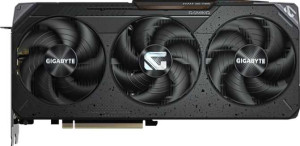
Gigabyte Radeon RX 9070 XT Gaming OC
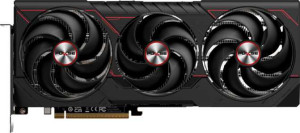
Sapphire Pulse Radeon RX 9070 XT

Gigabyte Radeon RX 9070 XT Gaming OC Sapphire Pulse Radeon RX 9070 XT

Overview

When it comes to choosing between the Gigabyte Radeon RX 9070 XT Gaming OC and the Sapphire Pulse Radeon RX 9070 XT, both cards share the same powerful RDNA 4.0 foundation, 16GB of GDDR6 memory, and a 304W TDP — making the decision anything but straightforward. This comparison dives into the key battlegrounds: boost clock performance, physical dimensions, and feature extras like RGB lighting to help you find the right fit for your build.

Common Features

  • Both cards share a base GPU clock speed of 1660 MHz.
  • Both cards have a GPU memory speed of 2518 MHz.
  • Both cards feature 4096 shading units.
  • Both cards include 256 texture mapping units (TMUs).
  • Both cards have 128 render output units (ROPs).
  • Double Precision Floating Point (DPFP) is supported on both cards.
  • Both cards have an effective memory speed of 20000 MHz.
  • Both cards offer a maximum memory bandwidth of 644.6 GB/s.
  • Both cards come with 16GB of VRAM.
  • Both cards use GDDR6 memory.
  • Both cards have a 256-bit memory bus width.
  • ECC memory is supported on both cards.
  • Both cards support DirectX 12 Ultimate.
  • Both cards support OpenGL version 4.6.
  • Both cards support OpenCL version 2.2.
  • Multi-display technology is supported on both cards.
  • Ray tracing is supported on both cards.
  • 3D support is available on both cards.
  • DLSS is not supported on either card.
  • FSR4 is supported on both cards.
  • Both cards have 2 HDMI ports with HDMI 2.1b.
  • Both cards have 2 DisplayPort outputs.
  • Neither card has USB-C ports, DVI outputs, or mini DisplayPort outputs.
  • Both cards are built on the RDNA 4.0 GPU architecture.
  • Both cards have a Thermal Design Power (TDP) of 304W.
  • Both cards use PCIe version 5.
  • Both cards are manufactured on a 4 nm process.
  • Both cards contain 53900 million transistors.
  • Neither card uses air-water cooling.

Main Differences

  • GPU turbo clock speed is 3060 MHz on the Gigabyte Radeon RX 9070 XT Gaming OC and 2970 MHz on the Sapphire Pulse Radeon RX 9070 XT.
  • Pixel rate is 391.7 GPixel/s on the Gigabyte Radeon RX 9070 XT Gaming OC and 380.2 GPixel/s on the Sapphire Pulse Radeon RX 9070 XT.
  • Floating-point performance is 50.14 TFLOPS on the Gigabyte Radeon RX 9070 XT Gaming OC and 48.66 TFLOPS on the Sapphire Pulse Radeon RX 9070 XT.
  • Texture rate is 783.4 GTexels/s on the Gigabyte Radeon RX 9070 XT Gaming OC and 760.3 GTexels/s on the Sapphire Pulse Radeon RX 9070 XT.
  • RGB lighting is present on the Gigabyte Radeon RX 9070 XT Gaming OC but not available on the Sapphire Pulse Radeon RX 9070 XT.
  • Card width is 288 mm on the Gigabyte Radeon RX 9070 XT Gaming OC and 320 mm on the Sapphire Pulse Radeon RX 9070 XT.
  • Card height is 132 mm on the Gigabyte Radeon RX 9070 XT Gaming OC and 120.3 mm on the Sapphire Pulse Radeon RX 9070 XT.
Specs Comparison
Gigabyte Radeon RX 9070 XT Gaming OC

Gigabyte Radeon RX 9070 XT Gaming OC

Sapphire Pulse Radeon RX 9070 XT

Sapphire Pulse Radeon RX 9070 XT

Performance:
GPU clock speed 1660 MHz 1660 MHz
GPU turbo 3060 MHz 2970 MHz
pixel rate 391.7 GPixel/s 380.2 GPixel/s
floating-point performance 50.14 TFLOPS 48.66 TFLOPS
texture rate 783.4 GTexels/s 760.3 GTexels/s
GPU memory speed 2518 MHz 2518 MHz
shading units 4096 4096
texture mapping units (TMUs) 256 256
render output units (ROPs) 128 128
Has Double Precision Floating Point (DPFP)

Both cards share an identical architectural foundation: the same 1660 MHz base clock, 4096 shading units, 256 TMUs, 128 ROPs, and 2518 MHz memory speed. This means any performance gap between them comes down entirely to one variable — the factory overclock applied to the boost/turbo frequency.

That is where the Gigabyte Radeon RX 9070 XT Gaming OC pulls ahead. Its 3060 MHz turbo clock outpaces the Sapphire Pulse's 2970 MHz — a 90 MHz, or roughly 3%, advantage. While that may sound modest, it compounds directly into every throughput metric: the Gaming OC delivers 50.14 TFLOPS of floating-point performance versus 48.66 TFLOPS on the Pulse, and leads in both pixel fill rate (391.7 vs 380.2 GPixel/s) and texture throughput (783.4 vs 760.3 GTexels/s). In practice, these differences translate to a consistent but small frame-rate lead in GPU-bound scenarios, most visible at higher resolutions where shader and texturing throughput are the bottleneck.

The edge goes to the Gigabyte Gaming OC on pure performance metrics, strictly based on the provided data. That said, the gap is narrow — under 3% across all throughput figures — meaning real-world gaming differences will likely be within the margin of run-to-run variance in most titles. Users prioritizing maximum out-of-box performance should favor the Gaming OC, while those who plan to manually overclock may close or erase the gap entirely with the Sapphire Pulse.

Memory:
effective memory speed 20000 MHz 20000 MHz
maximum memory bandwidth 644.6 GB/s 644.6 GB/s
VRAM 16GB 16GB
GDDR version GDDR6 GDDR6
memory bus width 256-bit 256-bit
Supports ECC memory

On memory, these two cards are completely identical across every measurable dimension. Both carry 16GB of GDDR6 running at an effective 20000 MHz over a 256-bit bus, yielding 644.6 GB/s of peak memory bandwidth. That bandwidth figure is substantial — enough to handle 4K textures, high-resolution shadow maps, and large asset pools without becoming a bottleneck in modern titles.

The shared 16GB VRAM capacity is particularly noteworthy at this tier. It comfortably exceeds the 12GB ceiling that has constrained many competing cards in memory-intensive workloads like 4K gaming with high-resolution texture packs, AI-assisted rendering, or content creation tasks. ECC memory support on both cards is a practical bonus for users running compute or professional workloads alongside gaming, as it enables error-corrected memory operation where data integrity matters.

This group is an absolute tie. Every spec — capacity, speed, bandwidth, bus width, and ECC support — is identical. Memory will not be a differentiating factor in any purchasing decision between these two cards; buyers should look to other spec groups to find meaningful separation.

Features:
DirectX version DirectX 12 Ultimate DirectX 12 Ultimate
OpenGL version 4.6 4.6
OpenCL version 2.2 2.2
Supports multi-display technology
supports ray tracing
Supports 3D
supports DLSS
has FSR4
has XeSS (XMX)
AMD SAM / Intel Resizable BAR AMD SAM AMD SAM
has LHR
has RGB lighting
supported displays 4 4

At the software and API level, these two cards are functionally identical. Both support DirectX 12 Ultimate, ray tracing, FSR4, and AMD SAM — the full modern AMD feature stack. FSR4 in particular is worth highlighting: it represents AMD's most advanced upscaling generation, offering meaningful image quality improvements over prior FSR versions and making high-fidelity gaming at elevated resolutions more accessible without a raw performance cost.

The only concrete differentiator in this group is RGB lighting: the Gigabyte Gaming OC includes it, the Sapphire Pulse does not. This is purely an aesthetic consideration — it has no bearing on gaming performance, thermals, or compatibility. For builders assembling a themed or windowed system, the Gaming OC's RGB is a genuine perk; for those indifferent to aesthetics or preferring a cleaner look, it is irrelevant.

Functionally, this group is essentially a tie. Every feature that influences actual gaming or compute capability — ray tracing, upscaling, API support, multi-display, AMD SAM — is shared identically. The edge goes to the Gaming OC on a strictly literal reading of the spec list, but only by virtue of RGB lighting, which is a lifestyle choice rather than a technical advantage.

Ports:
has an HDMI output
HDMI ports 2 2
HDMI version HDMI 2.1b HDMI 2.1b
DisplayPort outputs 2 2
USB-C ports 0 0
DVI outputs 0 0
mini DisplayPort outputs 0 0

Port selection is identical across both cards: each offers 2× HDMI 2.1b and 2× DisplayPort outputs, totaling four display connections — which aligns with the four supported displays noted in the Features group. The dual HDMI configuration is relatively uncommon at this tier and genuinely useful; it allows two HDMI-native devices — such as a gaming monitor and a TV, or two high-refresh displays — to be connected simultaneously without adapters.

HDMI 2.1b is the headline spec here. It supports bandwidth sufficient for 4K at high refresh rates and 8K output, and includes features like Variable Refresh Rate (VRR) and Auto Low Latency Mode (ALLM) that are relevant for users connecting to modern televisions or high-end monitors. The absence of USB-C is worth noting for users who rely on that interface for display connectivity or VR headsets, though neither card offers it — so it's a shared limitation rather than a differentiator.

This group is a complete tie. Port layout, connector types, and HDMI version are identical on both cards. Connectivity will not factor into a decision between the Gigabyte Gaming OC and the Sapphire Pulse.

General info:
GPU architecture RDNA 4.0 RDNA 4.0
release date March 2025 March 2025
Thermal Design Power (TDP) 304W 304W
PCI Express (PCIe) version 5 5
semiconductor size 4 nm 4 nm
number of transistors 53900 million 53900 million
Has air-water cooling
width 288 mm 320 mm
height 132 mm 120.3 mm

Architecturally, these two cards are cut from the same cloth: identical RDNA 4.0 silicon built on a 4nm process with 53.9 billion transistors, the same 304W TDP, and PCIe 5.0 connectivity. The shared TDP means power delivery and cooling requirements are equivalent — builders can plan around the same PSU headroom and case airflow for either card.

Where they diverge is physical dimensions. The Gigabyte Gaming OC measures 288mm long × 132mm tall, while the Sapphire Pulse is noticeably longer and shorter — 320mm × 120.3mm. The Pulse is 32mm longer, which is a meaningful difference in compact or mid-tower cases with tight GPU clearance limits. Conversely, the Gaming OC stands taller, which could create interference issues with certain motherboard heatsinks or case side panels in width-constrained builds. Neither profile is universally superior; the right choice depends entirely on the specific chassis.

No clear overall winner emerges from this group. The shared silicon, TDP, and interface specs put both cards on equal footing for system planning purposes. The edge on case compatibility shifts depending on the build: the Gaming OC suits cases with height clearance but limited GPU length, while the Sapphire Pulse fits better where length is available but vertical space is tighter. Prospective buyers should measure their case's maximum GPU length and PCIe slot clearance before deciding.

Comparison Summary & Verdict

Both the Gigabyte Radeon RX 9070 XT Gaming OC and the Sapphire Pulse Radeon RX 9070 XT are built on the same RDNA 4.0 architecture with identical memory configurations, port layouts, and power envelopes, making them remarkably close siblings. The Gigabyte card pulls ahead in raw throughput, offering a higher GPU turbo clock of 3060 MHz, a superior floating-point performance of 50.14 TFLOPS, and a better texture rate — advantages that will appeal to enthusiasts who want every last frame. It also adds RGB lighting and a more compact 288 mm width. The Sapphire Pulse, at 320 mm wide but a slimmer 120.3 mm tall, trades those extras for a cleaner, no-frills aesthetic and a slightly lower boost clock. Ultimately, the Gigabyte suits performance-focused and aesthetics-conscious builders, while the Sapphire is the smarter pick for those who want a quiet, understated card that still delivers near-identical real-world capability.

Gigabyte Radeon RX 9070 XT Gaming OC
Buy Gigabyte Radeon RX 9070 XT Gaming OC if...

Buy the Gigabyte Radeon RX 9070 XT Gaming OC if you want the highest boost clock speeds and floating-point performance available on this GPU, and appreciate RGB lighting in your build.

Sapphire Pulse Radeon RX 9070 XT
Buy Sapphire Pulse Radeon RX 9070 XT if...

Buy the Sapphire Pulse Radeon RX 9070 XT if you prefer a clean, RGB-free aesthetic and a shorter card profile, while still getting near-identical memory and feature capabilities.