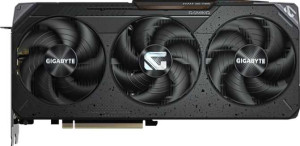
Gigabyte Radeon RX 9070 XT Gaming OC
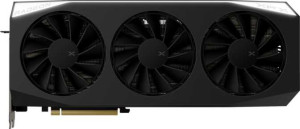
XFX Mercury Radeon RX 9070 XT Gaming Edition

Gigabyte Radeon RX 9070 XT Gaming OC XFX Mercury Radeon RX 9070 XT Gaming Edition

Overview

Welcome to our in-depth specification comparison between the Gigabyte Radeon RX 9070 XT Gaming OC and the XFX Mercury Radeon RX 9070 XT Gaming Edition. Both cards are built on the same RDNA 4.0 architecture and share a surprisingly long list of common traits, yet they diverge in meaningful ways across peak GPU boost clocks, raw compute throughput, physical dimensions, and display output configurations. Whether you are chasing every last frame or need a specific port layout for a multi-monitor setup, this comparison will help you identify which card best suits your needs.

Common Features

  • Both cards share a base GPU clock speed of 1660 MHz.
  • Both cards have a GPU memory speed of 2518 MHz.
  • Both cards feature 4096 shading units.
  • Both cards have 256 texture mapping units (TMUs).
  • Both cards have 128 render output units (ROPs).
  • Double Precision Floating Point (DPFP) is supported on both cards.
  • Both cards have an effective memory speed of 20000 MHz.
  • Both cards come with 16 GB of VRAM.
  • Both cards use GDDR6 memory.
  • Both cards feature a 256-bit memory bus width.
  • ECC memory is supported on both cards.
  • Both cards support DirectX 12 Ultimate.
  • Both cards support OpenGL version 4.6.
  • Both cards support OpenCL version 2.2.
  • Multi-display technology is supported on both cards.
  • Ray tracing is supported on both cards.
  • 3D support is available on both cards.
  • DLSS is not supported on either card.
  • FSR4 is available on both cards.
  • Both cards have an HDMI 2.1b output.
  • Neither card has USB-C ports, DVI outputs, or mini DisplayPort outputs.
  • Both cards are built on the RDNA 4.0 GPU architecture.
  • Both cards have a Thermal Design Power (TDP) of 304W.
  • Both cards use PCIe version 5.
  • Both cards are manufactured on a 4 nm semiconductor process.
  • Both cards contain 53,900 million transistors.
  • Neither card uses air-water cooling.

Main Differences

  • GPU turbo clock speed is 3060 MHz on the Gigabyte Radeon RX 9070 XT Gaming OC and 2970 MHz on the XFX Mercury Radeon RX 9070 XT Gaming Edition.
  • Pixel rate is 391.7 GPixel/s on the Gigabyte Radeon RX 9070 XT Gaming OC and 380.2 GPixel/s on the XFX Mercury Radeon RX 9070 XT Gaming Edition.
  • Floating-point performance is 50.14 TFLOPS on the Gigabyte Radeon RX 9070 XT Gaming OC and 48.66 TFLOPS on the XFX Mercury Radeon RX 9070 XT Gaming Edition.
  • Texture rate is 783.4 GTexels/s on the Gigabyte Radeon RX 9070 XT Gaming OC and 760.3 GTexels/s on the XFX Mercury Radeon RX 9070 XT Gaming Edition.
  • Maximum memory bandwidth is 644.6 GB/s on the Gigabyte Radeon RX 9070 XT Gaming OC and 640 GB/s on the XFX Mercury Radeon RX 9070 XT Gaming Edition.
  • The Gigabyte Radeon RX 9070 XT Gaming OC has 2 HDMI ports, while the XFX Mercury Radeon RX 9070 XT Gaming Edition has 1 HDMI port.
  • The Gigabyte Radeon RX 9070 XT Gaming OC has 2 DisplayPort outputs, while the XFX Mercury Radeon RX 9070 XT Gaming Edition has 3 DisplayPort outputs.
  • Card width is 288 mm on the Gigabyte Radeon RX 9070 XT Gaming OC and 360 mm on the XFX Mercury Radeon RX 9070 XT Gaming Edition.
  • Card height is 132 mm on the Gigabyte Radeon RX 9070 XT Gaming OC and 155 mm on the XFX Mercury Radeon RX 9070 XT Gaming Edition.
Specs Comparison
Gigabyte Radeon RX 9070 XT Gaming OC

Gigabyte Radeon RX 9070 XT Gaming OC

XFX Mercury Radeon RX 9070 XT Gaming Edition

XFX Mercury Radeon RX 9070 XT Gaming Edition

Performance:
GPU clock speed 1660 MHz 1660 MHz
GPU turbo 3060 MHz 2970 MHz
pixel rate 391.7 GPixel/s 380.2 GPixel/s
floating-point performance 50.14 TFLOPS 48.66 TFLOPS
texture rate 783.4 GTexels/s 760.3 GTexels/s
GPU memory speed 2518 MHz 2518 MHz
shading units 4096 4096
texture mapping units (TMUs) 256 256
render output units (ROPs) 128 128
Has Double Precision Floating Point (DPFP)

Both cards share an identical foundation: the same 1660 MHz base clock, 4096 shading units, 256 TMUs, 128 ROPs, and 2518 MHz memory speed. This means their theoretical performance ceiling is defined almost entirely by one variable — the GPU turbo (boost) clock. Here, the Gigabyte Radeon RX 9070 XT Gaming OC pulls ahead with a 3060 MHz boost versus the XFX Mercury's 2970 MHz, a difference of 90 MHz or roughly 3%.

That gap flows directly into every compute-bound metric. The Gigabyte card delivers 50.14 TFLOPS of floating-point performance and a texture rate of 783.4 GTexels/s, compared to 48.66 TFLOPS and 760.3 GTexels/s on the XFX. In practice, a ~3% advantage in shader throughput and texturing speed is unlikely to be transformative in most gaming workloads, but it can translate to marginally higher sustained frame rates or slightly better headroom in GPU-limited scenarios, particularly at higher resolutions where the GPU is the clear bottleneck.

The Gigabyte Gaming OC holds a clear, if modest, performance edge in this group purely due to its higher factory boost clock. Both cards support Double Precision Floating Point, so there is no differentiation there. For users prioritizing peak out-of-the-box performance without manual overclocking, the Gigabyte card is the stronger choice; the XFX Mercury is functionally very close but does trail across every throughput metric.

Memory:
effective memory speed 20000 MHz 20000 MHz
maximum memory bandwidth 644.6 GB/s 640 GB/s
VRAM 16GB 16GB
GDDR version GDDR6 GDDR6
memory bus width 256-bit 256-bit
Supports ECC memory

At the memory configuration level, these two cards are nearly indistinguishable. Both feature 16GB of GDDR6 on a 256-bit bus running at an effective 20000 MHz, and both support ECC memory — a feature more relevant to professional and compute workloads than gaming, but a welcome inclusion nonetheless. For gaming purposes, 16GB of VRAM is comfortably above the threshold needed for high-resolution and texture-heavy titles today, and the wide 256-bit bus ensures that bandwidth is not a bottleneck in demanding scenes.

The only numerical split is in maximum memory bandwidth: the Gigabyte Gaming OC reaches 644.6 GB/s versus 640 GB/s on the XFX Mercury. That ~0.7% difference almost certainly stems from a marginal variance in how each board partner reports or bins their memory configuration, and is of no practical consequence in real-world workloads. No user would perceive this gap in frame rates, texture streaming, or any memory-bound task.

This group is effectively a tie. The memory subsystem is identical in every meaningful dimension, and the fractional bandwidth difference carries no actionable weight. Neither card holds a memory advantage over the other.

Features:
DirectX version DirectX 12 Ultimate DirectX 12 Ultimate
OpenGL version 4.6 4.6
OpenCL version 2.2 2.2
Supports multi-display technology
supports ray tracing
Supports 3D
supports DLSS
has FSR4
has XeSS (XMX)
AMD SAM / Intel Resizable BAR AMD SAM AMD SAM
has LHR
has RGB lighting
supported displays 4 4

Feature-for-feature, these two cards are identical. Both support DirectX 12 Ultimate — the current gold standard for modern gaming, enabling hardware ray tracing, mesh shaders, and variable rate shading — alongside OpenGL 4.6 and OpenCL 2.2 for compatibility with a broad range of applications and compute workloads. Ray tracing support is present on both, which matters for titles that lean on real-time lighting and shadow effects, though real-world ray tracing performance ultimately ties back to the clock speed differences covered in the Performance group.

On the upscaling front, both cards support FSR4 — AMD's latest spatial and machine-learning-based upscaling technology — while neither supports DLSS (an Nvidia-exclusive feature) or XeSS with XMX acceleration (an Intel-exclusive path). FSR4 is a meaningful inclusion, as it allows compatible games to render at a lower internal resolution and reconstruct a higher-quality image, directly boosting frame rates with minimal visual cost. Both cards also benefit from AMD SAM (Smart Access Memory), which allows a compatible AMD CPU to access the full VRAM pool, potentially improving performance in SAM-optimized titles. Multi-display support across up to 4 displays and RGB lighting round out a feature set that is shared entirely between the two.

This group is a complete tie — there is not a single feature differentiator between the Gigabyte Gaming OC and the XFX Mercury. A buyer's decision here should rest entirely on the performance, design, or pricing differences found in other specification groups.

Ports:
has an HDMI output
HDMI ports 2 1
HDMI version HDMI 2.1b HDMI 2.1b
DisplayPort outputs 2 3
USB-C ports 0 0
DVI outputs 0 0
mini DisplayPort outputs 0 0

Both cards share the same total of four display outputs and use HDMI 2.1b — the latest HDMI revision, capable of driving 4K at high refresh rates or 8K displays — so the maximum supported display count and signal quality are equal. Where they diverge is in how those four ports are distributed. The Gigabyte Gaming OC opts for a 2 HDMI + 2 DisplayPort layout, while the XFX Mercury goes with 1 HDMI + 3 DisplayPort.

This split has real practical implications depending on a user's monitor setup. HDMI is the dominant connection standard for TVs, console-style gaming monitors, and many consumer displays, so the Gigabyte's dual HDMI outputs give it an edge for users running a mixed setup — for instance, a gaming monitor paired with a TV — without needing an adapter. Conversely, the XFX Mercury's three DisplayPort outputs are better suited to users running a multi-monitor productivity or sim-racing rig, since DisplayPort handles daisy-chaining and higher refresh rate panels more gracefully in desktop environments.

There is no outright winner here — the better layout depends entirely on the user's display ecosystem. Users with HDMI-centric setups will prefer the Gigabyte Gaming OC, while those invested in DisplayPort monitors will find the XFX Mercury more accommodating. Neither card supports USB-C or DVI, so those are non-factors.

General info:
GPU architecture RDNA 4.0 RDNA 4.0
release date March 2025 March 2025
Thermal Design Power (TDP) 304W 304W
PCI Express (PCIe) version 5 5
semiconductor size 4 nm 4 nm
number of transistors 53900 million 53900 million
Has air-water cooling
width 288 mm 360 mm
height 132 mm 155 mm

Underneath, these two cards are built from the same silicon: identical RDNA 4.0 architecture, fabricated on a 4 nm process with 53,900 million transistors, running over PCIe 5.0, and drawing a identical 304W TDP. That shared power envelope means neither card has a thermal or efficiency advantage over the other — both will demand the same from your PSU and produce roughly the same heat load under sustained load.

The meaningful differentiator in this group is physical size. The Gigabyte Gaming OC measures 288 mm × 132 mm, while the XFX Mercury is considerably larger at 360 mm × 155 mm — that is 72 mm longer and 23 mm taller. In practical terms, the XFX Mercury is a substantially bulkier card that may not fit in smaller or mid-tower cases without careful clearance checks. The Gigabyte card's more compact footprint gives it a meaningful advantage in system compatibility and build flexibility.

For this group, the Gigabyte Gaming OC holds the clearer edge — not through any silicon or power difference, but because its significantly smaller dimensions make it the more versatile choice across a wider range of PC cases. Users with compact builds or tight GPU clearance should weigh this carefully, as the XFX Mercury's size could be a genuine installation constraint.

Comparison Summary & Verdict

After examining all the evidence, both cards are closely matched at a fundamental level, sharing the same RDNA 4.0 architecture, 304W TDP, 16 GB GDDR6 VRAM, and full support for ray tracing and FSR4. However, the differences matter for the right buyer. The Gigabyte Radeon RX 9070 XT Gaming OC edges ahead in pure performance metrics, delivering a higher GPU turbo clock of 3060 MHz, 50.14 TFLOPS of floating-point performance, and a superior texture rate, all in a noticeably more compact 288 x 132 mm footprint. The XFX Mercury Radeon RX 9070 XT Gaming Edition, while slightly slower on paper, offers three DisplayPort outputs instead of two, making it the better pick for users running triple-monitor DisplayPort setups, albeit in a larger 360 x 155 mm chassis. Choose the Gigabyte for outright performance and a smaller build; choose the XFX if your display configuration demands an extra DisplayPort connection.

Gigabyte Radeon RX 9070 XT Gaming OC
Buy Gigabyte Radeon RX 9070 XT Gaming OC if...

Buy the Gigabyte Radeon RX 9070 XT Gaming OC if you want the higher boost clock, stronger compute performance, and a more compact card that fits tighter cases while still offering two HDMI outputs.

XFX Mercury Radeon RX 9070 XT Gaming Edition
Buy XFX Mercury Radeon RX 9070 XT Gaming Edition if...

Buy the XFX Mercury Radeon RX 9070 XT Gaming Edition if your setup relies on three DisplayPort monitors and you can accommodate its larger physical dimensions.