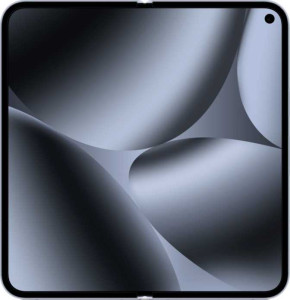
Google Pixel 10 Pro Fold
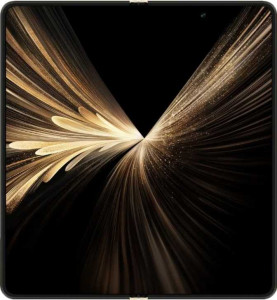
Honor Magic V5

Google Pixel 10 Pro Fold Honor Magic V5

Overview

When two premium foldable smartphones go head-to-head, the details matter. This in-depth comparison between the Google Pixel 10 Pro Fold and the Honor Magic V5 puts two cutting-edge folding devices under the microscope, examining everything from their contrasting chip architectures and display brightness levels to their battery capacities and camera capabilities. Whether you care most about software experience, charging speed, or raw performance, read on to see how these two flagship foldables stack up against each other.

Common Features

  • Both phones are waterproof and can be folded.
  • Both devices have an OLED/AMOLED display with a 120Hz refresh rate.
  • Neither phone has branded damage-resistant glass on the display.
  • Both phones have a secondary screen in addition to the main display.
  • Both devices feature a touch screen.
  • Both phones come with 16GB of RAM and 1024GB of internal storage.
  • Both devices use a 3nm semiconductor size.
  • Both phones have integrated LTE and integrated graphics.
  • Both devices support 64-bit processing and DirectX 12.
  • Both phones feature a multi-lens main camera with built-in optical image stabilization.
  • Both devices support 4K video recording at 60fps on the main camera.
  • Both phones have phase-detection autofocus and continuous autofocus when recording video.
  • Both devices support slow-motion video recording and have a built-in HDR mode.
  • Both phones have two flash LEDs.
  • Both devices include privacy options for location, camera, and microphone, as well as clipboard warnings, theme customization, and app tracking blocking.
  • Neither phone has Mail Privacy Protection or blocks cross-site tracking.
  • Both phones support wireless charging, fast charging, and have a non-removable rechargeable battery with a battery level indicator.
  • Both devices lack a 3.5mm audio jack but feature stereo speakers and no built-in radio.
  • Both phones support 5G, NFC, USB Type-C, Wi-Fi 7, and have a fingerprint scanner.
  • Both devices have no external memory slot, no crash detection, have a gyroscope, no heart rate monitor, no sapphire glass display, no curved display, and include a video light.

Main Differences

  • Weight is 257g on Google Pixel 10 Pro Fold and 217g on Honor Magic V5.
  • Thickness is 5.2mm on Google Pixel 10 Pro Fold and 4.1mm on Honor Magic V5.
  • Width is 150.4mm on Google Pixel 10 Pro Fold and 145.9mm on Honor Magic V5.
  • Height is 155.2mm on Google Pixel 10 Pro Fold and 156.8mm on Honor Magic V5.
  • IP rating is IPX8 on Google Pixel 10 Pro Fold and IP58 on Honor Magic V5.
  • Main screen size is 8″ on Google Pixel 10 Pro Fold and 7.95″ on Honor Magic V5.
  • Pixel density is 373 ppi on Google Pixel 10 Pro Fold and 403 ppi on Honor Magic V5.
  • Screen resolution is 2152x2076px on Google Pixel 10 Pro Fold and 2172x2352px on Honor Magic V5.
  • Typical brightness is 1800 nits on Google Pixel 10 Pro Fold and 5000 nits on Honor Magic V5.
  • HDR10 and HDR10+ support is present on Google Pixel 10 Pro Fold but not available on Honor Magic V5.
  • Always-On Display is available on Google Pixel 10 Pro Fold but not on Honor Magic V5.
  • Chipset is Google Tensor G5 on Google Pixel 10 Pro Fold and Qualcomm Snapdragon 8 Elite on Honor Magic V5.
  • Geekbench 6 multi-core score is 5712 on Google Pixel 10 Pro Fold and 10059 on Honor Magic V5.
  • Geekbench 6 single-core score is 2267 on Google Pixel 10 Pro Fold and 3234 on Honor Magic V5.
  • Maximum supported RAM is 16GB on Google Pixel 10 Pro Fold and 24GB on Honor Magic V5.
  • Main camera resolution is 48, 10.8, and 10.5MP on Google Pixel 10 Pro Fold and 64, 50, and 50MP on Honor Magic V5.
  • Optical zoom is 5x on Google Pixel 10 Pro Fold and 3x on Honor Magic V5.
  • Front camera resolution is 10MP on Google Pixel 10 Pro Fold and 20MP on Honor Magic V5.
  • RAW shooting, 360° panorama, manual shutter speed, and dual-tone LED flash are available on Google Pixel 10 Pro Fold but not on Honor Magic V5.
  • Direct OS updates are available for Google Pixel 10 Pro Fold but not for Honor Magic V5.
  • Battery capacity is 5015 mAh on Google Pixel 10 Pro Fold and 5820 mAh on Honor Magic V5.
  • Wired charging speed is 30W on Google Pixel 10 Pro Fold and 66W on Honor Magic V5.
  • Wireless charging speed is 15W on Google Pixel 10 Pro Fold and 50W on Honor Magic V5.
  • Reverse wireless charging is not available on Google Pixel 10 Pro Fold but is present on Honor Magic V5.
  • A charger is not included with Google Pixel 10 Pro Fold but is included with Honor Magic V5.
  • aptX, aptX HD, and aptX Adaptive audio codec support is absent on Google Pixel 10 Pro Fold but present on Honor Magic V5.
  • SIM support is 1 SIM and 1 eSIM on Google Pixel 10 Pro Fold and 2 SIMs and 2 eSIMs on Honor Magic V5.
  • Bluetooth version is 5.3 on Google Pixel 10 Pro Fold and 6.0 on Honor Magic V5.
  • USB version is 3.2 on Google Pixel 10 Pro Fold and 3.1 on Honor Magic V5.
  • Emergency SOS via satellite is available on Google Pixel 10 Pro Fold but not on Honor Magic V5.
  • 3D facial recognition is available on Google Pixel 10 Pro Fold but not on Honor Magic V5.
  • A barometer is absent on Google Pixel 10 Pro Fold but present on Honor Magic V5.
Specs Comparison
Google Pixel 10 Pro Fold

Google Pixel 10 Pro Fold

Honor Magic V5

Honor Magic V5

Design:
water resistance Waterproof Waterproof
weight 257 g 217 g
thickness 5.2 mm 4.1 mm
width 150.4 mm 145.9 mm
height 155.2 mm 156.8 mm
Ingress Protection (IP) rating IPX8 IP58
can be folded

Both the Google Pixel 10 Pro Fold and the Honor Magic V5 are foldable devices with waterproof builds, but their physical profiles tell very different stories. The Magic V5 is notably lighter at 217 g versus the Pixel 10 Pro Fold's 257 g — a 40 g difference that is genuinely perceptible during extended one-handed use or when carrying the device all day. Similarly, the Magic V5's 4.1 mm folded thickness undercuts the Pixel's 5.2 mm by over a millimeter, making it one of the slimmest foldables available and significantly easier to pocket.

On water and dust resistance, both carry waterproof ratings, but the distinction matters: the Pixel 10 Pro Fold holds an IPX8 rating, meaning it is tested for deep-water submersion but carries no official dust resistance certification. The Magic V5's IP58 rating adds a dust-resistance component, offering more well-rounded environmental protection in real-world conditions like sandy or dusty environments.

Overall, the Honor Magic V5 holds a clear advantage in this group. It is meaningfully lighter, considerably thinner, and offers broader ingress protection. For users who prioritize a refined, pocketable form factor and more complete durability, the Magic V5 is the stronger design.

Display:
Display type OLED/AMOLED OLED/AMOLED
screen size 8" 7.95"
pixel density 373 ppi 403 ppi
resolution 2152 x 2076 px 2172 x 2352 px
refresh rate 120Hz 120Hz
brightness (typical) 1800 nits 5000 nits
has branded damage-resistant glass
supports HDR10
supports HDR10+
Always-On Display
Has a secondary screen
resolution (secondary screen) 1080 x 2364px 1060 x 2376px
has a touch screen

The most striking difference in this group is peak brightness. The Honor Magic V5 achieves a staggering 5000 nits of typical brightness, compared to the Pixel 10 Pro Fold's 1800 nits — nearly three times higher. In practice, this translates to dramatically better outdoor legibility in direct sunlight, where displays below 2000 nits can struggle to remain readable. For users who frequently use their device outside, this gap is one of the most impactful differentiators in the entire display category.

The Pixel 10 Pro Fold counters with stronger HDR credentials, supporting both HDR10 and HDR10+, while the Magic V5 supports neither. This matters for streaming HDR video content on platforms that leverage dynamic metadata — the Pixel's inner screen will render compatible content with more accurate tone-mapping and contrast. The Pixel also offers an Always-On Display, a convenience feature for glanceable notifications that the Magic V5 lacks. Pixel density slightly favors the Magic V5 at 403 ppi versus 373 ppi, though both are sharp enough that the gap is unlikely to be perceptible in daily use.

This group is genuinely split depending on use case. The Honor Magic V5 has a decisive edge for outdoor use and raw screen brightness, while the Pixel 10 Pro Fold is the better choice for HDR media consumption and always-on convenience. Neither product dominates outright, but users who prioritize outdoor visibility will find the Magic V5's brightness advantage hard to overlook.

Performance:
internal storage 1024GB 1024GB
RAM 16GB 16GB
Chipset (SoC) name Google Tensor G5 Qualcomm Snapdragon 8 Elite Qualcomm Snapdragon 8 Elite
GPU name PowerVR DXT 48 1536 Adreno 830
CPU speed 1 x 3.4 & 5 x 2.85 & 2 x 2.4 GHz 2 x 4.32 & 6 x 3.53 GHz
Geekbench 6 result (multi) 5712 10059
Geekbench 6 result (single) 2267 3234
GPU clock speed 1100 MHz 1100 MHz
Has integrated LTE
RAM speed 4200 MHz 5300 MHz
semiconductor size 3 nm 3 nm
Supports 64-bit
DirectX version DirectX 12 DirectX 12
Has integrated graphics
OpenGL ES version 3.2 3.2
Uses big.LITTLE technology
CPU threads 8 threads 8 threads
Uses HMP
Has TrustZone
OpenCL version 2 3
maximum memory amount 16GB 24GB
DDR memory version 5 5

The benchmark numbers here are decisive. The Honor Magic V5, powered by the Qualcomm Snapdragon 8 Elite, posts a Geekbench 6 multi-core score of 10059 and a single-core score of 3234 — versus the Pixel 10 Pro Fold's 5712 and 2267 respectively on Google's Tensor G5. That is a roughly 75% lead in multi-core throughput, which in practice means faster app launches, smoother multitasking across the large foldable canvas, and more headroom for computationally demanding workloads like video editing or gaming.

Beyond raw CPU performance, the Magic V5 also holds advantages in memory architecture. Its RAM operates at 5300 MHz compared to the Pixel's 4200 MHz, enabling faster data throughput between the processor and memory. Equally notable, the Magic V5 supports a maximum of 24 GB RAM versus the Pixel's ceiling of 16 GB — meaningful for heavy multitaskers who keep many large apps resident in memory simultaneously. The Magic V5 also steps up to OpenCL 3, offering more capable GPU compute support for tasks like machine learning inference and image processing pipelines.

The Honor Magic V5 wins this group convincingly. Across CPU benchmarks, memory bandwidth, and compute capability, it outpaces the Pixel 10 Pro Fold by a significant margin. The Pixel's Tensor G5 is a competitive chip with strengths in on-device AI, but the provided specs offer no data on that — and on every measurable performance dimension here, the Snapdragon 8 Elite-powered Magic V5 is the stronger performer.

Cameras:
megapixels (main camera) 48 & 10.8 & 10.5 MP 64 & 50 & 50 MP
wide aperture (main camera) 1.7 & 2.2 & 3.05f 2.5 & 2 & 1.6f
Has a dual-lens (or multi-lens) main camera
megapixels (front camera) 10MP 20MP
has built-in optical image stabilization
video recording (main camera) 2160 x 60 fps 2160 x 60 fps
Has a dual-tone LED flash
number of flash LEDs 2 2
has continuous autofocus when recording movies
Has phase-detection autofocus for photos
supports slow-motion video recording
has a built-in HDR mode
has manual exposure
has a flash
optical zoom 5x 3x
has manual ISO
has a serial shot mode
has manual focus
has a front camera
Has laser autofocus
Shoots 360° panorama
has manual white balance
shoots raw
has touch autofocus
has manual shutter speed
can create panoramas in-camera
wide aperture (front camera) 2.2f 2.2f
Has timelapse function
Has a front-facing LED flash
has a dual-lens (or multi-lens) front camera
Has a RGB LED flash

Sensor resolution tells only part of the story here. The Honor Magic V5 packs considerably more megapixels across all three lenses — 64, 50, and 50 MP — compared to the Pixel 10 Pro Fold's 48, 10.8, and 10.5 MP. However, the Pixel's main lens opens to a wider f/1.7 aperture versus the Magic V5's f/2.5, which is a substantial difference in light-gathering ability. A wider aperture directly benefits low-light photography and allows for shallower depth of field — areas where raw megapixel counts matter less than how much light the sensor can capture.

For zoom photography, the Pixel holds a clear structural advantage with 5x optical zoom versus the Magic V5's 3x. That extra reach is meaningful for portraits, sports, or any distant subject where cropping digitally degrades quality. On the pro-controls front, the Pixel 10 Pro Fold supports RAW image capture and manual shutter speed — neither of which the Magic V5 offers — making it a more capable tool for photographers who want full control in post-processing or demanding shooting conditions. The Pixel's front camera also lags at 10 MP versus the Magic V5's 20 MP, a meaningful gap for selfie quality and video calls.

The Google Pixel 10 Pro Fold takes the edge in this group for users who care about versatility and photographic control — its wider main aperture, longer optical zoom, RAW support, and manual shutter speed form a compelling package for serious photographers. The Magic V5 counters with higher-resolution sensors and a better front camera, making it the stronger pick for those who prioritize sheer pixel count and selfie clarity.
Operating system:
has clipboard warnings
has location privacy options
has camera/microphone privacy options
has Mail Privacy Protection
has theme customization
can block app tracking
blocks cross-site tracking
has on-device machine learning
has notification permissions
has media picker
Can play games while they download
has dark mode
has Wi-Fi password sharing
has battery health check
has an extra dim mode
has focus modes
has dynamic theming
can offload apps
Has customizable notifications
has Live Text
has full-page screenshots
supports split screen
gets direct OS updates
has PiP
Can be used as a PC
Has sharing intents
has a child lock
Supports widgets
Is free and open source
Has offline voice recognition
has voice commands
Tracks the current position of a mobile device
is a multi-user system
has Quick Start

Across this entire specification group, the two devices are remarkably aligned — sharing identical support for privacy controls, dark mode, split-screen multitasking, on-device machine learning, widgets, offline voice recognition, and a full suite of productivity and customization features. For the vast majority of software capabilities listed, choosing between them on OS features alone would be a coin flip.

The one meaningful exception is OS update delivery. The Google Pixel 10 Pro Fold receives direct OS updates straight from Google, meaning it gets new Android versions and security patches on day one, without waiting on a manufacturer or carrier to repackage and distribute them. The Honor Magic V5 does not have this designation, meaning updates are subject to Honor's own release schedule — which historically introduces delays and can result in a device running an older security patch level for extended periods.

For security-conscious users or those who simply want the latest Android features as soon as they are available, the Pixel 10 Pro Fold has a clear and practical advantage here. It is the only differentiator in this group, but it is a consequential one — software longevity and timely security updates are central to the long-term value of any smartphone.

Battery:
battery power 5015 mAh 5820 mAh
has wireless charging
Supports fast charging
charging speed 30W 66W
wireless charging speed 15W 50W
has reverse wireless charging
comes with a charger
has a removable battery
has a battery level indicator
has a rechargeable battery

From capacity to charging speed, the Honor Magic V5 leads across every dimension of this group. Its 5820 mAh battery holds a meaningful 805 mAh advantage over the Pixel 10 Pro Fold's 5015 mAh — enough to translate into a noticeable difference in screen-on time over a full day, particularly given the power demands of a large foldable display. For users who push their device hard through long workdays or travel, that extra capacity provides a tangible buffer before needing to reach for a cable.

The charging story is even more lopsided. The Magic V5 supports 66W wired fast charging compared to the Pixel's 30W — more than double the speed — meaning significantly shorter time tethered to a wall. Wireless charging follows the same pattern: 50W on the Magic V5 versus 15W on the Pixel, a gap that makes wireless top-ups genuinely practical on the Magic V5 rather than a slow overnight convenience. The Magic V5 also supports reverse wireless charging, allowing it to act as a charging pad for accessories like earbuds, which the Pixel cannot do. Adding to that, the Magic V5 comes with a charger in the box — a meaningful value consideration given the Pixel does not.

The Honor Magic V5 wins this group decisively. It carries more capacity, charges faster by wired and wireless means, adds reverse wireless charging, and includes a charger out of the box. For buyers who treat battery endurance and charging flexibility as priorities, the Magic V5 offers a comprehensively stronger package.

Audio:
has a socket for a 3.5 mm audio jack
has stereo speakers
has aptX
has aptX HD
has aptX Adaptive
Has a radio

Both devices share the same basic audio hardware profile — stereo speakers, no 3.5mm headphone jack, and no FM radio. For wired headphone users, neither device accommodates legacy audio gear without an adapter. The shared stereo speaker setup means spatial audio quality from the built-in speakers is structurally equivalent on paper.

Where they diverge is in Bluetooth audio codec support, and the gap is substantial. The Honor Magic V5 supports aptX, aptX HD, and aptX Adaptive, while the Google Pixel 10 Pro Fold supports none of them. For wireless headphone users, these codecs matter: aptX reduces latency and improves audio quality over standard SBC, aptX HD extends that to higher bitrates for near-lossless wireless audio, and aptX Adaptive dynamically adjusts bitrate for the best balance of quality and stability. Together, they represent a meaningful step up in wireless listening experience — provided the headphones also support these codecs.

The Honor Magic V5 wins this group clearly. Stereo speakers are a wash, but its full aptX codec stack gives wireless audio enthusiasts a noticeably richer and more reliable listening experience — an advantage the Pixel 10 Pro Fold simply cannot match in this category.

Connectivity & Features:
release date August 2025 July 2025
has 5G support
Wi-Fi version Wi-Fi 6 (802.11ax), Wi-Fi 6E (802.11ax), Wi-Fi 5 (802.11ac), Wi-Fi 4 (802.11n), Wi-Fi 7 (802.11be) Wi-Fi 4 (802.11n), Wi-Fi 6 (802.11ax), Wi-Fi 5 (802.11ac), Wi-Fi 6E (802.11ax), Wi-Fi 7 (802.11be)
SIM cards 1 SIM, 1 eSIM 2 SIM, 2 eSIM
Bluetooth version 5.3 6
has an external memory slot
Has USB Type-C
USB version 3.2 3.1
has NFC
Has a fingerprint scanner
has emergency SOS via satellite
has crash detection
has a gyroscope
Has a heart rate monitor
has GPS
has a compass
supports Wi-Fi
Has an infrared sensor
has an accelerometer
has a cellular module
Has a barometer
Uses 3D facial recognition
Has an iris scanner
Stylus included
supports Galileo

Wireless connectivity is nearly identical between the two — both support 5G, Wi-Fi 7, NFC, and GPS — but a few specific differentiators are worth unpacking. The Honor Magic V5 steps up to Bluetooth 6 versus the Pixel 10 Pro Fold's Bluetooth 5.3, bringing improved connection stability, lower latency, and better handling of multiple simultaneous Bluetooth devices. The Magic V5 also supports 2 physical SIMs and 2 eSIMs, compared to the Pixel's 1 SIM and 1 eSIM — a practical advantage for frequent travelers or users who separate personal and work lines without sacrificing eSIM flexibility.

Each device holds a unique feature the other lacks. The Pixel 10 Pro Fold includes emergency SOS via satellite and 3D facial recognition — the former being a genuine safety net in areas without cellular coverage, and the latter offering a more secure biometric unlock method than 2D face scanning. The Magic V5 counters with a barometer, useful for altitude tracking and weather sensing, and its USB connection runs on USB 3.1 versus the Pixel's USB 3.2 — a slight edge for the Pixel in wired data transfer speeds.

This group ends in a close split. The Honor Magic V5 edges ahead for everyday connectivity with newer Bluetooth and superior dual-SIM flexibility, while the Pixel 10 Pro Fold offers more compelling safety and security features through satellite SOS and 3D facial recognition. Which device wins here depends entirely on what the user values more — versatile connectivity or emergency preparedness and biometric security.

Miscellaneous:
has a video light
Has sapphire glass display
Has a curved display

The miscellaneous specification group for these two devices contains just three data points, and all three are identical. Both the Google Pixel 10 Pro Fold and the Honor Magic V5 include a video light, neither uses sapphire glass on the display, and neither features a curved screen. There is simply nothing in this group that separates them.

This is a clear tie. Buyers should not factor this specification group into their decision, as it offers no differentiating information between the two products.

Comparison Summary & Verdict

After a thorough side-by-side analysis, both devices prove themselves as serious foldable contenders, but they cater to different priorities. The Honor Magic V5 stands out for users who demand raw performance, thanks to its higher Geekbench scores, blazing 5000-nit display brightness, larger 5820 mAh battery, faster 66W wired and 50W wireless charging, and support for aptX HD audio. Its slimmer and lighter build also gives it a physical advantage. On the other hand, the Google Pixel 10 Pro Fold is the clear choice for users embedded in the Android ecosystem who value direct OS updates, stronger camera versatility with 5x optical zoom, RAW shooting, and manual controls, plus extras like emergency SOS via satellite, Always-On Display, and HDR10+ support. Choose the Pixel for a polished software-first experience; choose the Honor for a performance-first, hardware-focused powerhouse.

Google Pixel 10 Pro Fold
Buy Google Pixel 10 Pro Fold if...

Buy the Google Pixel 10 Pro Fold if you value direct OS updates, versatile camera controls with 5x optical zoom and RAW support, emergency SOS via satellite, and a refined software-first Android experience.

Honor Magic V5
Buy Honor Magic V5 if...

Buy the Honor Magic V5 if you prioritize superior raw performance, a significantly brighter display, faster wired and wireless charging, a lighter and slimmer design, and aptX HD audio support.