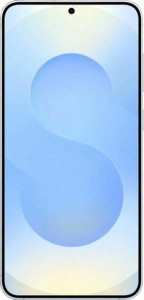
At the core connectivity level, these two devices are well matched — both support 5G, Wi-Fi 7, NFC, USB 3.2 Type-C, GPS, and Galileo positioning. Bluetooth versions are nearly identical at 5.3 on the Pixel 10 Pro Fold and 5.4 on the Galaxy S25, a difference too minor to have any practical impact. The SIM situation is more meaningful: the S25 accommodates 2 physical SIMs plus 2 eSIMs, while the Fold offers only 1 SIM and 1 eSIM — a clear advantage for frequent travelers or users who maintain separate personal and work lines.
Safety and sensor features split the advantage in opposite directions. The Pixel 10 Pro Fold includes emergency SOS via satellite — the ability to send distress signals without any cellular or Wi-Fi coverage — a potentially life-saving capability the Galaxy S25 entirely lacks. The Fold also uses 3D facial recognition for biometric authentication, a more secure method than 2D face unlock. The Galaxy S25, meanwhile, includes a barometer absent on the Fold, which enables accurate altitude readings useful for fitness tracking, weather apps, and navigation in multi-story environments.
Neither device offers expandable storage, an infrared sensor, or a stylus. On balance, there is no single overall winner here — the choice hinges on priorities. The Galaxy S25 suits dual-SIM users and those who value environmental sensing, while the Pixel 10 Pro Fold is the stronger pick for users who want satellite emergency connectivity and more secure facial authentication.