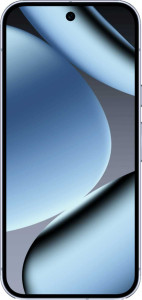
Google Pixel 10 Pro
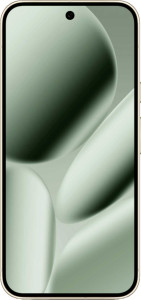
Google Pixel 10 Pro XL

Google Pixel 10 Pro Google Pixel 10 Pro XL

Overview

Choosing between the Google Pixel 10 Pro and the Google Pixel 10 Pro XL comes down to more than just screen size. Both phones share the same powerful Tensor G5 chipset, identical camera systems, and a consistent software experience — making this a comparison sharply focused on portability versus endurance. The key battlegrounds include display dimensions, battery capacity, and charging speeds: subtle but meaningful distinctions that could define your everyday experience.

Common Features

  • Both phones are waterproof with an IP68 ingress protection rating.
  • Neither phone has a rugged build.
  • Neither phone can be folded.
  • Both phones feature an OLED/AMOLED display with a 120Hz refresh rate.
  • Both phones share a typical brightness of 2200 nits.
  • Damage-resistant Gorilla Glass Victus 2 is present on both phones.
  • HDR10 support is available on both phones.
  • HDR10+ support is available on both phones.
  • Always-On Display is available on both phones.
  • Both phones are powered by the Google Tensor G5 chipset with 16GB of RAM and 1024GB of internal storage.
  • Both phones use the PowerVR DXT 48 1536 GPU running at 1100 MHz.
  • Both phones achieve a Geekbench 6 multi-core score of 5712 and a single-core score of 2267.
  • Both phones share the same triple-camera system at 50, 48, and 48 MP with optical image stabilization.
  • Both phones record video at up to 2160p at 60fps.
  • Both phones have a 42MP front camera.
  • Both phones run Android 15.
  • Clipboard warnings, location privacy options, and camera/microphone privacy options are available on both phones.
  • The ability to block app tracking is present on both phones, while cross-site tracking blocking is not available on either.
  • Mail Privacy Protection is not available on either phone.
  • Both phones support wireless charging, fast charging, and reverse wireless charging, but neither comes with a charger in the box.
  • Neither phone has a removable battery.
  • Neither phone has a 3.5mm audio jack, but both have stereo speakers and three microphones.
  • Both phones support aptX, aptX HD, and LDAC, but neither supports aptX Adaptive.
  • Neither phone has a built-in radio.
  • Both phones support 5G, Wi-Fi 7, Bluetooth 6, NFC, and USB Type-C 3.2.
  • Both phones use a single SIM plus one eSIM configuration and have no external memory slot.
  • Neither phone has a sapphire glass display, a curved display, or an e-paper display.
  • Both phones have a video light.

Main Differences

  • Weight is 204 g on the Google Pixel 10 Pro and 232 g on the Google Pixel 10 Pro XL.
  • Thickness is 8.6 mm on the Google Pixel 10 Pro and 8.5 mm on the Google Pixel 10 Pro XL.
  • Width is 72 mm on the Google Pixel 10 Pro and 76.6 mm on the Google Pixel 10 Pro XL.
  • Height is 152.8 mm on the Google Pixel 10 Pro and 162.8 mm on the Google Pixel 10 Pro XL.
  • Volume is 94.61376 cm³ on the Google Pixel 10 Pro and 105.99908 cm³ on the Google Pixel 10 Pro XL.
  • Screen size is 6.3″ on the Google Pixel 10 Pro and 6.8″ on the Google Pixel 10 Pro XL.
  • Pixel density is 495 ppi on the Google Pixel 10 Pro and 486 ppi on the Google Pixel 10 Pro XL.
  • Resolution is 1280 x 2856 px on the Google Pixel 10 Pro and 1344 x 2992 px on the Google Pixel 10 Pro XL.
  • Battery capacity is 4870 mAh on the Google Pixel 10 Pro and 5200 mAh on the Google Pixel 10 Pro XL.
  • Wired charging speed is 30W on the Google Pixel 10 Pro and 45W on the Google Pixel 10 Pro XL.
  • Wireless charging speed is 15W on the Google Pixel 10 Pro and 25W on the Google Pixel 10 Pro XL.
Specs Comparison
Google Pixel 10 Pro

Google Pixel 10 Pro

Google Pixel 10 Pro XL

Google Pixel 10 Pro XL

Design:
water resistance Waterproof Waterproof
weight 204 g 232 g
thickness 8.6 mm 8.5 mm
width 72 mm 76.6 mm
height 152.8 mm 162.8 mm
volume 94.61376 cm³ 105.99908 cm³
Ingress Protection (IP) rating IP68 IP68
has a rugged build
can be folded

The most defining physical difference between these two phones is size and weight. The Pixel 10 Pro is notably more compact, measuring 152.8 × 72 mm and weighing 204 g, while the Pixel 10 Pro XL stretches to 162.8 × 76.6 mm and tips the scale at 232 g — a full 28-gram difference. In practice, that gap is perceptible during prolonged use: the standard Pro is easier to grip one-handed, fits more pockets comfortably, and causes less wrist fatigue over the course of a day.

Thickness is the one dimension where the two phones are virtually indistinguishable — 8.6 mm vs 8.5 mm — so neither device has a meaningful slimness advantage. Both share an IP68 waterproof rating, meaning they offer the same level of protection against dust and sustained water immersion, and neither carries a rugged or foldable build. Durability parity is complete on paper.

The design edge goes to the Pixel 10 Pro for users who prioritize one-handed usability and portability, while the Pixel 10 Pro XL suits those who prefer a larger canvas and don't mind the added bulk — a trade-off that ultimately comes down to personal preference rather than any objective quality difference.

Display:
Display type OLED/AMOLED OLED/AMOLED
screen size 6.3" 6.8"
pixel density 495 ppi 486 ppi
resolution 1280 x 2856 px 1344 x 2992 px
refresh rate 120Hz 120Hz
brightness (typical) 2200 nits 2200 nits
has branded damage-resistant glass
Gorilla Glass version Gorilla Glass Victus 2 Gorilla Glass Victus 2
supports HDR10
supports HDR10+
Always-On Display
contrast ratio 2000000:1 2000000:1
Has a secondary screen
has a touch screen

Screen size is the headline difference here. The Pixel 10 Pro XL's 6.8″ panel gives it meaningfully more real estate than the Pixel 10 Pro's 6.3″ display — a gap that translates directly into more comfortable reading, better media consumption, and a more expansive experience in split-screen multitasking. The XL also carries a higher raw resolution (1344 × 2992 px vs 1280 × 2856 px), though both screens are sharp enough that the difference is imperceptible in daily use.

On pixel density, the standard Pro actually edges ahead at 495 ppi versus the XL's 486 ppi — a negligible real-world gap, but it confirms that neither phone sacrifices sharpness for screen size. Where the two are genuinely identical is everywhere else that matters most for display quality: both use OLED/AMOLED panels with a 120Hz refresh rate, peak brightness of 2200 nits, a 2,000,000:1 contrast ratio, HDR10+ support, Always-On Display, and Gorilla Glass Victus 2 protection. The viewing experience — color accuracy, smoothness, outdoor legibility, and durability — is essentially the same on both devices.

For display, the choice reduces to form factor preference rather than quality. Neither phone has a technical edge in panel performance; the Pixel 10 Pro XL simply offers more screen, which is an advantage only if you want it.

Performance:
internal storage 1024GB 1024GB
RAM 16GB 16GB
Chipset (SoC) name Google Tensor G5 Google Tensor G5
GPU name PowerVR DXT 48 1536 PowerVR DXT 48 1536
CPU speed 1 x 3.4 & 5 x 2.85 & 2 x 2.4 GHz 1 x 3.4 & 5 x 2.85 & 2 x 2.4 GHz
Geekbench 6 result (multi) 5712 5712
Geekbench 6 result (single) 2267 2267
GPU clock speed 1100 MHz 1100 MHz
Has integrated LTE
RAM speed 4200 MHz 4200 MHz
semiconductor size 3 nm 3 nm
Supports 64-bit
DirectX version DirectX 12 DirectX 12
Has integrated graphics
OpenGL ES version 3.2 3.2
Uses big.LITTLE technology
CPU threads 8 threads 8 threads
Has NX bit
Uses HMP
Has TrustZone
OpenCL version 2 2
maximum memory amount 16GB 16GB
DDR memory version 5 5

Under the hood, these two phones are identical in every measurable way. Both run on the Google Tensor G5 chipset built on a 3 nm process, paired with 16GB of DDR5 RAM clocked at 4200 MHz and 1TB of internal storage. The same 8-thread CPU configuration, the same PowerVR DXT 48 1536 GPU at 1100 MHz, and identical Geekbench 6 scores — 2267 single-core and 5712 multi-core — confirm there is zero performance differentiation between the two devices.

The 3 nm fabrication process is worth noting in context: it enables the Tensor G5 to deliver high computational throughput while keeping thermal output and power draw in check relative to larger nodes. DDR5 memory at 4200 MHz ensures snappy app loading and smooth multitasking headroom, and the big.LITTLE heterogeneous architecture means the chip can intelligently shift workloads between its performance and efficiency cores depending on demand.

Performance is a complete dead heat. No matter which model you choose, you are getting the exact same chip, the same memory subsystem, and the same benchmark results. This category offers no basis for differentiation — the decision between the Pixel 10 Pro and the Pixel 10 Pro XL must be made entirely on other grounds.

Cameras:
megapixels (main camera) 50 & 48 & 48 MP 50 & 48 & 48 MP
wide aperture (main camera) 1.68 & 1.7 & 2.8f 1.68 & 1.7 & 2.8f
Has a dual-lens (or multi-lens) main camera
megapixels (front camera) 42MP 42MP
has built-in optical image stabilization
video recording (main camera) 2160 x 60 fps 2160 x 60 fps
Has a dual-tone LED flash
number of flash LEDs 2 2
has a BSI sensor
has a CMOS sensor
has continuous autofocus when recording movies
Has phase-detection autofocus for photos
supports slow-motion video recording
has a built-in HDR mode
has manual exposure
has a flash
optical zoom 5x 5x
has manual ISO
has a serial shot mode
has manual focus
has a front camera
Has laser autofocus
has manual white balance
shoots raw
has touch autofocus
has manual shutter speed
can create panoramas in-camera
wide aperture (front camera) 2.2f 2.2f
Has timelapse function
Has a front-facing LED flash
has a dual-lens (or multi-lens) front camera
supports HDR10 recording
has a front-facing camera under the display
Has a RGB LED flash

Camera hardware is a mirror image across both phones. Each carries an identical triple-lens rear system at 50 + 48 + 48 MP, with apertures of f/1.68, f/1.70, and f/2.8 respectively, plus a 42 MP front camera at f/2.2. Optical image stabilization, laser autofocus, phase-detection autofocus, and 5x optical zoom are present on both, as is the ability to shoot 4K at 60fps, record in HDR10, and capture RAW files — a full professional-grade feature set shared equally.

The manual controls suite — ISO, shutter speed, white balance, focus, and exposure — is identical on both devices, making them equally capable for photographers who like to shoot with deliberate, hands-on settings. Slow motion, timelapse, continuous autofocus during video, and panorama mode round out a feature list that is, without exception, replicated exactly between the two models.

Cameras are another complete tie. Every spec, every feature, every capability is shared between the Pixel 10 Pro and the Pixel 10 Pro XL — the only camera-related difference a larger screen on the XL might offer is a more comfortable live viewfinder experience, but that falls under display, not optics. If camera quality is your primary purchase criterion, it provides no reason to choose one over the other.

Operating system:
Android version Android 15 Android 15
has clipboard warnings
has location privacy options
has camera/microphone privacy options
has Mail Privacy Protection
has theme customization
can block app tracking
blocks cross-site tracking
has on-device machine learning
has notification permissions
has media picker
Can play games while they download
has dark mode
has Wi-Fi password sharing
has battery health check
has an extra dim mode
has focus modes
has dynamic theming
can offload apps
Has customizable notifications
has Live Text
has full-page screenshots
supports split screen
gets direct OS updates
has PiP
Can be used as a PC
Has sharing intents
has a child lock
Supports widgets
Is free and open source
Has offline voice recognition
has voice commands
Tracks the current position of a mobile device
is a multi-user system
has Quick Start

Both phones ship with Android 15 and receive direct OS updates from Google — a meaningful advantage over Android devices that depend on a third-party manufacturer to relay updates, as it ensures faster access to security patches and new features. The software experience is otherwise identical across every single spec provided, covering privacy controls, productivity features, and system-level capabilities alike.

On the privacy front, both devices offer location controls, camera and microphone permissions management, app tracking blocks, and clipboard warnings — a solid baseline for users who are security-conscious. Notably, neither phone supports cross-site tracking protection or Wi-Fi password sharing, and both lack focus modes, so those absences apply equally to each model. On-device machine learning, offline voice recognition, and Live Text round out a capable AI and accessibility feature set that is shared in full.

As with performance and cameras, the operating system category is an exact tie — every feature flag is identical. The software you get on the Pixel 10 Pro is precisely the software you get on the Pixel 10 Pro XL, which means this category contributes nothing to the buying decision. Your choice between the two continues to rest entirely on the physical differences covered elsewhere.

Battery:
battery power 4870 mAh 5200 mAh
has wireless charging
Supports fast charging
charging speed 30W 45W
wireless charging speed 15W 25W
has reverse wireless charging
comes with a charger
has a removable battery
has a battery level indicator
has a rechargeable battery

Battery is one of the few categories where these two phones genuinely diverge. The Pixel 10 Pro XL carries a 5200 mAh cell versus the standard Pro's 4870 mAh — a 330 mAh difference that, while not dramatic, translates to a moderate but real endurance advantage under sustained use. The XL's larger body directly enables this bigger battery, making the size trade-off from the Design category slightly more meaningful for heavy users who regularly push through a full day.

The charging gap is more striking. The XL supports 45W wired fast charging compared to the Pro's 30W, meaning the larger phone can actually replenish power considerably faster despite its bigger cell. Wireless charging follows the same pattern — 25W on the XL versus 15W on the Pro — a difference that adds up noticeably during daily top-ups. Both phones support reverse wireless charging, arrive without a charger in the box, and have non-removable batteries, so those points are equal.

Battery is a clear win for the Pixel 10 Pro XL across every relevant metric: more capacity, faster wired charging, and faster wireless charging. For users who prioritize longevity and quick refueling, this category alone may tip the scales toward the larger model.

Audio:
has a socket for a 3.5 mm audio jack
has stereo speakers
has aptX
has LDAC
has aptX HD
has aptX Adaptive
Has a radio
number of microphones 3 3

Audio hardware is shared completely between the two phones. Both feature stereo speakers, a 3-microphone array for voice capture and noise isolation, and support for aptX, aptX HD, and LDAC Bluetooth audio codecs — covering high-fidelity wireless audio for the vast majority of premium headphones and earbuds on the market. Neither device includes a 3.5mm headphone jack or FM radio, and neither supports aptX Adaptive, the newer low-latency variant.

The codec support is worth contextualizing: LDAC in particular enables wireless transmission at up to three times the data rate of standard Bluetooth audio, making it the preferred choice for listeners using high-resolution audio sources with compatible headphones. Having aptX HD alongside it gives broad compatibility across a wide range of quality wireless audio gear. The absence of aptX Adaptive is a minor omission but applies equally to both devices.

Audio is yet another tie. Every speaker, microphone, and codec spec is identical, leaving no grounds for differentiation. Neither phone holds any audio advantage over the other.

Connectivity & Features:
release date August 2025 August 2025
has 5G support
Wi-Fi version Wi-Fi 6E (802.11ax), Wi-Fi 6 (802.11ax), Wi-Fi 5 (802.11ac), Wi-Fi 4 (802.11n), Wi-Fi 7 (802.11be) Wi-Fi 6E (802.11ax), Wi-Fi 6 (802.11ax), Wi-Fi 5 (802.11ac), Wi-Fi 4 (802.11n), Wi-Fi 7 (802.11be)
SIM cards 1 SIM, 1 eSIM 1 SIM, 1 eSIM
Bluetooth version 6 6
has an external memory slot
Has USB Type-C
USB version 3.2 3.2
has NFC
Has a fingerprint scanner
has emergency SOS via satellite
has crash detection
has a gyroscope
supports ANT+
Has a heart rate monitor
has GPS
has a compass
supports Wi-Fi
Has an infrared sensor
has an accelerometer
has a cellular module
Has a barometer
has an HDMI output
Uses 3D facial recognition
Has an iris scanner
Stylus included
supports Galileo
Has motion tracking
Has optical tracking
Has a built-in projector

Connectivity specs are identical across both phones, and the shared feature set is impressively modern. Both support Wi-Fi 7 (802.11be) — the latest generation, offering significantly higher throughput and lower latency than Wi-Fi 6E in compatible network environments — alongside Bluetooth 6, which brings improved connection stability and ranging accuracy over its predecessors. 5G, NFC, USB 3.2 Type-C, and a hybrid SIM tray with one physical SIM and one eSIM round out a thoroughly current wireless stack.

On the safety and sensor side, both devices include emergency SOS via satellite and crash detection — features that have real-world significance for users in areas with poor cellular coverage or those who travel frequently. The sensor suite — gyroscope, accelerometer, barometer, compass, and GPS with Galileo support — is equally matched, providing a solid foundation for navigation, fitness, and environmental awareness applications.

Connectivity and features produce yet another complete tie. Every radio, every sensor, every safety feature is shared without exception. As has been the pattern across most of this comparison, the Pixel 10 Pro and Pixel 10 Pro XL are fundamentally the same device from a features standpoint — the differentiators remain physical: size, weight, display area, and battery capacity.

Miscellaneous:
has a video light
Has sapphire glass display
Has a curved display
Has an e-paper display

The miscellaneous category covers a small set of display and hardware traits, and both phones share every one of them. Neither features a sapphire glass display or a curved screen — opting instead for the flat Gorilla Glass Victus 2 protection already noted in the Display group — and neither incorporates an e-paper panel or secondary display technology. Both include a video light, which aids in low-light video recording scenarios.

This is a minimal data set with no differentiating value. The specs here are fully matched, and none of the absent features — sapphire glass, curved display — represent a meaningful omission given that both phones are equally without them. No edge exists for either model in this category.

Comparison Summary & Verdict

After examining every specification, the choice between the Google Pixel 10 Pro and the Google Pixel 10 Pro XL comes down firmly to your lifestyle. Both phones deliver identical performance through the Tensor G5 chipset, the same triple-camera array, and a unified Android 15 software experience. Where they diverge is in form and stamina: the Pixel 10 Pro, weighing just 204 g with a 6.3″ display and a slightly higher pixel density of 495 ppi, is the more compact and pocketable choice. The Pixel 10 Pro XL responds with a larger 5200 mAh battery, considerably faster 45W wired and 25W wireless charging, and a roomier 6.8″ screen — making it the stronger pick for power users and media enthusiasts who prioritize longevity and screen real estate over a lighter footprint.

Google Pixel 10 Pro
Buy Google Pixel 10 Pro if...

Buy the Google Pixel 10 Pro if you prefer a lighter, more compact phone that fits comfortably in hand and pocket without any compromise on performance or camera quality.

Google Pixel 10 Pro XL
Buy Google Pixel 10 Pro XL if...

Choose the Google Pixel 10 Pro XL if you need a larger display, a bigger battery, and faster wired and wireless charging to power through heavy daily use.