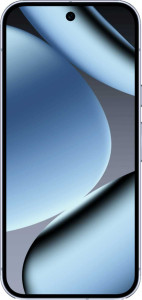
Google Pixel 10 Pro
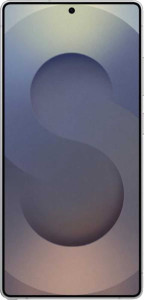
Samsung Galaxy S25 Ultra

Google Pixel 10 Pro Samsung Galaxy S25 Ultra

Overview

When it comes to choosing between the Google Pixel 10 Pro and the Samsung Galaxy S25 Ultra, two of Android's most compelling flagships go head-to-head across some fiercely contested ground. From raw processing power and display quality to camera versatility and everyday usability, these two phones take meaningfully different approaches to the premium smartphone experience. Whether you care most about performance benchmarks, camera hardware, battery and charging, or software features, this in-depth spec comparison will help you decide which device truly fits your needs.

Common Features

  • Both phones are waterproof with an IP68 ingress protection rating.
  • Neither phone has a rugged build.
  • Neither phone can be folded.
  • Both phones feature an OLED/AMOLED display type.
  • Both phones support a 120Hz refresh rate.
  • Both phones have branded damage-resistant glass.
  • HDR10 support is available on both phones.
  • HDR10+ support is available on both phones.
  • Always-On Display is available on both phones.
  • Neither phone has a secondary screen.
  • Both phones have a touchscreen.
  • Both phones have 1024GB of internal storage.
  • Both phones have integrated LTE.
  • Both phones are built on a 3 nm semiconductor process.
  • Both phones support 64-bit processing.
  • Both phones support DirectX 12.
  • Both phones have integrated graphics.
  • Both phones use big.LITTLE technology.
  • Both phones run Android 15.
  • Both phones have clipboard warnings, location privacy options, and camera/microphone privacy options.
  • Neither phone has Mail Privacy Protection.
  • Both phones support theme customization and can block app tracking.
  • Both phones have on-device machine learning.
  • Both phones support wireless charging at 15W.
  • Both phones support fast charging.
  • Both phones support reverse wireless charging.
  • Neither phone comes with a charger in the box.
  • Neither phone has a removable battery.
  • Both phones have a battery level indicator and a rechargeable battery.
  • Neither phone has a 3.5mm audio jack.
  • Both phones have stereo speakers.
  • Both phones support aptX, LDAC, and aptX HD audio codecs.
  • Neither phone supports aptX Adaptive or aptX Lossless.
  • Neither phone has a radio.
  • Both phones support 5G connectivity.
  • Neither phone has an external memory slot.
  • Both phones have USB Type-C with USB 3.2.
  • Both phones have NFC.
  • Both phones have a fingerprint scanner.
  • Both phones have a gyroscope.
  • Neither phone has a heart rate monitor.
  • Both phones have a video light.
  • Neither phone has a sapphire glass display.
  • Neither phone has a curved display.
  • Neither phone has an e-paper display.
  • Both phones have a multi-lens main camera with built-in optical image stabilization.
  • Both phones have a dual-tone LED flash with 2 LEDs.
  • Both phones have a BSI and CMOS sensor.
  • Both phones support continuous autofocus and phase-detection autofocus when recording.

Main Differences

  • Weight is 204g on the Google Pixel 10 Pro and 218g on the Samsung Galaxy S25 Ultra.
  • Thickness is 8.6mm on the Google Pixel 10 Pro and 8.2mm on the Samsung Galaxy S25 Ultra.
  • Width is 72mm on the Google Pixel 10 Pro and 77.6mm on the Samsung Galaxy S25 Ultra.
  • Height is 152.8mm on the Google Pixel 10 Pro and 162.8mm on the Samsung Galaxy S25 Ultra.
  • Volume is 94.61cm³ on the Google Pixel 10 Pro and 103.59cm³ on the Samsung Galaxy S25 Ultra.
  • Screen size is 6.3″ on the Google Pixel 10 Pro and 6.9″ on the Samsung Galaxy S25 Ultra.
  • Resolution is 1280x2856px on the Google Pixel 10 Pro and 1440x3120px on the Samsung Galaxy S25 Ultra.
  • Typical brightness is 2200 nits on the Google Pixel 10 Pro and 2600 nits on the Samsung Galaxy S25 Ultra.
  • The Google Pixel 10 Pro uses Gorilla Glass Victus 2, while the Samsung Galaxy S25 Ultra uses Gorilla Armor 2.
  • Contrast ratio is 2,000,000:1 on the Google Pixel 10 Pro and 3,000,000:1 on the Samsung Galaxy S25 Ultra.
  • RAM is 16GB on the Google Pixel 10 Pro and 12GB on the Samsung Galaxy S25 Ultra.
  • The Google Pixel 10 Pro is powered by the Google Tensor G5 chipset, while the Samsung Galaxy S25 Ultra uses the Qualcomm Snapdragon 8 Elite.
  • AnTuTu benchmark score is 961,489 on the Google Pixel 10 Pro and 2,207,809 on the Samsung Galaxy S25 Ultra.
  • Geekbench 6 multi-core score is 5,712 on the Google Pixel 10 Pro and 9,846 on the Samsung Galaxy S25 Ultra.
  • Geekbench 6 single-core score is 2,267 on the Google Pixel 10 Pro and 3,057 on the Samsung Galaxy S25 Ultra.
  • RAM speed is 4200MHz on the Google Pixel 10 Pro and 5300MHz on the Samsung Galaxy S25 Ultra.
  • Maximum memory is 16GB on the Google Pixel 10 Pro and 24GB on the Samsung Galaxy S25 Ultra.
  • The main camera megapixels are 50+48+48MP on the Google Pixel 10 Pro and 200+50+50+10MP on the Samsung Galaxy S25 Ultra.
  • The front camera is 42MP on the Google Pixel 10 Pro and 12MP on the Samsung Galaxy S25 Ultra.
  • Main camera video recording goes up to 2160p at 60fps on the Google Pixel 10 Pro and up to 4320p at 30fps on the Samsung Galaxy S25 Ultra.
  • Cross-site tracking blocking is present on the Samsung Galaxy S25 Ultra but not available on the Google Pixel 10 Pro.
  • Wi-Fi password sharing is available on the Samsung Galaxy S25 Ultra but not on the Google Pixel 10 Pro.
  • Focus modes are available on the Samsung Galaxy S25 Ultra but not on the Google Pixel 10 Pro.
  • The Google Pixel 10 Pro receives direct OS updates, while the Samsung Galaxy S25 Ultra does not.
  • The Samsung Galaxy S25 Ultra can be used as a PC, while the Google Pixel 10 Pro cannot.
  • Battery capacity is 4870mAh on the Google Pixel 10 Pro and 5000mAh on the Samsung Galaxy S25 Ultra.
  • Wired charging speed is 30W on the Google Pixel 10 Pro and 45W on the Samsung Galaxy S25 Ultra.
  • The Google Pixel 10 Pro supports 1 SIM and 1 eSIM, while the Samsung Galaxy S25 Ultra supports 2 SIMs and 2 eSIMs.
  • Bluetooth version is 6 on the Google Pixel 10 Pro and 5.4 on the Samsung Galaxy S25 Ultra.
  • Emergency SOS via satellite is available on the Google Pixel 10 Pro but not on the Samsung Galaxy S25 Ultra.
  • Crash detection is available on the Google Pixel 10 Pro but not on the Samsung Galaxy S25 Ultra.
  • ANT+ support is present on the Samsung Galaxy S25 Ultra but not on the Google Pixel 10 Pro.
  • A stylus is included with the Samsung Galaxy S25 Ultra but not with the Google Pixel 10 Pro.
  • Head SAR (US) is 0.99W/kg on the Google Pixel 10 Pro and 1.26W/kg on the Samsung Galaxy S25 Ultra.
  • Body SAR (US) is 1.39W/kg on the Google Pixel 10 Pro and 0.64W/kg on the Samsung Galaxy S25 Ultra.
Specs Comparison
Google Pixel 10 Pro

Google Pixel 10 Pro

Samsung Galaxy S25 Ultra

Samsung Galaxy S25 Ultra

Design:
water resistance Waterproof Waterproof
weight 204 g 218 g
thickness 8.6 mm 8.2 mm
width 72 mm 77.6 mm
height 152.8 mm 162.8 mm
volume 94.61376 cm³ 103.592896 cm³
Ingress Protection (IP) rating IP68 IP68
has a rugged build
can be folded

Both the Google Pixel 10 Pro and the Samsung Galaxy S25 Ultra share the same IP68 waterproof rating, meaning neither has an edge in water and dust resistance — both can handle submersion under typical conditions equally well.

Where they diverge is in physical footprint and feel. The Pixel 10 Pro is notably more compact: at 152.8 × 72 mm and 204 g, it is shorter, narrower, and lighter than the S25 Ultra's 162.8 × 77.6 mm frame and 218 g weight. That 14 g difference and the tighter width translate to a phone that is meaningfully easier to grip one-handed and less fatiguing during extended use. The S25 Ultra, in turn, is marginally thinner at 8.2 mm versus 8.6 mm, but the difference is barely perceptible in-hand.

For users who prioritize pocketability and one-handed comfort, the Pixel 10 Pro has a clear design edge. The S25 Ultra's larger volume — 103.6 cm³ versus 94.6 cm³ — is a trade-off that typically accommodates a larger display and battery, but purely from a design ergonomics standpoint, the Pixel 10 Pro is the more manageable device.

Display:
Display type OLED/AMOLED OLED/AMOLED
screen size 6.3" 6.9"
pixel density 495 ppi 498 ppi
resolution 1280 x 2856 px 1440 x 3120 px
refresh rate 120Hz 120Hz
brightness (typical) 2200 nits 2600 nits
has branded damage-resistant glass
Gorilla Glass version Gorilla Glass Victus 2 Gorilla Armor 2
supports HDR10
supports HDR10+
Always-On Display
contrast ratio 2000000:1 3000000:1
Has a secondary screen
has a touch screen

Both phones use OLED/AMOLED panels with 120Hz refresh rates, HDR10+ support, and Always-On Display — so the baseline experience is strong on either device. The meaningful separation comes down to scale and peak visual quality. The S25 Ultra's 6.9″ screen versus the Pixel 10 Pro's 6.3″ is a significant real-world difference: more content fits on screen, media feels more immersive, and productivity tasks like split-screen multitasking are far more comfortable.

On raw display quality, the S25 Ultra also pulls ahead in two measurable ways. Its 2600 nits typical brightness outpaces the Pixel 10 Pro's 2200 nits, which matters most under direct sunlight where legibility can degrade quickly. Its contrast ratio of 3,000,000:1 versus 2,000,000:1 means deeper blacks and more punch in HDR content — a difference that is visible in dark scenes and high-contrast imagery. Pixel density is effectively identical at 498 ppi versus 495 ppi, so sharpness is a non-factor in this comparison.

The Pixel 10 Pro counters with Gorilla Glass Victus 2, a well-established drop-protection standard, while the S25 Ultra uses Gorilla Armor 2, which adds anti-reflective properties on top of impact resistance. Overall, the S25 Ultra holds a clear display advantage — brighter, larger, higher contrast, and with superior glass — making it the stronger choice for anyone who prioritizes screen experience.

Performance:
internal storage 1024GB 1024GB
RAM 16GB 12GB
AnTuTu benchmark score 961489 2207809
Chipset (SoC) name Google Tensor G5 Qualcomm Snapdragon 8 Elite
GPU name PowerVR DXT 48 1536 Adreno 830
CPU speed 1 x 3.4 & 5 x 2.85 & 2 x 2.4 GHz 2 x 4.47 & 6 x 3.53 GHz
Geekbench 6 result (multi) 5712 9846
Geekbench 6 result (single) 2267 3057
GPU clock speed 1100 MHz 1200 MHz
Has integrated LTE
RAM speed 4200 MHz 5300 MHz
semiconductor size 3 nm 3 nm
Supports 64-bit
DirectX version DirectX 12 DirectX 12
Has integrated graphics
OpenGL ES version 3.2 3.2
Uses big.LITTLE technology
CPU threads 8 threads 8 threads
Uses HMP
Has TrustZone
OpenCL version 2 3
maximum memory amount 16GB 24GB
DDR memory version 5 5

The raw benchmark numbers here tell a stark story. The S25 Ultra's Qualcomm Snapdragon 8 Elite chip scores 2,207,809 on AnTuTu versus the Pixel 10 Pro's 961,489 on its Google Tensor G5 — a gap of over 2x. Geekbench 6 results reinforce this: the S25 Ultra leads in both single-core (3057 vs 2267) and multi-core (9846 vs 5712) performance. In practical terms, this translates to faster app launches, smoother handling of computationally intensive tasks, and greater headroom for demanding workloads like video editing, gaming, and AI-driven processing.

The RAM picture adds another dimension. The Pixel 10 Pro ships with 16 GB of RAM at 4200 MHz, while the S25 Ultra carries 12 GB at a faster 5300 MHz with a higher maximum ceiling of 24 GB. In day-to-day multitasking, the Pixel 10 Pro's larger RAM pool means more apps can stay resident in memory simultaneously — a genuine advantage for heavy multitaskers. However, the S25 Ultra's faster memory speed helps offset the capacity deficit by feeding its more powerful CPU cores more efficiently. Both max out at 1024 GB of internal storage, so there is no difference there.

The S25 Ultra also edges ahead with OpenCL 3 support versus the Pixel 10 Pro's OpenCL 2, which is relevant for GPU-accelerated compute tasks. On pure processing power, the S25 Ultra holds a commanding and clear performance advantage. The Pixel 10 Pro's extra RAM keeps it competitive for multitasking, but cannot close the CPU and GPU performance gap demonstrated across multiple benchmarks.

Cameras:
megapixels (main camera) 50 & 48 & 48 MP 200 & 50 & 50 & 10 MP
wide aperture (main camera) 1.68 & 1.7 & 2.8f 1.7 & 3.4 & 1.9 & 2.4f
Has a dual-lens (or multi-lens) main camera
megapixels (front camera) 42MP 12MP
has built-in optical image stabilization
video recording (main camera) 2160 x 60 fps 4320 x 30 fps
Has a dual-tone LED flash
number of flash LEDs 2 2
has a BSI sensor
has a CMOS sensor
has continuous autofocus when recording movies
Has phase-detection autofocus for photos
supports slow-motion video recording
has a built-in HDR mode
has manual exposure
has a flash
optical zoom 5x 5x
has manual ISO
has a serial shot mode
has manual focus
has a front camera
Has laser autofocus
has manual white balance
shoots raw
has touch autofocus
has manual shutter speed
can create panoramas in-camera
wide aperture (front camera) 2.2f 2.2f
Has timelapse function
Has a front-facing LED flash
has a dual-lens (or multi-lens) front camera
supports HDR10 recording
has a front-facing camera under the display
Has a RGB LED flash

The rear camera systems reveal a fundamental difference in philosophy. The S25 Ultra deploys a four-lens array led by a 200 MP main sensor, adding dedicated coverage and flexibility that the Pixel 10 Pro's three-lens setup cannot match on paper. The Pixel 10 Pro's main sensor tops out at 50 MP, but its trio of lenses — including two 48 MP sensors — keeps resolution competitive across focal lengths. Both phones share the same 5x optical zoom, so telephoto reach is equal, and both offer OIS, phase-detection and laser autofocus, RAW shooting, and the full suite of manual controls — the fundamentals are evenly matched.

Video is where another clear gap emerges. The S25 Ultra is capable of recording at 8K (4320p) at 30 fps, while the Pixel 10 Pro maxes out at 4K (2160p) at 60 fps. For most users, 4K/60fps is more than sufficient and actually more practical for smooth motion capture, but creators who need maximum resolution for cropping or future-proofing will find the S25 Ultra's ceiling meaningfully higher.

The front camera comparison flips the script: the Pixel 10 Pro's 42 MP selfie sensor is a substantial upgrade over the S25 Ultra's 12 MP, which matters for those who shoot a lot of selfies or use the front camera for video calls where detail and crop flexibility are valued. Overall, the S25 Ultra holds an edge in rear camera versatility and peak video resolution, while the Pixel 10 Pro counters with a considerably more capable front camera — making the ″winner″ here dependent on how and what you shoot most.

Operating system:
Android version Android 15 Android 15
has clipboard warnings
has location privacy options
has camera/microphone privacy options
has Mail Privacy Protection
has theme customization
can block app tracking
blocks cross-site tracking
has on-device machine learning
has notification permissions
has media picker
Can play games while they download
has dark mode
has Wi-Fi password sharing
has battery health check
has an extra dim mode
has focus modes
has dynamic theming
can offload apps
Has customizable notifications
has Live Text
has full-page screenshots
supports split screen
gets direct OS updates
has PiP
Can be used as a PC
Has sharing intents
has a child lock
Supports widgets
Is free and open source
Has offline voice recognition
has voice commands
Tracks the current position of a mobile device
is a multi-user system
has Quick Start

Running the same Android 15 base, both phones share an extensive and nearly identical feature set — dark mode, dynamic theming, split-screen, widgets, PiP, offline voice recognition, on-device machine learning, and a robust suite of privacy controls are all present on both. The overlap is so significant that for the vast majority of daily use cases, the software experience will feel closely matched.

The differences that do exist are worth noting. The S25 Ultra adds cross-site tracking blocking, Wi-Fi password sharing, focus modes, and the ability to be used as a PC — a desktop mode feature that lets power users connect to a monitor and work in a more traditional computing environment. These are all meaningful quality-of-life additions that the Pixel 10 Pro lacks according to the provided data. On the other side, the Pixel 10 Pro holds one important structural advantage: it gets direct OS updates, meaning it receives Android updates straight from Google without an intermediary. The S25 Ultra does not have this flag set, indicating updates are mediated through Samsung's own release process, which can introduce delays.

For most users, the S25 Ultra's extra feature set gives it a modest software edge in day-to-day versatility. However, for those who prioritize receiving security patches and OS updates as quickly as possible, the Pixel 10 Pro's direct OS update pipeline is a meaningful advantage — one that compounds in value over the device's lifespan.

Battery:
battery power 4870 mAh 5000 mAh
has wireless charging
Supports fast charging
charging speed 30W 45W
wireless charging speed 15W 15W
has reverse wireless charging
comes with a charger
has a removable battery
has a battery level indicator
has a rechargeable battery

The Google Pixel 10 Pro and Samsung Galaxy S25 Ultra both offer robust battery features, including wireless charging, fast charging, and reverse wireless charging. The Pixel 10 Pro has a 4870 mAh battery, while the Galaxy S25 Ultra features a slightly larger 5000 mAh battery. Both phones support wireless charging at a speed of 15W and have fast charging capabilities, with the Pixel 10 Pro offering 30W charging speed and the Galaxy S25 Ultra supporting 45W, allowing for faster charging on the latter.

Neither device includes a charger in the box, and both have non-removable rechargeable batteries. Both phones also feature a battery level indicator to track the remaining charge. Additionally, both the Pixel 10 Pro and Galaxy S25 Ultra support reverse wireless charging, allowing them to charge other devices wirelessly.

In summary, while both phones share similar battery features, the Galaxy S25 Ultra has a slightly larger battery capacity and a faster charging speed at 45W compared to the Pixel 10 Pro's 30W.

Audio:
has a socket for a 3.5 mm audio jack
has stereo speakers
has aptX
has LDAC
has aptX HD
has aptX Adaptive
has aptX Lossless
Has a radio
number of microphones 3 3

Both the Google Pixel 10 Pro and Samsung Galaxy S25 Ultra lack a 3.5 mm audio jack but are equipped with stereo speakers for an enhanced audio experience. In terms of audio technology, both phones support aptX, LDAC, and aptX HD, ensuring high-quality wireless audio. However, neither device supports aptX Adaptive or aptX Lossless.

Both devices also feature three microphones, which help with capturing clearer audio during calls and recording. Additionally, neither phone includes an FM radio, which may be a drawback for users who enjoy traditional radio listening.

In summary, both the Pixel 10 Pro and Galaxy S25 Ultra offer similar audio capabilities, with support for high-end wireless audio codecs, stereo speakers, and multiple microphones, but they do not support the 3.5 mm audio jack or FM radio.

Connectivity & Features:
release date August 2025 January 2025
has 5G support
Wi-Fi version Wi-Fi 6E (802.11ax), Wi-Fi 6 (802.11ax), Wi-Fi 5 (802.11ac), Wi-Fi 4 (802.11n), Wi-Fi 7 (802.11be) Wi-Fi 4 (802.11n), Wi-Fi 6 (802.11ax), Wi-Fi 5 (802.11ac), Wi-Fi 7 (802.11be), Wi-Fi 6E (802.11ax)
SIM cards 1 SIM, 1 eSIM 2 SIM, 2 eSIM
Bluetooth version 6 5.4
has an external memory slot
Has USB Type-C
USB version 3.2 3.2
has NFC
Has a fingerprint scanner
has emergency SOS via satellite
has crash detection
has a gyroscope
supports ANT+
Has a heart rate monitor
has GPS
has a compass
supports Wi-Fi
Has an infrared sensor
Head SAR (US) 0.99W/kg 1.26W/kg
Body SAR (US) 1.39W/kg 0.64W/kg
Head SAR (EU) 0.99W/kg 1.25W/kg
Body SAR (EU) 0.99W/kg 1.42W/kg
has an accelerometer
has a cellular module
Has a barometer
has an HDMI output
Uses 3D facial recognition
Has an iris scanner
Stylus included
supports Galileo
Has motion tracking
Has optical tracking
Has a built-in projector

The Google Pixel 10 Pro and Samsung Galaxy S25 Ultra both offer 5G support, ensuring fast network speeds. The Pixel 10 Pro supports Wi-Fi 6E, Wi-Fi 6, Wi-Fi 5, Wi-Fi 4, and Wi-Fi 7, while the Galaxy S25 Ultra supports Wi-Fi 6, Wi-Fi 5, Wi-Fi 4, Wi-Fi 7, and Wi-Fi 6E, with both devices offering a range of connectivity options. In terms of SIM cards, the Pixel 10 Pro supports 1 SIM and 1 eSIM, whereas the S25 Ultra supports 2 SIMs and 2 eSIMs, providing more flexibility for users needing multiple numbers or networks.

Both phones are equipped with USB Type-C, Bluetooth (version 6 on the Pixel 10 Pro and version 5.4 on the Galaxy S25 Ultra), NFC, and have fingerprint scanners for security. However, the Galaxy S25 Ultra supports ANT+, while the Pixel 10 Pro does not. The Pixel 10 Pro has emergency SOS via satellite and crash detection, which the Galaxy S25 Ultra lacks.

Other features like GPS, a compass, accelerometer, barometer, and gyroscope are available on both devices. The Pixel 10 Pro supports Galileo, while the S25 Ultra does as well. The S25 Ultra includes support for motion tracking, but the Pixel 10 Pro does not. Both devices lack a built-in projector, HDMI output, and an infrared sensor, and neither includes 3D facial recognition or an iris scanner. The Galaxy S25 Ultra also comes with a stylus, which the Pixel 10 Pro does not offer.

Miscellaneous:
has a video light
Has sapphire glass display
Has a curved display
Has an e-paper display

Both the Google Pixel 10 Pro and Samsung Galaxy S25 Ultra are equipped with a video light, making them suitable for low-light video recording. Neither device features sapphire glass displays, curved displays, or e-paper displays, which means their screens are not designed with these specific materials or display types.

In summary, both phones share similar miscellaneous features, offering a video light for enhanced video functionality, but they lack more specialized screen technologies such as sapphire glass, curved displays, or e-paper displays.

Comparison Summary & Verdict

After a thorough comparison, both phones earn their flagship status but cater to distinct users. The Google Pixel 10 Pro stands out with its lighter and more compact build, a higher-resolution 42MP front camera, direct OS updates, Bluetooth 6, emergency SOS via satellite, and crash detection — making it an excellent choice for users who value a manageable form factor and tight software integration. The Samsung Galaxy S25 Ultra, on the other hand, dominates in raw performance with its Snapdragon 8 Elite chipset and significantly higher benchmark scores, offers a larger and brighter display with a superior contrast ratio, faster 45W wired charging, a 200MP quad-camera system with 8K video, an included S Pen stylus, and a broader feature set including PC mode and focus modes. For power users and content creators who want the absolute best in performance and versatility, the S25 Ultra is the clear pick. For those who prefer a compact, well-rounded daily driver with seamless software updates, the Pixel 10 Pro is the smarter choice.

Google Pixel 10 Pro
Buy Google Pixel 10 Pro if...

Buy the Google Pixel 10 Pro if you prefer a lighter, more compact design with direct OS updates, emergency SOS via satellite, crash detection, and a superior front camera for selfies and video calls.

Samsung Galaxy S25 Ultra
Buy Samsung Galaxy S25 Ultra if...

Buy the Samsung Galaxy S25 Ultra if you want class-leading performance, a larger and brighter display, faster wired charging, a versatile 200MP quad-camera system with 8K video recording, and the productivity boost of an included stylus.