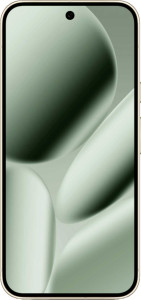
Google Pixel 10 Pro XL
Honor Magic V Flip 2

Google Pixel 10 Pro XL Honor Magic V Flip 2

Overview

In this in-depth comparison between the Google Pixel 10 Pro XL and the Honor Magic V Flip 2, two very different philosophies of modern smartphone design go head to head. From the Pixel's traditional slab form factor with its advanced camera system to the Flip 2's foldable design and rapid charging capabilities, these two devices target distinct types of users. Join us as we examine their display quality, performance benchmarks, camera versatility, battery life, and connectivity to help you decide which one fits your lifestyle.

Common Features

  • Neither product has a rugged build.
  • Both products have an OLED/AMOLED display type.
  • Both products support a 120Hz refresh rate.
  • HDR10 support is available on both products.
  • HDR10+ support is available on both products.
  • Both products have a touch screen.
  • Both products come with 1024GB of internal storage.
  • Both products have 16GB of RAM.
  • Both products have integrated LTE.
  • Both products support 64-bit processing.
  • Both products support DirectX 12.
  • Both products have integrated graphics.
  • Both products use big.LITTLE technology.
  • Both products have a multi-lens main camera.
  • Both products have built-in optical image stabilization.
  • Both products have 2 flash LEDs.
  • Both products have a CMOS sensor.
  • Both products support continuous autofocus when recording movies.
  • Both products have phase-detection autofocus for photos.
  • Both products support slow-motion video recording.
  • Both products have a built-in HDR mode.
  • Both products run Android 15.
  • Both products have clipboard warnings.
  • Both products have location privacy options.
  • Both products have camera and microphone privacy options.
  • Mail Privacy Protection is not available on either product.
  • Both products have theme customization.
  • Both products can block app tracking.
  • Cross-site tracking is not blocked on either product.
  • Both products support wireless charging.
  • Both products support fast charging.
  • Neither product has a removable battery.
  • Both products have a battery level indicator.
  • Both products have a rechargeable battery.
  • Neither product has a 3.5mm audio jack.
  • Both products have stereo speakers.
  • Both products support aptX.
  • Both products support aptX HD.
  • aptX Adaptive is not available on either product.
  • Neither product has a radio.
  • Both products support 5G.
  • Neither product has an external memory slot.
  • Both products have USB Type-C.
  • Both products have NFC.
  • Both products have a fingerprint scanner.
  • Both products have a gyroscope.
  • ANT+ support is not available on either product.
  • Neither product has a heart rate monitor.
  • Both products have a video light.
  • Neither product has a sapphire glass display.
  • Neither product has a curved display.
  • Neither product has an e-paper display.

Main Differences

  • Water resistance is rated as waterproof on Google Pixel 10 Pro XL and water resistant on Honor Magic V Flip 2.
  • Weight is 232g on Google Pixel 10 Pro XL and 204g on Honor Magic V Flip 2.
  • Thickness is 8.5mm on Google Pixel 10 Pro XL and 6.9mm on Honor Magic V Flip 2.
  • Width is 76.6mm on Google Pixel 10 Pro XL and 75.6mm on Honor Magic V Flip 2.
  • Height is 162.8mm on Google Pixel 10 Pro XL and 167.1mm on Honor Magic V Flip 2.
  • Volume is 105.99908 cm³ on Google Pixel 10 Pro XL and 87.166044 cm³ on Honor Magic V Flip 2.
  • The IP rating is IP68 on Google Pixel 10 Pro XL and IP58 on Honor Magic V Flip 2.
  • The Honor Magic V Flip 2 can be folded, while the Google Pixel 10 Pro XL cannot.
  • Screen size is 6.8″ on Google Pixel 10 Pro XL and 6.82″ on Honor Magic V Flip 2.
  • Pixel density is 486 ppi on Google Pixel 10 Pro XL and 458 ppi on Honor Magic V Flip 2.
  • Resolution is 1344 x 2992 px on Google Pixel 10 Pro XL and 1232 x 2868 px on Honor Magic V Flip 2.
  • Damage-resistant glass branding is present on Google Pixel 10 Pro XL but not on Honor Magic V Flip 2.
  • Always-On Display is available on Google Pixel 10 Pro XL but not on Honor Magic V Flip 2.
  • A secondary screen is present on Honor Magic V Flip 2 but not on Google Pixel 10 Pro XL.
  • The GPU is PowerVR DXT 48 1536 on Google Pixel 10 Pro XL and Adreno 750 on Honor Magic V Flip 2.
  • CPU speed is 1 x 3.4 & 5 x 2.85 & 2 x 2.4 GHz on Google Pixel 10 Pro XL and 3 x 3.15 & 2 x 2.96 & 2 x 2.26 & 1 x 3.3 GHz on Honor Magic V Flip 2.
  • Geekbench 6 multi-core score is 5712 on Google Pixel 10 Pro XL and 7325 on Honor Magic V Flip 2.
  • Geekbench 6 single-core score is 2267 on Google Pixel 10 Pro XL and 2213 on Honor Magic V Flip 2.
  • GPU clock speed is 1100 MHz on Google Pixel 10 Pro XL and 900 MHz on Honor Magic V Flip 2.
  • RAM speed is 4200 MHz on Google Pixel 10 Pro XL and 4800 MHz on Honor Magic V Flip 2.
  • Semiconductor size is 3nm on Google Pixel 10 Pro XL and 4nm on Honor Magic V Flip 2.
  • Maximum memory is 16GB on Google Pixel 10 Pro XL and 24GB on Honor Magic V Flip 2.
  • Main camera resolution is 50 & 48 & 48 MP on Google Pixel 10 Pro XL and 200 & 50 MP on Honor Magic V Flip 2.
  • Main camera wide aperture is f/1.68, f/1.7, and f/2.8 on Google Pixel 10 Pro XL and f/2 and f/1.9 on Honor Magic V Flip 2.
  • Front camera resolution is 42MP on Google Pixel 10 Pro XL and 50MP on Honor Magic V Flip 2.
  • Dual-tone LED flash is present on Google Pixel 10 Pro XL but not on Honor Magic V Flip 2.
  • A BSI sensor is present on Google Pixel 10 Pro XL but not on Honor Magic V Flip 2.
  • Optical zoom is 5x on Google Pixel 10 Pro XL and 0x on Honor Magic V Flip 2.
  • Laser autofocus is available on Google Pixel 10 Pro XL but not on Honor Magic V Flip 2.
  • RAW shooting is supported on Google Pixel 10 Pro XL but not on Honor Magic V Flip 2.
  • Manual shutter speed is available on Google Pixel 10 Pro XL but not on Honor Magic V Flip 2.
  • Front camera aperture is f/2.2 on Google Pixel 10 Pro XL and f/2 on Honor Magic V Flip 2.
  • HDR10 video recording is supported on Google Pixel 10 Pro XL but not on Honor Magic V Flip 2.
  • Direct OS updates are available on Google Pixel 10 Pro XL but not on Honor Magic V Flip 2.
  • Battery capacity is 5200 mAh on Google Pixel 10 Pro XL and 5500 mAh on Honor Magic V Flip 2.
  • Charging speed is 45W on Google Pixel 10 Pro XL and 80W on Honor Magic V Flip 2.
  • Wireless charging speed is 25W on Google Pixel 10 Pro XL and 50W on Honor Magic V Flip 2.
  • A charger is included with Honor Magic V Flip 2 but not with Google Pixel 10 Pro XL.
  • LDAC support is present on Google Pixel 10 Pro XL but not on Honor Magic V Flip 2.
  • Wi-Fi version support includes Wi-Fi 7 (802.11be) and Wi-Fi 6E on Google Pixel 10 Pro XL, while Honor Magic V Flip 2 supports up to Wi-Fi 6 (802.11ax).
  • SIM configuration is 1 SIM and 1 eSIM on Google Pixel 10 Pro XL and 2 SIM on Honor Magic V Flip 2.
  • Bluetooth version is 6 on Google Pixel 10 Pro XL and 5.4 on Honor Magic V Flip 2.
  • USB version is 3.2 on Google Pixel 10 Pro XL and 2 on Honor Magic V Flip 2.
  • Emergency SOS via satellite is available on Google Pixel 10 Pro XL but not on Honor Magic V Flip 2.
  • Crash detection is available on Google Pixel 10 Pro XL but not on Honor Magic V Flip 2.
  • A barometer is present on Google Pixel 10 Pro XL but not on Honor Magic V Flip 2.
Specs Comparison
Google Pixel 10 Pro XL

Google Pixel 10 Pro XL

Honor Magic V Flip 2

Honor Magic V Flip 2

Design:
water resistance Waterproof Water resistant
weight 232 g 204 g
thickness 8.5 mm 6.9 mm
width 76.6 mm 75.6 mm
height 162.8 mm 167.1 mm
volume 105.99908 cm³ 87.166044 cm³
Ingress Protection (IP) rating IP68 IP58
has a rugged build
can be folded

The most defining design difference between these two phones is form factor: the Honor Magic V Flip 2 folds, while the Pixel 10 Pro XL is a traditional candy-bar slab. This single fact shapes everything else. When unfolded, the Flip 2 is actually taller (167.1 mm vs 162.8 mm) and has a smaller overall volume (87.17 cm³ vs 106 cm³), making it notably more compact in the hand and pocket-friendly when closed — a significant ergonomic advantage for one-handed use and portability.

The Flip 2 also wins on raw physical specs: at 204 g it is meaningfully lighter than the Pixel's 232 g, and at 6.9 mm thick it is slimmer than the Pixel's 8.5 mm. In day-to-day handling, a 28 g difference is perceptible, especially over long usage sessions, and the thinner profile adds to that lighter-in-hand feel.

However, the Pixel 10 Pro XL holds a clear edge in durability: its IP68 rating means full submersion protection (typically up to 1.5 m for 30 minutes), whereas the Flip 2's IP58 rating offers a lower dust-resistance guarantee while maintaining similar water resistance — a real-world consideration for users who frequently expose their phone to the elements. In summary, the Honor Flip 2 wins on portability and form-factor versatility, but the Pixel 10 Pro XL has the stronger environmental protection.

Display:
Display type OLED/AMOLED OLED/AMOLED
screen size 6.8" 6.82"
pixel density 486 ppi 458 ppi
resolution 1344 x 2992 px 1232 x 2868 px
refresh rate 120Hz 120Hz
has branded damage-resistant glass
supports HDR10
supports HDR10+
Always-On Display
Has a secondary screen
has a touch screen

Both phones share the same core display technology — OLED/AMOLED panels with 120Hz refresh rates and full HDR10+ support — so the viewing experience in terms of color accuracy, contrast, and motion smoothness is broadly comparable. The screen sizes are virtually identical at 6.8″ and 6.82″, meaning neither has a real-world edge in content real estate. Where they diverge is in sharpness: the Pixel 10 Pro XL's 486 ppi pixel density edges out the Flip 2's 458 ppi, a difference that is unlikely to be visible to most users in everyday use but does represent a technically crisper image at close inspection.

The more meaningful distinctions lie in the feature set surrounding the panel. The Pixel 10 Pro XL includes branded damage-resistant glass and an Always-On Display, both of which the Flip 2 lacks. The former provides measurable scratch and drop resilience for the screen surface; the latter allows glanceable notifications and time without fully waking the phone — a genuine quality-of-life feature. The Flip 2 counters with a secondary screen, which as a flip phone enables quick interactions — checking notifications, controlling music, or taking selfies — without ever unfolding the device.

On balance, the Pixel 10 Pro XL has the stronger single-screen package thanks to higher pixel density, damage-resistant glass, and Always-On Display. But the Honor Magic V Flip 2's secondary screen introduces a unique utility that is simply absent on the Pixel, making it the more versatile display setup for users who value that flip-phone convenience. Which product has the edge depends on whether a user prioritizes raw screen quality or multi-screen flexibility.

Performance:
internal storage 1024GB 1024GB
RAM 16GB 16GB
GPU name PowerVR DXT 48 1536 Adreno 750
CPU speed 1 x 3.4 & 5 x 2.85 & 2 x 2.4 GHz 3 x 3.15 & 2 x 2.96 & 2 x 2.26 & 1 x 3.3 GHz
Geekbench 6 result (multi) 5712 7325
Geekbench 6 result (single) 2267 2213
GPU clock speed 1100 MHz 900 MHz
Has integrated LTE
RAM speed 4200 MHz 4800 MHz
semiconductor size 3 nm 4 nm
Supports 64-bit
DirectX version DirectX 12 DirectX 12
Has integrated graphics
OpenGL ES version 3.2 3.2
Uses big.LITTLE technology
CPU threads 8 threads 8 threads
Uses HMP
Has TrustZone
OpenCL version 2 2
maximum memory amount 16GB 24GB
DDR memory version 5 5

At first glance these two phones look evenly matched — both ship with 16GB of RAM, 1TB of storage, 8-thread processors, and identical feature parity on DDR5 memory, 64-bit support, and DirectX 12. But dig into the benchmarks and a clearer picture emerges. The Honor Magic V Flip 2 pulls significantly ahead in multi-core performance with a Geekbench 6 score of 7325 versus the Pixel 10 Pro XL's 5712 — a roughly 28% gap that translates directly to faster app launches, smoother multitasking, and better sustained performance under heavy workloads like video editing or gaming. Single-core scores are nearly tied (2267 vs 2213), so for light, single-threaded tasks both phones feel essentially equivalent.

The Pixel 10 Pro XL counters with a smaller 3 nm semiconductor process compared to the Flip 2's 4 nm, which typically implies better power efficiency per operation. Its GPU also runs at a higher clock speed (1100 MHz vs 900 MHz), which could provide an advantage in graphics-intensive scenarios. The Honor chip's Adreno 750 GPU is a well-established high-performance architecture, however, so raw clock speed alone does not tell the full story. One additional edge the Flip 2 holds: a higher maximum memory ceiling of 24GB (vs the Pixel's cap of 16GB) and faster RAM at 4800 MHz vs 4200 MHz, both of which benefit memory-intensive workloads and future-proofing.

Overall, the Honor Magic V Flip 2 holds the performance edge in this group. Its multi-core advantage is substantial and practically meaningful, its RAM bandwidth is higher, and its memory ceiling is more expansive. The Pixel 10 Pro XL's more efficient process node is a genuine strength, but it is not enough to overcome the gap in compute throughput shown by the benchmark data provided.

Cameras:
megapixels (main camera) 50 & 48 & 48 MP 200 & 50 MP
wide aperture (main camera) 1.68 & 1.7 & 2.8f 2 & 1.9f
Has a dual-lens (or multi-lens) main camera
megapixels (front camera) 42MP 50MP
has built-in optical image stabilization
Has a dual-tone LED flash
number of flash LEDs 2 2
has a BSI sensor
has a CMOS sensor
has continuous autofocus when recording movies
Has phase-detection autofocus for photos
supports slow-motion video recording
has a built-in HDR mode
has manual exposure
has a flash
optical zoom 5x 0x
has manual ISO
has a serial shot mode
has manual focus
has a front camera
Has laser autofocus
has manual white balance
shoots raw
has touch autofocus
has manual shutter speed
can create panoramas in-camera
wide aperture (front camera) 2.2f 2f
Has timelapse function
Has a front-facing LED flash
has a dual-lens (or multi-lens) front camera
supports HDR10 recording
has a front-facing camera under the display
Has a RGB LED flash

The headline number on the Honor Magic V Flip 2 is its 200MP primary sensor — eye-catching on paper, but context matters. Without any optical zoom (rated at 0x), the Flip 2 has no dedicated telephoto lens, meaning any zoom beyond the main sensor is digital. The Pixel 10 Pro XL takes a fundamentally different approach: a triple-lens system with 50 + 48 + 48 MP sensors and a dedicated 5x optical zoom, which preserves actual detail when shooting at distance in a way digital zoom cannot replicate. For anyone who regularly photographs subjects at range — wildlife, events, architecture — this is a decisive practical gap.

The Pixel also holds advantages in low-light and versatility. Its main lens aperture of f/1.68 lets in noticeably more light than the Flip 2's f/2.0, which matters in dim conditions. It adds a BSI sensor for improved light capture efficiency, laser autofocus for faster and more reliable locking, and critically, the ability to shoot RAW — essential for photographers who post-process their images. The Pixel further supports HDR10 video recording and manual shutter speed control, neither of which the Flip 2 offers, giving it a stronger hand for both stills and video work.

The Flip 2 is not without merit: its 50MP front camera outresolves the Pixel's 42MP selfie shooter, and its high-resolution main sensor can produce highly detailed crops in good light. But across the breadth of camera capabilities — zoom versatility, low-light optics, manual controls, and video features — the Google Pixel 10 Pro XL holds a clear and meaningful advantage.

Operating system:
Android version Android 15 Android 15
has clipboard warnings
has location privacy options
has camera/microphone privacy options
has Mail Privacy Protection
has theme customization
can block app tracking
blocks cross-site tracking
has on-device machine learning
has notification permissions
has media picker
Can play games while they download
has dark mode
has Wi-Fi password sharing
has battery health check
has an extra dim mode
has focus modes
has dynamic theming
can offload apps
Has customizable notifications
has Live Text
has full-page screenshots
supports split screen
gets direct OS updates
has PiP
Can be used as a PC
Has sharing intents
has a child lock
Supports widgets
Is free and open source
Has offline voice recognition
has voice commands
Tracks the current position of a mobile device
is a multi-user system
has Quick Start

This is one of the most evenly matched spec groups in the entire comparison. Both phones run Android 15 and share an essentially identical software feature set — split screen, Picture-in-Picture, dynamic theming, on-device machine learning, customizable notifications, offline voice recognition, and a full suite of privacy controls including app tracking blocks and camera/microphone permission management. For the vast majority of day-to-day software experiences, users of either device will find themselves on equal footing.

With the feature list so uniformly matched, the single standout differentiator is update delivery: the Pixel 10 Pro XL gets direct OS updates from Google, while the Honor Magic V Flip 2 does not. This is more significant than it may appear. Direct updates mean the Pixel receives security patches and new Android features as soon as Google releases them, with no delay from a third-party manufacturer layer. The Flip 2, running Honor's MagicOS skin on top of Android, depends on Honor to certify and push those updates — a process that historically introduces lag and can mean fewer guaranteed years of support.

As a result, the Google Pixel 10 Pro XL earns the edge in this group. The software feature parity between the two is remarkable, but update timeliness and longevity are real-world concerns that compound over a device's lifespan. For users who prioritize staying current with security and OS features, the Pixel's direct update pipeline is a tangible, lasting advantage.

Battery:
battery power 5200 mAh 5500 mAh
has wireless charging
Supports fast charging
charging speed 45W 80W
wireless charging speed 25W 50W
comes with a charger
has a removable battery
has a battery level indicator
has a rechargeable battery

Charging speed is where this comparison is most lopsided. The Honor Magic V Flip 2 supports 80W wired charging versus the Pixel 10 Pro XL's 45W — nearly double the rate. In practical terms, this translates to significantly shorter time tethered to a cable; getting from low battery to a usable charge takes meaningfully less time on the Flip 2. The wireless charging gap tells the same story: 50W on the Flip 2 versus 25W on the Pixel, making the Flip 2 one of the faster wireless chargers available in any phone category. For users who rely on wireless pads as their primary charging method, that difference is substantial.

The Flip 2 also edges ahead on capacity with 5500 mAh versus the Pixel's 5200 mAh — a modest 300 mAh gap that, all else being equal, implies slightly longer runtime between charges. Neither difference is transformative on its own, but combined with the faster charging, the Flip 2 builds a consistent lead across every battery metric. One additional practical note: the Flip 2 comes with a charger in the box, while the Pixel 10 Pro XL does not — a minor but real cost consideration for new buyers.

The verdict in this group is clear: the Honor Magic V Flip 2 wins on every battery dimension — capacity, wired charging speed, wireless charging speed, and out-of-box value. The Pixel 10 Pro XL offers a respectable charging setup, but it cannot match the Flip 2's across-the-board advantage here.

Audio:
has a socket for a 3.5 mm audio jack
has stereo speakers
has aptX
has LDAC
has aptX HD
has aptX Adaptive
Has a radio

Audio hardware is nearly identical between these two phones — both drop the 3.5mm jack, offer stereo speakers, and support aptX and aptX HD for high-quality Bluetooth audio. For most users pairing wireless headphones or earbuds, day-to-day audio performance over Bluetooth will be comparably capable on either device.

The one meaningful split is LDAC support, which the Pixel 10 Pro XL has and the Honor Magic V Flip 2 lacks. LDAC is Sony's high-resolution Bluetooth codec, transmitting up to three times more data than standard SBC — a significant advantage for audiophiles using LDAC-compatible headphones who want to stream high-resolution audio without a wired connection. If you own or plan to buy premium wireless headphones that support LDAC, the Pixel unlocks a noticeably higher audio quality ceiling that the Flip 2 simply cannot match over Bluetooth.

For the majority of listeners using standard wireless earbuds, the difference is negligible and this group is essentially a draw. But for the audio-focused user, the Google Pixel 10 Pro XL earns a narrow but clear edge solely on the strength of its LDAC support.

Connectivity & Features:
release date August 2025 August 2025
has 5G support
Wi-Fi version Wi-Fi 6E (802.11ax), Wi-Fi 6 (802.11ax), Wi-Fi 5 (802.11ac), Wi-Fi 4 (802.11n), Wi-Fi 7 (802.11be) Wi-Fi 4 (802.11n), Wi-Fi 5 (802.11ac), Wi-Fi 6 (802.11ax)
SIM cards 1 SIM, 1 eSIM 2 SIM
Bluetooth version 6 5.4
has an external memory slot
Has USB Type-C
USB version 3.2 2
has NFC
Has a fingerprint scanner
has emergency SOS via satellite
has crash detection
has a gyroscope
supports ANT+
Has a heart rate monitor
has GPS
has a compass
supports Wi-Fi
Has an infrared sensor
has an accelerometer
has a cellular module
Has a barometer
has an HDMI output
Uses 3D facial recognition
Has an iris scanner
Stylus included
supports Galileo
Has motion tracking
Has optical tracking
Has a built-in projector

Wireless connectivity tells a story of two clearly different generations. The Pixel 10 Pro XL supports Wi-Fi 7 (802.11be) alongside Wi-Fi 6E, versus the Honor Magic V Flip 2's maximum of Wi-Fi 6 — a meaningful gap, as Wi-Fi 7 delivers significantly higher throughput and lower latency on compatible routers, future-proofing the Pixel for next-generation home and office networks. The Bluetooth gap reinforces this: Bluetooth 6 on the Pixel versus 5.4 on the Flip 2, with the newer version offering improved connection stability and energy efficiency. The Pixel also steps ahead on wired data transfer with USB 3.2 versus the Flip 2's USB 2.0 — a stark difference for anyone who transfers large files, shoots high-res video, or uses the port for desktop-class connectivity.

Safety and sensor features further widen the gap. The Pixel 10 Pro XL includes emergency SOS via satellite and crash detection — capabilities absent on the Flip 2 — which can be genuinely life-saving in emergencies or remote locations without cellular coverage. A built-in barometer adds environmental sensing for weather awareness and altitude tracking, again exclusive to the Pixel in this comparison. The Flip 2 counters with dual physical SIM card slots (versus the Pixel's 1 SIM + 1 eSIM), which is a tangible advantage for frequent travelers or users managing two active numbers simultaneously without relying on eSIM support.

Taken together, the Google Pixel 10 Pro XL holds a clear and broad advantage in this group. Its superior Wi-Fi, Bluetooth, USB standards, satellite SOS, crash detection, and barometer collectively represent a more capable and future-ready connectivity package. The Flip 2's dual physical SIM is a genuine point in its favor, but it is not enough to offset the Pixel's lead across so many other dimensions.

Miscellaneous:
has a video light
Has sapphire glass display
Has a curved display
Has an e-paper display

This spec group is a complete tie. Every attribute listed — video light, absence of sapphire glass, flat (non-curved) display, and no e-paper display — is identical across both the Google Pixel 10 Pro XL and the Honor Magic V Flip 2. There are no differentiators here, and no advantage can be awarded to either device based solely on the provided data.

Comparison Summary & Verdict

After a thorough review of the specs, both devices have compelling strengths that serve different audiences. The Google Pixel 10 Pro XL stands out for photography enthusiasts, thanks to its 5x optical zoom, RAW shooting support, laser autofocus, and a more robust IP68 waterproof rating, alongside superior connectivity with Bluetooth 6, Wi-Fi 7, and USB 3.2. It also benefits from direct OS updates and satellite emergency SOS. The Honor Magic V Flip 2, on the other hand, appeals to users who want a compact foldable design with a secondary screen, faster 80W wired and 50W wireless charging, a larger 5500 mAh battery, and a higher Geekbench 6 multi-core score of 7325. If cutting-edge camera performance and software longevity matter most to you, the Pixel 10 Pro XL is your pick. If you crave a foldable form factor with rapid charging and extra RAM headroom, the Honor Magic V Flip 2 delivers.

Google Pixel 10 Pro XL
Buy Google Pixel 10 Pro XL if...

Buy the Google Pixel 10 Pro XL if you want a powerful traditional smartphone with advanced camera features like 5x optical zoom, RAW shooting, and laser autofocus, backed by direct OS updates and best-in-class connectivity including Wi-Fi 7 and Bluetooth 6.

Honor Magic V Flip 2
Buy Honor Magic V Flip 2 if...

Buy the Honor Magic V Flip 2 if you prefer a foldable design with a secondary screen, faster 80W wired and 50W wireless charging, a larger battery, and a higher multi-core performance score for demanding workloads.