Google Pixel 9a
Meizu Note 22 Pro 5G

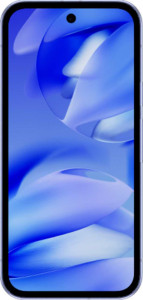
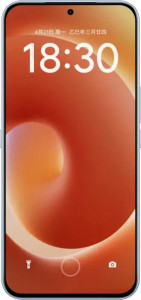
Google Pixel 9a Meizu Note 22 Pro 5G

Overview

Welcome to our in-depth spec comparison between the Google Pixel 9a and the Meizu Note 22 Pro 5G. Both phones share a solid IP68 waterproof build, OLED displays with 120Hz or higher refresh rates, and 5G connectivity, yet they take strikingly different paths when it comes to performance, camera capabilities, battery size, and charging approach. Read on to see how these two mid-range contenders stack up across every major specification.

Common Features

  • Both phones are waterproof with an IP68 ingress protection rating.
  • Neither phone has a rugged build.
  • Neither phone can be folded.
  • Both phones feature an OLED/AMOLED display type.
  • HDR10+ support is not available on either phone.
  • Always-On Display is available on both phones.
  • Dolby Vision support is not available on either phone.
  • Neither phone has a secondary screen.
  • Both phones have a touchscreen.
  • Both phones have integrated LTE.
  • Both phones use a 4 nm semiconductor size.
  • Both phones support 64-bit processing.
  • Both phones support DirectX 12.
  • Both phones have integrated graphics.
  • Both phones use big.LITTLE technology.
  • Both phones have 8 CPU threads.
  • Both phones have a dual-lens or multi-lens main camera.
  • Both phones have a CMOS sensor.
  • Both phones support continuous autofocus when recording video.
  • Both phones have phase-detection autofocus for photos.
  • Both phones support slow-motion video recording.
  • Both phones have a built-in HDR mode.
  • Both phones support manual exposure.
  • Both phones have a flash.
  • Both phones run Android 15.
  • Both phones have clipboard warnings.
  • Both phones offer location privacy options.
  • Both phones have camera and microphone privacy options.
  • Mail Privacy Protection is not available on either phone.
  • Both phones support theme customization.
  • Both phones can block app tracking.
  • Cross-site tracking blocking is not available on either phone.
  • Both phones support fast charging.
  • Neither phone has a removable battery.
  • Both phones have a battery level indicator.
  • Both phones have a rechargeable battery.
  • Neither phone has a 3.5 mm audio jack.
  • Both phones have stereo speakers.
  • Both phones support aptX.
  • Both phones have 5G support.
  • Neither phone has an external memory slot.
  • Both phones have a USB Type-C connector.
  • Both phones have a fingerprint scanner.
  • Emergency SOS via satellite is not available on either phone.
  • Both phones have a gyroscope.
  • ANT+ support is not available on either phone.
  • Neither phone has a heart rate monitor.
  • Neither phone has a sapphire glass display.
  • Neither phone has a curved display.
  • Neither phone has an e-paper display.
  • Both phones have a video light.

Main Differences

  • Weight is 186 g on Google Pixel 9a and 197.5 g on Meizu Note 22 Pro 5G.
  • Thickness is 8.9 mm on Google Pixel 9a and 8.4 mm on Meizu Note 22 Pro 5G.
  • Width is 73.3 mm on Google Pixel 9a and 76.2 mm on Meizu Note 22 Pro 5G.
  • Height is 154.7 mm on Google Pixel 9a and 163.8 mm on Meizu Note 22 Pro 5G.
  • Screen size is 6.3″ on Google Pixel 9a and 6.78″ on Meizu Note 22 Pro 5G.
  • Pixel density is 422 ppi on Google Pixel 9a and 440 ppi on Meizu Note 22 Pro 5G.
  • Resolution is 1080 x 2424 px on Google Pixel 9a and 1224 x 2720 px on Meizu Note 22 Pro 5G.
  • Refresh rate is 120Hz on Google Pixel 9a and 144Hz on Meizu Note 22 Pro 5G.
  • Typical brightness is 1800 nits on Google Pixel 9a and 1600 nits on Meizu Note 22 Pro 5G.
  • Damage-resistant glass branding is present on Google Pixel 9a but not on Meizu Note 22 Pro 5G.
  • HDR10 support is present on Google Pixel 9a but not available on Meizu Note 22 Pro 5G.
  • Contrast ratio is 1000000:1 on Google Pixel 9a and 5000:1 on Meizu Note 22 Pro 5G.
  • Internal storage is 256GB on Google Pixel 9a and 512GB on Meizu Note 22 Pro 5G.
  • RAM is 8GB on Google Pixel 9a and 16GB on Meizu Note 22 Pro 5G.
  • The chipset is Google Tensor G4 on Google Pixel 9a and Qualcomm Snapdragon 7s Gen 3 on Meizu Note 22 Pro 5G.
  • The GPU is ARM Mali-G715 MP7 on Google Pixel 9a and Adreno 710 on Meizu Note 22 Pro 5G.
  • CPU speed is 1 x 3.1 & 3 x 2.6 & 4 x 1.92 GHz on Google Pixel 9a and 1 x 2.5 & 3 x 2.4 & 4 x 1.8 GHz on Meizu Note 22 Pro 5G.
  • Geekbench 6 multi-core score is 4500 on Google Pixel 9a and 3239 on Meizu Note 22 Pro 5G.
  • Geekbench 6 single-core score is 1600 on Google Pixel 9a and 1162 on Meizu Note 22 Pro 5G.
  • Main camera resolution is 48 & 13 MP on Google Pixel 9a and 50 & 8 & 2 MP on Meizu Note 22 Pro 5G.
  • Front camera resolution is 13MP on Google Pixel 9a and 8MP on Meizu Note 22 Pro 5G.
  • Optical image stabilization is present on Google Pixel 9a but not on Meizu Note 22 Pro 5G.
  • A dual-tone LED flash is present on Google Pixel 9a but not on Meizu Note 22 Pro 5G.
  • A BSI sensor is present on Google Pixel 9a but not on Meizu Note 22 Pro 5G.
  • RAW shooting is supported on Google Pixel 9a but not on Meizu Note 22 Pro 5G.
  • Manual shutter speed is available on Google Pixel 9a but not on Meizu Note 22 Pro 5G.
  • HDR10 video recording is supported on Google Pixel 9a but not on Meizu Note 22 Pro 5G.
  • Direct OS updates are available on Google Pixel 9a but not on Meizu Note 22 Pro 5G.
  • Battery capacity is 5100 mAh on Google Pixel 9a and 6200 mAh on Meizu Note 22 Pro 5G.
  • Wireless charging is available on Google Pixel 9a but not on Meizu Note 22 Pro 5G.
  • Wired charging speed is 23W on Google Pixel 9a and 80W on Meizu Note 22 Pro 5G.
  • A charger is not included with Google Pixel 9a but is included with Meizu Note 22 Pro 5G.
  • LDAC support is present on Google Pixel 9a but not on Meizu Note 22 Pro 5G.
  • aptX HD support is present on Meizu Note 22 Pro 5G but not on Google Pixel 9a.
  • aptX Adaptive support is present on Meizu Note 22 Pro 5G but not on Google Pixel 9a.
  • Wi-Fi 6E support is available on Google Pixel 9a but not on Meizu Note 22 Pro 5G.
  • SIM setup is 1 SIM plus 1 eSIM on Google Pixel 9a and 2 physical SIM cards on Meizu Note 22 Pro 5G.
  • Bluetooth version is 5.3 on Google Pixel 9a and 5.4 on Meizu Note 22 Pro 5G.
  • USB version is 3.2 on Google Pixel 9a and 2.0 on Meizu Note 22 Pro 5G.
  • Crash detection is available on Google Pixel 9a but not on Meizu Note 22 Pro 5G.
  • A barometer is present on Google Pixel 9a but not on Meizu Note 22 Pro 5G.
Specs Comparison
Google Pixel 9a

Google Pixel 9a

Meizu Note 22 Pro 5G

Meizu Note 22 Pro 5G

Design:
water resistance Waterproof Waterproof
weight 186 g 197.5 g
thickness 8.9 mm 8.4 mm
width 73.3 mm 76.2 mm
height 154.7 mm 163.8 mm
volume 100.921639 cm³ 104.845104 cm³
Ingress Protection (IP) rating IP68 IP68
has a rugged build
can be folded

Both the Google Pixel 9a and the Meizu Note 22 Pro 5G share a solid baseline of design durability: each carries an IP68 rating, meaning both are fully waterproof and capable of withstanding submersion — a genuinely useful real-world feature, not just a spec-sheet checkbox. Neither has a rugged build or a foldable form factor, so they occupy the same conventional smartphone category on those fronts.

Where they diverge meaningfully is in physical footprint and weight. The Meizu Note 22 Pro is the larger device in almost every dimension — 163.8 mm tall versus 154.7 mm, and 76.2 mm wide versus 73.3 mm — which translates to a noticeably bigger overall volume (104.85 cm³ vs 100.92 cm³). It also weighs more at 197.5 g compared to the Pixel 9a's 186 g, a difference of about 11.5 g. In daily use, the Pixel 9a will feel slightly easier to pocket and more manageable for one-handed use. The Meizu Note 22 Pro counters with a slimmer profile at 8.4 mm thick versus the Pixel 9a's 8.9 mm, which may contribute to a sleeker in-hand feel despite the larger frame.

On balance, the Pixel 9a holds a modest design edge for users who prioritize compactness and lighter carry weight, while the Meizu Note 22 Pro's slimness is a minor offset but not enough to overcome its larger overall size. For water resistance and durability parity, both phones are effectively equal.

Display:
Display type OLED/AMOLED OLED/AMOLED
screen size 6.3" 6.78"
pixel density 422 ppi 440 ppi
resolution 1080 x 2424 px 1224 x 2720 px
refresh rate 120Hz 144Hz
brightness (typical) 1800 nits 1600 nits
has branded damage-resistant glass
supports HDR10
supports HDR10+
Always-On Display
supports Dolby Vision
contrast ratio 1000000:1 5000:1
Has a secondary screen
has a touch screen

Both screens are OLED/AMOLED panels, so the fundamental display technology — deep blacks, vibrant colors, and strong power efficiency — is shared. The Meizu Note 22 Pro goes larger at 6.78″ versus the Pixel 9a's 6.3″, and pairs that with a higher 144Hz refresh rate compared to 120Hz, which means animations and scrolling will appear marginally smoother. Its pixel density is also slightly higher at 440 ppi versus 422 ppi, though both figures are sharp enough that the difference is essentially imperceptible in everyday use.

However, the Pixel 9a pulls ahead in two areas that matter more in practice. Its 1800 nits of typical brightness significantly outpaces the Meizu's 1600 nits, translating to considerably better outdoor visibility in direct sunlight. More critically, the Pixel 9a's contrast ratio of 1,000,000:1 versus the Meizu's 5,000:1 is a dramatic difference — the Pixel 9a's ratio is characteristic of a true OLED panel capable of absolute blacks, while the Meizu's figure raises questions about panel quality or spec reporting. The Pixel 9a also supports HDR10 and features branded damage-resistant glass, adding both content compatibility and physical durability that the Meizu lacks entirely.

The Pixel 9a holds a clear display advantage overall. The Meizu Note 22 Pro offers a larger canvas and a slightly smoother refresh rate, which will appeal to media consumers and gamers, but the Pixel 9a's superior brightness, vastly higher contrast ratio, HDR10 support, and protected glass make it the more well-rounded and dependable display package.
Performance:
internal storage 256GB 512GB
RAM 8GB 16GB
Chipset (SoC) name Google Tensor G4 Qualcomm Snapdragon 7s Gen 3
GPU name ARM Mali-G715 MP7 Adreno 710
CPU speed 1 x 3.1 & 3 x 2.6 & 4 x 1.92 GHz 1 x 2.5 & 3 x 2.4 & 4 x 1.8 GHz
Geekbench 6 result (multi) 4500 3239
Geekbench 6 result (single) 1600 1162
GPU clock speed 940 MHz 1050 MHz
Has integrated LTE
RAM speed 4200 MHz 3200 MHz
semiconductor size 4 nm 4 nm
Supports 64-bit
DirectX version DirectX 12 DirectX 12
Has integrated graphics
OpenGL ES version 3.2 3.2
Uses big.LITTLE technology
CPU threads 8 threads 8 threads
Uses HMP
Has TrustZone
OpenCL version 2 2
maximum memory amount 16GB 16GB
Thermal Design Power (TDP) 6W 5W
DDR memory version 5 5

Raw CPU performance is where the sharpest divide emerges. The Google Tensor G4 in the Pixel 9a scores 4,500 multi-core and 1,600 single-core on Geekbench 6, compared to 3,239 and 1,162 respectively for the Meizu Note 22 Pro's Snapdragon 7s Gen 3. That is a roughly 39% multi-core gap — meaningful enough to show up in demanding workloads like video processing, machine learning tasks, and sustained multitasking. The Pixel 9a's CPU clock speeds are also higher across all core clusters, reinforcing what the benchmarks indicate. Both chips are fabbed on a 4 nm process, so efficiency is similar in principle, though the Pixel 9a draws a slightly higher 6W TDP versus the Meizu's 5W — a reasonable trade-off for the performance it delivers.

The Meizu Note 22 Pro fights back on memory and storage. Its 16GB of RAM at up to 512GB of internal storage doubles the Pixel 9a's 8GB / 256GB configuration. More RAM means more apps can remain active in the background without being killed, which is a tangible benefit for heavy multitaskers. That said, the Pixel 9a's RAM runs at a faster 4200 MHz versus the Meizu's 3200 MHz, meaning its smaller memory pool operates with lower latency — partially offsetting the raw capacity deficit.

The Pixel 9a holds the stronger performance edge overall. Its lead in real-world CPU throughput is substantial and consistent with the benchmark data, making it the more capable chip for intensive tasks. The Meizu Note 22 Pro's larger RAM and storage are genuine advantages for users who juggle many apps or store large local libraries, but raw processing power tips the balance firmly toward the Pixel 9a.

Cameras:
megapixels (main camera) 48 & 13 MP 50 & 8 & 2 MP
wide aperture (main camera) 2.2 & 1.7f 1.8 & 2.2 & 2.4f
Has a dual-lens (or multi-lens) main camera
megapixels (front camera) 13MP 8MP
has built-in optical image stabilization
Has a dual-tone LED flash
number of flash LEDs 2 1
has a BSI sensor
has a CMOS sensor
has continuous autofocus when recording movies
Has phase-detection autofocus for photos
supports slow-motion video recording
has a built-in HDR mode
has manual exposure
has a flash
has manual ISO
has a serial shot mode
has manual focus
has a front camera
Has laser autofocus
Shoots 360° panorama
has manual white balance
shoots raw
has touch autofocus
has manual shutter speed
can create panoramas in-camera
wide aperture (front camera) 2.2f 2.1f
Has timelapse function
Has a front-facing LED flash
has a dual-lens (or multi-lens) front camera
supports HDR10 recording
supports Dolby Vision recording
has a front-facing camera under the display
Has a RGB LED flash
has 3D photo/video recording capabilities

The Meizu Note 22 Pro fields a triple rear camera system — 50 & 8 & 2 MP — versus the Pixel 9a's dual setup at 48 & 13 MP. On paper, the Meizu has more lenses, but the third 2 MP sensor is effectively a depth helper with negligible real-world impact on image quality. The more meaningful comparison is the primary lens: the Meizu's f/1.8 main aperture is wider than the Pixel 9a's f/1.7 secondary wide lens, though the Pixel's ultrawide at 13 MP outresolves the Meizu's 8 MP equivalent. Critically, the Pixel 9a includes optical image stabilization (OIS) while the Meizu does not — a significant practical advantage for handheld low-light photography and video stability that no megapixel count can compensate for.

The Pixel 9a also distinguishes itself in capture flexibility and image pipeline depth. It supports RAW shooting and manual shutter speed control, features absent on the Meizu, making it a notably more capable tool for enthusiast photographers who want granular control or post-processing headroom. On the video side, the Pixel 9a supports HDR10 recording, a format the Meizu lacks entirely. The Pixel 9a's BSI sensor — also absent on the Meizu — improves light capture efficiency, which compounds the advantage in challenging lighting conditions. The front camera gap is less dramatic but still favors the Pixel 9a, with 13 MP against the Meizu's 8 MP.

The Pixel 9a has a clear and well-rounded camera advantage. Despite the Meizu offering an additional rear lens, the Pixel 9a wins on the factors that most directly affect image and video quality in real use: OIS, RAW support, a BSI sensor, HDR10 video, and a higher-resolution front camera. The Meizu's triple-camera count is the headline, but the Pixel 9a's system is more capable end to end.

Operating system:
Android version Android 15 Android 15
has clipboard warnings
has location privacy options
has camera/microphone privacy options
has Mail Privacy Protection
has theme customization
can block app tracking
blocks cross-site tracking
has on-device machine learning
has notification permissions
has media picker
Can play games while they download
has dark mode
has Wi-Fi password sharing
has battery health check
has an extra dim mode
has focus modes
has dynamic theming
can offload apps
Has customizable notifications
has Live Text
has full-page screenshots
supports split screen
gets direct OS updates
has PiP
Can be used as a PC
Has sharing intents
has a child lock
Supports widgets
Is free and open source
Has offline voice recognition
has voice commands
Tracks the current position of a mobile device
is a multi-user system
has Quick Start

Across the vast majority of OS-level features, these two phones are virtually identical — both ship with Android 15, share the same privacy controls, support the same productivity and accessibility features, and are equally capable on the software surface. For most users comparing feature lists, the overlap is nearly total.

The one meaningful differentiator is update delivery. The Pixel 9a gets direct OS updates straight from Google, while the Meizu Note 22 Pro does not. In practice, this means the Pixel 9a will receive new Android versions and security patches faster, more reliably, and for a longer guaranteed window — since Google controls its own update pipeline end to end. The Meizu depends on its manufacturer to adapt and push updates, a process that historically results in delays and, in many cases, fewer total years of software support. For anyone holding a phone for two or more years, this is a genuinely important long-term consideration.

The Pixel 9a holds a clear OS advantage — not because of feature parity, which is essentially equal, but because of the reliability and longevity of its software support. Timely updates carry real security and functionality value that compounds over the life of the device, and the Meizu Note 22 Pro cannot match that on the provided specs.

Battery:
battery power 5100 mAh 6200 mAh
has wireless charging
Supports fast charging
charging speed 23W 80W
comes with a charger
has a removable battery
has a battery level indicator
has a rechargeable battery

Battery capacity is a decisive point in the Meizu Note 22 Pro's favor. Its 6200 mAh cell is substantially larger than the Pixel 9a's 5100 mAh — a 21% difference that, all else being equal, translates to meaningfully more screen-on time before needing a charge. For heavy users, travelers, or anyone who struggles to reach a charger by end of day, that extra headroom is a tangible daily benefit.

Charging speed compounds the Meizu's battery advantage further. Its 80W fast charging is dramatically faster than the Pixel 9a's 23W — meaning the Meizu can replenish its larger battery in a fraction of the time it takes the Pixel 9a to top up its smaller one. The Meizu also includes a charger in the box, while the Pixel 9a does not, adding immediate out-of-the-box convenience and saving an additional purchase. Where the Pixel 9a recovers some ground is with wireless charging, a feature the Meizu entirely lacks — useful for overnight pad charging or desk setups, though it is typically slower than wired methods.

On balance, the Meizu Note 22 Pro holds a clear battery advantage. Its larger capacity and dramatically faster wired charging make it the stronger choice for endurance-focused users, and the included charger is a practical bonus. The Pixel 9a's wireless charging is a genuine convenience perk, but it does not offset the Meizu's lead in raw capacity and charging speed.

Audio:
has a socket for a 3.5 mm audio jack
has stereo speakers
has aptX
has LDAC
has aptX HD
has aptX Adaptive

Neither phone offers a 3.5mm headphone jack, so both commit fully to wireless audio — a shared limitation worth noting for users with wired headphone collections. On the speaker side, both deliver stereo output, putting them on equal footing for media consumption without headphones.

The real distinction lies in Bluetooth audio codec support, and here the two phones make different trade-offs. The Pixel 9a supports LDAC, Sony's high-resolution wireless codec capable of streaming up to 990 kbps — making it the better match for LDAC-compatible headphones and audiophiles prioritizing maximum wireless fidelity. The Meizu Note 22 Pro counters with aptX HD and aptX Adaptive, the latter being Qualcomm's most advanced codec, offering low-latency, high-quality adaptive streaming that adjusts bitrate dynamically based on connection conditions. aptX Adaptive is particularly valuable for gaming and video, where audio-visual sync matters. Both phones share standard aptX as a baseline.

This category is effectively a codec preference draw that depends on the user's headphone ecosystem. The Pixel 9a is the stronger pick for LDAC headphone owners seeking high-bitrate audio, while the Meizu Note 22 Pro suits those with aptX Adaptive or aptX HD gear who benefit from low-latency, adaptive streaming. Neither phone has a universal audio advantage over the other.

Connectivity & Features:
release date March 2025 May 2025
has 5G support
Wi-Fi version Wi-Fi 6E (802.11ax), Wi-Fi 6 (802.11ax), Wi-Fi 5 (802.11ac), Wi-Fi 4 (802.11n) Wi-Fi 4 (802.11n), Wi-Fi 5 (802.11ac), Wi-Fi 6 (802.11ax)
SIM cards 1 SIM, 1 eSIM 2 SIM
Bluetooth version 5.3 5.4
has an external memory slot
Has USB Type-C
USB version 3.2 2
Has a fingerprint scanner
has emergency SOS via satellite
has crash detection
has a gyroscope
supports ANT+
Has a heart rate monitor
has GPS
has a compass
supports Wi-Fi
Has an infrared sensor
has an accelerometer
has a cellular module
Has a barometer
has an HDMI output
Uses 3D facial recognition
Has an iris scanner
Stylus included
supports Galileo
Has motion tracking
Has optical tracking
Has a built-in projector

Wireless connectivity is a clear win for the Pixel 9a. It supports Wi-Fi 6E in addition to Wi-Fi 6 and 5, while the Meizu Note 22 Pro tops out at Wi-Fi 6. Wi-Fi 6E opens access to the 6 GHz band — less congested, faster in dense environments like apartments or offices — which is a meaningful real-world advantage as 6E routers become more common. The Pixel 9a's USB 3.2 port also vastly outpaces the Meizu's USB 2.0, enabling significantly faster wired data transfers and future-proofing for accessories — a gap that matters for anyone who regularly moves large files. The Meizu counters with a marginally newer Bluetooth 5.4 versus 5.3, a difference too minor to have any practical impact, and it offers dual physical SIM slots compared to the Pixel 9a's single SIM plus eSIM — a genuine advantage for users who need two active lines simultaneously without relying on eSIM compatibility.

On the sensor and safety features front, the Pixel 9a again pulls ahead. It includes a barometer — useful for weather apps, altitude tracking, and navigation accuracy — which the Meizu lacks. More significantly, the Pixel 9a supports crash detection, a safety feature that can automatically call emergency services after a serious vehicle accident. The Meizu offers no equivalent. These are not everyday features, but the crash detection capability in particular carries real-world safety value that is difficult to dismiss.

The Pixel 9a holds the stronger connectivity and features edge. Its Wi-Fi 6E support, USB 3.2 speeds, barometer, and crash detection collectively represent a more capable and future-ready package. The Meizu Note 22 Pro's dual physical SIM support is a practical advantage for specific users, but it is not enough to offset the Pixel 9a's broader lead across this category.

Miscellaneous:
has a video light
Has sapphire glass display
Has a curved display
Has an e-paper display

The miscellaneous specs for these two phones are identical across every data point provided — both have a video light, neither has sapphire glass, a curved display, or an e-paper display. There is simply nothing in this group to differentiate them.

This is a complete tie by the available data. Neither phone holds any advantage in this category.

Comparison Summary & Verdict

After a thorough comparison, it is clear that each phone suits a distinct type of user. The Google Pixel 9a stands out for its superior benchmark performance thanks to the Tensor G4 chip, a more refined camera system with optical image stabilization, RAW shooting, HDR10 video recording, direct OS updates, wireless charging, Wi-Fi 6E, and a significantly better display contrast ratio. It is the stronger choice for those who value software quality and imaging versatility. The Meizu Note 22 Pro 5G, on the other hand, appeals to users who prioritize a larger screen, a bigger 6200 mAh battery, blazing 80W wired fast charging, more RAM and storage out of the box, and a smoother 144Hz display refresh rate. Neither phone is an outright winner for everyone, making your personal priorities the deciding factor.

Google Pixel 9a
Buy Google Pixel 9a if...

Buy the Google Pixel 9a if you want a compact, camera-focused phone with optical image stabilization, direct OS updates, wireless charging, and top-tier benchmark performance.

Meizu Note 22 Pro 5G
Buy Meizu Note 22 Pro 5G if...

Buy the Meizu Note 22 Pro 5G if you need a larger display, a bigger battery with faster 80W wired charging, and more RAM and storage for the price.