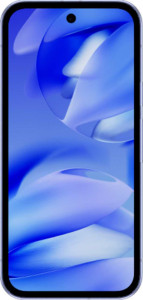
Google Pixel 9a
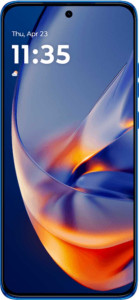
Motorola Edge 60 Neo

Google Pixel 9a Motorola Edge 60 Neo

Overview

Welcome to our in-depth specification comparison between the Google Pixel 9a and the Motorola Edge 60 Neo. Both phones share a solid foundation — IP68 waterproofing, 120Hz OLED displays, and 5G connectivity — yet they take markedly different paths when it comes to raw performance, charging speeds, and camera capabilities. Read on to discover which device best matches your priorities.

Common Features

  • Both phones are waterproof with an IP68 ingress protection rating.
  • Neither phone has a rugged build.
  • Neither phone can be folded.
  • Both phones feature an OLED/AMOLED display.
  • Both phones support a 120Hz refresh rate.
  • HDR10 support is available on both phones.
  • Dolby Vision support is not available on either phone.
  • Neither phone has a secondary screen.
  • Both phones have a touchscreen.
  • Both phones have integrated LTE.
  • Both phones use a 4 nm semiconductor.
  • Both phones support 64-bit processing.
  • Both phones support DirectX 12.
  • Both phones have integrated graphics.
  • Both phones use big.LITTLE technology with 8 CPU threads and HMP.
  • Both phones have a dual-lens or multi-lens main camera with optical image stabilization.
  • Both phones have a CMOS sensor with phase-detection autofocus and continuous autofocus during video recording.
  • Both phones support slow-motion video recording and have a built-in HDR mode.
  • Both phones run Android 15 with theme customization, clipboard warnings, location privacy options, and camera/microphone privacy options.
  • Neither phone has Mail Privacy Protection or blocks cross-site tracking, but both can block app tracking.
  • Both phones support wireless charging and fast charging and have a non-removable rechargeable battery with a battery level indicator.
  • Neither phone has a 3.5mm audio jack, but both have stereo speakers.
  • Neither phone has a radio.
  • Both phones support 5G, USB Type-C, NFC, and have a fingerprint scanner.
  • Neither phone supports ANT+, has a heart rate monitor, or has emergency SOS via satellite.
  • Both phones have a gyroscope.
  • Neither phone has a sapphire glass display, a curved display, or an e-paper display.
  • Both phones have a video light.

Main Differences

  • Weight is 186 g on Google Pixel 9a and 174.5 g on Motorola Edge 60 Neo.
  • Thickness is 8.9 mm on Google Pixel 9a and 8.1 mm on Motorola Edge 60 Neo.
  • Width is 73.3 mm on Google Pixel 9a and 71.2 mm on Motorola Edge 60 Neo.
  • Height is 154.7 mm on Google Pixel 9a and 154.1 mm on Motorola Edge 60 Neo.
  • Volume is 100.92 cm³ on Google Pixel 9a and 88.87 cm³ on Motorola Edge 60 Neo.
  • Screen size is 6.3″ on Google Pixel 9a and 6.36″ on Motorola Edge 60 Neo.
  • Pixel density is 422 ppi on Google Pixel 9a and 460 ppi on Motorola Edge 60 Neo.
  • Resolution is 1080 x 2424 px on Google Pixel 9a and 1200 x 2670 px on Motorola Edge 60 Neo.
  • Gorilla Glass version is Gorilla Glass 3 on Google Pixel 9a and Gorilla Glass 7i on Motorola Edge 60 Neo.
  • HDR10+ support is present on Motorola Edge 60 Neo but not available on Google Pixel 9a.
  • Internal storage is 256GB on Google Pixel 9a and 512GB on Motorola Edge 60 Neo.
  • RAM is 8GB on Google Pixel 9a and 12GB on Motorola Edge 60 Neo.
  • AnTuTu benchmark score is 1,071,616 on Google Pixel 9a and 678,400 on Motorola Edge 60 Neo.
  • The chipset is Google Tensor G4 on Google Pixel 9a and MediaTek Dimensity 7400 on Motorola Edge 60 Neo.
  • The GPU is ARM Mali-G715 MP7 on Google Pixel 9a and Mali G615 MC2 on Motorola Edge 60 Neo.
  • RAM speed is 4200 MHz on Google Pixel 9a and 6400 MHz on Motorola Edge 60 Neo.
  • The main camera is 48 & 13 MP on Google Pixel 9a and 50 & 13 & 10 MP on Motorola Edge 60 Neo.
  • The front camera is 13MP on Google Pixel 9a and 32MP on Motorola Edge 60 Neo.
  • Main camera video recording goes up to 2160p at 60 fps on Google Pixel 9a and 2160p at 30 fps on Motorola Edge 60 Neo.
  • A dual-tone LED flash is present on Google Pixel 9a but not available on Motorola Edge 60 Neo.
  • A BSI sensor is present on Google Pixel 9a but not available on Motorola Edge 60 Neo.
  • Manual shutter speed is available on Google Pixel 9a but not on Motorola Edge 60 Neo.
  • HDR10 video recording is supported on Google Pixel 9a but not on Motorola Edge 60 Neo.
  • Direct OS updates are provided on Google Pixel 9a but not on Motorola Edge 60 Neo.
  • Battery capacity is 5100 mAh on Google Pixel 9a and 5200 mAh on Motorola Edge 60 Neo.
  • Wired charging speed is 23W on Google Pixel 9a and 68W on Motorola Edge 60 Neo.
  • Wireless charging speed is 7.5W on Google Pixel 9a and 15W on Motorola Edge 60 Neo.
  • A charger is not included with Google Pixel 9a but is included with Motorola Edge 60 Neo.
  • Google Pixel 9a supports 1 SIM and 1 eSIM, while Motorola Edge 60 Neo supports 2 physical SIM cards.
  • An external memory slot is not available on Google Pixel 9a but is present on Motorola Edge 60 Neo.
  • USB version is 3.2 on Google Pixel 9a and 2.0 on Motorola Edge 60 Neo.
  • Crash detection is available on Google Pixel 9a but not on Motorola Edge 60 Neo.
  • A barometer is present on Google Pixel 9a but not on Motorola Edge 60 Neo.
Specs Comparison
Google Pixel 9a

Google Pixel 9a

Motorola Edge 60 Neo

Motorola Edge 60 Neo

Design:
water resistance Waterproof Waterproof
weight 186 g 174.5 g
thickness 8.9 mm 8.1 mm
width 73.3 mm 71.2 mm
height 154.7 mm 154.1 mm
volume 100.921639 cm³ 88.872552 cm³
Ingress Protection (IP) rating IP68 IP68
has a rugged build
can be folded

Both phones share the same core durability credentials: a full IP68 waterproof rating, meaning each can withstand submersion in fresh water. Neither adopts a rugged or foldable form factor, so they compete squarely as standard-slab smartphones designed for everyday carry.

Where they diverge is in hand-feel. The Motorola Edge 60 Neo is measurably more compact across every physical dimension — lighter at 174.5 g versus 186 g, slimmer at 8.1 mm versus 8.9 mm, and narrower at 71.2 mm versus 73.3 mm. The cumulative effect is significant: the Edge 60 Neo displaces roughly 88.9 cm³ of space compared to the Pixel 9a's 100.9 cm³ — about 12% less volume. In practice, an 11.5 g weight difference and a nearly 1 mm reduction in thickness are both noticeable during prolonged single-hand use and when slipping the device into a pocket.

On design, the Edge 60 Neo holds a clear advantage for users who prioritize a lighter, slimmer, and more pocketable device. The Pixel 9a sacrifices some ergonomic comfort in this category, though both phones are equally protected against water ingress.

Display:
Display type OLED/AMOLED OLED/AMOLED
screen size 6.3" 6.36"
pixel density 422 ppi 460 ppi
resolution 1080 x 2424 px 1200 x 2670 px
refresh rate 120Hz 120Hz
Gorilla Glass version Gorilla Glass 3 Gorilla Glass 7i
supports HDR10
supports HDR10+
supports Dolby Vision
Has a secondary screen
has a touch screen

Both screens are OLED/AMOLED panels running at 120Hz, so the foundational viewing and scrolling experience is comparable. The size difference — 6.3″ on the Pixel 9a versus 6.36″ on the Edge 60 Neo — is negligible in daily use and not a meaningful differentiator.

The gap opens up in resolution and sharpness. The Edge 60 Neo resolves at 1200 x 2670 px with a pixel density of 460 ppi, against the Pixel 9a's 1080 x 2424 px at 422 ppi. That 38 ppi advantage translates to noticeably crisper text and finer detail, particularly when reading small print or viewing high-resolution images up close. The Edge 60 Neo also adds HDR10+ support on top of the baseline HDR10 that both phones share, enabling better dynamic tone mapping in compatible streaming content. Glass protection is another point of separation: Gorilla Glass 7i on the Edge 60 Neo is a newer generation than the Gorilla Glass 3 on the Pixel 9a, offering meaningfully improved scratch and drop resistance.

Across every differentiating display spec, the Edge 60 Neo holds a clear advantage — higher pixel density, a more advanced HDR standard, and stronger glass protection. The Pixel 9a offers a perfectly capable screen, but users who prioritize display quality will find more to appreciate on the Motorola.

Performance:
internal storage 256GB 512GB
RAM 8GB 12GB
AnTuTu benchmark score 1071616 678400
Chipset (SoC) name Google Tensor G4 MediaTek Dimensity 7400
GPU name ARM Mali-G715 MP7 Mali G615 MC2
CPU speed 1 x 3.1 & 3 x 2.6 & 4 x 1.92 GHz 4 x 2.6 & 4 x 2 GHz
GPU clock speed 940 MHz 1047 MHz
Has integrated LTE
RAM speed 4200 MHz 6400 MHz
semiconductor size 4 nm 4 nm
Supports 64-bit
DirectX version DirectX 12 DirectX 12
Has integrated graphics
Uses big.LITTLE technology
CPU threads 8 threads 8 threads
Uses HMP
maximum memory amount 16GB 16GB
DDR memory version 5 5

The most decisive number in this category is the AnTuTu benchmark score: the Pixel 9a's Google Tensor G4 posts 1,071,616 against the Edge 60 Neo's 678,400 on its MediaTek Dimensity 7400 — a gap of roughly 58%. Both chips are fabbed on a 4 nm process and share the same 8-thread big.LITTLE architecture, but the Tensor G4 delivers substantially more computational throughput in CPU-intensive tasks, gaming, and on-device AI workloads.

The Edge 60 Neo counters with advantages in memory and storage configuration. It ships with 12 GB of RAM at a faster 6400 MHz versus the Pixel 9a's 8 GB at 4200 MHz, and doubles the base storage at 512 GB compared to 256 GB. More RAM at higher speeds benefits heavy multitaskers who keep many apps alive simultaneously, and the extra storage is genuinely useful for users who avoid cloud services. These are real-world advantages, but they do not close the raw processing gap suggested by the benchmark delta.

On balance, the Pixel 9a holds a clear performance edge for compute-heavy use cases — faster rendering, snappier app launches, and more capable on-device processing. The Edge 60 Neo is the better pick only if generous storage and a larger RAM pool for multitasking are the primary priorities.

Cameras:
megapixels (main camera) 48 & 13 MP 50 & 13 & 10 MP
wide aperture (main camera) 2.2 & 1.7f 1.8 & 2.2 & 2f
Has a dual-lens (or multi-lens) main camera
megapixels (front camera) 13MP 32MP
has built-in optical image stabilization
video recording (main camera) 2160 x 60 fps 2160 x 30 fps
Has a dual-tone LED flash
number of flash LEDs 2 1
has a BSI sensor
has a CMOS sensor
has continuous autofocus when recording movies
Has phase-detection autofocus for photos
supports slow-motion video recording
has a built-in HDR mode
has manual exposure
has a flash
has manual ISO
has a serial shot mode
has manual focus
pixel size (main camera) 0.8 & 1.12 µm 1 & 1.12 & 1 µm
has a front camera
Has laser autofocus
Shoots 360° panorama
has manual white balance
has touch autofocus
has manual shutter speed
can create panoramas in-camera
wide aperture (front camera) 2.2f 2.4f
Has timelapse function
Has a front-facing LED flash
has a dual-lens (or multi-lens) front camera
supports HDR10 recording
supports Dolby Vision recording
has a front-facing camera under the display
Has a RGB LED flash
has 3D photo/video recording capabilities

The rear camera systems take different structural approaches. The Pixel 9a keeps it to two lenses but prioritizes quality fundamentals: its primary sensor's wider f/1.7 aperture admits more light than the Edge 60 Neo's f/1.8, and it adds a BSI sensor for improved low-light efficiency. The Edge 60 Neo counters with a triple-lens setup — adding a third 10 MP shooter that extends compositional flexibility beyond what a dual-lens system can offer.

Video is where the Pixel 9a pulls ahead most decisively. It records 4K at 60 fps versus the Edge 60 Neo's cap of 4K at 30 fps, which matters for capturing fast motion smoothly or having more flexibility in post-production. The Pixel 9a also supports HDR10 recording and retains manual shutter speed control — both absent on the Edge 60 Neo — giving videographers and manual-control enthusiasts meaningfully more creative headroom. Flipping to selfies, the dynamic reverses sharply: the Edge 60 Neo's 32 MP front camera is a substantial jump over the Pixel 9a's 13 MP, producing far more detailed self-portraits.

Neither phone dominates outright, making the right choice depend on use case. The Pixel 9a has the edge for video and low-light stills, while the Edge 60 Neo suits users who want rear versatility and a high-resolution front camera for selfies or video calls.

Operating system:
Android version Android 15 Android 15
has clipboard warnings
has location privacy options
has camera/microphone privacy options
has Mail Privacy Protection
has theme customization
can block app tracking
blocks cross-site tracking
has on-device machine learning
has notification permissions
has media picker
Can play games while they download
has dark mode
has Wi-Fi password sharing
has battery health check
has an extra dim mode
has focus modes
has dynamic theming
can offload apps
Has customizable notifications
has Live Text
has full-page screenshots
supports split screen
gets direct OS updates
has PiP
Can be used as a PC
Has sharing intents
has a child lock
Supports widgets
Is free and open source
Has offline voice recognition
has voice commands
Tracks the current position of a mobile device
is a multi-user system
has Quick Start

Across the entire operating system feature set, these two phones are remarkably well matched. Both launch on Android 15 and share an identical list of privacy controls, productivity tools, and customization options — dynamic theming, split-screen multitasking, on-device machine learning, picture-in-picture, and more. For the vast majority of day-to-day software experiences, users would notice no meaningful difference between them.

The single but significant divergence is update delivery. The Pixel 9a gets direct OS updates straight from Google, while the Edge 60 Neo does not — Motorola acts as an intermediary, which historically results in updates arriving later and, depending on the manufacturer's commitment, potentially fewer of them over the device's lifespan. For a security-conscious user or someone who wants timely access to new Android features, this distinction carries real long-term weight.

As a result, the Pixel 9a holds a clear software advantage. The feature parity between the two makes the update pipeline the decisive factor — and direct, first-party OS updates represent a meaningfully better ownership experience over time.

Battery:
battery power 5100 mAh 5200 mAh
has wireless charging
Supports fast charging
charging speed 23W 68W
wireless charging speed 7.5W 15W
comes with a charger
has a removable battery
has a battery level indicator
has a rechargeable battery

Raw capacity is virtually identical — 5100 mAh on the Pixel 9a versus 5200 mAh on the Edge 60 Neo — so neither phone has a meaningful endurance advantage on a single charge. The real story in this category is how quickly each can be refilled.

Charging speed is where the gap becomes impossible to ignore. The Edge 60 Neo supports 68W wired charging, nearly three times the Pixel 9a's 23W. In practical terms, this means the Motorola can go from critically low to mostly full in a fraction of the time it takes the Pixel to do the same — a genuine quality-of-life difference for users who charge on the go or during short breaks. The wireless charging advantage follows the same pattern: 15W versus 7.5W means roughly twice the replenishment speed over a pad. The Edge 60 Neo also ships with a charger in the box, while the Pixel 9a does not — an added out-of-pocket cost to factor in for new buyers.

The Edge 60 Neo wins this category decisively. Equal battery size with dramatically faster wired and wireless charging, plus an included charger, makes it the stronger proposition for anyone who values topping up quickly and conveniently.

Audio:
has a socket for a 3.5 mm audio jack
has stereo speakers
Has a radio

Audio hardware is a straight tie. Both phones offer stereo speakers, omit a 3.5 mm headphone jack, and lack a built-in radio — there is not a single differentiating data point between them in this category.

The absence of a headphone jack means both devices rely on Bluetooth or USB-C for wired audio, which is now standard practice at this price tier and unlikely to be a surprise to most buyers. Stereo speakers on both ensure adequate spatial separation for media consumption without headphones.

This category is a complete draw — neither phone holds any audio hardware advantage over the other based on the available specs.

Connectivity & Features:
release date March 2025 September 2025
has 5G support
SIM cards 1 SIM, 1 eSIM 2 SIM
has an external memory slot
Has USB Type-C
USB version 3.2 2
has NFC
Has a fingerprint scanner
has emergency SOS via satellite
has crash detection
has a gyroscope
supports ANT+
Has a heart rate monitor
has GPS
has a compass
supports Wi-Fi
Has an infrared sensor
has an accelerometer
has a cellular module
Has a barometer
has an HDMI output
Uses 3D facial recognition
Has an iris scanner
Stylus included
supports Galileo
Has motion tracking
Has optical tracking
Has a built-in projector

The shared connectivity foundation is solid on both phones — 5G, NFC, GPS with Galileo support, fingerprint scanner, and the full suite of standard motion sensors are present on each. For most users, this common ground covers everything they interact with daily.

The differentiators split along practical lines. The Edge 60 Neo supports dual physical SIM cards and adds a microSD slot for expandable storage — valuable for travelers juggling multiple carriers or users who want to grow their storage without relying on the cloud. The Pixel 9a trades those flexibility features for a meaningfully superior USB 3.2 connection versus the Edge 60 Neo's USB 2.0, enabling significantly faster data transfers when moving large files to a computer. The Pixel 9a also includes crash detection and a barometer — the former an active safety feature that can alert emergency services after an accident, the latter useful for fitness tracking and weather apps — neither of which the Edge 60 Neo offers.

This category does not have a single outright winner; it splits by user profile. The Edge 60 Neo suits frequent travelers and storage-conscious users, while the Pixel 9a is the stronger choice for fast data transfers and safety-oriented features like crash detection.

Miscellaneous:
has a video light
Has sapphire glass display
Has a curved display
Has an e-paper display

Every data point in this category is identical between the two phones — both have a video light, and neither features sapphire glass, a curved display, or an e-paper display. There is simply nothing here to separate them.

This category is a complete tie, and no advantage can be assigned to either phone based on the available specs.

Comparison Summary & Verdict

After examining every specification, these two phones reveal clearly distinct identities. The Google Pixel 9a stands out with its significantly superior AnTuTu benchmark score, direct OS updates, USB 3.2, crash detection, HDR10 video recording, and a more capable main camera system with a BSI sensor and manual shutter speed. It is the better pick for users who value raw processing power and long-term software support. The Motorola Edge 60 Neo, on the other hand, wins on charging speed (68W wired, 15W wireless), a higher-resolution display with Gorilla Glass 7i and HDR10+ support, more RAM, more internal storage, an expandable memory slot, and a higher-resolution 32MP front camera — making it ideal for users who prioritize fast top-ups, vivid media consumption, and versatile storage options.

Google Pixel 9a
Buy Google Pixel 9a if...

Buy the Google Pixel 9a if you want top-tier processing performance, guaranteed direct OS updates, and a more versatile main camera with HDR10 video recording and manual controls.

Motorola Edge 60 Neo
Buy Motorola Edge 60 Neo if...

Buy the Motorola Edge 60 Neo if you prioritize significantly faster wired charging, a sharper HDR10+ display with Gorilla Glass 7i, more RAM and storage, and a high-resolution 32MP front camera.