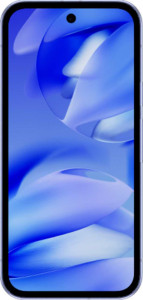
Google Pixel 9a
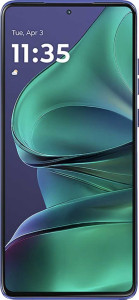
Motorola Moto G Stylus 5G (2025)

Google Pixel 9a Motorola Moto G Stylus 5G (2025)

Overview

When comparing the Google Pixel 9a and the Motorola Moto G Stylus 5G (2025), two mid-range contenders emerge with surprisingly different priorities. Both share a solid IP68 waterproof rating, OLED displays with 120Hz refresh rates, and 256GB of storage, yet they diverge sharply on raw performance, charging speed, and everyday usability features. Whether you value processing power or productivity tools, this comparison breaks down every key specification to help you decide.

Common Features

  • Both phones are waterproof with an IP68 ingress protection rating.
  • Neither phone has a rugged build.
  • Neither phone can be folded.
  • Both phones feature an OLED/AMOLED display with a 120Hz refresh rate.
  • Both phones have damage-resistant glass, specifically Gorilla Glass 3.
  • HDR10 support is available on both phones.
  • HDR10+ support is not available on either phone.
  • Dolby Vision support is not available on either phone.
  • Neither phone has a secondary screen.
  • Both phones come with 256GB of internal storage and 8GB of RAM.
  • Both phones use a 4nm semiconductor process.
  • Both phones have integrated LTE, integrated graphics, support 64-bit processing, DirectX 12, and OpenGL ES 3.2.
  • Both phones feature a dual-lens main camera with optical image stabilization, a CMOS sensor, phase-detection autofocus, continuous autofocus during video, slow-motion recording, built-in HDR mode, and manual exposure.
  • Both phones run Android 15.
  • Both phones include clipboard warnings, location privacy options, and camera/microphone privacy options.
  • Mail Privacy Protection is not available on either phone.
  • Both phones support theme customization and can block app tracking.
  • Cross-site tracking blocking is not available on either phone.
  • Both phones support wireless charging, fast charging, and have a non-removable rechargeable battery with a battery level indicator.
  • Reverse wireless charging is not available on either phone.
  • Both phones have stereo speakers and two microphones.
  • Neither phone supports aptX Adaptive or has a built-in radio.
  • Both phones use a single SIM plus eSIM configuration, have USB Type-C, NFC, a fingerprint scanner, and a gyroscope.
  • Emergency SOS via satellite is not available on either phone.
  • Neither phone supports ANT+ or has a heart rate monitor.
  • Both phones have a video light, no sapphire glass display, no curved display, and no e-paper display.

Main Differences

  • Weight is 186g on Google Pixel 9a and 191g on Motorola Moto G Stylus 5G (2025).
  • Thickness is 8.9mm on Google Pixel 9a and 8.3mm on Motorola Moto G Stylus 5G (2025).
  • Height is 154.7mm on Google Pixel 9a and 162.2mm on Motorola Moto G Stylus 5G (2025).
  • Screen size is 6.3″ on Google Pixel 9a and 6.7″ on Motorola Moto G Stylus 5G (2025).
  • Pixel density is 422 ppi on Google Pixel 9a and 444 ppi on Motorola Moto G Stylus 5G (2025).
  • Resolution is 1080 x 2424 px on Google Pixel 9a and 1220 x 2712 px on Motorola Moto G Stylus 5G (2025).
  • Typical brightness is 1800 nits on Google Pixel 9a and 3000 nits on Motorola Moto G Stylus 5G (2025).
  • AnTuTu benchmark score is 1,071,616 on Google Pixel 9a and 568,626 on Motorola Moto G Stylus 5G (2025).
  • The chipset is Google Tensor G4 on Google Pixel 9a and Qualcomm Snapdragon 6 Gen 3 on Motorola Moto G Stylus 5G (2025).
  • The GPU is ARM Mali-G715 MP7 on Google Pixel 9a and Adreno 710 on Motorola Moto G Stylus 5G (2025).
  • GPU clock speed is 940 MHz on Google Pixel 9a and 800 MHz on Motorola Moto G Stylus 5G (2025).
  • RAM speed is 4200 MHz on Google Pixel 9a and 2750 MHz on Motorola Moto G Stylus 5G (2025).
  • Maximum memory is 16GB on Google Pixel 9a and 12GB on Motorola Moto G Stylus 5G (2025).
  • Main camera megapixels are 48 & 13 MP on Google Pixel 9a and 50 & 13 MP on Motorola Moto G Stylus 5G (2025).
  • Front camera resolution is 13MP on Google Pixel 9a and 32MP on Motorola Moto G Stylus 5G (2025).
  • Main camera max video recording is 2160p at 60fps on Google Pixel 9a and 2160p at 30fps on Motorola Moto G Stylus 5G (2025).
  • A BSI sensor is present on Google Pixel 9a but not on Motorola Moto G Stylus 5G (2025).
  • Manual shutter speed is available on Google Pixel 9a but not on Motorola Moto G Stylus 5G (2025).
  • HDR10 video recording is supported on Google Pixel 9a but not on Motorola Moto G Stylus 5G (2025).
  • A dual-tone LED flash with 2 LEDs is present on Google Pixel 9a, while Motorola Moto G Stylus 5G (2025) has a single LED flash.
  • Direct OS updates are available on Google Pixel 9a but not on Motorola Moto G Stylus 5G (2025).
  • Desktop PC mode is available on Motorola Moto G Stylus 5G (2025) but not on Google Pixel 9a.
  • Battery capacity is 5100 mAh on Google Pixel 9a and 5000 mAh on Motorola Moto G Stylus 5G (2025).
  • Wired charging speed is 23W on Google Pixel 9a and 68W on Motorola Moto G Stylus 5G (2025).
  • Wireless charging speed is 7.5W on Google Pixel 9a and 15W on Motorola Moto G Stylus 5G (2025).
  • A charger is not included with Google Pixel 9a but is included with Motorola Moto G Stylus 5G (2025).
  • A 3.5mm audio jack is absent on Google Pixel 9a but present on Motorola Moto G Stylus 5G (2025).
  • LDAC support is available on Google Pixel 9a but not on Motorola Moto G Stylus 5G (2025).
  • 5G support is present on Google Pixel 9a but not on Motorola Moto G Stylus 5G (2025).
  • An external memory card slot is absent on Google Pixel 9a but present on Motorola Moto G Stylus 5G (2025).
  • USB version is 3.2 on Google Pixel 9a and 2.0 on Motorola Moto G Stylus 5G (2025).
  • Crash detection is available on Google Pixel 9a but not on Motorola Moto G Stylus 5G (2025).
  • A barometer is present on Google Pixel 9a but absent on Motorola Moto G Stylus 5G (2025).
  • A stylus is included with Motorola Moto G Stylus 5G (2025) but not with Google Pixel 9a.
Specs Comparison
Google Pixel 9a

Google Pixel 9a

Motorola Moto G Stylus 5G (2025)

Motorola Moto G Stylus 5G (2025)

Design:
water resistance Waterproof Waterproof
weight 186 g 191 g
thickness 8.9 mm 8.3 mm
width 73.3 mm 74.8 mm
height 154.7 mm 162.2 mm
volume 100.921639 cm³ 100.700248 cm³
Ingress Protection (IP) rating IP68 IP68
has a rugged build
can be folded

Both the Google Pixel 9a and the Motorola Moto G Stylus 5G (2025) share a strong foundation in durability, with identical IP68 waterproofing ratings. This means both can withstand submersion in fresh water under standard conditions — a meaningful assurance for everyday use, and not a differentiator between them.

Where the two phones diverge is in their physical form factor. The Moto G Stylus is noticeably taller (162.2 mm vs 154.7 mm) and slightly wider (74.8 mm vs 73.3 mm), making it a larger device to hold and pocket. However, it compensates with a slimmer profile at 8.3 mm thick compared to the Pixel 9a's 8.9 mm. Interestingly, despite the difference in footprint, their total volumes are nearly identical — roughly 100.7 cm³ vs 100.9 cm³ — meaning the Stylus simply distributes its mass across a larger, flatter frame. The Pixel 9a is also lighter at 186 g versus 191 g, a modest but real difference during extended one-handed use.

Overall, the Pixel 9a holds a slight edge in ergonomics: it is more compact and lighter, which translates to easier one-handed handling and a less bulky feel in a pocket. The Moto G Stylus's slimmer thickness partially offsets this, but its taller, wider body will feel more pronounced day-to-day. Neither device has a rugged build beyond the shared IP68 rating, so neither is suited for extreme environments.

Display:
Display type OLED/AMOLED OLED/AMOLED
screen size 6.3" 6.7"
pixel density 422 ppi 444 ppi
resolution 1080 x 2424 px 1220 x 2712 px
refresh rate 120Hz 120Hz
brightness (typical) 1800 nits 3000 nits
has branded damage-resistant glass
Gorilla Glass version Gorilla Glass 3 Gorilla Glass 3
supports HDR10
supports HDR10+
supports Dolby Vision
Has a secondary screen
has a touch screen

Both phones use OLED/AMOLED panels with a 120Hz refresh rate and HDR10 support, and both are protected by Gorilla Glass 3 — so the baseline display experience is competitive on either device. The meaningful differences lie in size, resolution, and especially brightness.

The Moto G Stylus sports a larger 6.7″ screen versus the Pixel 9a's 6.3″, and its higher resolution of 1220 x 2712 px yields a pixel density of 444 ppi compared to 422 ppi — both sharp enough that individual pixels are indistinguishable in normal use, making this difference negligible day-to-day. Far more impactful is the brightness gap: the Moto G Stylus reaches 3000 nits typical brightness versus 1800 nits on the Pixel 9a. That 67% advantage translates directly into dramatically better outdoor legibility under bright sunlight, where high nit counts make the difference between a readable screen and one you have to shade with your hand.

The Moto G Stylus holds a clear edge in this category. Its larger canvas and significantly higher brightness make it the stronger display choice, particularly for users who spend time outdoors or consume media. The Pixel 9a's more compact 6.3″ screen may suit those who prefer a smaller form factor, but on raw display performance, the Stylus leads.

Performance:
internal storage 256GB 256GB
RAM 8GB 8GB
AnTuTu benchmark score 1071616 568626
Chipset (SoC) name Google Tensor G4 Qualcomm Snapdragon 6 Gen 3
GPU name ARM Mali-G715 MP7 Adreno 710
CPU speed 1 x 3.1 & 3 x 2.6 & 4 x 1.92 GHz 4 x 2.4 & 4 x 1.8 GHz
GPU clock speed 940 MHz 800 MHz
Has integrated LTE
RAM speed 4200 MHz 2750 MHz
semiconductor size 4 nm 4 nm
Supports 64-bit
DirectX version DirectX 12 DirectX 12
Has integrated graphics
OpenGL ES version 3.2 3.2
Uses big.LITTLE technology
CPU threads 8 threads 8 threads
Has NX bit
Uses HMP
Has TrustZone
OpenCL version 2 2
maximum memory amount 16GB 12GB
Thermal Design Power (TDP) 6W 7W
DDR memory version 5 5

On paper, these two phones look nearly identical at a glance — same 8GB of RAM, same 256GB of storage, both built on a 4nm process with DDR5 memory. But underneath, the performance gap is enormous. The Pixel 9a's Google Tensor G4 scores 1,071,616 on AnTuTu versus the Moto G Stylus's 568,626 on the Qualcomm Snapdragon 6 Gen 3 — nearly double the score. This is not a marginal difference; it reflects a fundamentally different performance tier.

The supporting specs reinforce this gap. The Pixel 9a's RAM runs at 4200 MHz compared to 2750 MHz on the Stylus, meaning faster data throughput between the CPU and memory — critical for multitasking and app switching. Its GPU also clocks higher at 940 MHz versus 800 MHz, and it supports a higher maximum memory ceiling of 16GB versus 12GB. Notably, the Pixel 9a achieves all this at a lower 6W TDP compared to the Stylus's 7W, suggesting it delivers more performance per watt — a meaningful efficiency advantage for thermal management and battery longevity under load.

The Pixel 9a wins this category decisively. Its Tensor G4 chip outpaces the Snapdragon 6 Gen 3 by a wide margin in real-world workloads — from gaming and video editing to heavy multitasking — while also running more efficiently. The Moto G Stylus is adequate for everyday tasks, but users who demand sustained performance will find the Pixel 9a in a clearly higher league.

Cameras:
megapixels (main camera) 48 & 13 MP 50 & 13 MP
wide aperture (main camera) 2.2 & 1.7f 2.2 & 1.8f
Has a dual-lens (or multi-lens) main camera
megapixels (front camera) 13MP 32MP
has built-in optical image stabilization
video recording (main camera) 2160 x 60 fps 2160 x 30 fps
Has a dual-tone LED flash
number of flash LEDs 2 1
has a BSI sensor
has a CMOS sensor
has continuous autofocus when recording movies
Has phase-detection autofocus for photos
supports slow-motion video recording
has a built-in HDR mode
has manual exposure
has a flash
has manual ISO
has a serial shot mode
has manual focus
has a front camera
Has laser autofocus
Shoots 360° panorama
has manual white balance
shoots raw
has touch autofocus
has manual shutter speed
can create panoramas in-camera
wide aperture (front camera) 2.2f 2.2f
Has timelapse function
Has a front-facing LED flash
has a dual-lens (or multi-lens) front camera
supports HDR10 recording
supports Dolby Vision recording
has a front-facing camera under the display
Has a RGB LED flash
has 3D photo/video recording capabilities

The rear camera systems are closely matched in configuration — both feature dual-lens setups with OIS and phase-detection autofocus — but meaningful differences emerge in the details. The Pixel 9a's main lens carries a wider aperture of f/1.7 versus f/1.8 on the Moto G Stylus, which allows slightly more light in low-light conditions. More significantly, the Pixel 9a shoots 4K video at 60fps while the Stylus caps out at 4K/30fps — a tangible advantage for anyone capturing fast motion or wanting smoother footage. The Pixel 9a also includes a BSI sensor, which is optimized for better light capture efficiency, a feature the Stylus lacks. Adding to this, the Pixel 9a supports manual shutter speed control and HDR10 video recording, neither of which is available on the Stylus — giving it more creative and technical headroom.

Where the Moto G Stylus fights back is at the front. Its 32MP selfie camera is a substantial leap over the Pixel 9a's 13MP front shooter, meaning finer detail, more flexibility for cropping, and generally crisper selfies and video calls. For users who prioritize self-facing photography or content creation, this is a genuinely meaningful advantage.

Taken together, the Pixel 9a holds the edge for rear camera versatility and video capability, while the Moto G Stylus offers a notably stronger front camera. Users who shoot a lot of video or prioritize rear camera control will lean toward the Pixel 9a; those who favor selfies or front-facing video will find the Stylus more compelling.

Operating system:
Android version Android 15 Android 15
has clipboard warnings
has location privacy options
has camera/microphone privacy options
has Mail Privacy Protection
has theme customization
can block app tracking
blocks cross-site tracking
has on-device machine learning
has notification permissions
has media picker
Can play games while they download
has dark mode
has Wi-Fi password sharing
has battery health check
has an extra dim mode
has focus modes
has dynamic theming
can offload apps
Has customizable notifications
has Live Text
has full-page screenshots
supports split screen
gets direct OS updates
has PiP
Can be used as a PC
Has sharing intents
has a child lock
Supports widgets
Is free and open source
Has offline voice recognition
has voice commands
Tracks the current position of a mobile device
is a multi-user system
has Quick Start

Running the same Android 15 base, these two phones are remarkably alike in software features — privacy controls, dark mode, dynamic theming, split-screen, picture-in-picture, and on-device machine learning are all present on both. For the vast majority of day-to-day software interactions, users would find the experience essentially equivalent.

The two differences worth flagging are on opposite ends of the priority spectrum. The more consequential one: the Pixel 9a gets direct OS updates from Google, while the Moto G Stylus does not. Direct updates mean the Pixel 9a receives new Android versions and security patches faster and, historically, for a longer guaranteed window — a significant long-term value advantage for users who plan to keep their phone for several years. Security patches in particular matter for anyone using their phone for banking, work email, or sensitive data. The Moto G Stylus, by contrast, depends on Motorola's update cadence, which typically lags behind. On the other side, the Stylus supports PC mode — the ability to connect the phone to a monitor and use it like a desktop — a feature the Pixel 9a lacks. This is a niche but genuine advantage for productivity-focused users.

The Pixel 9a holds the stronger overall software position. Direct OS updates are a durable, practical advantage that compounds over time, benefiting every user regardless of usage pattern. The Stylus's PC mode capability is a meaningful bonus for the right user, but it doesn't offset the update advantage for most people.
Battery:
battery power 5100 mAh 5000 mAh
has wireless charging
Supports fast charging
charging speed 23W 68W
wireless charging speed 7.5W 15W
has reverse wireless charging
comes with a charger
has a removable battery
has a battery level indicator
has a rechargeable battery

Battery capacity is nearly a wash — the Pixel 9a packs 5100 mAh against the Moto G Stylus's 5000 mAh, a 100 mAh difference that will have no meaningful impact on real-world endurance. Where these two phones genuinely diverge is in how fast they replenish that capacity.

The Moto G Stylus charges at 68W wired versus a notably slower 23W on the Pixel 9a — nearly three times the charging speed. In practical terms, this means the Stylus can go from low battery to a substantial charge in the time it takes the Pixel 9a to recover a modest top-up. The wireless charging gap is similarly lopsided: 15W on the Stylus versus 7.5W on the Pixel 9a, making the Stylus considerably faster on the pad as well. The Stylus also ships with a charger included in the box, while the Pixel 9a does not — a small but real out-of-pocket consideration for buyers who don't already own a compatible fast charger.

The Moto G Stylus takes a clear win in this category. Despite the near-identical battery sizes, its charging ecosystem — faster wired speeds, faster wireless speeds, and an included charger — makes it the more convenient device to live with day-to-day, especially for users who frequently need to recharge quickly.

Audio:
has a socket for a 3.5 mm audio jack
has stereo speakers
has LDAC
has aptX Adaptive
Has a radio
number of microphones 2 2

Stereo speakers and dual microphones appear on both devices, so the core listening and call experience starts from the same baseline. The split comes down to two specific features that serve very different audiences: wired connectivity and wireless audio quality.

The Moto G Stylus includes a 3.5mm headphone jack, which the Pixel 9a drops entirely. For users with a collection of wired headphones or earphones — or anyone who simply doesn't want to manage Bluetooth pairing and charging — this is a genuine, everyday convenience the Stylus provides and the Pixel 9a cannot without an adapter. Flipping that dynamic, the Pixel 9a supports LDAC, Sony's high-resolution Bluetooth audio codec, which transmits significantly more audio data than standard Bluetooth — a tangible benefit for wireless listeners using compatible high-quality headphones who want the closest approximation to lossless audio over a wireless connection. The Stylus offers neither LDAC nor aptX Adaptive, meaning its wireless audio is limited to standard codecs.

This category is a trade-off rather than a clean win for either side. The right choice depends entirely on how you listen: the Moto G Stylus is the better pick for wired headphone users, while the Pixel 9a serves wireless audio enthusiasts who want higher-fidelity Bluetooth performance. Neither phone holds an unqualified overall advantage here.

Connectivity & Features:
release date March 2025 April 2025
has 5G support
Wi-Fi version Wi-Fi 6E (802.11ax), Wi-Fi 6 (802.11ax), Wi-Fi 5 (802.11ac), Wi-Fi 4 (802.11n) Wi-Fi 4 (802.11n), Wi-Fi 6E (802.11ax), Wi-Fi 6 (802.11ax), Wi-Fi 5 (802.11ac)
SIM cards 1 SIM, 1 eSIM 1 SIM, 1 eSIM
has an external memory slot
Has USB Type-C
USB version 3.2 2
has NFC
Has a fingerprint scanner
has emergency SOS via satellite
has crash detection
has a gyroscope
supports ANT+
Has a heart rate monitor
has GPS
has a compass
supports Wi-Fi
Has an infrared sensor
has an accelerometer
has a cellular module
Has a barometer
has an HDMI output
Uses 3D facial recognition
Has an iris scanner
Stylus included
supports Galileo
Has motion tracking
Has optical tracking
Has a built-in projector

Several meaningful differences surface here, starting with one that stands out immediately: the Moto G Stylus 5G (2025) actually lacks 5G connectivity despite its name — a striking omission that the Pixel 9a covers without question. For users in areas with 5G coverage, this translates to faster mobile data speeds and better future-proofing as 5G networks continue to expand. Compounding this, the Pixel 9a also uses USB 3.2 versus the Stylus's USB 2.0, meaning significantly faster wired data transfers — relevant for anyone who regularly moves large files like videos between phone and computer.

The Moto G Stylus punches back in two notable areas. It includes a microSD card slot for expandable storage — something the Pixel 9a omits entirely — giving users a low-cost path to extra capacity. More distinctively, it ships with an actual stylus, which is the device's namesake feature and a genuine differentiator for note-takers, sketchers, and productivity users who benefit from precise pen input. Neither of these advantages applies to everyone, but for the right user they carry real weight. The Pixel 9a counters with crash detection and a barometer, features the Stylus lacks — the former a potentially life-saving safety tool, the latter useful for weather-aware apps and altitude tracking.

Overall, the Pixel 9a holds the stronger connectivity profile — 5G support and USB 3.2 are broadly valuable advantages. The Moto G Stylus carves out its niche with expandable storage and the bundled stylus, but those benefits are use-case specific. For most users, the Pixel 9a's connectivity advantages are harder to overlook.

Miscellaneous:
has a video light
Has sapphire glass display
Has a curved display
Has an e-paper display

This category is a complete tie. Every spec in this group — a video light, no sapphire glass, a flat display, and no e-paper screen — is identical across both the Google Pixel 9a and the Moto G Stylus 5G (2025). Neither device offers any distinguishing feature here, and neither is at a disadvantage. Buyers can set this category aside entirely when making their decision.

Comparison Summary & Verdict

After examining every specification, these two phones cater to distinctly different users. The Google Pixel 9a stands out with its significantly higher AnTuTu benchmark score, USB 3.2 connectivity, 5G support, superior camera features including HDR10 video recording and a BSI sensor, and direct OS updates — making it the stronger choice for performance-focused and future-proof users. The Motorola Moto G Stylus 5G (2025), on the other hand, wins on practical everyday advantages: its blazing 68W fast charging, brighter 3000-nit display, larger 6.7″ screen, included stylus, 3.5mm headphone jack, expandable storage, and a bundled charger make it a compelling productivity-oriented device. If raw power and software longevity matter most, choose the Pixel 9a. If you want a feature-rich, larger-screen phone with faster charging and built-in stylus support, the Moto G Stylus 5G (2025) delivers excellent value.

Google Pixel 9a
Buy Google Pixel 9a if...

Buy the Google Pixel 9a if you want significantly faster performance, 5G connectivity, superior camera capabilities, and guaranteed direct OS updates for long-term software support.

Motorola Moto G Stylus 5G (2025)
Buy Motorola Moto G Stylus 5G (2025) if...

Buy the Motorola Moto G Stylus 5G (2025) if you prefer a larger, brighter display with 68W fast charging, an included stylus, a headphone jack, expandable storage, and a charger in the box.