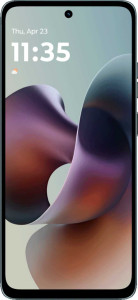
Both phones cover the connectivity basics well — 5G, NFC, USB Type-C, Bluetooth 5.3, GPS, and Galileo support are shared across the board. The divergence begins with Wi-Fi. The Pixel 9a supports Wi-Fi 6E, the latest generation that unlocks the less congested 6 GHz band for faster, more stable connections in crowded environments, while the Moto G66j tops out at Wi-Fi 5. For anyone with a Wi-Fi 6E router, the Pixel will deliver meaningfully better wireless throughput and reliability.
The USB gap is equally telling. The Pixel 9a's USB 3.2 interface enables fast wired data transfers — moving large files, video, or doing device backups — while the Moto G66j's USB 2.0 is substantially slower for data, limited to roughly one-tenth the theoretical throughput. The Pixel also adds crash detection and a barometer — the former a genuine safety feature that can automatically call emergency services after a serious accident, and the latter useful for altitude tracking and weather apps. The Moto G66j has neither.
The Moto G66j's sole connectivity advantage is its external memory slot, allowing users to expand storage cheaply via a microSD card — a practical perk the Pixel 9a, with its fixed storage, cannot match. Still, taken as a whole, the Pixel 9a holds a clear and broad connectivity edge, with superior Wi-Fi, faster USB, crash detection, and environmental sensing all tipping the balance decisively in its favor.