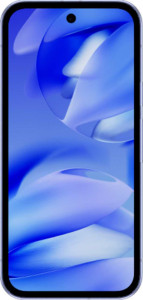
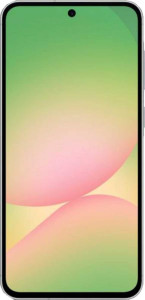
Google Pixel 9a
Samsung Galaxy A56 5G

Google Pixel 9a Samsung Galaxy A56 5G

Overview

Welcome to our in-depth spec comparison between the Google Pixel 9a and the Samsung Galaxy A56 5G — two compelling mid-range Android smartphones that take very different paths to win you over. From their distinct display sizes and brightness levels to contrasting approaches to camera versatility and battery charging, these two devices each have a strong case to make. Read on as we break down every key specification to help you find your perfect match.

Common Features

  • Both phones are waterproof with no rugged build and cannot be folded.
  • Both feature an OLED/AMOLED display with a 120Hz refresh rate.
  • Both displays support HDR10 and include an Always-On Display.
  • Neither display supports Dolby Vision or has a secondary screen.
  • Both phones have damage-resistant glass on their displays.
  • Both offer 256GB of internal storage built on a 4nm semiconductor.
  • Both support 64-bit processing, DirectX 12, OpenGL ES 3.2, and big.LITTLE technology.
  • Both have integrated LTE and integrated graphics.
  • Both cameras feature optical image stabilization, a CMOS sensor, phase-detection autofocus, and continuous autofocus during video.
  • Both support slow-motion video recording and have a built-in HDR mode.
  • Both support manual exposure in their camera apps.
  • Both phones run Android 15 with theme customization and the ability to block app tracking.
  • Both include clipboard warnings and location privacy options, as well as camera and microphone privacy options.
  • Neither phone blocks cross-site tracking or has Mail Privacy Protection.
  • Both support fast charging but do not come with a charger in the box.
  • Both have a non-removable battery with an ultra power-saving mode and a battery level indicator.
  • Neither phone has a 3.5mm audio jack, but both feature stereo speakers and two microphones.
  • Neither phone has a radio.
  • Both support 5G, Bluetooth 5.3, NFC, USB Type-C, and have a fingerprint scanner.
  • Both lack an external memory slot and do not support emergency SOS via satellite, but both include a gyroscope.

Main Differences

  • Weight is 186g on Google Pixel 9a and 198g on Samsung Galaxy A56 5G.
  • Thickness is 8.9mm on Google Pixel 9a and 7.4mm on Samsung Galaxy A56 5G.
  • Width is 73.3mm on Google Pixel 9a and 77.5mm on Samsung Galaxy A56 5G.
  • Height is 154.7mm on Google Pixel 9a and 162.2mm on Samsung Galaxy A56 5G.
  • IP rating is IP68 on Google Pixel 9a and IP67 on Samsung Galaxy A56 5G.
  • Screen size is 6.3″ on Google Pixel 9a and 6.7″ on Samsung Galaxy A56 5G.
  • Pixel density is 422 ppi on Google Pixel 9a and 385 ppi on Samsung Galaxy A56 5G.
  • Typical brightness is 1800 nits on Google Pixel 9a and 1200 nits on Samsung Galaxy A56 5G.
  • Gorilla Glass version is Gorilla Glass 3 on Google Pixel 9a and Gorilla Glass Victus on Samsung Galaxy A56 5G.
  • HDR10+ support is present on Samsung Galaxy A56 5G but not available on Google Pixel 9a.
  • RAM is 8GB on Google Pixel 9a and 12GB on Samsung Galaxy A56 5G.
  • AnTuTu benchmark score is 1,071,616 on Google Pixel 9a and 932,578 on Samsung Galaxy A56 5G.
  • The chipset is Google Tensor G4 on Google Pixel 9a and Samsung Exynos 1580 on Samsung Galaxy A56 5G.
  • Geekbench 6 multi-core score is 4500 on Google Pixel 9a and 3893 on Samsung Galaxy A56 5G.
  • Main camera setup is 48MP and 13MP on Google Pixel 9a, while Samsung Galaxy A56 5G has 50MP, 12MP, and 5MP.
  • 4K video recording goes up to 60fps on Google Pixel 9a and 30fps on Samsung Galaxy A56 5G.
  • RAW shooting, BSI sensor, manual shutter speed, and HDR10 recording are available on Google Pixel 9a but not on Samsung Galaxy A56 5G.
  • Direct OS updates are provided for Google Pixel 9a but not for Samsung Galaxy A56 5G.
  • Battery capacity is 5100 mAh on Google Pixel 9a and 5000 mAh on Samsung Galaxy A56 5G.
  • Wireless charging is supported on Google Pixel 9a but not on Samsung Galaxy A56 5G.
  • Wired charging speed is 23W on Google Pixel 9a and 45W on Samsung Galaxy A56 5G.
  • LDAC audio support is present on Google Pixel 9a but not on Samsung Galaxy A56 5G.
  • Wi-Fi 6E support is available on Google Pixel 9a but Samsung Galaxy A56 5G tops out at Wi-Fi 6.
  • SIM support is 1 SIM and 1 eSIM on Google Pixel 9a, while Samsung Galaxy A56 5G supports 2 SIMs and 2 eSIMs.
  • Crash detection and a barometer are present on Google Pixel 9a but not on Samsung Galaxy A56 5G.
Specs Comparison
Google Pixel 9a

Google Pixel 9a

Samsung Galaxy A56 5G

Samsung Galaxy A56 5G

Design:
water resistance Waterproof Waterproof
weight 186 g 198 g
thickness 8.9 mm 7.4 mm
width 73.3 mm 77.5 mm
height 154.7 mm 162.2 mm
volume 100.921639 cm³ 93.0217 cm³
Ingress Protection (IP) rating IP68 IP67
has a rugged build
can be folded

Both phones share a waterproof rating and a standard, non-rugged slab form factor, but they diverge meaningfully in how that protection is certified and how the devices feel in hand. The Google Pixel 9a carries an IP68 rating, meaning it is tested to withstand submersion in up to 1.5 meters of fresh water for 30 minutes, while the Samsung Galaxy A56 5G is rated IP67, which covers the same depth but is generally considered a slightly less rigorous certification in terms of manufacturer testing tolerances. For most everyday scenarios — rain, splashes, accidental drops in shallow water — both phones offer equivalent real-world protection, but the Pixel 9a holds a technical edge for users who want the higher-rated peace of mind.

The physical design trade-offs are where the two diverge most sharply. The A56 is notably thinner at 7.4 mm versus the Pixel 9a's 8.9 mm, making it feel sleeker and more pocket-friendly in terms of profile. However, it achieves this on a larger footprint — taller at 162.2 mm and wider at 77.5 mm — which means it demands more one-handed reach. The Pixel 9a, while chunkier in thickness, is more compact overall (154.7 × 73.3 mm) and lighter at 186 g compared to the A56's 198 g. That 12-gram difference is perceptible over long usage sessions and gives the Pixel 9a a more manageable, balanced feel despite its extra bulk.

Overall, the Pixel 9a has a clear design advantage for users who prioritize a compact footprint, lighter weight, and stronger water resistance certification. The A56 appeals to those who prefer a slimmer profile and a larger frame — but it trades away some ergonomic comfort and a full IP68 rating to get there.

Display:
Display type OLED/AMOLED OLED/AMOLED
screen size 6.3" 6.7"
pixel density 422 ppi 385 ppi
resolution 1080 x 2424 px 1080 x 2340 px
refresh rate 120Hz 120Hz
brightness (typical) 1800 nits 1200 nits
has branded damage-resistant glass
Gorilla Glass version Gorilla Glass 3 Gorilla Glass Victus
supports HDR10
supports HDR10+
Always-On Display
supports Dolby Vision
Has a secondary screen
has a touch screen

Both screens are OLED/AMOLED panels with a 120Hz refresh rate, HDR10, and Always-On Display support, so the baseline experience is strong on either phone. The critical split comes down to brightness and pixel density. The Pixel 9a peaks at a 1800 nits typical brightness versus the A56's 1200 nits — a 50% advantage that translates directly into far better legibility in harsh sunlight. For outdoor users, this gap is genuinely noticeable and not just a spec sheet number.

On sharpness, the Pixel 9a's smaller 6.3-inch screen at 422 ppi is noticeably crisper than the A56's 6.7-inch panel at 385 ppi. Both exceed the threshold where individual pixels become imperceptible at normal viewing distances, but the Pixel 9a's density advantage is meaningful for fine text and detailed imagery. The A56 counters with Gorilla Glass Victus protection — a newer, more drop-resistant generation compared to the Pixel 9a's Gorilla Glass 3, which is several generations older and noticeably less robust against accidental impacts. The A56 also adds HDR10+ support, enabling dynamic tone mapping for compatible content, though real-world HDR10+ content availability remains limited.

The display comparison produces a split verdict depending on priorities. The Pixel 9a has the edge in raw visual quality — higher brightness and sharper pixel density make it the stronger screen for everyday viewing and outdoor use. The A56 counters meaningfully with superior glass protection and HDR10+ support, making it the better choice for users who prioritize screen durability and a larger canvas. Neither phone dominates outright, but the Pixel 9a's brightness advantage carries more practical weight for most users.

Performance:
internal storage 256GB 256GB
RAM 8GB 12GB
AnTuTu benchmark score 1071616 932578
Chipset (SoC) name Google Tensor G4 Samsung Exynos 1580
GPU name ARM Mali-G715 MP7 Xclipse 530
CPU speed 1 x 3.1 & 3 x 2.6 & 4 x 1.92 GHz 1 x 2.9 & 3 x 2.6 & 4 x 1.95 GHz
Geekbench 6 result (multi) 4500 3893
Geekbench 6 result (single) 1600 1360
GPU clock speed 940 MHz 1300 MHz
Has integrated LTE
RAM speed 4200 MHz 3200 MHz
semiconductor size 4 nm 4 nm
Supports 64-bit
DirectX version DirectX 12 DirectX 12
Has integrated graphics
OpenGL ES version 3.2 3.2
Uses big.LITTLE technology
CPU threads 8 threads 8 threads
Uses HMP
Has TrustZone
OpenCL version 2 2
maximum memory amount 16GB 12GB
DDR memory version 5 5
L3 cache 4 MB 4 MB

Sharing the same 4 nm fabrication process and identical storage at 256GB, these two phones arrive at very different performance outcomes. The Pixel 9a's Google Tensor G4 leads across every benchmark provided: its AnTuTu score of 1,071,616 versus the A56's 932,578 represents a roughly 15% gap, and the Geekbench 6 results tell a consistent story — the Pixel 9a posts 1600 single-core and 4500 multi-core against the Exynos 1580's 1360 and 3893 respectively. Single-core performance is especially relevant for everyday responsiveness — app launches, UI animations, and web browsing — making the Pixel 9a's lead there tangible in daily use.

The A56 fights back with 12GB of RAM compared to the Pixel 9a's 8GB, and a higher ceiling of 12GB maximum versus the Pixel 9a's expandable-to-16GB maximum. More RAM generally means more apps can stay resident in the background without being force-closed, which benefits heavy multitaskers. However, the Pixel 9a's RAM runs at a faster 4200 MHz versus the A56's 3200 MHz, which partially offsets the raw capacity difference by allowing quicker data throughput between the processor and memory.

The Pixel 9a holds a clear performance edge. Its Tensor G4 chip outpaces the Exynos 1580 meaningfully on both raw compute and memory bandwidth, and those benchmark gaps reflect real-world advantages in processing speed. The A56's extra 4GB of RAM is a genuine counterpoint for multitasking-heavy users, but it cannot close the processing gap — making the Pixel 9a the stronger performer in this category overall.

Cameras:
megapixels (main camera) 48 & 13 MP 50 & 12 & 5 MP
wide aperture (main camera) 2.2 & 1.7f 1.8 & 2.2 & 2.4f
Has a dual-lens (or multi-lens) main camera
megapixels (front camera) 13MP 12MP
has built-in optical image stabilization
video recording (main camera) 2160 x 60 fps 2160 x 30 fps
Has a dual-tone LED flash
number of flash LEDs 2 1
has a BSI sensor
has a CMOS sensor
has continuous autofocus when recording movies
Has phase-detection autofocus for photos
supports slow-motion video recording
has a built-in HDR mode
has manual exposure
has a flash
has manual ISO
has a serial shot mode
has manual focus
has a front camera
Has laser autofocus
Shoots 360° panorama
has manual white balance
shoots raw
has touch autofocus
has manual shutter speed
can create panoramas in-camera
wide aperture (front camera) 2.2f 2.2f
Has timelapse function
Has a front-facing LED flash
has a dual-lens (or multi-lens) front camera
supports HDR10 recording
supports Dolby Vision recording
has a front-facing camera under the display
Has a RGB LED flash
has 3D photo/video recording capabilities

The Google Pixel 9a and Samsung Galaxy A56 5G both feature multi-lens main cameras, but with different configurations. The Pixel 9a has a 48 MP and 13 MP dual-lens setup, with aperture values of f/2.2 and f/1.7. In comparison, the A56 5G uses a 50 MP, 12 MP, and 5 MP triple-lens setup, with aperture values of f/1.8, f/2.2, and f/2.4, respectively. Both phones support phase-detection autofocus, continuous autofocus during video recording, and have a flash, but the Pixel 9a includes a dual-tone LED flash with two LEDs, while the A56 5G has a single LED flash without the dual-tone feature.

For video recording, the Pixel 9a supports 4K video at 60 fps, whereas the A56 5G records 4K at 30 fps. Both phones support slow-motion video, HDR recording, and have manual exposure controls, but the Pixel 9a also supports HDR10 recording, which the A56 5G does not. Additionally, the Pixel 9a supports shooting in raw format, while the A56 5G does not.

The front cameras are both 13 MP for the Pixel 9a and 12 MP for the A56 5G, each with a wide aperture of f/2.2. Neither device has a front-facing LED flash or a dual-lens front camera. Both support timelapse functions, have manual white balance, and include touch autofocus, but only the Pixel 9a features manual shutter speed adjustments. Neither phone includes advanced features like 3D photo/video recording or a front-facing camera under the display.

Operating system:
Android version Android 15 Android 15
has clipboard warnings
has location privacy options
has camera/microphone privacy options
has Mail Privacy Protection
has theme customization
can block app tracking
blocks cross-site tracking
has on-device machine learning
has notification permissions
has media picker
Can play games while they download
has dark mode
has Wi-Fi password sharing
has battery health check
has an extra dim mode
has focus modes
has dynamic theming
can offload apps
Has customizable notifications
has Live Text
has full-page screenshots
supports split screen
gets direct OS updates
has PiP
Can be used as a PC
Has sharing intents
has a child lock
Supports widgets
Is free and open source
Has offline voice recognition
has voice commands
Tracks the current position of a mobile device
is a multi-user system
has Quick Start

Both the Google Pixel 9a and Samsung Galaxy A56 5G run Android 15 and share a range of similar features. Both phones include clipboard warnings, location and camera/microphone privacy options, theme customization, the ability to block app tracking, and on-device machine learning. They also support media pickers, customizable notifications, dark mode, Wi-Fi password sharing, battery health checks, an extra dim mode, and dynamic theming. Both phones offer PiP (Picture-in-Picture) mode, offline voice recognition, voice commands, and the ability to track the current position of the device.

The Pixel 9a stands out by providing direct OS updates, while the Galaxy A56 5G does not. Additionally, the Pixel 9a includes some extra features such as Live Text, full-page screenshots, focus modes, and sharing intents. The A56 5G lacks focus modes but includes the same core functionalities, like PiP and widgets.

Neither phone offers the ability to be used as a PC, and neither has Quick Start functionality. Both devices are free and open-source and support multi-user systems. Notably, the A56 5G does not block cross-site tracking, while the Pixel 9a does not include Mail Privacy Protection. Overall, both devices offer a very similar set of features with a few key differences in update management and privacy options.

Battery:
battery power 5100 mAh 5000 mAh
has wireless charging
Supports fast charging
charging speed 23W 45W
comes with a charger
has a removable battery
Has an ultra power-saving mode
has a battery level indicator
Battery life 30 hours 29 hours
has a rechargeable battery

The Google Pixel 9a and Samsung Galaxy A56 5G have very similar battery features, though there are some key differences. The Pixel 9a has a 5100 mAh battery, while the Galaxy A56 5G features a slightly smaller 5000 mAh battery. Both phones support fast charging, but the Pixel 9a charges at a speed of 23W, while the A56 5G supports a faster 45W charging speed.

Wireless charging is supported by the Pixel 9a but not the A56 5G. Both devices have ultra power-saving modes, battery level indicators, and rechargeable batteries. The Pixel 9a offers a battery life of 30 hours, while the A56 5G has a slightly shorter battery life of 29 hours.

Neither device comes with a charger, and neither has a removable battery. Both phones include a rechargeable battery, with the same overall functionality in terms of power management features.

Audio:
has a socket for a 3.5 mm audio jack
has stereo speakers
has LDAC
Has a radio
number of microphones 2 2

Both the Google Pixel 9a and Samsung Galaxy A56 5G do not feature a 3.5 mm audio jack, meaning users will need to rely on wireless or USB-C audio solutions. Both phones are equipped with stereo speakers, providing a more immersive sound experience. The Pixel 9a supports LDAC, which allows for high-resolution audio streaming over Bluetooth, while the A56 5G does not support LDAC.

In terms of microphones, both devices have two microphones, ensuring clear voice capture for calls and recordings. Neither phone includes a built-in radio.

Connectivity & Features:
release date March 2025 March 2025
has 5G support
Wi-Fi version Wi-Fi 6E (802.11ax), Wi-Fi 6 (802.11ax), Wi-Fi 5 (802.11ac), Wi-Fi 4 (802.11n) Wi-Fi 4 (802.11n), Wi-Fi 5 (802.11ac), Wi-Fi 6 (802.11ax)
SIM cards 1 SIM, 1 eSIM 2 SIM, 2 eSIM
Bluetooth version 5.3 5.3
has an external memory slot
Has USB Type-C
USB version 3.2 2
has NFC
Has a fingerprint scanner
has emergency SOS via satellite
has crash detection
has a gyroscope
supports ANT+
Has a heart rate monitor
has GPS
has a compass
supports Wi-Fi
Has an infrared sensor
has an accelerometer
has a cellular module
Has a barometer
has an HDMI output
Uses 3D facial recognition
Has an iris scanner
Stylus included
supports Galileo
Has motion tracking
Has optical tracking
Has a built-in projector

Both the Google Pixel 9a and Samsung Galaxy A56 5G support 5G connectivity, ensuring fast mobile network speeds. The Pixel 9a features Wi-Fi 6E, Wi-Fi 6, Wi-Fi 5, and Wi-Fi 4, while the Galaxy A56 5G supports Wi-Fi 4, Wi-Fi 5, and Wi-Fi 6, but lacks support for Wi-Fi 6E. The Pixel 9a also has USB Type-C 3.2, whereas the A56 5G uses USB Type-C 2.0. Both phones are equipped with Bluetooth 5.3 and NFC capabilities, as well as fingerprint scanners for security.

The Pixel 9a supports a single SIM and eSIM, while the A56 5G supports two SIMs and two eSIMs, offering more flexibility in terms of cellular connectivity. Both devices lack external memory slots but include GPS, a compass, an accelerometer, and a gyroscope. Notably, the Pixel 9a features a barometer, which the A56 5G does not.

Neither phone supports emergency SOS via satellite, 3D facial recognition, iris scanning, or includes a stylus or built-in projector. The Pixel 9a offers crash detection, while the A56 5G does not. Both phones support Galileo for satellite navigation, but neither device has motion tracking or optical tracking, and neither includes an infrared sensor or HDMI output.

Miscellaneous:
has a video light
Has sapphire glass display
Has a curved display
Has an e-paper display

Both the Google Pixel 9a and Samsung Galaxy A56 5G feature a video light, allowing for better lighting during video recordings. Neither device includes sapphire glass displays, curved displays, or e-paper displays, so both have more traditional screen technologies. These features are identical across both products, with no differences in this group.

Overall, both devices share the same set of miscellaneous display and video features, offering a similar experience in this area.

Comparison Summary & Verdict

After examining every spec, the Google Pixel 9a and Samsung Galaxy A56 5G reveal themselves as two well-rounded mid-rangers built for different priorities. The Pixel 9a stands out with a brighter 1800-nit display, stronger benchmark performance, a more capable camera system featuring RAW shooting and HDR10 recording, wireless charging, Wi-Fi 6E, and the assurance of direct OS updates — making it the smarter pick for power users and photography enthusiasts. The Samsung Galaxy A56 5G, on the other hand, counters with a larger 6.7-inch screen, a slimmer 7.4mm profile, faster 45W wired charging, 12GB of RAM, Gorilla Glass Victus protection, and dual physical SIM support, appealing to users who value a bigger display, faster top-up speeds, and everyday durability. Neither phone is a clear-cut winner — your ideal choice hinges firmly on what you value most in a daily driver.

Google Pixel 9a
Buy Google Pixel 9a if...

Buy the Google Pixel 9a if you want a brighter display, superior benchmark performance, a more advanced camera system with RAW support and HDR10 recording, wireless charging, Wi-Fi 6E, and guaranteed direct OS updates.

Samsung Galaxy A56 5G
Buy Samsung Galaxy A56 5G if...

Buy the Samsung Galaxy A56 5G if you prefer a larger 6.7-inch screen, a slimmer design, faster 45W wired charging, 12GB of RAM, Gorilla Glass Victus protection, or the flexibility of dual physical SIM and eSIM support.