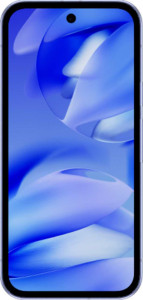
Google Pixel 9a
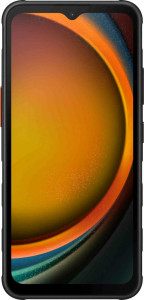
Samsung Galaxy XCover 7 Pro

Google Pixel 9a Samsung Galaxy XCover 7 Pro

Overview

Welcome to our in-depth spec comparison between the Google Pixel 9a and the Samsung Galaxy XCover 7 Pro. These two Android 15 smartphones take very different approaches to the mid-range segment, with the Pixel 9a focusing on display quality and camera performance, while the XCover 7 Pro leans into rugged durability and field-ready practicality. Read on as we break down their key differences across design, performance, cameras, battery, and more.

Common Features

  • Both phones are waterproof with an IP68 ingress protection rating.
  • Neither phone can be folded.
  • Both displays have a 120Hz refresh rate.
  • Both phones feature branded damage-resistant glass.
  • HDR10+ support is not available on either phone.
  • Dolby Vision support is not available on either phone.
  • Neither phone has a secondary screen.
  • Both phones have a touchscreen.
  • Both chipsets are built on a 4 nm semiconductor process.
  • Both phones support 64-bit processing.
  • Both phones use big.LITTLE CPU technology with 8 threads.
  • Both phones have integrated LTE and integrated graphics.
  • Both phones run Android 15.
  • Both phones have a dual-lens main camera system.
  • The front camera is 13MP on both phones.
  • Both phones have a dual-tone LED flash with 2 LEDs.
  • Both phones support slow-motion video recording and continuous autofocus when recording.
  • Both phones support fast charging and have a rechargeable battery with a battery level indicator.
  • Neither phone has a 3.5mm audio jack, while both feature stereo speakers.
  • Both phones support 5G, NFC, USB Type-C (USB 3.2), have a fingerprint scanner, a gyroscope, and Wi-Fi 6E.

Main Differences

  • Weight is 186 g on Google Pixel 9a and 240 g on Samsung Galaxy XCover 7 Pro.
  • Thickness is 8.9 mm on Google Pixel 9a and 10.2 mm on Samsung Galaxy XCover 7 Pro.
  • Height is 154.7 mm on Google Pixel 9a and 168.6 mm on Samsung Galaxy XCover 7 Pro.
  • A rugged build is present on Samsung Galaxy XCover 7 Pro but not on Google Pixel 9a.
  • Display type is OLED/AMOLED on Google Pixel 9a and LCD IPS on Samsung Galaxy XCover 7 Pro.
  • Screen size is 6.3″ on Google Pixel 9a and 6.6″ on Samsung Galaxy XCover 7 Pro.
  • Pixel density is 422 ppi on Google Pixel 9a and 400 ppi on Samsung Galaxy XCover 7 Pro.
  • Gorilla Glass version is Gorilla Glass 3 on Google Pixel 9a and Gorilla Glass DX+ on Samsung Galaxy XCover 7 Pro.
  • HDR10 support is present on Google Pixel 9a but not available on Samsung Galaxy XCover 7 Pro.
  • Always-On Display is available on Google Pixel 9a but not on Samsung Galaxy XCover 7 Pro.
  • The chipset is Google Tensor G4 on Google Pixel 9a and Qualcomm Snapdragon 7s Gen 3 on Samsung Galaxy XCover 7 Pro.
  • RAM is 8GB on Google Pixel 9a and 6GB on Samsung Galaxy XCover 7 Pro.
  • Internal storage is 256GB on Google Pixel 9a and 128GB on Samsung Galaxy XCover 7 Pro.
  • Geekbench 6 multi-core score is 4500 on Google Pixel 9a and 3239 on Samsung Galaxy XCover 7 Pro.
  • Optical image stabilization is present on Google Pixel 9a but not available on Samsung Galaxy XCover 7 Pro.
  • Main camera video recording goes up to 2160p at 60fps on Google Pixel 9a and 1080p at 30fps on Samsung Galaxy XCover 7 Pro.
  • Direct OS updates are provided to Google Pixel 9a but not to Samsung Galaxy XCover 7 Pro.
  • Battery capacity is 5100 mAh on Google Pixel 9a and 4350 mAh on Samsung Galaxy XCover 7 Pro.
  • Wireless charging is available on Google Pixel 9a but not on Samsung Galaxy XCover 7 Pro.
  • A removable battery is featured on Samsung Galaxy XCover 7 Pro but not on Google Pixel 9a.
  • Charging speed is 23W on Google Pixel 9a and 15W on Samsung Galaxy XCover 7 Pro.
  • A charger is included in the box with Samsung Galaxy XCover 7 Pro but not with Google Pixel 9a.
  • aptX and LDAC audio codec support are available on Google Pixel 9a but not on Samsung Galaxy XCover 7 Pro.
  • An external memory slot is present on Samsung Galaxy XCover 7 Pro but not on Google Pixel 9a.
  • Crash detection is available on Google Pixel 9a but not on Samsung Galaxy XCover 7 Pro.
  • Bluetooth version is 5.3 on Google Pixel 9a and 5.4 on Samsung Galaxy XCover 7 Pro.
  • Google Pixel 9a uses 1 SIM and 1 eSIM, while Samsung Galaxy XCover 7 Pro supports 2 physical SIM cards.
Specs Comparison
Google Pixel 9a

Google Pixel 9a

Samsung Galaxy XCover 7 Pro

Samsung Galaxy XCover 7 Pro

Design:
water resistance Waterproof Waterproof
weight 186 g 240 g
thickness 8.9 mm 10.2 mm
width 73.3 mm 79.9 mm
height 154.7 mm 168.6 mm
volume 100.921639 cm³ 137.405628 cm³
Ingress Protection (IP) rating IP68 IP68
has a rugged build
can be folded

Both the Google Pixel 9a and the Samsung Galaxy XCover 7 Pro carry an IP68 waterproof rating, meaning neither has an advantage in water resistance — both can handle submersion under the same standardized conditions. That shared baseline, however, is where the design similarities largely end.

The most meaningful differentiator is build philosophy. The XCover 7 Pro has a rugged build, which explains its significantly larger physical footprint: at 240 g, it is 54 g heavier than the Pixel 9a's 186 g, and at 10.2 mm thick versus 8.9 mm, it is noticeably bulkier. Its greater height and width translate to a volume of roughly 137.4 cm³ compared to the Pixel 9a's 100.9 cm³ — about 36% more mass overall. In practice, the XCover 7 Pro is built to absorb drops, shocks, and harsh environments beyond what IP68 alone guarantees, while the Pixel 9a is a standard-form consumer device that prioritizes slim, pocketable ergonomics.

The Pixel 9a has the clear edge for everyday comfort — it is lighter, thinner, and easier to handle one-handed. The XCover 7 Pro wins for durability in demanding conditions, where its rugged construction justifies the added bulk. The right choice comes down to use case: general consumer use favors the Pixel 9a, while field, industrial, or outdoor-heavy use favors the XCover 7 Pro.

Display:
Display type OLED/AMOLED LCD, IPS
screen size 6.3" 6.6"
pixel density 422 ppi 400 ppi
resolution 1080 x 2424 px 1080 x 2408 px
refresh rate 120Hz 120Hz
has branded damage-resistant glass
Gorilla Glass version Gorilla Glass 3 Gorilla Glass DX+
supports HDR10
supports HDR10+
Always-On Display
supports Dolby Vision
Has a secondary screen
has a touch screen

The panel technology gap is the single biggest story here. The Pixel 9a uses an OLED/AMOLED display, which delivers true blacks, higher contrast, and more vibrant color reproduction by powering pixels individually — while the XCover 7 Pro relies on an LCD IPS panel, which backlights the entire screen and cannot match OLED's depth or energy efficiency on dark content. For media consumption, gaming, or anything visually demanding, the Pixel 9a's screen will look noticeably richer.

Tied at 120Hz and near-identical resolutions, the two phones feel equally smooth in scrolling and interaction. Pixel density is also close — 422 ppi on the Pixel 9a versus 400 ppi on the XCover 7 Pro — meaning sharpness is comparable in everyday use despite the Pixel 9a's smaller 6.3″ screen versus the XCover 7 Pro's larger 6.6″ panel. The Pixel 9a additionally supports HDR10 and features an Always-On Display, both absent on the XCover 7 Pro, adding to its multimedia and convenience credentials. On the protection side, the XCover 7 Pro counters with Gorilla Glass DX+ — a variant engineered specifically for outdoor readability and scratch resistance — versus the Pixel 9a's older Gorilla Glass 3, which is a meaningful trade-off for rugged-use scenarios.

Overall, the Pixel 9a holds a clear display advantage for general consumers: superior panel technology, HDR10, and Always-On Display outweigh the size difference. The XCover 7 Pro's Gorilla Glass DX+ gives it a niche edge for outdoor and high-wear environments, but cannot compensate for the fundamental gap in screen quality.

Performance:
internal storage 256GB 128GB
RAM 8GB 6GB
Chipset (SoC) name Google Tensor G4 Qualcomm Snapdragon 7s Gen 3
GPU name ARM Mali-G715 MP7 Adreno 710
CPU speed 1 x 3.1 & 3 x 2.6 & 4 x 1.92 GHz 1 x 2.5 & 3 x 2.4 & 4 x 1.8 GHz
Geekbench 6 result (multi) 4500 3239
Geekbench 6 result (single) 1600 1162
GPU clock speed 940 MHz 1050 MHz
Has integrated LTE
RAM speed 4200 MHz 3200 MHz
semiconductor size 4 nm 4 nm
Supports 64-bit
DirectX version DirectX 12 DirectX 12
Has integrated graphics
OpenGL ES version 3.2 3.2
Uses big.LITTLE technology
CPU threads 8 threads 8 threads
Uses HMP
Has TrustZone
OpenCL version 2 2
maximum memory amount 16GB 16GB
Thermal Design Power (TDP) 6W 5W
DDR memory version 5 5

Benchmarks tell a decisive story here. The Pixel 9a's Google Tensor G4 scores approximately 4500 multi-core and 1600 single-core on Geekbench 6, compared to 3239 multi-core and 1162 single-core for the XCover 7 Pro's Snapdragon 7s Gen 3. That translates to roughly a 39% multi-core advantage and a 38% single-core lead — gaps large enough to be felt in real-world tasks like app launch times, photo processing, and sustained workloads under pressure.

Memory compounds the difference. The Pixel 9a ships with 8GB of RAM running at 4200 MHz versus 6GB at 3200 MHz on the XCover 7 Pro — meaning it can keep more apps alive in the background and feed the processor data faster. Storage is equally lopsided: 256GB versus 128GB, doubling the base capacity for files, apps, and media. Both chips are manufactured on a 4nm process with DDR5 memory and share architectural features like big.LITTLE and HMP scheduling, so neither has a structural efficiency edge — the Pixel 9a simply operates at a higher performance tier within that shared foundation.

The Pixel 9a holds an unambiguous performance advantage across CPU throughput, RAM capacity and speed, and storage. For users who multitask heavily, work with demanding apps, or simply want headroom for the years ahead, the gap is meaningful. The XCover 7 Pro's chipset is capable for everyday use, but cannot match the Pixel 9a on any raw performance dimension provided in the data.

Cameras:
megapixels (main camera) 48 & 13 MP 50 & 8 MP
Has a dual-lens (or multi-lens) main camera
megapixels (front camera) 13MP 13MP
has built-in optical image stabilization
video recording (main camera) 2160 x 60 fps 1080 x 30 fps
Has a dual-tone LED flash
number of flash LEDs 2 2
has a BSI sensor
has a CMOS sensor
has continuous autofocus when recording movies
Has phase-detection autofocus for photos
supports slow-motion video recording
has a built-in HDR mode
has manual exposure
has a flash
has manual ISO
has a serial shot mode
has manual focus
has a front camera
Has laser autofocus
Shoots 360° panorama
has manual white balance
shoots raw
has touch autofocus
has manual shutter speed
can create panoramas in-camera
wide aperture (front camera) 2.2f 2.2 & 1.8f
Has a front-facing LED flash
has a dual-lens (or multi-lens) front camera
has a front-facing camera under the display
Has a RGB LED flash
has 3D photo/video recording capabilities

Video capability alone draws a sharp line between these two. The Pixel 9a records at up to 4K 60fps, while the XCover 7 Pro tops out at 1080p 30fps — a two-generation gap in video quality that matters significantly for anyone who shoots footage they intend to keep, share, or edit. Paired with optical image stabilization (OIS), which the XCover 7 Pro lacks entirely, the Pixel 9a produces far steadier handheld video and sharper low-light photos by physically compensating for hand movement at the sensor level.

The Pixel 9a also supports RAW shooting and manual shutter speed control — both absent on the XCover 7 Pro — giving photographers meaningful creative and post-processing latitude. Its main camera uses a BSI sensor, which is engineered to capture more light per pixel, a tangible advantage in dim conditions. The XCover 7 Pro counters with a slightly higher 50 MP primary sensor versus 48 MP, but that margin is negligible in practice. Its secondary lens comes in at 8 MP compared to the Pixel 9a's 13 MP ultrawide, a more meaningful gap for secondary shots. On the front camera, both offer 13 MP at the same aperture on the primary lens, so selfie quality is comparable.

The Pixel 9a holds a commanding camera advantage. OIS, 4K video, RAW support, and a BSI sensor form a combination the XCover 7 Pro cannot match — the latter is adequate for documentation and field use, but the Pixel 9a is the clear choice for users who prioritize photographic and video output.

Operating system:
Android version Android 15 Android 15
has clipboard warnings
has location privacy options
has camera/microphone privacy options
has Mail Privacy Protection
has theme customization
can block app tracking
blocks cross-site tracking
has on-device machine learning
has notification permissions
has media picker
Can play games while they download
has dark mode
has Wi-Fi password sharing
has battery health check
has an extra dim mode
has focus modes
has dynamic theming
can offload apps
Has customizable notifications
has Live Text
has full-page screenshots
supports split screen
gets direct OS updates
has PiP
Can be used as a PC
Has sharing intents
has a child lock
Supports widgets
Is free and open source
Has offline voice recognition
has voice commands
Tracks the current position of a mobile device
is a multi-user system
has Quick Start

At the software feature level, these two phones are virtually identical — both launch on Android 15 and share the same extensive list of privacy controls, productivity tools, and customization options across the board. Dark mode, dynamic theming, split-screen, Picture-in-Picture, on-device machine learning, and granular app permissions are all present on both devices. For day-to-day software experience, users switching between these two would notice no functional difference.

The only spec that separates them in this category is also the one with the longest tail: the Pixel 9a receives direct OS updates from Google, while the XCover 7 Pro does not. Direct updates mean the Pixel 9a gets new Android versions and security patches as soon as Google releases them, without waiting for a manufacturer or carrier to repackage and approve them. That delay — often weeks or months on non-direct update devices — has real security implications, particularly for enterprise or field deployments where the XCover 7 Pro's rugged profile might otherwise make it appealing.

As a result, the Pixel 9a takes the edge in this group, and it is a meaningful one over a multi-year ownership period. Feature parity today does not guarantee parity tomorrow — timely updates determine how long that parity holds and how well-protected the device remains throughout its lifespan.

Battery:
battery power 5100 mAh 4350 mAh
has wireless charging
Supports fast charging
charging speed 23W 15W
comes with a charger
has a removable battery
has a battery level indicator
has a rechargeable battery

Raw capacity favors the Pixel 9a decisively: its 5100 mAh battery holds 17% more charge than the XCover 7 Pro's 4350 mAh cell — a gap that, in practical terms, translates to a meaningful buffer of extra screen-on time before reaching for a cable. The Pixel 9a also charges faster at 23W versus 15W, and adds wireless charging, which the XCover 7 Pro does not support at all. For most users, this combination of larger capacity, faster wired charging, and wireless convenience gives the Pixel 9a a well-rounded battery package.

The XCover 7 Pro holds one card the Pixel 9a cannot match: a removable battery. In field, industrial, or emergency contexts — precisely the environments its rugged build targets — the ability to swap in a fully charged spare unit without any downtime is operationally significant. It also ships with a charger included, a minor but practical advantage out of the box.

For general consumers, the Pixel 9a wins this category on nearly every dimension that matters day-to-day. The XCover 7 Pro's removable battery is a specialized advantage that is genuinely compelling in its intended deployment scenarios, but it cannot offset the Pixel 9a's larger capacity, faster charging, and wireless charging support for everyday use.

Audio:
has a socket for a 3.5 mm audio jack
has stereo speakers
has aptX
has LDAC
has aptX HD
has aptX Adaptive
Has a radio

Wired and speaker output are identical here — neither phone has a 3.5mm audio jack, and both feature stereo speakers, so anyone listening out loud is on equal footing. The meaningful split happens over Bluetooth audio codecs. The Pixel 9a supports both aptX and LDAC; the XCover 7 Pro supports neither.

That gap matters for wireless headphone users. LDAC in particular is Sony's high-resolution codec capable of transmitting significantly more audio data per second than standard Bluetooth, making it the preferred choice for audiophiles or anyone using compatible high-quality wireless headphones. aptX improves latency and audio quality over standard SBC. The XCover 7 Pro is limited to whatever baseline codec its connected device falls back to, which in most cases means lower fidelity and potentially more lag during video playback.

The Pixel 9a holds a clear advantage in this group for wireless audio quality. For users who invest in capable Bluetooth headphones, codec support is not a trivial detail — it directly determines the ceiling of what those headphones can deliver. The XCover 7 Pro's audio profile is functional but leaves that ceiling unnecessarily low.

Connectivity & Features:
release date March 2025 April 2025
has 5G support
Wi-Fi version Wi-Fi 6E (802.11ax), Wi-Fi 6 (802.11ax), Wi-Fi 5 (802.11ac), Wi-Fi 4 (802.11n) Wi-Fi 4 (802.11n), Wi-Fi 5 (802.11ac), Wi-Fi 6 (802.11ax), Wi-Fi 6E (802.11ax)
SIM cards 1 SIM, 1 eSIM 2 SIM
Bluetooth version 5.3 5.4
has an external memory slot
Has USB Type-C
USB version 3.2 3.2
has NFC
Has a fingerprint scanner
has emergency SOS via satellite
has crash detection
has a gyroscope
supports ANT+
Has a heart rate monitor
has GPS
has a compass
supports Wi-Fi
Has an infrared sensor
has an accelerometer
has a cellular module
Has a barometer
has an HDMI output
Uses 3D facial recognition
Has an iris scanner
Stylus included
supports Galileo
Has motion tracking
Has optical tracking
Has a built-in projector

Core connectivity is well-matched: both phones support 5G, Wi-Fi 6E, NFC, USB 3.2 Type-C, and an identical sensor suite including GPS, gyroscope, accelerometer, and compass. Neither has a meaningful edge on the fundamentals. Where the two diverge is in a handful of targeted features that reflect each device's intended audience.

The XCover 7 Pro offers dual physical SIM slots and an external memory card slot — both practically useful for field workers, travelers, or enterprise deployments needing flexible carrier switching and expandable local storage. Its Bluetooth 5.4 is a minor step ahead of the Pixel 9a's 5.3, though the real-world difference is negligible for most users. The Pixel 9a counters with crash detection and a barometer — the former being a genuine safety feature that can automatically alert emergency services after an accident, and the latter useful for altitude tracking and weather-aware applications. The Pixel 9a also supports an eSIM alongside its physical SIM, offering digital carrier flexibility without requiring a physical card.

This group is genuinely split along use-case lines rather than one phone dominating the other. The XCover 7 Pro's dual SIM and expandable storage serve operational and enterprise needs well, while the Pixel 9a's crash detection and barometer add safety and environmental sensing value for everyday and outdoor consumer use. Neither holds an overall edge — the right advantage depends entirely on what the user actually needs.

Miscellaneous:
has a video light
Has sapphire glass display
Has a curved display
Has an e-paper display

The miscellaneous spec set for these two phones is an exact match across every data point provided: both have a video light, neither uses sapphire glass, and neither features a curved or e-paper display. There is simply nothing in this group that separates them.

This is a complete tie based strictly on the available data. No advantage can be assigned to either device here, and the specs in this category are unlikely to be a deciding factor for any buyer choosing between the two.

Comparison Summary & Verdict

After a thorough side-by-side analysis, these two phones clearly serve different audiences. The Google Pixel 9a stands out with its superior OLED display, higher benchmark performance thanks to the Tensor G4 chip, better camera versatility with optical image stabilization and 4K video, wireless charging, and direct OS updates — making it the stronger choice for everyday users who want a well-rounded, future-proof smartphone. The Samsung Galaxy XCover 7 Pro, on the other hand, wins on rugged practicality: it offers a removable battery, dual physical SIM slots, an external memory slot, and an included charger in the box, all wrapped in a tough build designed for demanding environments. If you need a reliable workhorse for fieldwork or harsh conditions, the XCover 7 Pro delivers. If you want a sleeker, more powerful daily driver with a premium screen and smarter camera system, the Pixel 9a is the clear pick.

Google Pixel 9a
Buy Google Pixel 9a if...

Buy the Google Pixel 9a if you want a powerful daily smartphone with a premium OLED display, superior camera capabilities including 4K video and optical image stabilization, wireless charging, and guaranteed direct OS updates.

Samsung Galaxy XCover 7 Pro
Buy Samsung Galaxy XCover 7 Pro if...

Buy the Samsung Galaxy XCover 7 Pro if you need a rugged, field-ready device with a removable battery, dual physical SIM support, expandable storage, and a bundled charger straight out of the box.