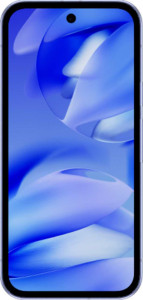
Google Pixel 9a
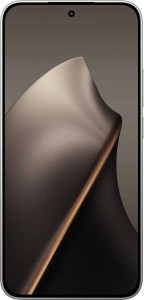
Xiaomi 15T

Google Pixel 9a Xiaomi 15T

Overview

Welcome to this in-depth specification face-off between the Google Pixel 9a and the Xiaomi 15T. These two mid-range contenders take notably different approaches across key areas including display size and quality, raw processing performance, camera versatility, and battery management. Whether you prioritize a compact and refined software experience or a larger screen paired with faster charging, this comparison breaks down every spec that matters to help you make the right call.

Common Features

  • Both phones are waterproof with an IP68 ingress protection rating.
  • Neither phone has a rugged build.
  • Neither phone can be folded.
  • Both phones feature an OLED/AMOLED display with a 120Hz refresh rate.
  • Both phones have branded damage-resistant glass.
  • HDR10 support is available on both phones.
  • Always-On Display is available on both phones.
  • Neither phone has a secondary screen.
  • Both phones have a touchscreen.
  • Both phones use a 4 nm semiconductor and support 64-bit processing.
  • Both phones support DirectX 12 and OpenGL ES 3.2.
  • Both phones use big.LITTLE technology with 8 CPU threads.
  • Both phones have integrated graphics and an NX bit.
  • Both main cameras support optical image stabilization and record video at 2160 x 60 fps.
  • Both cameras have a CMOS sensor, continuous autofocus, phase-detection autofocus, HDR mode, and slow-motion video recording.
  • Both phones have clipboard warnings and location privacy options.
  • Both phones offer camera and microphone privacy options, theme customization, and the ability to block app tracking.
  • Mail Privacy Protection is not available on either phone.
  • Cross-site tracking blocking is not available on either phone.
  • Both phones support fast charging, have a non-removable battery, an ultra power-saving mode, a battery level indicator, and a rechargeable battery.
  • Reverse wireless charging is not available on either phone.
  • Neither phone has a 3.5 mm audio jack.
  • Both phones have stereo speakers.
  • Neither phone supports aptX HD, aptX Adaptive, or has a radio.
  • Both phones support 5G, have no external memory slot, include USB Type-C, NFC, a fingerprint scanner, and a gyroscope.
  • Emergency SOS via satellite is not available on either phone.
  • ANT+ support is not available on either phone.
  • Both phones support Wi-Fi 6E, Wi-Fi 6, Wi-Fi 5, and Wi-Fi 4.
  • Neither phone has a sapphire glass display, a curved display, or an e-paper display.
  • Both phones have a video light.

Main Differences

  • Weight is 186 g on Google Pixel 9a and 194 g on Xiaomi 15T.
  • Thickness is 8.9 mm on Google Pixel 9a and 7.5 mm on Xiaomi 15T.
  • Width is 73.3 mm on Google Pixel 9a and 78 mm on Xiaomi 15T.
  • Height is 154.7 mm on Google Pixel 9a and 163.2 mm on Xiaomi 15T.
  • Volume is 100.92 cm³ on Google Pixel 9a and 95.47 cm³ on Xiaomi 15T.
  • Screen size is 6.3″ on Google Pixel 9a and 6.83″ on Xiaomi 15T.
  • Pixel density is 422 ppi on Google Pixel 9a and 435 ppi on Xiaomi 15T.
  • Resolution is 1080 x 2424 px on Google Pixel 9a and 1220 x 2712 px on Xiaomi 15T.
  • Gorilla Glass version is Gorilla Glass 3 on Google Pixel 9a and Gorilla Glass 7i on Xiaomi 15T.
  • HDR10+ support is present on Xiaomi 15T but not available on Google Pixel 9a.
  • Dolby Vision support is present on Xiaomi 15T but not available on Google Pixel 9a.
  • Contrast ratio is 1,000,000:1 on Google Pixel 9a and 5,000,000:1 on Xiaomi 15T.
  • Internal storage is 256 GB on Google Pixel 9a and 512 GB on Xiaomi 15T.
  • RAM is 8 GB on Google Pixel 9a and 12 GB on Xiaomi 15T.
  • AnTuTu benchmark score is 1,071,616 on Google Pixel 9a and 1,821,100 on Xiaomi 15T.
  • The chipset is Google Tensor G4 on Google Pixel 9a and MediaTek Dimensity 8400 on Xiaomi 15T.
  • GPU is ARM Mali-G715 MP7 on Google Pixel 9a and Mali G720 MC7 on Xiaomi 15T.
  • CPU speed is 1x3.1 & 3x2.6 & 4x1.92 GHz on Google Pixel 9a and 1x3.25 & 3x3 & 4x2.15 GHz on Xiaomi 15T.
  • Geekbench 6 multi-core score is 4500 on Google Pixel 9a and 6033 on Xiaomi 15T.
  • Geekbench 6 single-core score is 1600 on Google Pixel 9a and 1571 on Xiaomi 15T.
  • GPU clock speed is 940 MHz on Google Pixel 9a and 1300 MHz on Xiaomi 15T.
  • L2 cache is 8 MB on Google Pixel 9a and 1 MB on Xiaomi 15T.
  • Maximum memory is 16 GB on Google Pixel 9a and 24 GB on Xiaomi 15T.
  • Main camera is 48 & 13 MP on Google Pixel 9a and 50 & 50 & 12 MP on Xiaomi 15T.
  • Front camera resolution is 13 MP on Google Pixel 9a and 32 MP on Xiaomi 15T.
  • Dual-tone LED flash is present on Google Pixel 9a but not on Xiaomi 15T.
  • Number of flash LEDs is 2 on Google Pixel 9a and 1 on Xiaomi 15T.
  • BSI sensor is present on Google Pixel 9a but not on Xiaomi 15T.
  • RAW shooting is supported on Google Pixel 9a but not on Xiaomi 15T.
  • Manual shutter speed is available on Google Pixel 9a but not on Xiaomi 15T.
  • Timelapse function is available on Google Pixel 9a but not on Xiaomi 15T.
  • Android version is Android 15 on Google Pixel 9a and Android 16 on Xiaomi 15T.
  • Direct OS updates are available on Google Pixel 9a but not on Xiaomi 15T.
  • Battery capacity is 5100 mAh on Google Pixel 9a and 5500 mAh on Xiaomi 15T.
  • Wireless charging is supported on Google Pixel 9a but not on Xiaomi 15T.
  • Charging speed is 23W on Google Pixel 9a and 67W on Xiaomi 15T.
  • A charger is not included with Google Pixel 9a but is included with Xiaomi 15T.
  • aptX support is present on Google Pixel 9a but not on Xiaomi 15T.
  • LDAC support is present on Google Pixel 9a but not on Xiaomi 15T.
  • SIM configuration is 1 SIM + 1 eSIM on Google Pixel 9a and 2 physical SIMs on Xiaomi 15T.
  • Bluetooth version is 5.3 on Google Pixel 9a and 6 on Xiaomi 15T.
  • USB version is 3.2 on Google Pixel 9a and 2.0 on Xiaomi 15T.
  • Crash detection is available on Google Pixel 9a but not on Xiaomi 15T.
  • An infrared sensor is present on Xiaomi 15T but not on Google Pixel 9a.
  • A barometer is present on Google Pixel 9a but not on Xiaomi 15T.
Specs Comparison
Google Pixel 9a

Google Pixel 9a

Xiaomi 15T

Xiaomi 15T

Design:
water resistance Waterproof Waterproof
weight 186 g 194 g
thickness 8.9 mm 7.5 mm
width 73.3 mm 78 mm
height 154.7 mm 163.2 mm
volume 100.921639 cm³ 95.472 cm³
Ingress Protection (IP) rating IP68 IP68
has a rugged build
can be folded

Both the Google Pixel 9a and the Xiaomi 15T share a strong design foundation: both are rated IP68, meaning full dust and water resistance at meaningful depths — a premium feature that is equally matched here. Neither is a rugged device, and neither folds, so the real design story comes down to their form factors.

The two phones take opposite approaches to physical design. The Pixel 9a is noticeably more compact — shorter at 154.7 mm, narrower at 73.3 mm, and lighter at 186 g — making it easier to use one-handed and more pocketable. The Xiaomi 15T, by contrast, is taller at 163.2 mm and wider at 78 mm, which typically signals a larger display. However, where the 15T wins decisively is thickness: at just 7.5 mm, it is substantially slimmer than the Pixel 9a's 8.9 mm — a difference you will absolutely feel in-hand and in a pocket. This slimness also results in a smaller overall volume (95.5 cm³ vs 100.9 cm³), despite the 15T's larger footprint.

The edge here depends on what matters most to you. If one-handed comfort and compactness are the priority, the Pixel 9a has the clear advantage. If you prefer a slim, sleek profile and don't mind a larger chassis, the Xiaomi 15T's dramatically thinner build gives it a premium, modern feel. On water resistance, they are perfectly tied.

Display:
Display type OLED/AMOLED OLED/AMOLED
screen size 6.3" 6.83"
pixel density 422 ppi 435 ppi
resolution 1080 x 2424 px 1220 x 2712 px
refresh rate 120Hz 120Hz
has branded damage-resistant glass
Gorilla Glass version Gorilla Glass 3 Gorilla Glass 7i
supports HDR10
supports HDR10+
Always-On Display
supports Dolby Vision
contrast ratio 1000000:1 5000000:1
Has a secondary screen
has a touch screen

Both phones use OLED/AMOLED panels with a 120Hz refresh rate and Always-On Display support, so the baseline viewing experience is smooth and power-efficient on either device. The meaningful differences, however, emerge when you look closer at quality and capability. The Xiaomi 15T sports a larger 6.83″ screen versus the Pixel 9a's 6.3″, and despite that larger canvas, it actually achieves a slightly higher pixel density — 435 ppi versus 422 ppi — thanks to its higher 1220 x 2712 px resolution. In practice, both are sharp enough that individual pixels are indistinguishable to the naked eye, but the 15T's screen real estate advantage is real and welcome for media consumption.

Where the gap widens is in display standards and glass protection. The Xiaomi 15T supports HDR10+ and Dolby Vision — two dynamic HDR formats that enable scene-by-scene brightness and color optimization in compatible streaming content — while the Pixel 9a supports only HDR10. The contrast ratio difference is equally striking: 5,000,000:1 on the 15T versus 1,000,000:1 on the Pixel 9a, which translates to deeper blacks and more vivid highlights in real content. On glass, the 15T's Gorilla Glass 7i offers meaningfully better scratch and drop resistance than the Pixel 9a's older Gorilla Glass 3.

The Xiaomi 15T holds a clear display advantage across nearly every dimension that matters — screen size, HDR format support, contrast, and glass durability. The Pixel 9a's panel is by no means poor, but users who prioritize media quality or screen longevity will find the 15T's display specifications considerably more compelling.

Performance:
internal storage 256GB 512GB
RAM 8GB 12GB
AnTuTu benchmark score 1071616 1821100
Chipset (SoC) name Google Tensor G4 MediaTek Dimensity 8400
GPU name ARM Mali-G715 MP7 Mali G720 MC7
CPU speed 1 x 3.1 & 3 x 2.6 & 4 x 1.92 GHz 1 x 3.25 & 3 x 3 & 4 x 2.15 GHz
Geekbench 6 result (multi) 4500 6033
Geekbench 6 result (single) 1600 1571
GPU clock speed 940 MHz 1300 MHz
RAM speed 4200 MHz 4267 MHz
semiconductor size 4 nm 4 nm
Supports 64-bit
DirectX version DirectX 12 DirectX 12
Has integrated graphics
OpenGL ES version 3.2 3.2
Uses big.LITTLE technology
CPU threads 8 threads 8 threads
Has NX bit
Uses HMP
Has TrustZone
OpenCL version 2 2
L2 cache 8 MB 1 MB
maximum memory amount 16GB 24GB
DDR memory version 5 5
L3 cache 4 MB 6 MB

On raw benchmark numbers, the Xiaomi 15T pulls decisively ahead. Its AnTuTu score of 1,821,100 is roughly 70% higher than the Pixel 9a's 1,071,616, and its Geekbench 6 multi-core result of 6,033 outpaces the Pixel 9a's 4,500 by a substantial margin. This reflects the Dimensity 8400's faster clock speeds across all core clusters — every tier of the 15T's CPU runs at a higher frequency. In day-to-day use, this gap is most felt during sustained workloads like video editing, gaming, or heavy multitasking. One notable counterpoint: single-core performance is essentially identical (1,571 vs 1,600 in favor of the Pixel 9a), meaning routine single-threaded tasks like launching apps or scrolling feel comparably snappy on both.

The GPU story also favors the 15T, with a GPU clock speed of 1,300 MHz versus the Pixel 9a's 940 MHz — a 38% advantage that directly translates to smoother frame rates in graphically demanding games. Complementing this, the 15T ships with 12 GB of RAM and 512 GB of storage compared to the Pixel 9a's 8 GB and 256 GB, giving it more headroom for background app retention and media storage. One area where the Pixel 9a holds a structural edge is its 8 MB L2 cache versus the 15T's 1 MB — larger L2 cache can reduce latency for frequently accessed data — though the 15T compensates with a larger 6 MB L3 cache.

The Xiaomi 15T is the clear performance winner in this group. The Pixel 9a holds its own in single-core tasks, but the 15T's advantages in multi-core throughput, GPU power, RAM, and storage capacity make it the stronger choice for users who push their devices hard.
Cameras:
megapixels (main camera) 48 & 13 MP 50 & 50 & 12 MP
wide aperture (main camera) 2.2 & 1.7f 1.7 & 1.9 & 2.2f
Has a dual-lens (or multi-lens) main camera
megapixels (front camera) 13MP 32MP
has built-in optical image stabilization
video recording (main camera) 2160 x 60 fps 2160 x 60 fps
Has a dual-tone LED flash
number of flash LEDs 2 1
has a BSI sensor
has a CMOS sensor
has continuous autofocus when recording movies
Has phase-detection autofocus for photos
supports slow-motion video recording
has a built-in HDR mode
has manual exposure
has a flash
has manual ISO
has a serial shot mode
has manual focus
has a front camera
Has laser autofocus
Shoots 360° panorama
has manual white balance
shoots raw
has touch autofocus
has manual shutter speed
can create panoramas in-camera
wide aperture (front camera) 2.2f 2.2f
Has timelapse function
Has a front-facing LED flash
has a dual-lens (or multi-lens) front camera
supports HDR10 recording
supports Dolby Vision recording
has a front-facing camera under the display
Has a RGB LED flash
has 3D photo/video recording capabilities

The most structurally significant difference here is lens count. The Xiaomi 15T fields a triple rear camera system (50 + 50 + 12 MP) with three distinct apertures, meaning it covers wide, ultrawide, and a third focal length in a single device. The Pixel 9a, by contrast, offers a dual rear system (48 + 13 MP). For users who frequently shoot at varied distances or want more compositional flexibility without cropping, the 15T's extra lens is a tangible advantage. Aperture-wise, both phones lead with an f/1.7 main lens — identical light-gathering capability in low light — so neither has an edge on the primary shooter in dim conditions.

Where the Pixel 9a fights back is in photographic control and sensor technology. It supports RAW shooting and manual shutter speed — two features absent on the 15T — making it a more capable tool for enthusiast photographers who process images in post or need precise exposure control. It also includes a BSI (Back-Side Illuminated) sensor, which improves light capture efficiency, and a timelapse mode that the 15T lacks. On the selfie side, the gap is hard to ignore: the 15T's 32 MP front camera versus the Pixel 9a's 13 MP is a significant resolution advantage for video calls and self-portraits.

This category is genuinely split by use case. The Xiaomi 15T holds the edge for versatility — more rear lenses and a far superior front camera make it the stronger all-rounder. The Pixel 9a counters with RAW support and manual controls that appeal to hands-on photographers. Casual users and selfie-focused shooters will likely prefer the 15T; those who want creative control over their shots will find the Pixel 9a's feature set more rewarding.

Operating system:
Android version Android 15 Android 16
has clipboard warnings
has location privacy options
has camera/microphone privacy options
has Mail Privacy Protection
has theme customization
can block app tracking
blocks cross-site tracking
has on-device machine learning
has notification permissions
has media picker
Can play games while they download
has dark mode
has Wi-Fi password sharing
has battery health check
has an extra dim mode
has focus modes
has dynamic theming
can offload apps
Has customizable notifications
has Live Text
has full-page screenshots
supports split screen
gets direct OS updates
has PiP
Can be used as a PC
Has sharing intents
has a child lock
Supports widgets
Is free and open source
Has offline voice recognition
has voice commands
Tracks the current position of a mobile device
is a multi-user system
has Quick Start

Across the vast majority of software features, these two phones are functionally identical — both run stock-adjacent Android with the same privacy controls, multitasking capabilities, on-device ML, and customization options. The only two specs that actually separate them are Android version and update delivery, and both carry real long-term implications.

The Xiaomi 15T ships with Android 16 versus the Pixel 9a's Android 15, giving it a head start on the latest platform features and security patches at launch. However, the more consequential difference cuts the other way: the Pixel 9a gets direct OS updates from Google, while the Xiaomi 15T does not. Direct updates mean the Pixel 9a receives new Android versions and security patches as soon as Google releases them, with no manufacturer delay. The 15T, by contrast, depends on Xiaomi to validate and push updates — a process that historically adds weeks or months of lag and may result in fewer major version upgrades over the device's lifetime.

For long-term software support, the Google Pixel 9a holds a clear structural advantage. Starting on Android 16 today means little if the 15T falls behind on updates a year from now. Users who prioritize security, timely feature access, and a cleaner software experience over time will find the Pixel 9a's update model significantly more reliable.

Battery:
battery power 5100 mAh 5500 mAh
has wireless charging
Supports fast charging
charging speed 23W 67W
has reverse wireless charging
comes with a charger
has a removable battery
Has an ultra power-saving mode
has a battery level indicator
has a rechargeable battery

Capacity-wise, the Xiaomi 15T edges ahead with a 5,500 mAh battery versus the Pixel 9a's 5,100 mAh — a modest 8% difference that, in practice, may translate to an extra 30–60 minutes of screen-on time depending on usage. Neither figure is small; both are large cells by modern standards, and both include an ultra power-saving mode for stretching reserves in a pinch.

The charging picture is where the two phones diverge sharply. The Xiaomi 15T supports 67W wired fast charging — enough to take a depleted battery to full in roughly an hour — while the Pixel 9a is limited to 23W, a significantly slower rate that will require considerably more time for a full charge. The 15T also includes a charger in the box, an increasingly rare convenience that the Pixel 9a does not offer. The Pixel 9a counters with one meaningful exclusive: wireless charging, which the 15T lacks entirely. For users who rely on Qi pads at a desk or bedside, this is a genuine lifestyle differentiator.

Overall, the Xiaomi 15T holds the stronger battery profile — larger capacity and dramatically faster wired charging give it a practical daily advantage. The Pixel 9a's wireless charging support is a real convenience for the right user, but it cannot fully offset the 15T's edge in charge speed and included accessories.

Audio:
has a socket for a 3.5 mm audio jack
has stereo speakers
has aptX
has LDAC
has aptX HD
has aptX Adaptive
Has a radio

For wired and speaker audio, these two phones are evenly matched — neither retains a 3.5mm headphone jack, and both offer stereo speakers for hands-free listening. The meaningful separation in this category comes entirely from Bluetooth audio codec support.

The Google Pixel 9a supports both aptX and LDAC, while the Xiaomi 15T supports neither. This matters most to wireless headphone users: aptX reduces Bluetooth audio latency and improves compression efficiency over standard SBC, while LDAC is the highest-quality codec listed here, capable of transmitting audio at up to three times the bitrate of standard Bluetooth — a significant benefit when paired with LDAC-compatible headphones and high-resolution audio sources. The Xiaomi 15T, lacking both, is limited to whatever baseline codec its Bluetooth connection negotiates, which typically means lower audio fidelity and potentially higher latency over wireless.

The Pixel 9a holds a clear audio advantage for anyone who uses quality wireless headphones. If your listening is primarily through the phone's speakers or you use headphones that don't support aptX or LDAC anyway, the gap narrows — but for dedicated audio listeners, the Pixel 9a's codec support is a genuinely useful differentiator.

Connectivity & Features:
release date March 2025 September 2025
has 5G support
Wi-Fi version Wi-Fi 6E (802.11ax), Wi-Fi 6 (802.11ax), Wi-Fi 5 (802.11ac), Wi-Fi 4 (802.11n) Wi-Fi 4 (802.11n), Wi-Fi 6E (802.11ax), Wi-Fi 6 (802.11ax), Wi-Fi 5 (802.11ac)
SIM cards 1 SIM, 1 eSIM 2 SIM
Bluetooth version 5.3 6
has an external memory slot
Has USB Type-C
USB version 3.2 2
has NFC
Has a fingerprint scanner
has emergency SOS via satellite
has crash detection
has a gyroscope
supports ANT+
Has a heart rate monitor
has GPS
has a compass
supports Wi-Fi
Has an infrared sensor
has an accelerometer
has a cellular module
Has a barometer
has an HDMI output
Uses 3D facial recognition
Has an iris scanner
Stylus included
supports Galileo
Has motion tracking
Has optical tracking
Has a built-in projector

The core connectivity pillars — 5G, Wi-Fi 6E, and NFC — are identical across both phones, so day-to-day network performance and contactless payments are a wash. The divergences emerge in the details. The Xiaomi 15T steps ahead on Bluetooth with version 6.0 versus the Pixel 9a's 5.3, offering improved connection stability, lower energy consumption, and better multi-device handling — a meaningful upgrade for users who regularly juggle wireless peripherals. The 15T also supports dual physical SIM cards, useful for separating work and personal lines or using local SIMs abroad, while the Pixel 9a offers only one physical SIM paired with an eSIM — more flexible for digital carrier switching but less practical for physical SIM users.

The USB story flips the advantage back to the Pixel 9a: its USB 3.2 port enables dramatically faster wired data transfers compared to the 15T's USB 2.0, which is a notable downgrade for anyone who regularly transfers large files, uses the phone as external storage, or connects to external displays via USB. Sensor-wise, each phone carries something the other lacks — the Pixel 9a includes a barometer and crash detection, while the Xiaomi 15T brings an infrared sensor that can control TVs and appliances. Crash detection is a genuine safety feature; the IR blaster is a convenience.

This group is closely contested with trade-offs running in both directions. The 15T wins on Bluetooth and dual SIM flexibility; the Pixel 9a counters with far superior USB transfer speeds, a barometer, and crash detection. Neither phone dominates outright, but users who prioritize wired data transfer or safety features will find the Pixel 9a's connectivity profile more complete, while those who want dual SIM or smart home IR control should favor the 15T.

Miscellaneous:
has a video light
Has sapphire glass display
Has a curved display
Has an e-paper display

The miscellaneous specs for the Google Pixel 9a and Xiaomi 15T are identical across every data point in this group — both include a video light, and neither features a sapphire glass display, curved display, or e-paper display. There is simply nothing here that separates the two devices.

This is a clear tie. Based strictly on the provided data, neither phone holds any advantage in this category.

Comparison Summary & Verdict

After examining every specification, both phones earn their place but serve different users. The Google Pixel 9a stands out for those who value a more compact form factor, wireless charging, superior audio codec support with LDAC and aptX, RAW photo shooting, and the assurance of direct OS updates straight from Google. Its barometer, crash detection, and BSI sensor round out a well-rounded everyday device. The Xiaomi 15T, on the other hand, is the clear pick for users who want a larger, sharper display with Dolby Vision and HDR10+, significantly stronger multi-core performance, a 67W fast-charging speed, a higher-resolution 32 MP front camera, and a triple rear camera system. It also ships with a charger included. In short, choose the Pixel 9a for software reliability and portability, and the Xiaomi 15T for outright performance and multimedia experience.

Google Pixel 9a
Buy Google Pixel 9a if...

Buy the Google Pixel 9a if you want a compact phone with wireless charging, guaranteed direct OS updates, LDAC and aptX audio support, and advanced camera controls like RAW shooting and manual shutter speed.

Xiaomi 15T
Buy Xiaomi 15T if...

Buy the Xiaomi 15T if you prioritize a large high-quality display with Dolby Vision, significantly faster 67W wired charging, stronger multi-core performance, and a versatile triple camera setup with a high-resolution 32 MP selfie camera.