Google Pixel Buds 2a
JBL Endurance Race 2

Google Pixel Buds 2a JBL Endurance Race 2

Overview

Welcome to our in-depth specification comparison between the Google Pixel Buds 2a and the JBL Endurance Race 2. Both are fully wireless, in-ear earbuds packed with active noise cancellation, ambient sound mode, and fast charging — but they take different paths when it comes to battery endurance, water resistance, and build characteristics. Whether you prioritize a lighter fit or maximum durability, this comparison will help you find the right pair for your lifestyle.

Common Features

  • Both products have an in-ear fit.
  • Neither product has wires or cables.
  • Neither product is a neckband earbud design.
  • Both products include wingtips.
  • Neither product has RGB lighting.
  • Both products have stereo speakers.
  • Neither product has a UV light.
  • Neither product has a display.
  • Both products support active noise cancellation (ANC).
  • Both products have passive noise reduction.
  • Both products share a lowest frequency of 20 Hz and a highest frequency of 20000 Hz.
  • Spatial audio is not supported on either product.
  • Dolby Atmos is not available on either product.
  • Neither product has a neodymium magnet.
  • Wireless charging is not available on either product.
  • Neither product has a solar power battery.
  • Both products have a battery level indicator.
  • Both products have a rechargeable battery.
  • Both products support fast pairing.
  • Both products have a USB Type-C connector.
  • LDAC is not supported on either product.
  • Bluetooth LE Audio is not supported on either product.
  • aptX Adaptive is not supported on either product.
  • aptX Low Latency is not supported on either product.
  • aptX HD is not supported on either product.
  • Both products have an ambient sound mode.
  • Both products include a find device feature.
  • Both products support fast charging.
  • Neither product can read notifications.
  • Both products have a mute function.
  • Both products can be used as a headset.
  • Both products have a control panel placed on the device.
  • Both products have voice prompts.
  • Both products have 4 microphones.
  • Both products have a noise-canceling microphone.

Main Differences

  • Ingress Protection rating is IP54 and IPX4 on Google Pixel Buds 2a and IP68 on JBL Endurance Race 2.
  • Water resistance is sweat resistant on Google Pixel Buds 2a and fully waterproof on JBL Endurance Race 2.
  • Weight is 9.4 g on Google Pixel Buds 2a and 12.8 g on JBL Endurance Race 2.
  • Driver unit size is 11 mm on Google Pixel Buds 2a and 6.8 mm on JBL Endurance Race 2.
  • Battery life is 10 hours on Google Pixel Buds 2a and 12 hours on JBL Endurance Race 2.
  • Battery life of the charging case is 27 hours on Google Pixel Buds 2a and 36 hours on JBL Endurance Race 2.
  • Battery life with ANC enabled is 7 hours on Google Pixel Buds 2a and 10 hours on JBL Endurance Race 2.
  • Bluetooth version is 5.4 on Google Pixel Buds 2a and 5.3 on JBL Endurance Race 2.
Specs Comparison
Google Pixel Buds 2a

Google Pixel Buds 2a

JBL Endurance Race 2

JBL Endurance Race 2

Design:
Fit In-ear In-ear
Ingress Protection (IP) rating IP54, IPX4 IP68
water resistance Sweat resistant Waterproof
weight 9.4 g 12.8 g
has no wires or cables
are neckband earbuds
wingtips included
has RGB lighting
has stereo speakers
has UV light
Has a display

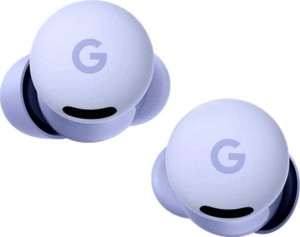
Both the Google Pixel Buds 2a and the JBL Endurance Race 2 share the same fundamental design philosophy: true wireless, in-ear earbuds with wingtips for a more secure fit and stereo playback. Neither adds gimmicks like RGB lighting or a display, keeping the focus squarely on functional audio hardware. For most users, this shared foundation means the decision comes down to two concrete specs: water resistance and weight.

On water resistance, the gap is significant. The Pixel Buds 2a carry an IP54 rating, which guards against light splashes and sweat — perfectly adequate for casual workouts or being caught in light rain. The Endurance Race 2, however, are rated IP68, meaning they can withstand full submersion in water. This is a meaningful real-world difference for swimmers, runners in heavy rain, or anyone who puts their gear through genuinely harsh conditions. The JBL earbuds are not merely sweat-resistant; they are waterproof in a way the Pixel Buds simply are not.

Weight tells a different story. At 9.4 g, the Pixel Buds 2a are noticeably lighter than the Endurance Race 2's 12.8 g — a roughly 36% difference per earbud. Over extended listening sessions, lighter earbuds tend to cause less ear fatigue, which matters for all-day wear. Overall, the JBL Endurance Race 2 holds a clear edge in durability thanks to its superior IP68 rating, while the Pixel Buds 2a counter with a lighter, potentially more comfortable build for long-term use.

Sound quality:
has active noise cancellation (ANC)
has passive noise reduction
driver unit size 11 mm 6.8 mm
lowest frequency 20 Hz 20 Hz
highest frequency 20000 Hz 20000 Hz
supports spatial audio
has Dolby Atmos
has Dirac Virtuo
has a neodymium magnet

At a glance, these two earbuds share a lot of common ground in sound quality: both feature active noise cancellation, passive noise reduction, and an identical frequency range of 20 Hz to 20,000 Hz — the full span of human hearing. Neither supports spatial audio, Dolby Atmos, or Dirac Virtuo, so advanced audio processing is off the table for both.

The single most meaningful differentiator here is driver size. The Pixel Buds 2a use an 11 mm driver, while the Endurance Race 2 use a significantly smaller 6.8 mm driver. A larger driver moves more air, which generally translates to more authoritative bass reproduction and greater overall dynamic range. This does not guarantee superior sound — tuning, materials, and internal acoustic design all play a role — but the driver size difference is substantial enough that, all else being equal, the Pixel Buds 2a have a structural advantage in low-frequency output.

Given that the frequency response floors are identical on paper, the driver gap is the key spec separating these two in this category. The Pixel Buds 2a hold the measurable edge in sound quality potential, particularly for listeners who prioritize full-bodied bass and dynamic punch. The Endurance Race 2's smaller driver is a real constraint, though its ANC implementation may partially compensate by improving perceived clarity in noisy environments.

Power:
Battery life 10 hours 12 hours
Battery life of charging case 27 hours 36 hours
Battery life (ANC) 7 hours 10 hours
has wireless charging
Has a solar power battery
has a battery level indicator
has a rechargeable battery

Battery life is one of the clearest ways to differentiate these two earbuds, and the numbers consistently favor the JBL Endurance Race 2 across every metric. With 12 hours of playback per charge versus the Pixel Buds 2a's 10 hours, the JBL earbuds can comfortably outlast a long-haul flight or a full workday without needing to return to the case. Factor in the charging case and the gap widens further: the Endurance Race 2 delivers a combined 36 hours of total listening time, compared to 27 hours for the Pixel Buds 2a.

The ANC endurance figures are particularly telling. Running active noise cancellation is power-intensive, and it typically causes a steep drop in battery life. The Pixel Buds 2a fall to 7 hours with ANC enabled — a 30% reduction from their standard playtime. The Endurance Race 2 holds at 10 hours with ANC on, which is not only a longer absolute figure but also a proportionally smaller penalty. For commuters or open-office workers who rely on ANC daily, this distinction is genuinely significant.

Neither product supports wireless charging, so both require a wired top-up — a shared limitation worth noting for convenience-focused buyers. That aside, the JBL Endurance Race 2 takes a clear and convincing win in this category. Its stamina advantage is consistent, meaningful in real-world use, and especially pronounced under the demanding conditions of continuous ANC operation.

Connectivity:
has fast pairing
Has USB Type-C
Bluetooth version 5.4 5.3
has LDAC
has LDHC
has Bluetooth LE Audio
has aptX Adaptive
has aptX Low Latency
has aptX HD
has aptX
has aptX Lossless
has aptX Voice
has Auracast
maximum Bluetooth range 10 m 10 m
supports Bluetooth pairing using NFC
Can be used wirelessly
has AAC

Connectivity is the most evenly matched category between these two earbuds. Both support fast pairing, use USB Type-C for charging, max out at a 10 m Bluetooth range, and operate entirely wirelessly. Neither supports advanced audio codecs — no LDAC, aptX, AAC, or Bluetooth LE Audio — meaning both rely on standard SBC transmission. For most listeners this will not be noticeable day-to-day, but audiophiles seeking high-resolution wireless audio will find both options equally limited in this regard.

The only measurable difference in this category is the Bluetooth version: the Pixel Buds 2a run Bluetooth 5.4 versus the Endurance Race 2's Bluetooth 5.3. In practical terms, both versions offer robust connection stability and low energy consumption well beyond what the average user will tax. Bluetooth 5.4 introduced refinements around connection reliability and security, but the real-world impact of a single point version gap is marginal for typical consumer use cases like music playback and calls.

Ultimately, connectivity is a near-total draw. The Pixel Buds 2a claim a narrow technical edge on paper with the newer Bluetooth version, but the absence of any advanced codec support on either device means neither product distinguishes itself meaningfully here. Buyers prioritizing connectivity features specifically will find little reason to choose one over the other.

Features:
release date August 2025 March 2025
has ambient sound mode
has find device feature
Supports fast charging
can read notifications
has a mute function
can be used as a headset
control panel placed on a device
Has voice prompts
travel bag is included
Has a temperature sensor
Has a built-in camera remote control function

Rarely does a spec-by-spec comparison land on a perfect tie, but the Features category is exactly that. The Google Pixel Buds 2a and JBL Endurance Race 2 match each other on every single data point provided: both offer ambient sound mode, fast charging, on-device controls, voice prompts, a mute function, headset capability, a find-device feature, and even a travel bag in the box.

The practical significance of this overlap should not be understated. Ambient sound mode and fast charging are two of the most valued everyday features in modern earbuds — ambient mode for situational awareness during outdoor activities, and fast charging for quick top-ups before a commute. The fact that both products check these boxes means neither can claim a lifestyle or convenience advantage over the other based on this data alone.

This is a definitive draw. There is no differentiator in this category to tip the scales either way, and any purchasing decision will need to rest entirely on how these products compare across other specification groups such as sound quality, battery endurance, or durability.

Microphone:
number of microphones 4 4
has a noise-canceling microphone

The microphone specifications for these two earbuds are identical: 4 microphones each, both with noise-canceling capability. A quad-mic array is a meaningful hardware commitment — more microphones allow for more sophisticated beamforming and wind noise rejection, which translates to cleaner voice pickup during calls in noisy environments like busy streets or open offices.

This is another clean tie. With no differentiating data points available, neither the Pixel Buds 2a nor the Endurance Race 2 can claim a structural advantage in call quality hardware based on these specs. Buyers prioritizing microphone performance for calls or voice assistants will need to look beyond this category to make their decision.

Comparison Summary & Verdict

After reviewing all available specifications, both earbuds deliver a strong shared foundation: ANC, passive noise reduction, fast pairing, USB-C charging, and a four-microphone setup for calls. However, key differences set them apart. The Google Pixel Buds 2a stands out with a lighter 9.4 g build and a slightly newer Bluetooth 5.4 standard, making it a compelling choice for users who value comfort during long listening sessions. The JBL Endurance Race 2, on the other hand, pulls ahead with a superior IP68 waterproof rating, longer 12-hour battery life, and an impressive 36-hour charging case, making it the better fit for active users and outdoor environments where durability and stamina matter most.

Google Pixel Buds 2a
Buy Google Pixel Buds 2a if...

Buy the Google Pixel Buds 2a if you prefer a lighter earbud with the latest Bluetooth 5.4 standard and a more compact overall weight for everyday comfort.

JBL Endurance Race 2
Buy JBL Endurance Race 2 if...

Buy the JBL Endurance Race 2 if you need a fully waterproof (IP68) earbud with longer battery life — 12 hours per charge and 36 hours total with the case — ideal for workouts and outdoor use.