Google Pixel Buds 2a
Sennheiser Accentum Open

Google Pixel Buds 2a Sennheiser Accentum Open

Overview

Welcome to our in-depth specification comparison between the Google Pixel Buds 2a and the Sennheiser Accentum Open. These two wireless earbuds share a common foundation — identical driver sizes, sweat resistance, and a cable-free design — yet they diverge in some meaningful ways. In this comparison, we examine their key battlegrounds: noise cancellation capabilities, battery endurance, audio frequency range, and connectivity features to help you decide which pair best fits your lifestyle.

Common Features

  • Both products are sweat resistant.
  • Neither product has wires or cables.
  • Neither product is a neckband earbud design.
  • Neither product has RGB lighting.
  • Both products have stereo speakers.
  • Neither product has a UV light.
  • Neither product has a display.
  • Both products share the same driver unit size of 11 mm.
  • Neither product supports spatial audio.
  • Neither product has Dolby Atmos.
  • Neither product has Dirac Virtuo.
  • Neither product has a neodymium magnet.
  • Neither product supports wireless charging.
  • Neither product has a solar power battery.
  • Both products have a battery level indicator.
  • Both products have a rechargeable battery.
  • Both products have a USB Type-C connection.
  • Neither product has LDAC, LDHC, Bluetooth LE Audio, aptX Adaptive, aptX Low Latency, aptX HD, or aptX support.
  • Both products support fast charging.
  • Neither product can read notifications.
  • Both products have a mute function.
  • Both products can be used as a headset.
  • Both products have a control panel placed on the device.
  • Both products have voice prompts.
  • A travel bag is included with both products.
  • Neither product has a temperature sensor.
  • Both products have 4 microphones.
  • Both products have a noise-canceling microphone.

Main Differences

  • The fit style is in-ear on Google Pixel Buds 2a and earbud on Sennheiser Accentum Open.
  • The Ingress Protection rating is IP54 and IPX4 on Google Pixel Buds 2a, while it is IPX4 only on Sennheiser Accentum Open.
  • The weight is 9.4 g on Google Pixel Buds 2a and 8.7 g on Sennheiser Accentum Open.
  • Wingtips are included with Google Pixel Buds 2a but are not included with Sennheiser Accentum Open.
  • Active noise cancellation (ANC) is available on Google Pixel Buds 2a but not on Sennheiser Accentum Open.
  • Passive noise reduction is present on Google Pixel Buds 2a but not on Sennheiser Accentum Open.
  • The lowest frequency is 20 Hz on Google Pixel Buds 2a and 25 Hz on Sennheiser Accentum Open.
  • The highest frequency is 20000 Hz on Google Pixel Buds 2a and 15000 Hz on Sennheiser Accentum Open.
  • Battery life is 10 hours on Google Pixel Buds 2a and 6 hours on Sennheiser Accentum Open.
  • The battery life of the charging case is 27 hours on Google Pixel Buds 2a and 18 hours on Sennheiser Accentum Open.
  • Fast pairing is supported on Google Pixel Buds 2a but not on Sennheiser Accentum Open.
  • The Bluetooth version is 5.4 on Google Pixel Buds 2a and 5.3 on Sennheiser Accentum Open.
  • AAC support is available on Sennheiser Accentum Open but not on Google Pixel Buds 2a.
  • Ambient sound mode is available on Google Pixel Buds 2a but not on Sennheiser Accentum Open.
  • A find device feature is present on Google Pixel Buds 2a but not on Sennheiser Accentum Open.
Specs Comparison
Google Pixel Buds 2a

Google Pixel Buds 2a

Sennheiser Accentum Open

Sennheiser Accentum Open

Design:
Fit In-ear Earbud
Ingress Protection (IP) rating IP54, IPX4 IPX4
water resistance Sweat resistant Sweat resistant
weight 9.4 g 8.7 g
has no wires or cables
are neckband earbuds
wingtips included
has RGB lighting
has stereo speakers
has UV light
Has a display

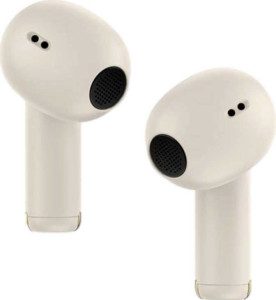
The most consequential design difference here is the fit philosophy. The Google Pixel Buds 2a uses a traditional in-ear fit, meaning the earbud creates a seal inside the ear canal. The Sennheiser Accentum Open, by contrast, uses an open earbud style that rests at the ear's entrance without sealing the canal. In practice, this distinction shapes the entire listening experience: in-ear designs typically deliver better passive noise isolation and stronger bass response, while open earbuds allow ambient sound through naturally, which many users find more comfortable for long wear or situational awareness during outdoor activities.

On protection, the Pixel Buds 2a holds a clear edge with its IP54 rating versus the Accentum Open's IPX4. Both share the same level of water/sweat resistance, but IP54 adds a dust-resistance rating that IPX4 entirely lacks. For gym use or outdoor environments where dust and debris are factors, this is a meaningful practical advantage. Weight is nearly identical — 9.4 g versus 8.7 g — a 0.7 g gap that is unlikely to be perceptible during real-world use. The Pixel Buds 2a also includes wingtips for added ear stability, which is particularly useful during high-motion activities, while the Accentum Open ships without them.

Overall, the Pixel Buds 2a has the design edge for users who prioritize secure fit, isolation, and broader environmental protection. The Accentum Open's open earbud format is a deliberate, differentiated choice suited to listeners who prefer ambient awareness and a less occlusive feel — not a shortcoming, but a trade-off that makes it a niche fit compared to the more versatile in-ear approach of the Pixel Buds 2a.

Sound quality:
has active noise cancellation (ANC)
has passive noise reduction
driver unit size 11 mm 11 mm
lowest frequency 20 Hz 25 Hz
highest frequency 20000 Hz 15000 Hz
supports spatial audio
has Dolby Atmos
has Dirac Virtuo
has a neodymium magnet

Noise isolation is where these two products diverge most sharply. The Google Pixel Buds 2a offers both active noise cancellation (ANC) and passive noise reduction — a meaningful combination that actively counters low-frequency rumble (traffic, engines, AC hum) while the in-ear seal physically blocks higher-frequency ambient noise. The Sennheiser Accentum Open has neither. Given its open earbud design, this is expected rather than an oversight, but the real-world implication is significant: in louder environments, the Accentum Open will not shield the listener at all, making it better suited for quieter settings or situations where ambient awareness is desirable.

Both earbuds share an identical 11 mm driver size, so neither has a raw hardware advantage in transducer area. Where they do differ is in frequency response. The Pixel Buds 2a spans 20 Hz to 20,000 Hz — the full range of human hearing — while the Accentum Open reaches from 25 Hz to 15,000 Hz. The higher low-end cutoff is a minor distinction in practice, but the upper ceiling of 15 kHz is more notable: it falls short of the 20 kHz standard, meaning the uppermost octave of treble detail — cymbal shimmer, breath in vocals, subtle high-frequency air — is outside the Accentum Open's specified range.

Taken together, the Pixel Buds 2a holds a clear sound quality edge on paper. It covers a wider frequency range and adds active noise cancellation that the Accentum Open cannot match by design. Listeners who prioritize a controlled, isolated listening experience will find the Pixel Buds 2a considerably better equipped. The Accentum Open's sound profile, while open and unobstructed, is constrained by both its form factor and its narrower specified frequency ceiling.

Power:
Battery life 10 hours 6 hours
Battery life of charging case 27 hours 18 hours
has wireless charging
Has a solar power battery
has a battery level indicator
has a rechargeable battery

Battery life is one of the starkest separations between these two products. The Google Pixel Buds 2a delivers 10 hours of continuous playback per charge, compared to just 6 hours for the Sennheiser Accentum Open. That 4-hour gap is substantial in practical terms — it's the difference between comfortably covering a full workday of listening on a single charge versus needing to reach for the case mid-afternoon. For commuters, travelers, or anyone in long meetings or focus sessions, the Pixel Buds 2a's stamina is a meaningful daily advantage.

The gap extends to total system endurance as well. Combined with their respective charging cases, the Pixel Buds 2a offers 27 hours of total battery versus 18 hours for the Accentum Open. In real terms, this means the Pixel Buds 2a can go roughly two and a half days of moderate use without needing a wall outlet, while the Accentum Open requires recharging sooner. For travel or situations where charging access is limited, this difference compounds quickly.

Both products are evenly matched on charging features — neither supports wireless charging, and both include a battery level indicator for monitoring status. But those shared traits don't offset the core gap: the Pixel Buds 2a wins the power category decisively, offering significantly more runtime both per session and across the full case capacity.

Connectivity:
has fast pairing
Has USB Type-C
Bluetooth version 5.4 5.3
has LDAC
has LDHC
has Bluetooth LE Audio
has aptX Adaptive
has aptX Low Latency
has aptX HD
has aptX
has aptX Lossless
has aptX Voice
has Auracast
maximum Bluetooth range 10 m 10 m
supports Bluetooth pairing using NFC
Can be used wirelessly
has AAC

Wireless connectivity is closely matched here, but two meaningful differences emerge on closer inspection. The Google Pixel Buds 2a runs on Bluetooth 5.4 versus the Sennheiser Accentum Open's Bluetooth 5.3 — a generational step that brings minor improvements in connection efficiency, though in everyday use the gap between these two versions will rarely be perceptible. More practically useful is the Pixel Buds 2a's support for fast pairing, which streamlines the initial device connection process, particularly with compatible Android devices. The Accentum Open offers no equivalent, meaning setup requires the standard manual pairing flow.

The codec picture, however, tilts the other way. Neither device supports the premium high-resolution wireless codecs — no LDAC, aptX, or any of their variants — so audio transmission quality is constrained on both sides. But the Accentum Open does support AAC, which the Pixel Buds 2a lacks entirely. AAC is the preferred Bluetooth codec for Apple devices and delivers noticeably lower latency and better audio fidelity on iOS compared to the default SBC fallback. For iPhone users, this is a genuine advantage. The Pixel Buds 2a, without AAC, will default to SBC on non-Android sources, which is a meaningful concession in audio transmission quality for that user segment.

Overall, connectivity is a split verdict shaped strongly by ecosystem. The Pixel Buds 2a edges ahead for Android users thanks to its newer Bluetooth version and fast pairing. The Accentum Open, with its AAC support, is the more practical choice for Apple device users. Both share the same 10 m maximum range, so neither has a reach advantage in open space.

Features:
release date August 2025 May 2025
has ambient sound mode
has find device feature
Supports fast charging
can read notifications
has a mute function
can be used as a headset
control panel placed on a device
Has voice prompts
travel bag is included
Has a temperature sensor
Has a built-in camera remote control function

Much of the features list is shared territory — both earbuds support fast charging, include on-device controls, offer voice prompts, ship with a travel bag, and can function as a headset with mute capability. These are solid baseline features, but they don't differentiate the two products. The meaningful separation comes down to two specs exclusive to the Google Pixel Buds 2a: ambient sound mode and a find device feature.

Ambient sound mode is a genuinely useful active feature, particularly for the Pixel Buds 2a which, as an in-ear design, otherwise blocks out the surrounding environment by default. The ability to electronically pipe in external audio without removing the earbuds is a practical convenience for navigating public spaces, catching announcements, or holding brief conversations. The Sennheiser Accentum Open's open earbud design inherently lets ambient sound through, so the absence of a dedicated mode is less of a gap for that product — though it still means users have no electronic control over how much of the environment they hear. The find device feature on the Pixel Buds 2a adds another layer of everyday utility, enabling location tracking when the earbuds are misplaced, a function the Accentum Open cannot replicate.

With those two additions, the Pixel Buds 2a takes a clear edge in this category. The Accentum Open's feature set is functional and complete for core use cases, but it lacks the quality-of-life extras that make the Pixel Buds 2a a more versatile daily companion.

Microphone:
number of microphones 4 4
has a noise-canceling microphone

On microphone hardware, these two products are spec-for-spec identical. Both the Google Pixel Buds 2a and the Sennheiser Accentum Open carry 4 microphones and both implement noise-canceling microphone technology. A four-mic array is a well-equipped configuration for true wireless earbuds, enabling beamforming and wind noise suppression techniques that meaningfully improve call clarity in noisy environments compared to single- or dual-mic setups.

This is a clear tie. With no differentiating data points in this group, neither product holds a spec advantage in microphone hardware. Users prioritizing call quality can consider this category a non-factor in their decision between the two.

Comparison Summary & Verdict

After reviewing all specifications, it is clear that both earbuds serve different listener profiles. The Google Pixel Buds 2a stand out as the more feature-rich option, offering active noise cancellation, passive noise reduction, an ambient sound mode, a find-device feature, fast pairing, and a superior battery life of 10 hours with 27 hours of total case backup — making them ideal for commuters and users who need immersive, distraction-free listening. The Sennheiser Accentum Open, on the other hand, adopt an open earbud fit, are slightly lighter at 8.7 g, and support AAC audio codec, appealing to those who prefer situational awareness and a more natural listening experience. Both share the same 11 mm driver, fast charging support, and a four-microphone noise-canceling setup, ensuring solid call quality on either side.

Google Pixel Buds 2a
Buy Google Pixel Buds 2a if...

Buy the Google Pixel Buds 2a if you want active noise cancellation, longer battery life, and a richer feature set including ambient sound mode and fast pairing.

Sennheiser Accentum Open
Buy Sennheiser Accentum Open if...

Buy the Sennheiser Accentum Open if you prefer a lighter, open earbud fit with AAC codec support and a more natural, awareness-friendly listening experience.