Google Pixel Buds 2a
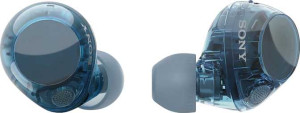
Sony WF-C710N

Google Pixel Buds 2a Sony WF-C710N

Overview

Welcome to this in-depth specification comparison between the Google Pixel Buds 2a and the Sony WF-C710N. Both are fully wireless, in-ear earbuds packed with active noise cancellation and a shared commitment to everyday usability, but they diverge in meaningful ways across battery performance, driver hardware, and codec support. Read on to see how these two contenders stack up across every major spec category.

Common Features

  • Both products use an in-ear fit.
  • Both products are sweat resistant.
  • Both products are wireless with no cables.
  • Neither product is a neckband earbud.
  • Neither product has RGB lighting.
  • Both products have stereo speakers.
  • Neither product has a UV light.
  • Neither product has a display.
  • Both products have active noise cancellation (ANC).
  • Both products have passive noise reduction.
  • Both products share a lowest frequency of 20 Hz and a highest frequency of 20000 Hz.
  • Spatial audio is not supported on either product.
  • Dolby Atmos is not available on either product.
  • Neither product has a neodymium magnet.
  • Wireless charging is not available on either product.
  • Both products have a battery level indicator.
  • Both products have a rechargeable battery.
  • Both products support fast pairing.
  • Both products have a USB Type-C connector.
  • LDAC support is not available on either product.
  • Bluetooth LE Audio is not supported on either product.
  • aptX Adaptive is not supported on either product.
  • Both products have an ambient sound mode.
  • Both products include a find device feature.
  • Both products support fast charging.
  • Neither product can read notifications.
  • Both products have a mute function.
  • Both products can be used as a headset.
  • Both products have a control panel placed on the device.
  • Both products have voice prompts.
  • Both products have a noise-canceling microphone.

Main Differences

  • The Ingress Protection rating is IP54 and IPX4 on Google Pixel Buds 2a, while it is IPX4 only on Sony WF-C710N.
  • The weight is 9.4 g on Google Pixel Buds 2a and 10.4 g on Sony WF-C710N.
  • Wingtips are included with Google Pixel Buds 2a but are not included with Sony WF-C710N.
  • The driver unit size is 11 mm on Google Pixel Buds 2a and 5 mm on Sony WF-C710N.
  • Battery life is 10 hours on Google Pixel Buds 2a and 12 hours on Sony WF-C710N.
  • Battery life of the charging case is 27 hours on Google Pixel Buds 2a and 21.5 hours on Sony WF-C710N.
  • Battery life with ANC enabled is 7 hours on Google Pixel Buds 2a and 8.5 hours on Sony WF-C710N.
  • The Bluetooth version is 5.4 on Google Pixel Buds 2a and 5.3 on Sony WF-C710N.
  • AAC support is present on Sony WF-C710N but not available on Google Pixel Buds 2a.
Specs Comparison
Google Pixel Buds 2a

Google Pixel Buds 2a

Sony WF-C710N

Sony WF-C710N

Design:
Fit In-ear In-ear
Ingress Protection (IP) rating IP54, IPX4 IPX4
water resistance Sweat resistant Sweat resistant
weight 9.4 g 10.4 g
has no wires or cables
are neckband earbuds
wingtips included
has RGB lighting
has stereo speakers
has UV light
Has a display

Both the Google Pixel Buds 2a and the Sony WF-C710N share the same fundamental design philosophy: fully wireless, in-ear buds with no neckband, stereo audio, and sweat resistance. For everyday users, this means both are equally portable and suited for gym sessions or light outdoor use.

Where they diverge is in two meaningful details. First, the Pixel Buds 2a come in at 9.4 g per earbud versus the WF-C710N's 10.4 g — a full gram lighter. While this sounds minor, over extended listening sessions even small weight differences can affect comfort and ear fatigue. Second, the Pixel Buds 2a hold a clear advantage in water resistance: their IP54 rating covers both dust ingress and water splashes, while the WF-C710N's IPX4 rating only certifies water resistance with no dust protection. For users who use earbuds outdoors or in dusty environments, this distinction is practically significant.

Neither model includes RGB lighting, a display, or UV features — all non-factors here. The Pixel Buds 2a also include wingtips in the box, which can improve fit stability during workouts, a detail the WF-C710N lacks. Overall, the Pixel Buds 2a have a clear design edge: they are lighter, better protected against dust and water, and come with extra fit accessories.

Sound quality:
has active noise cancellation (ANC)
has passive noise reduction
driver unit size 11 mm 5 mm
lowest frequency 20 Hz 20 Hz
highest frequency 20000 Hz 20000 Hz
supports spatial audio
has Dolby Atmos
has Dirac Virtuo
has a neodymium magnet

On paper, the two earbuds share a lot of common ground: both offer active noise cancellation, passive noise reduction, and an identical frequency range of 20 Hz – 20,000 Hz, covering the full spectrum of human hearing. Neither supports spatial audio, Dolby Atmos, or Dirac Virtuo, so immersive audio processing is off the table for both.

The most consequential differentiator here is driver size. The Google Pixel Buds 2a pack an 11 mm driver, more than double the 5 mm driver found in the Sony WF-C710N. Driver size is not the sole determinant of sound quality, but larger drivers generally move more air, which tends to produce fuller bass response and more dynamic sound overall — particularly at higher volumes. A 5 mm driver is notably compact even by TWS earbud standards, which can limit low-end weight and overall soundstage.

Given the matching frequency range and noise-isolation features, the Pixel Buds 2a hold a meaningful structural advantage in this category purely by virtue of their significantly larger driver. Users who prioritize bass presence and dynamic range have more to expect from the Pixel Buds 2a based on these specs alone.

Power:
Battery life 10 hours 12 hours
Battery life of charging case 27 hours 21.5 hours
Battery life (ANC) 7 hours 8.5 hours
has wireless charging
Has a solar power battery
has a battery level indicator
has a rechargeable battery

The battery story here splits interestingly depending on how you use your earbuds. The Sony WF-C710N lasts longer on a single charge — 12 hours standard and 8.5 hours with ANC active — compared to the Pixel Buds 2a's 10 hours and 7 hours with ANC. For users who go long stretches without access to the case, that 2-hour buffer on the Sony is a genuine advantage, especially during travel or all-day wear.

Flip the lens to total system endurance, however, and the Pixel Buds 2a regain ground. Their charging case extends the total to 27 hours, versus 21.5 hours for the Sony's case. That 5.5-hour gap means the Pixel Buds 2a can sustain more full recharge cycles before the case itself needs to be plugged in — a practical advantage for multi-day trips or infrequent chargers. Neither model supports wireless charging, so both require a cable when the case runs low.

This is a genuine trade-off with no universal winner. The Sony WF-C710N edges ahead for users who prioritize uninterrupted per-session stamina, while the Pixel Buds 2a offer a larger total reserve across case and buds combined. The deciding factor comes down to usage pattern: frequent top-ups from the case favor the Pixel Buds 2a; long sessions away from the case favor the Sony.

Connectivity:
has fast pairing
Has USB Type-C
Bluetooth version 5.4 5.3
has LDAC
has LDHC
has Bluetooth LE Audio
has aptX Adaptive
has aptX Low Latency
has aptX HD
has aptX
has aptX Lossless
has aptX Voice
has Auracast
maximum Bluetooth range 10 m 10 m
supports Bluetooth pairing using NFC
Can be used wirelessly
has AAC

Connectivity is largely a wash between these two — both support fast pairing, USB Type-C, and a maximum Bluetooth range of 10 m, with no NFC, no aptX variants, no LDAC, and no LE Audio on either side. The codec and advanced feature landscape is notably sparse for both products.

Two details do separate them, however. The Pixel Buds 2a run on Bluetooth 5.4, the newer specification compared to the WF-C710N's Bluetooth 5.3. In practice, the gap between these two versions is marginal for most users, but 5.4 does introduce refinements in connection efficiency and reliability. More meaningfully, the Sony WF-C710N supports the AAC codec, which the Pixel Buds 2a lack entirely. AAC is the native audio codec for Apple devices and also delivers higher audio fidelity than standard SBC on compatible Android and iOS sources — making it a practical advantage for users pairing with iPhones or AAC-capable players.

The edge here depends on your ecosystem. For Apple users or anyone whose source device prioritizes AAC, the Sony WF-C710N has a tangible connectivity advantage in audio transmission quality. For Android users where AAC matters less, the Pixel Buds 2a's marginally newer Bluetooth version is the only differentiator — and a minor one at that.

Features:
release date August 2025 March 2025
has ambient sound mode
has find device feature
Supports fast charging
can read notifications
has a mute function
can be used as a headset
control panel placed on a device
Has voice prompts
travel bag is included
Has a temperature sensor
Has a built-in camera remote control function

Across every feature spec provided, the Google Pixel Buds 2a and the Sony WF-C710N are an exact match. Both offer ambient sound mode, fast charging, a find-device feature, on-device controls, voice prompts, a mute function, headset capability, and even a travel bag in the box.

A few of these shared features are worth highlighting for practical impact. Fast charging is increasingly standard but still valuable — a short time on the cable can restore meaningful playback time. Ambient sound mode on both means neither forces you to choose between audio immersion and situational awareness, which is particularly useful in urban or high-traffic environments. The inclusion of a travel bag with both is a small but welcome accessory detail.

There is no differentiator to analyze here — this group is a complete tie. Users comparing these two products on features alone will find no reason to favor one over the other based on the available data.

Microphone:
has a noise-canceling microphone

The microphone spec data available for this comparison is limited to a single point: both the Google Pixel Buds 2a and the Sony WF-C710N include a noise-canceling microphone. This is a meaningful baseline feature for call quality, as it helps suppress background noise — wind, traffic, office chatter — so the person on the other end hears your voice more clearly rather than your surroundings.

With only one shared data point and no differentiating specs provided, this group is a complete tie. Neither product holds an advantage over the other based on the available microphone data.

Comparison Summary & Verdict

After reviewing all the specs, both earbuds deliver a strong core experience with ANC, fast charging, USB-C, and wireless convenience. However, their strengths point to different buyers. The Google Pixel Buds 2a stands out with its larger 11 mm driver, a superior IP54 dust and water resistance rating, included wingtips for a more secure fit, and a longer-lasting 27-hour charging case — making it ideal for active users who want extra physical protection and extended case endurance. The Sony WF-C710N, on the other hand, pulls ahead with longer ANC battery life at 8.5 hours, better earbud playback time at 12 hours, and AAC codec support, making it the smarter pick for listeners who prioritize uninterrupted playback and broader audio device compatibility.

Google Pixel Buds 2a
Buy Google Pixel Buds 2a if...

Buy the Google Pixel Buds 2a if you need a more secure, active-ready fit with wingtips, stronger IP54 dust and water resistance, and a longer-lasting charging case.

Sony WF-C710N
Buy Sony WF-C710N if...

Buy the Sony WF-C710N if you prioritize longer earbud battery life, better ANC endurance, and AAC codec support for wider device compatibility.