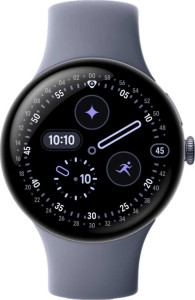
Google Pixel Watch 4
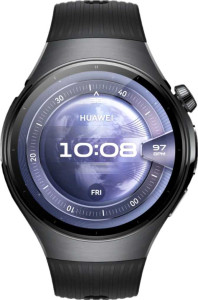
Huawei Watch 5

Google Pixel Watch 4 Huawei Watch 5

Overview

When choosing between the Google Pixel Watch 4 and the Huawei Watch 5, you are weighing two capable smartwatches that share a solid foundation yet diverge sharply in several key areas. Both offer OLED displays, GPS, cellular connectivity, and a rich suite of health sensors, but the real story lies in their differences around battery performance, physical design, sport-specific tracking, and platform compatibility. Read on to see how every specification stacks up.

Common Features

  • Both watches feature an OLED/AMOLED display type.
  • Both watches are waterproof with a 5 ATM rating.
  • Both watches carry an IP68 ingress protection rating.
  • Always-On Display is available on both watches.
  • Watch bands are replaceable on both watches.
  • Both watches monitor blood oxygenation levels.
  • Both watches have a heart rate monitor.
  • Both watches have built-in GPS.
  • Both watches include an accelerometer, gyroscope, compass, barometer, and temperature sensor.
  • Sleep tracking and sleep reports are available on both watches.
  • Both watches track distance, steps taken, pace, elevation, and include a route tracker.
  • Both watches automatically detect activities.
  • Both watches support cellular connectivity with 1 eSIM slot.
  • Both watches are compatible with Android.
  • Both watches support Wi-Fi 4 (802.11n), Wi-Fi 5 (802.11ac), and Wi-Fi 6 (802.11ax).
  • NFC is available on both watches.
  • Both watches support the Galileo satellite system.
  • HRV tracking, VO2 max measurement, resting heart rate measurement, and fast/slow heart rate notifications are available on both watches.
  • Both watches can be used to answer calls and have call control.
  • Neither watch has a removable battery, solar power battery, external memory slot, or 3.5 mm audio jack.

Main Differences

  • Screen size is 1.4″ on Google Pixel Watch 4 and 1.5″ on Huawei Watch 5.
  • Waterproof depth rating is 50 m on Google Pixel Watch 4 and 40 m on Huawei Watch 5.
  • Pixel density is 320 ppi on Google Pixel Watch 4 and 310 ppi on Huawei Watch 5.
  • Resolution is 456 x 456 px on Google Pixel Watch 4 and 466 x 466 px on Huawei Watch 5.
  • Branded damage-resistant glass is present on Google Pixel Watch 4 but not available on Huawei Watch 5.
  • Sapphire glass display is present on Huawei Watch 5 but not on Google Pixel Watch 4.
  • Thickness is 12.3 mm on Google Pixel Watch 4 and 11.3 mm on Huawei Watch 5.
  • Weight is 36.7 g on Google Pixel Watch 4 and 63 g on Huawei Watch 5.
  • Height is 45 mm on Google Pixel Watch 4 and 46.7 mm on Huawei Watch 5.
  • Width is 45 mm on Google Pixel Watch 4 and 46 mm on Huawei Watch 5.
  • A cadence sensor is present on Google Pixel Watch 4 but not available on Huawei Watch 5.
  • A stroke counter for swimming is available on Huawei Watch 5 but not on Google Pixel Watch 4.
  • Huawei Watch 5 is designed for diving and golf, while Google Pixel Watch 4 is not.
  • iOS compatibility is available on Huawei Watch 5 but not on Google Pixel Watch 4.
  • Bluetooth version is 6 on Google Pixel Watch 4 and 5.2 on Huawei Watch 5.
  • Battery life is 1.6 days on Google Pixel Watch 4 and 4.5 days on Huawei Watch 5.
  • Battery power is 455 mAh on Google Pixel Watch 4 and 867 mAh on Huawei Watch 5.
  • Charge time is 1.25 hours on Google Pixel Watch 4 and 1.5 hours on Huawei Watch 5.
  • Battery life in power save mode is 72 hours on Google Pixel Watch 4 and 264 hours on Huawei Watch 5.
  • Wireless charging is available on Huawei Watch 5 but not on Google Pixel Watch 4.
  • Faster GPS acquisition is available on Huawei Watch 5 but not on Google Pixel Watch 4.
Specs Comparison
Google Pixel Watch 4

Google Pixel Watch 4

Huawei Watch 5

Huawei Watch 5

Design:
screen size 1.4" 1.5"
Display type OLED/AMOLED OLED/AMOLED
water resistance Waterproof Waterproof
ATM rating 5 ATM 5 ATM
Ingress Protection (IP) rating IP68 IP68
waterproof depth rating 50 m 40 m
Always-On Display
pixel density 320 ppi 310 ppi
resolution 456 x 456 px 466 x 466 px
Watch band is replaceable
has branded damage-resistant glass
thickness 12.3 mm 11.3 mm
weight 36.7 g 63 g
height 45 mm 46.7 mm
width 45 mm 46 mm
Has a display
has a touch screen
Has sapphire glass display
volume 24.9075 cm³ 24.27466 cm³

Both the Google Pixel Watch 4 and the Huawei Watch 5 share the same core display technology — OLED/AMOLED panels with Always-On Display support — and are nearly identical in footprint, with the Huawei being marginally larger at 46.7 × 46 mm versus the Pixel's 45 × 45 mm. The Huawei also edges ahead with a slightly bigger 1.5″ screen compared to the Pixel's 1.4″, which translates to a touch more screen real estate for glanceable information. The Pixel Watch 4 counters with a marginally higher pixel density of 320 ppi versus 310 ppi, though both are sharp enough that the difference is essentially imperceptible in daily use.

Where the two watches diverge meaningfully is in glass protection and physical profile. The Huawei Watch 5 features sapphire glass, which is exceptionally scratch-resistant and typically found on more premium timepieces — a genuine long-term durability advantage for users who work with their hands or are rough on wearables. The Pixel Watch 4, by contrast, uses branded damage-resistant glass (not sapphire), which offers solid but generally inferior scratch resistance. On the other hand, the Pixel Watch 4 is rated waterproof to 50 m versus the Huawei's 40 m, giving it a slight edge for aquatic activities, though both carry identical 5 ATM / IP68 ratings for practical everyday water exposure.

The single most impactful design difference, however, is weight: the Pixel Watch 4 weighs just 36.7 g, while the Huawei Watch 5 comes in at a substantially heavier 63 g — nearly 72% more mass. Despite the Huawei being slightly thinner at 11.3 mm (vs. 12.3 mm), that weight gap is hard to ignore for all-day and sleep tracking wear comfort. Overall, the Pixel Watch 4 holds a clear advantage in wearability and water depth rating, while the Huawei Watch 5 wins on scratch-resistant glass and a marginally slimmer profile — making the Pixel the stronger choice for comfort-focused users and the Huawei more appealing to those who prioritize display durability.

Sensors:
Monitors blood oxygenation levels
Has a heart rate monitor
has GPS
has an accelerometer
Has a temperature sensor
has a compass
Has a barometer
has a gyroscope
Has a cadence sensor
Monitors perspiration

The sensor suites on these two watches are remarkably similar, covering all the essentials a health- and fitness-focused user would expect: heart rate monitoring, SpO2 (blood oxygen), GPS, accelerometer, gyroscope, barometer, compass, and temperature sensor are present on both. This shared foundation means neither watch is at a disadvantage for core health tracking, navigation, or activity detection in everyday and sporting contexts.

The one differentiator in this category is the cadence sensor, which is present on the Pixel Watch 4 but absent on the Huawei Watch 5. For runners and cyclists, cadence — measuring steps per minute or pedal revolutions — is a meaningful training metric that helps optimize efficiency and reduce injury risk. Its inclusion on the Pixel Watch 4 gives that watch a tangible edge for users who take their cardio training seriously and want richer performance data without relying on a paired phone or external device.

Overall, the sensor category is essentially a near-tie with one notable exception: the Google Pixel Watch 4 holds a modest but real advantage thanks to its cadence sensor, which adds practical value specifically for runners and cyclists. For general wellness tracking, both watches are equally equipped.

Activity tracking:
Tracks your sleep
Tracks distance
Tracks steps taken
Measures pace
Provides sleep reports
Detects activities automatically
Has a route tracker
Tracks elevation
Has exercise tagging
Has a stroke counter for swimming
Tracks calorie intake
Designed for diving
Designed for golf

When it comes to the fundamentals of activity tracking, these two watches are perfectly matched: both cover sleep tracking with reports, step counting, distance, pace, elevation, route tracking, automatic activity detection, exercise tagging, and calorie tracking. For the vast majority of users — runners, hikers, gym-goers, and general wellness trackers — neither watch leaves anything on the table at this level.

The real story in this category is where the Huawei Watch 5 pulls decisively ahead through sport-specific features absent on the Pixel Watch 4. The Huawei adds a stroke counter for swimming, which is a meaningful tool for lap swimmers who want to track technique and effort per length. More significantly, it is explicitly designed for diving and designed for golf — two activity profiles that cater to a notably broader and more specialized audience. Golf mode typically includes course mapping, shot tracking, and score logging, while dive support goes well beyond basic waterproofing to offer depth, time, and dive-log functionality that serious divers rely on.

The verdict here is clear: the Huawei Watch 5 holds a meaningful edge in activity tracking breadth. Swimmers, divers, and golfers gain purpose-built functionality that the Pixel Watch 4 simply does not offer. For users whose activities fall within that expanded set, the Huawei is the more capable companion by a significant margin.

Connectivity:
has a cellular module
Is compatible with iOS
Is compatible with Android
Bluetooth version 6 5.2
supports Wi-Fi
Wi-Fi version Wi-Fi 4 (802.11n), Wi-Fi 5 (802.11ac), Wi-Fi 6 (802.11ax) Wi-Fi 4 (802.11n), Wi-Fi 5 (802.11ac), Wi-Fi 6 (802.11ax)
SIM cards 1 eSIM 1 eSIM
has NFC
supports Galileo

On the connectivity front, these two watches share a strong common foundation: both offer cellular via eSIM, Wi-Fi 6 support, NFC for contactless payments, and Galileo satellite support — a meaningful parity that means neither watch is hamstrung when it comes to staying connected independently of a paired phone.

Two specs split them apart, however. The Google Pixel Watch 4 ships with Bluetooth 6 — the latest generation — versus the Huawei's Bluetooth 5.2. In practice, Bluetooth 6 brings improvements in connection efficiency, reduced latency, and more precise proximity detection, which translates to a more reliable link with earbuds, phones, and accessories. Meanwhile, the Huawei Watch 5 counters with cross-platform compatibility: it works with both Android and iOS, whereas the Pixel Watch 4 is locked to Android only. For iPhone users, the Pixel is simply off the table entirely.

Which advantage matters more depends entirely on the buyer's ecosystem. The Pixel Watch 4 wins on raw wireless technology with its newer Bluetooth standard, but the Huawei Watch 5 wins on reach — its iOS compatibility opens it up to a far larger global user base. For Android users choosing between the two, the Pixel's Bluetooth 6 edge is a genuine differentiator; for anyone in Apple's ecosystem, the Huawei is the only option here.

Battery:
battery life 1.6 days 4.5 days
battery power 455 mAh 867 mAh
charge time 1.25 hours 1.5 hours
battery life in power save mode 72 hours 264 hours
has wireless charging
has a rechargeable battery
Has a solar power battery
has a removable battery

Battery life is where the gap between these two watches becomes impossible to ignore. The Huawei Watch 5 carries an 867 mAh cell rated for 4.5 days of normal use, while the Google Pixel Watch 4 packs a much smaller 455 mAh battery lasting just 1.6 days. In practical terms, Pixel Watch 4 owners are charging every night — or risking a dead watch by evening of day two — whereas Huawei Watch 5 users can comfortably go several days, including through weekend trips, without reaching for a cable.

The power-save mode figures reinforce this divide even more starkly: the Huawei stretches to an extraordinary 264 hours (11 days) in reserve mode versus the Pixel's 72 hours (3 days). For travel, emergencies, or simply forgetful days, that headroom is a meaningful safety net. The Huawei also supports wireless charging, adding a convenience edge the Pixel Watch 4 lacks entirely — though the Pixel does charge slightly faster at 1.25 hours versus the Huawei's 1.5 hours, a modest consolation given how much more frequently it needs to be topped up.

The Huawei Watch 5 wins this category decisively and without qualification. Its combination of nearly three times the battery capacity, dramatically longer endurance in both standard and power-save modes, and wireless charging support makes it the clear choice for users who prioritize not having to think about charging their watch.

Features:
release date August 2025 May 2025
has HRV tracking
measures VO2 max
measures resting heart rate
has fast/slow heart rate notifications
shows readiness level
Can be used to answer calls
Locates your phone
Has call control
Has notifications
has irregular heart rate warnings
Has ECG technology
Has silent alarm
Has vibrating alerts
has fall detection
Has a stopwatch
Has smart alarm
has voice commands
Has a built-in camera remote control function
Acquires GPS faster
warranty period 1 years 1 years

Across the features category, these two watches are in near-perfect lockstep. Both offer a comprehensive and impressive set of health tools — ECG, HRV tracking, VO2 max, irregular heart rate warnings, and readiness scores — alongside a full communication suite including call answering, call control, notifications, and voice commands. Safety features like fall detection and vibrating alerts are also present on both, as is a camera remote control function. For the overwhelming majority of feature-driven purchase decisions, there is genuinely nothing to separate them.

The sole differentiator in this entire category is faster GPS acquisition, which the Huawei Watch 5 supports and the Pixel Watch 4 does not. In real-world use, this means the Huawei locks onto satellite signals more quickly at the start of an outdoor workout — a convenience particularly appreciated by runners and cyclists who want to start moving without standing still waiting for a GPS fix. It is a minor but tangible quality-of-life advantage for outdoor athletes.

Given the near-total feature parity here, this category is effectively a tie with a slim edge to the Huawei Watch 5 on account of its faster GPS acquisition. Users who frequently track outdoor activities will notice and appreciate it; for everyone else, both watches deliver an identically capable feature set.

App & Software:
Provides activity reports
Has inactivity alerts
Counts how many calories you've burned
Has goal setting
Has achievements
Free app
Has exercise diary
Ad-free
Has coaching
Has temperature tracking
Has period notifications
Supports routes
Has voice feedback
Has music playback
Displays fertile window notifications
Includes maps
Predicts ovulation
Predicts start date
Supports widgets
Can be personalised
Has barcode scanner on app
Tracks water intake
Has weight tracking
Has live tracking

The App & Software category produces a genuinely rare result in a head-to-head comparison: a perfect, spec-for-spec tie. Every single capability listed — from activity reports, coaching, and live tracking, to women's health features like ovulation prediction, fertile window notifications, and period tracking — is present on both watches. Both apps are free and ad-free, support widgets and personalization, and cover nutrition-adjacent tools like water intake and weight tracking. There is not a single differentiating data point in this entire group.

What is notable about this parity is the breadth of what both platforms cover. Comprehensive reproductive health tracking alongside route support with maps, voice feedback, music playback, and an exercise diary represent a genuinely well-rounded software ecosystem on both sides. Users with highly specific lifestyle needs — whether focused on athletic performance, daily wellness, or fertility planning — will find both companion apps equally equipped to support them.

This category is a complete and unambiguous tie. Neither the Google Pixel Watch 4 nor the Huawei Watch 5 holds any software or app advantage over the other based on the provided data, and purchase decisions should be driven entirely by the differentiators found in other specification groups.

Miscellaneous:
has a battery level indicator
Has passcode
has an external memory slot
has a socket for a 3.5 mm audio jack

The Miscellaneous category offers no grounds for differentiation whatsoever. Both the Google Pixel Watch 4 and the Huawei Watch 5 share identical specs across every data point: both include a battery level indicator and passcode security, and neither offers an external memory slot or a 3.5 mm audio jack. The absence of a headphone jack is standard across modern smartwatches, where wireless audio has long been the norm, so this omission carries no practical weight for either product.

This is a complete tie with no actionable insight to extract. The provided specs in this group are either universal baseline features or shared omissions that reflect category-wide conventions rather than individual product choices. Neither watch gains or loses any ground here.

Comparison Summary & Verdict

After examining every specification, it is clear that each watch serves a distinct type of user. The Google Pixel Watch 4 stands out for its lighter 36.7 g build, branded damage-resistant glass, a higher 320 ppi pixel density, deeper 50 m waterproof rating, the latest Bluetooth 6, and a quicker 1.25-hour charge time, making it an excellent daily companion for Android-first users who value a refined, lightweight wrist presence. The Huawei Watch 5, on the other hand, wins decisively on battery life at 4.5 days (versus 1.6 days), a much larger 867 mAh cell, 264 hours in power-save mode, wireless charging, sapphire glass, a faster GPS fix, iOS compatibility, and dedicated tracking for swimming, diving, and golf. If longevity, cross-platform support, and sport versatility are your priorities, the Huawei Watch 5 is the stronger choice.

Google Pixel Watch 4
Buy Google Pixel Watch 4 if...

Buy the Google Pixel Watch 4 if you want a lightweight, Android-exclusive smartwatch with a faster charge time, deeper waterproofing, and the latest Bluetooth 6 connectivity.

Huawei Watch 5
Buy Huawei Watch 5 if...

Buy the Huawei Watch 5 if you need a longer-lasting battery, wireless charging, sapphire glass durability, iOS compatibility, and advanced sport tracking for swimming, diving, and golf.