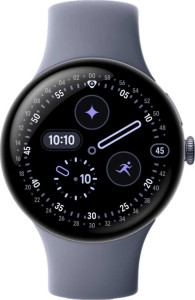
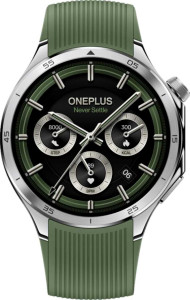
Both watches share the same core display technology (OLED/AMOLED), water protection parity (5 ATM / IP68 / 50 m), Always-On Display, and replaceable bands — so on the fundamentals, neither has a clear edge. The real story emerges when you look at the details. The OnePlus Watch 3 pulls ahead on screen real estate (1.5″ vs 1.4″) and, more meaningfully, on pixel density: 439 ppi against the Pixel Watch 4's 320 ppi. That 37% density gap is perceptible in everyday use — text appears sharper, icons cleaner, and the overall visual experience more refined on the OnePlus at normal viewing distances.
Screen protection tells an interesting story. The Google Pixel Watch 4 uses branded damage-resistant glass, while the OnePlus Watch 3 opts for sapphire glass — a material renowned for exceptional scratch resistance, typically found on premium timepieces. For users concerned about daily scratches, sapphire is a meaningful durability advantage. Conversely, the Pixel Watch 4 is the more compact and, crucially, dramatically lighter option: 36.7 g versus the OnePlus's 81 g. That is more than double the weight, and on a device worn on the wrist for 16+ hours a day, the difference is impossible to ignore — the Pixel will simply feel less intrusive during workouts, sleep tracking, and prolonged wear.
In summary, the OnePlus Watch 3 has the sharper display and more scratch-resistant glass, making it the better choice for those who prioritize screen quality and surface durability. The Pixel Watch 4 holds a decisive edge in wearability comfort thanks to its significantly lower weight and slightly slimmer profile (12.3 mm vs 11.8 mm is close, but the weight gap is decisive). Your choice here hinges on whether you value visual quality or all-day wearing comfort more.