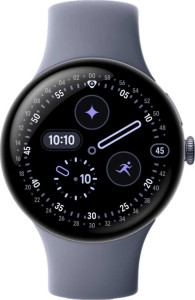
Google Pixel Watch 4
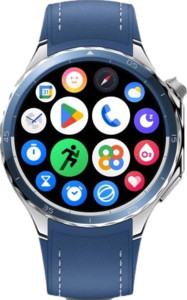
Oppo Watch X2

Google Pixel Watch 4 Oppo Watch X2

Overview

Welcome to our in-depth specification comparison between the Google Pixel Watch 4 and the Oppo Watch X2. Both smartwatches share a strong foundation — OLED displays, comprehensive health sensors, NFC, and robust activity tracking — yet they diverge sharply when it comes to battery life, connectivity options, and health-monitoring depth. Whether you prioritize staying connected on a cellular network or lasting through the week on a single charge, this comparison will help you navigate the key trade-offs before making your decision.

Common Features

  • Both watches feature an OLED/AMOLED display type.
  • Both watches are waterproof with a 5 ATM rating and a depth rating of 50 m.
  • Always-On Display is available on both watches.
  • The watch band is replaceable on both watches.
  • Both watches have a touchscreen display.
  • Blood oxygenation level monitoring is available on both watches.
  • A heart rate monitor is present on both watches.
  • GPS is available on both watches.
  • Both watches include an accelerometer, gyroscope, compass, barometer, and temperature sensor.
  • Sleep tracking is available on both watches.
  • Both watches track distance, steps taken, pace, elevation, and route.
  • Activity auto-detection is available on both watches.
  • Sleep reports are provided by both watches.
  • Both watches are compatible with Android and support Wi-Fi and NFC.
  • Galileo satellite navigation is supported on both watches.
  • Both watches measure VO2 max and resting heart rate.
  • Fast and slow heart rate notifications are available on both watches.
  • Both watches can be used to answer calls and have call control and notifications.
  • ECG technology is present on both watches.
  • Both watches provide activity reports, inactivity alerts, calorie tracking, goal setting, achievements, an exercise diary, and a free ad-free app.
  • Neither watch supports wireless charging or a solar power battery, and the battery is not removable on either.
  • Neither watch is compatible with iOS — wait, that is a difference — skipping.
  • A battery level indicator and passcode are available on both watches.
  • Neither watch is compatible with Windows or Mac OS X, and neither has an external memory slot or a 3.5 mm audio jack.

Main Differences

  • Screen size is 1.4″ on Google Pixel Watch 4 and 1.5″ on Oppo Watch X2.
  • IP rating is IP68 on Google Pixel Watch 4 and IP67 on Oppo Watch X2.
  • Pixel density is 320 ppi on Google Pixel Watch 4 and 310 ppi on Oppo Watch X2.
  • Resolution is 456 x 456 px on Google Pixel Watch 4 and 466 x 466 px on Oppo Watch X2.
  • Branded damage-resistant glass is present on Google Pixel Watch 4 but not available on Oppo Watch X2.
  • Thickness is 12.3 mm on Google Pixel Watch 4 and 11.8 mm on Oppo Watch X2.
  • Weight is 36.7 g on Google Pixel Watch 4 and 49.7 g on Oppo Watch X2.
  • Height is 45 mm on Google Pixel Watch 4 and 46.6 mm on Oppo Watch X2.
  • Width is 45 mm on Google Pixel Watch 4 and 47.6 mm on Oppo Watch X2.
  • Sapphire glass display is present on Oppo Watch X2 but not available on Google Pixel Watch 4.
  • A cadence sensor is present on Google Pixel Watch 4 but not available on Oppo Watch X2.
  • Cellular module is present on Google Pixel Watch 4 but not available on Oppo Watch X2.
  • iOS compatibility is present on Oppo Watch X2 but not available on Google Pixel Watch 4.
  • Bluetooth version is 6 on Google Pixel Watch 4 and 5.2 on Oppo Watch X2.
  • Wi-Fi support includes Wi-Fi 4, Wi-Fi 5, and Wi-Fi 6 on Google Pixel Watch 4, while Oppo Watch X2 supports Wi-Fi 4 only.
  • Battery life is 1.6 days on Google Pixel Watch 4 and 5 days on Oppo Watch X2.
  • Battery capacity is 455 mAh on Google Pixel Watch 4 and 648 mAh on Oppo Watch X2.
  • Charge time is 1.25 hours on Google Pixel Watch 4 and 1.3 hours on Oppo Watch X2.
  • Battery life in power save mode is 72 hours on Google Pixel Watch 4 and 384 hours on Oppo Watch X2.
  • HRV tracking is present on Google Pixel Watch 4 but not available on Oppo Watch X2.
  • Readiness level is shown on Google Pixel Watch 4 but not on Oppo Watch X2.
  • Irregular heart rate warnings are present on Google Pixel Watch 4 but not available on Oppo Watch X2.
  • Fall detection is present on Google Pixel Watch 4 but not available on Oppo Watch X2.
  • Faster GPS acquisition is available on Oppo Watch X2 but not on Google Pixel Watch 4.
  • Coaching is available on Google Pixel Watch 4 but not on Oppo Watch X2.
  • Route support is available on Google Pixel Watch 4 but not on Oppo Watch X2.
Specs Comparison
Google Pixel Watch 4

Google Pixel Watch 4

Oppo Watch X2

Oppo Watch X2

Design:
screen size 1.4" 1.5"
Display type OLED/AMOLED OLED/AMOLED
water resistance Waterproof Waterproof
ATM rating 5 ATM 5 ATM
Ingress Protection (IP) rating IP68 IP67
waterproof depth rating 50 m 50 m
Always-On Display
pixel density 320 ppi 310 ppi
resolution 456 x 456 px 466 x 466 px
Watch band is replaceable
has branded damage-resistant glass
thickness 12.3 mm 11.8 mm
weight 36.7 g 49.7 g
height 45 mm 46.6 mm
width 45 mm 47.6 mm
Has a display
has a touch screen
Has sapphire glass display
volume 24.9075 cm³ 26.174288 cm³

Both watches share a strong foundation: OLED/AMOLED displays with Always-On support, 5 ATM water resistance rated to 50 m, touch screens, and replaceable bands. Where they diverge is in the details that matter most for daily wear and long-term durability. The Google Pixel Watch 4 sports a 1.4″ screen at 320 ppi, while the Oppo Watch X2 goes slightly larger at 1.5″ with 310 ppi — meaning the Pixel Watch 4 is marginally sharper despite the smaller canvas, though the difference is unlikely to be perceptible in everyday use.

The most consequential design difference is weight. The Pixel Watch 4 weighs just 36.7 g versus the Oppo Watch X2's 49.7 g — a gap of over 13 grams, or roughly 35% heavier for the Oppo. Over the course of a full day, and especially during sleep tracking, that disparity is genuinely noticeable on the wrist. The Pixel Watch 4 is also slightly more compact (45 × 45 mm vs 46.6 × 47.6 mm), making it a better fit for smaller wrists, though it is fractionally thicker at 12.3 mm versus 11.8 mm. On ingress protection, the Pixel Watch 4 holds an IP68 rating versus the Oppo's IP67, offering marginally better dust and water sealing.

Screen protection is an interesting trade-off: the Pixel Watch 4 uses branded damage-resistant glass (optimized against impacts and cracks), while the Oppo Watch X2 features a sapphire glass display (exceptionally hard and scratch-resistant, but more brittle under sharp impacts). Neither is strictly superior — the right choice depends on whether scratches or drops are the bigger concern in your lifestyle. Overall, the Pixel Watch 4 has a clear edge in wearability thanks to its significantly lighter build and more compact form factor, while the Oppo Watch X2 appeals to those prioritizing a larger screen and scratch resistance.

Sensors:
Monitors blood oxygenation levels
Has a heart rate monitor
has GPS
has an accelerometer
Has a temperature sensor
has a compass
Has a barometer
has a gyroscope
Has a cadence sensor
Monitors perspiration

The sensor suites on both watches are remarkably well-matched, covering all the essentials a health- and fitness-focused user would expect: heart rate monitoring, blood oxygen (SpO2), GPS, accelerometer, gyroscope, barometer, compass, and temperature sensor. This shared foundation means both watches are genuinely capable of tracking a wide range of workouts, monitoring key health vitals, and supporting features like altitude awareness and automatic activity detection.

The one meaningful differentiator is the cadence sensor, present on the Google Pixel Watch 4 but absent from the Oppo Watch X2. Cadence — measuring steps per minute when running or pedal strokes per minute when cycling — is a metric serious athletes use to optimize efficiency and reduce injury risk. For casual users it is largely irrelevant, but for dedicated runners or cyclists, it is a tangible functional gap in the Oppo's offering.

Neither watch monitors perspiration, so electrodermal activity and sweat-based stress tracking are off the table for both. On balance, the Pixel Watch 4 holds a narrow edge in this category solely due to its cadence sensor — a single but genuinely useful addition for performance-oriented users. For everyone else, the two watches are effectively tied on sensors.

Activity tracking:
Tracks your sleep
Tracks distance
Tracks steps taken
Measures pace
Provides sleep reports
Detects activities automatically
Has a route tracker
Tracks elevation
Has multi-sport mode
Has exercise tagging
Tracks calorie intake
Designed for diving
Designed for golf

Activity tracking is the one category where these two watches are in complete lockstep. Every single capability listed — sleep tracking with reports, step and distance counting, pace measurement, elevation tracking, automatic activity detection, route tracking, exercise tagging, and calorie intake logging — is present on both the Google Pixel Watch 4 and the Oppo Watch X2 without exception.

The shared feature set is genuinely well-rounded for everyday fitness users. Automatic activity detection means neither watch requires you to manually start a workout, while elevation tracking adds meaningful context for hikers and stair climbers alike. The absence of multi-sport mode on both devices is worth noting for triathletes or users who switch rapidly between disciplines mid-session, though most general users will not miss it. Neither watch is designed for specialized use cases like diving or golf, keeping both firmly in the mainstream fitness category.

This group is a complete tie. There is no differentiator — not a single tracked capability separates them. A buyer's decision here should rest entirely on the other specification groups, as activity tracking offers zero advantage to either side.

Connectivity:
has a cellular module
Is compatible with iOS
Is compatible with Android
Bluetooth version 6 5.2
supports Wi-Fi
Wi-Fi version Wi-Fi 4 (802.11n), Wi-Fi 5 (802.11ac), Wi-Fi 6 (802.11ax) Wi-Fi 4 (802.11n)
has NFC
supports Galileo

Connectivity is where the gap between these two watches widens considerably. The Google Pixel Watch 4 includes a cellular module, meaning it can make calls, stream music, and receive notifications entirely independently of a paired phone — a freedom the Oppo Watch X2 simply cannot offer, as it lacks LTE entirely. For users who run, cycle, or travel without their phone, this is a fundamental lifestyle difference, not a minor spec footnote.

The wireless stack also favors the Pixel Watch 4. Its Bluetooth 6 versus the Oppo's Bluetooth 5.2 translates to more stable connections, lower energy consumption, and improved ranging capability. On Wi-Fi, the contrast is stark: the Pixel Watch 4 supports Wi-Fi 6 (802.11ax) alongside older standards, while the Oppo Watch X2 tops out at Wi-Fi 4 (802.11n) — a two-generation gap that means slower data sync speeds and no benefit from modern router infrastructure. Both watches support NFC for contactless payments and Galileo satellite navigation, keeping them level on those fronts.

Platform compatibility is the one area where the Oppo Watch X2 pulls ahead: it works with both Android and iOS, while the Pixel Watch 4 is Android-only. For iPhone users, the Oppo is the only viable option of the two. For Android users, however, the Pixel Watch 4 holds a clear and decisive connectivity advantage — cellular independence, a newer Bluetooth standard, and a significantly more capable Wi-Fi implementation collectively make it the stronger connected device.
Battery:
battery life 1.6 days 5 days
battery power 455 mAh 648 mAh
charge time 1.25 hours 1.3 hours
battery life in power save mode 72 hours 384 hours
has wireless charging
has a rechargeable battery
Has a solar power battery
has a removable battery

Battery life is arguably the most lopsided category in this entire comparison. The Oppo Watch X2 is rated for 5 days of standard use against the Google Pixel Watch 4's 1.6 days — meaning the Oppo lasts roughly three times longer between charges under normal conditions. Backed by a larger 648 mAh cell versus the Pixel Watch 4's 455 mAh, this is not a marginal difference; it translates directly into fewer charging interruptions and far greater confidence when traveling or during multi-day events.

The power-save mode figures drive the point home even further. The Oppo Watch X2 stretches to an extraordinary 384 hours in power-save mode — over 16 days — compared to the Pixel Watch 4's 72 hours. For users going off-grid or simply wanting a safety net, that gap is enormous. Charge times are effectively identical at 1.25 hours and 1.3 hours respectively, so the Oppo's advantage is purely in how long it runs, not in how quickly it recovers. Neither watch supports wireless charging, keeping both on equal footing there.

The Oppo Watch X2 wins this category decisively. The Pixel Watch 4's battery life is a known trade-off for its feature-rich, always-connected profile — particularly its cellular capability and more advanced wireless stack — but users who prioritize longevity over connectivity will find the Oppo's endurance significantly more practical for daily life.

Features:
release date August 2025 February 2025
has HRV tracking
measures VO2 max
measures resting heart rate
has fast/slow heart rate notifications
shows readiness level
Can be used to answer calls
Locates your phone
Has call control
Has notifications
has irregular heart rate warnings
Has ECG technology
Has silent alarm
Has vibrating alerts
has fall detection
Has a stopwatch
Has smart alarm
has voice commands
RAM 2GB 2GB
internal storage 32GB 32GB
Acquires GPS faster
warranty period 1 years 1 years

Across the core feature set, these two watches share a solid common ground: ECG technology, VO2 max measurement, call handling, notifications, voice commands, and identical hardware specs of 2GB RAM and 32GB internal storage. For most users, that shared base covers the vast majority of daily smartwatch needs. The divergences, however, are meaningful — and they consistently favor the Google Pixel Watch 4 on the health-monitoring front.

The Pixel Watch 4 adds three health features absent from the Oppo Watch X2: HRV (Heart Rate Variability) tracking, a readiness level score, and irregular heart rate warnings. HRV is one of the most clinically relevant indicators of recovery and stress, and when combined with a readiness score, it gives users an actionable daily snapshot of whether their body is primed to train or needs rest. Irregular heart rate alerts, distinct from standard fast/slow notifications, can flag potentially serious arrhythmias passively throughout the day. The Pixel Watch 4 also includes fall detection — a safety feature that automatically contacts emergency services if a hard fall is detected and the user is unresponsive, making it particularly valuable for older users or solo outdoor athletes.

The Oppo Watch X2's sole exclusive is faster GPS acquisition, which reduces the wait time before a workout can begin — a convenience rather than a health advantage. Both watches carry an identical 1-year warranty. On balance, the Pixel Watch 4 holds a clear edge in this category: its additional health-monitoring depth and fall detection represent substantive, real-world advantages that go well beyond convenience features.

App & Software:
Provides activity reports
Has inactivity alerts
Counts how many calories you've burned
Has goal setting
Has achievements
Free app
Has exercise diary
Ad-free
Has coaching
Has temperature tracking
Supports routes
Syncs with existing calendars
Has music playback
Exports to email
Doesn’t require account
Supports widgets
Can be personalised
Has barcode scanner on app
Tracks water intake
Has weight tracking

The app and software experience is largely consistent between the two watches, with both delivering a comprehensive, free, and ad-free companion app that covers the fundamentals well: activity reports, calorie tracking, goal setting, exercise diary, water and weight tracking, calendar sync, music playback, and widget and personalization support. For the majority of users, this shared feature set will feel complete and capable on either device.

Two differences stand out. First, the Google Pixel Watch 4 app includes coaching — guided, adaptive feedback that helps users improve performance over time — which the Oppo Watch X2 app lacks entirely. Coaching elevates the software from a passive tracker into an active training partner, a distinction that matters most to users with specific fitness progression goals. Second, the Pixel Watch 4 supports route planning and navigation within the app, while the Oppo Watch X2 does not. For runners and cyclists who rely on mapped courses or want to explore new paths with turn-by-turn guidance, this is a practical and recurring limitation for the Oppo.

Neither app supports account-free use or email export, putting both on equal footing for those edge cases. Overall, the Pixel Watch 4 takes a modest but clear edge in this category — coaching and route support are not niche additions; they are features that meaningfully expand what the software can do for active users on a day-to-day basis.

Miscellaneous:
has a battery level indicator
Has passcode
Is compatible with Windows
has an external memory slot
Is compatible with Mac OS X
has a socket for a 3.5 mm audio jack

The miscellaneous category offers nothing to separate these two watches — every single spec is identical. Both feature a battery level indicator and passcode security, neither supports Windows or Mac OS X desktop connectivity, neither has expandable storage via an external memory slot, and neither includes a 3.5 mm audio jack (standard practice for modern smartwatches, where audio is handled over Bluetooth).

This is a complete tie with no differentiators whatsoever. Buyers should place no weight on this category when choosing between the Google Pixel Watch 4 and the Oppo Watch X2 — the decision rests entirely on the other specification groups.

Comparison Summary & Verdict

After examining every specification, it is clear that both watches excel in different areas. The Google Pixel Watch 4 stands out with its built-in cellular module, a lighter 36.7 g build, broader Wi-Fi support (including Wi-Fi 6), and a richer health feature set that includes HRV tracking, fall detection, irregular heart rate warnings, and a readiness score — making it an excellent companion for health-focused users who want full connectivity independence. The Oppo Watch X2, on the other hand, dominates on battery life at 5 days (versus 1.6 days), a larger 648 mAh cell, an impressive 384-hour power-save mode, sapphire glass protection, and iOS compatibility, making it far better suited to users who value endurance and cross-platform flexibility over advanced health analytics.

Google Pixel Watch 4
Buy Google Pixel Watch 4 if...

Buy the Google Pixel Watch 4 if you want a lightweight smartwatch with built-in cellular, advanced health features like HRV tracking and fall detection, and broad Wi-Fi 6 connectivity.

Oppo Watch X2
Buy Oppo Watch X2 if...

Buy the Oppo Watch X2 if long battery life is your top priority — with up to 5 days of use and 384 hours in power-save mode — or if you need iOS compatibility and sapphire glass durability.