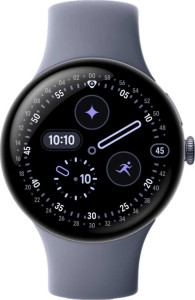
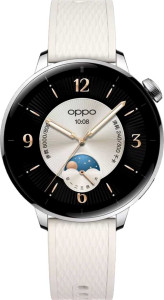
The app experience for both watches shares a strong common foundation — activity reports, inactivity alerts, goal setting, calorie tracking, exercise diary, calendar sync, music playback, water intake, weight tracking, widgets, and personalization are all present on both platforms. Crucially, both apps are free and ad-free, meaning neither watch imposes a paywall or interrupts the experience with advertising. For the majority of everyday users, this shared feature set will feel comprehensive and well-rounded.
The gaps, while fewer than in other spec groups, are worth noting. The Google Pixel Watch 4 app adds three capabilities absent from the Oppo: coaching, temperature tracking, and route support. Coaching brings guided, adaptive feedback into the training experience rather than leaving users to interpret raw data on their own — a meaningful distinction for those looking to actively improve performance. Route support in the app complements the watch's hardware route tracking, enabling planned and reviewed navigation workflows. Temperature tracking in the app ties directly into the Pixel Watch 4's onboard temperature sensor, creating an end-to-end body temperature monitoring pipeline that the Oppo Watch X2 Mini simply cannot replicate at either the hardware or software level.
The Pixel Watch 4 takes this category, not by a wide margin in terms of feature count, but through additions — particularly coaching and the integrated temperature tracking ecosystem — that meaningfully deepen the utility of the app for health-focused and performance-oriented users.