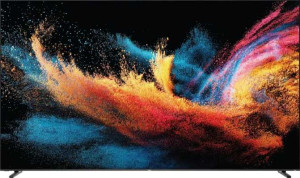
Haier H75M92FUX 75"
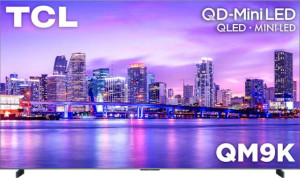
TCL 98QM9K 98"

Haier H75M92FUX 75" TCL 98QM9K 98"

Overview

Welcome to our in-depth spec comparison of the Haier H75M92FUX 75″ and the TCL 98QM9K 98″ — two Mini-LED QLED televisions that share a strong technical foundation yet differ in meaningful ways. Both deliver 4K resolution at 144Hz with robust HDR support, but they diverge when it comes to screen size and audio hardware, connectivity options, and smart home ecosystem support. Read on to see how these two sets stack up across every key specification.

Common Features

  • Both TVs have a 4K (UHD) display resolution of 3840 x 2160 px.
  • Both use a QLED, LED-backlit, LCD, Mini-LED display type.
  • Both support 1070 million display colors at 10-bit depth.
  • Both offer a 144Hz refresh rate.
  • HDR10 support is available on both products.
  • HDR10+ support is available on both products.
  • Bluetooth connectivity is available on both products.
  • Both use HDMI 2.1 with 4 HDMI ports.
  • Wi-Fi is supported on both, including Wi-Fi 4, Wi-Fi 5, and Wi-Fi 6.
  • Both have 2 USB ports and 1 RJ45 port.
  • Miracast support is available on both products.
  • Dolby Digital, Dolby Digital Plus, Dolby Atmos, and Dolby Audio are supported on both TVs.
  • Digital Out support is available on both products.
  • Stereo speakers are present on both products.
  • Dolby Virtual support is not available on either product.
  • SRS TheaterSound HD is not available on either product.
  • Both TVs support VESA mounting.
  • Chromecast built-in is available on both products.
  • AirPlay support is available on both products.
  • Both are smart TVs compatible with Google Assistant and support remote smartphone control.
  • USB recording is supported on both products.
  • Neither TV has a rechargeable remote control.
  • Siri and Apple HomeKit compatibility is not available on either product.

Main Differences

  • Screen size is 75″ on Haier H75M92FUX 75″ and 97.5″ on TCL 98QM9K 98″.
  • Pixel density is 59 ppi on Haier H75M92FUX 75″ and 54 ppi on TCL 98QM9K 98″.
  • AMD FreeSync Premium Pro adaptive sync is available on TCL 98QM9K 98″ but not on Haier H75M92FUX 75″, which supports only AMD FreeSync and AMD FreeSync Premium.
  • Bluetooth version is 5.2 on Haier H75M92FUX 75″ and 5.4 on TCL 98QM9K 98″.
  • A 3.5 mm audio jack is present on Haier H75M92FUX 75″ but not available on TCL 98QM9K 98″.
  • A built-in subwoofer is present on Haier H75M92FUX 75″ but not available on TCL 98QM9K 98″.
  • Width is 1670 mm on Haier H75M92FUX 75″ and 2166.1 mm on TCL 98QM9K 98″.
  • Height is 962 mm on Haier H75M92FUX 75″ and 1235.9 mm on TCL 98QM9K 98″.
  • Thickness is 77 mm on Haier H75M92FUX 75″ and 54.1 mm on TCL 98QM9K 98″.
  • Weight is 23200 g on Haier H75M92FUX 75″ and 56001 g on TCL 98QM9K 98″.
  • Volume is 123703.58 cm³ on Haier H75M92FUX 75″ and 144830.19 cm³ on TCL 98QM9K 98″.
  • Alexa compatibility is available on TCL 98QM9K 98″ but not on Haier H75M92FUX 75″.
  • Warranty period is 2 years on Haier H75M92FUX 75″ and 1 year on TCL 98QM9K 98″.
Specs Comparison
Haier H75M92FUX 75"

Haier H75M92FUX 75"

TCL 98QM9K 98"

TCL 98QM9K 98"

Display:
display resolution 4K (UHD) 4K (UHD)
Display type QLED, LED-backlit, LCD, Mini-LED QLED, LED-backlit, LCD, Mini-LED
screen size 75" 97.5"
resolution 3840 x 2160 px 3840 x 2160 px
pixel density 59 ppi 54 ppi
display colors 1070 million 1070 million
bit depth 10-bit 10-bit
refresh rate 144Hz 144Hz
supports HDR10
supports HDR10+
supports Dolby Vision
supports HLG
Adaptive synchronization AMD FreeSync, AMD FreeSync Premium AMD FreeSync, AMD FreeSync Premium, AMD FreeSync Premium Pro
has anti-reflection coating
has an ambient light sensor
maximum horizontal viewing angle 178º 178º
maximum vertical viewing angle 178º 178º

Both the Haier H75M92FUX and the TCL 98QM9K share the same fundamental display architecture — QLED Mini-LED LCD panels with a 4K (3840 x 2160) resolution, 144Hz refresh rate, 10-bit color depth, and full HDR format support including HDR10, HDR10+, Dolby Vision, and HLG. This means both deliver a broadly comparable image quality foundation with wide color coverage of 1.07 billion colors and identical 178°/178° viewing angles.

The most significant practical difference is screen size: the Haier measures 75″ while the TCL spans a considerably larger 97.5″. That size gap directly affects pixel density — the Haier achieves 59 ppi versus the TCL's 54 ppi. In real-world terms, the Haier's higher pixel density means slightly sharper detail at close viewing distances, while the TCL's massive screen commands a larger room and a farther seating position where that density difference becomes imperceptible. Neither panel is a disadvantage in its intended environment, but the choice is clearly driven by room size and viewing distance.

On adaptive sync, the TCL holds a narrow technical edge with support for AMD FreeSync Premium Pro in addition to the base FreeSync tiers the Haier already covers. FreeSync Premium Pro adds Low Framerate Compensation and mandates HDR support during variable refresh rate use, which matters specifically for high-performance PC gaming or console gaming with VRR. For movie and broadcast viewers, this distinction is irrelevant. Overall, if screen real estate is the priority, the TCL wins decisively; if a sharper image in a mid-size room matters more — and gaming with full VRR HDR is not a concern — the Haier is the more practical and likely more affordable choice.

Connectivity:
Has Bluetooth
HDMI version HDMI 2.1 HDMI 2.1
HDMI ports 4 4
supports Wi-Fi
Wi-Fi version Wi-Fi 4 (802.11n), Wi-Fi 5 (802.11ac), Wi-Fi 6 (802.11ax) Wi-Fi 4 (802.11n), Wi-Fi 5 (802.11ac), Wi-Fi 6 (802.11ax)
Bluetooth version 5.2 5.4
USB ports 2 2
RJ45 ports 1 1
supports Miracast
has a socket for a 3.5 mm audio jack
has an external memory slot
has a VGA connector
has a DVI connector

The wired connectivity lineup is essentially identical between the two TVs: both offer 4 HDMI 2.1 ports, 2 USB ports, and a dedicated RJ45 ethernet port. HDMI 2.1 across all four ports is a strong offering, supporting 4K at 144Hz and features like VRR and eARC without having to hunt for the ″right″ port — a convenience that matters for multi-device setups with gaming consoles, soundbars, and streaming boxes simultaneously connected.

Wireless connectivity is where small but meaningful differences emerge. Both support Wi-Fi 6 (802.11ax) and Miracast for screen mirroring, so network performance is evenly matched. On Bluetooth, however, the TCL carries Bluetooth 5.4 versus the Haier's 5.2. The practical gap is modest — 5.4 brings improvements in connection reliability and energy efficiency, most noticeable when using wireless headphones or peripherals for extended periods, but unlikely to be a deciding factor for casual use.

The clearest differentiator in this group is the 3.5mm headphone jack, which the Haier includes and the TCL omits entirely. For users who rely on wired headphones for late-night viewing or who connect legacy audio equipment directly, the Haier's jack is a tangible, practical advantage. The TCL's slightly newer Bluetooth version partially compensates for wireless audio scenarios, but it cannot replace a wired connection. On balance, the Haier H75M92FUX holds a modest edge in connectivity flexibility thanks to that headphone output, while the TCL counters only at the margins with its newer Bluetooth revision.

Audio:
supports Dolby Digital
supports Digital Out
supports Dolby Digital Plus
has SRS TheaterSound HD
has stereo speakers
has Dolby Atmos
has Dolby Audio
supports Dolby Virtual
has a subwoofer
HDMI ARC / eARC HDMI ARC, HDMI eARC HDMI ARC, HDMI eARC

Audio format support is a clean draw between these two TVs. Both decode Dolby Atmos, Dolby Digital Plus, and Dolby Audio, and both include HDMI ARC and eARC — the latter being particularly important for passing lossless, high-bandwidth audio formats to an external soundbar or AV receiver without signal degradation. For anyone planning to rely on external audio hardware, both sets are equally well-equipped.

Where the specs diverge is in built-in speaker hardware. The Haier H75M92FUX includes an integrated subwoofer, while the TCL 98QM9K does not. A dedicated subwoofer in a TV handles low-frequency reproduction — bass in music, rumble in action scenes, weight in dialogue-heavy drama — without taxing the main drivers. The real-world result is fuller, more balanced sound straight out of the box, particularly noticeable at moderate to high volumes.

For users who will connect a soundbar or home theater system regardless, the subwoofer gap is irrelevant — eARC handles that pipeline on both TVs equally well. But for anyone watching without external audio gear, the Haier holds a clear advantage in this group, delivering a more complete standalone audio experience than the TCL's speaker array alone can offer.

Design:
width 1670 mm 2166.1 mm
weight 23200 g 56001 g
thickness 77 mm 54.1 mm
height 962 mm 1235.9 mm
volume 123703.58 cm³ 144830.189759 cm³
Supports VESA mount

The size difference between these two TVs is substantial enough to make installation planning a serious consideration. The TCL 98QM9K stretches to 2166 mm wide and 1236 mm tall, while the Haier H75M92FUX comes in at 1670 mm wide and 962 mm tall — nearly half a meter narrower and a quarter meter shorter. That gap dictates not just wall space, but doorway clearance, furniture layout, and whether a two-person install is sufficient or professional handling is required.

Weight tells an equally dramatic story. The TCL tips the scales at 56 kg, more than double the Haier's 23.2 kg. At 56 kg, wall-mount hardware selection and stud placement become critical safety considerations, and a solo install is essentially off the table. The Haier, at roughly carry-on luggage weight for a TV of its class, is far more manageable. Both support VESA mounting, so neither forces you to use a stand, but the TCL demands proportionally more robust mounting infrastructure.

One area where the TCL gains back ground is thickness: at 54.1 mm it is notably slimmer than the Haier's 77 mm. For a wall-mounted installation, that nearly 23 mm difference means the TCL sits closer to the wall and presents a cleaner profile despite its enormous footprint. Still, for the majority of buyers, the Haier's decisive advantages in weight and overall dimensions make it the far easier TV to physically place and install — the TCL's scale demands a purpose-built space.

Features:
release date September 2025 September 2025
has Chromecast built-in
has AirPlay
has built-in smart TV
compatible with Google Assistant
works with Alexa
works with Siri/Apple HomeKit
supports a remote smartphone
has a rechargeable remote control
supports USB recording
standby power consumption 0.5W 0.5W
has a search browser
has a sleep timer
has a child lock
warranty period 2 years 1 years
has voice commands

As smart TV platforms, both models cover the same core ground: built-in smart TV, Chromecast, AirPlay, Google Assistant voice control, smartphone remote support, USB recording, and a web browser. For most households, this shared feature set handles daily needs comfortably — casting from a phone, controlling the TV by voice, and recording to a USB drive are all equally accessible on either set.

The one functional gap sits in voice assistant ecosystem breadth. The TCL 98QM9K adds Amazon Alexa compatibility on top of Google Assistant, while the Haier H75M92FUX supports Google Assistant only. For households already invested in an Alexa ecosystem — smart lights, thermostats, routines — the TCL integrates more seamlessly without workarounds. Neither TV supports Siri or Apple HomeKit, so that particular omission is a tie.

Where the Haier decisively reclaims ground is in after-sales protection: it carries a 2-year warranty compared to the TCL's 1-year coverage. On a large, high-investment display, an extra year of manufacturer protection is meaningful, covering the period when component failures are statistically most likely to surface. Weighed together, the TCL edges ahead on smart home versatility with Alexa support, but the Haier's longer warranty offers a durability assurance that may matter more to buyers prioritizing long-term value.

Comparison Summary & Verdict

After examining every specification, it is clear that both TVs occupy different niches despite sharing the same core display technology. The Haier H75M92FUX 75″ stands out for its built-in subwoofer, 3.5 mm audio jack, longer 2-year warranty, and more compact, lighter build — making it an excellent choice for rooms where audio quality, easy installation, and long-term peace of mind matter. The TCL 98QM9K 98″, on the other hand, wins on sheer screen presence at 97.5 inches, a newer Bluetooth 5.4 chip, AMD FreeSync Premium Pro for smoother gaming, and native Alexa support for Amazon smart home users. Both share 144Hz refresh rates, 4 HDMI 2.1 ports, Dolby Atmos, AirPlay, and Chromecast, so neither compromises on core performance. Your decision should ultimately come down to room size, audio priorities, and smart home ecosystem.

Haier H75M92FUX 75
Buy Haier H75M92FUX 75" if...

Buy the Haier H75M92FUX 75″ if you want a more manageable screen size with a built-in subwoofer, a 3.5 mm audio jack, and the reassurance of a 2-year warranty.

TCL 98QM9K 98
Buy TCL 98QM9K 98" if...

Buy the TCL 98QM9K 98″ if you want a massive 97.5-inch cinematic display, AMD FreeSync Premium Pro for gaming, and seamless Alexa smart home integration.