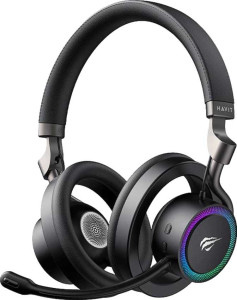
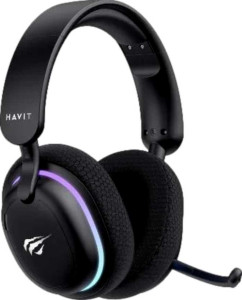
Havit Fuxi H8
Havit Gamenote Fuxi-H7

Havit Fuxi H8 Havit Gamenote Fuxi-H7

Overview

When choosing between the Havit Fuxi H8 and the Havit Gamenote Fuxi-H7, gamers are presented with two feature-rich wireless headsets that share a strong common foundation yet diverge in meaningful ways. Both offer RGB lighting, spatial audio, multi-platform compatibility, and noise-canceling microphones, but key battlegrounds such as noise cancellation technology, driver size, microphone flexibility, and battery endurance set them apart. Dive into the full spec breakdown below to find the right fit for your gaming setup.

Common Features

  • Both headsets have an over-ear fit.
  • Both headsets have a detachable cable.
  • Both headsets feature RGB lighting.
  • Both headsets have stereo speakers.
  • Both headsets have a lowest frequency of 20 Hz.
  • Both headsets have a highest frequency of 20000 Hz.
  • Both headsets support spatial audio.
  • Both headsets have an impedance of 32 Ohms.
  • Both headsets have 2 drivers.
  • Both headsets have a noise-canceling microphone.
  • Both headsets have a mute function.
  • Both headsets have 1 microphone.
  • Both headsets have a rechargeable battery.
  • Both headsets have a battery level indicator.
  • Neither headset has a removable battery.
  • Both headsets can be used wirelessly.
  • Both headsets have a USB Type-C port.
  • Both headsets have a control panel placed on the device.
  • Both headsets can be used as a headset.
  • Neither headset has a vibration function.
  • Neither headset has an in-line control panel.

Main Differences

  • Open-back design is present on Havit Fuxi H8 but not available on Havit Gamenote Fuxi-H7.
  • Active noise cancellation (ANC) is present on Havit Fuxi H8 but not available on Havit Gamenote Fuxi-H7.
  • Driver unit size is 32 mm on Havit Fuxi H8 and 40 mm on Havit Gamenote Fuxi-H7.
  • Sound pressure level is 94 dB/mW on Havit Fuxi H8 and 110 dB/mW on Havit Gamenote Fuxi-H7.
  • A neodymium magnet is present on Havit Gamenote Fuxi-H7 but not available on Havit Fuxi H8.
  • Passive noise reduction is present on Havit Gamenote Fuxi-H7 but not available on Havit Fuxi H8.
  • A removable microphone is present on Havit Fuxi H8 but not available on Havit Gamenote Fuxi-H7.
  • Battery life is 30 hours on Havit Fuxi H8 and 18 hours on Havit Gamenote Fuxi-H7.
  • Charge time is 4 hours on Havit Fuxi H8 and 2 hours on Havit Gamenote Fuxi-H7.
Specs Comparison
Havit Fuxi H8

Havit Fuxi H8

Havit Gamenote Fuxi-H7

Havit Gamenote Fuxi-H7

Design:
Fit Over-ear Over-ear
has a detachable cable
has RGB lighting
has an open-back design
has stereo speakers

Both the Havit Fuxi H8 and the Havit Gamenote Fuxi-H7 share the same over-ear fit, detachable cable, RGB lighting, and stereo speakers — making their core physical design largely equivalent on paper. The detachable cable is a practical durability win for both, as it means a frayed cable doesn't render the entire headset unusable.

The single meaningful differentiator in this group is the open-back design: the Fuxi H8 has it, while the Fuxi-H7 does not. Open-back construction allows air and sound to pass through the ear cups, which typically produces a wider, more natural soundstage — a real advantage for immersive gaming or critical listening. The trade-off, however, is reduced passive isolation and sound leakage to those nearby. The Fuxi-H7's closed-back design keeps audio more contained, making it better suited for shared spaces or noisier environments.

For users who prioritize an airy, spacious sound experience and primarily listen in quiet, private settings, the Fuxi H8 holds a design edge due to its open-back construction. Those who need more isolation or use their headset in shared environments will find the Fuxi-H7's closed-back approach more practical.

Sound quality:
lowest frequency 20 Hz 20 Hz
highest frequency 20000 Hz 20000 Hz
has active noise cancellation (ANC)
supports spatial audio
driver unit size 32 mm 40 mm
sound pressure level 94 dB/mW 110 dB/mW
impedance 32 Ohms 32 Ohms
has a neodymium magnet
has passive noise reduction
drivers count 2 2

Both headsets cover the standard 20 Hz–20,000 Hz audible range and share the same 32 Ohm impedance, meaning neither will strain a typical headset amplifier or gaming controller. They also both support spatial audio and run two drivers per unit — so the foundational audio architecture is comparable.

The more telling differences emerge in driver size, sensitivity, and noise management. The Fuxi-H7's 40 mm drivers are notably larger than the Fuxi H8's 32 mm units, which generally allows for more air displacement and a fuller low-end response. Paired with a significantly higher sound pressure level of 110 dB/mW versus 94 dB/mW, the Fuxi-H7 is capable of reaching substantially louder volumes from the same input signal — a meaningful advantage for users who want impactful, dynamic audio. The Fuxi-H7 also benefits from a neodymium magnet and passive noise reduction, the latter helping to naturally block ambient sound without any electronics involved.

The Fuxi H8 counters with active noise cancellation (ANC), which the Fuxi-H7 entirely lacks — a feature that electronically suppresses continuous background noise like fans or AC hum. However, given that the Fuxi H8 also lacks passive noise reduction, its overall isolation story depends entirely on ANC being active. On balance, the Fuxi-H7 holds a sound quality edge in raw driver capability and loudness headroom, while the Fuxi H8 appeals to users for whom ANC is a priority over outright audio output performance.

Microphone:
has a noise-canceling microphone
has a removable microphone
has a mute function
number of microphones 1 1

Microphone parity is strong between these two headsets: both carry a single noise-canceling microphone with a mute function, meaning neither holds an inherent advantage in voice clarity or communication control during gaming sessions.

The one point of separation is the removable microphone on the Fuxi H8, which the Fuxi-H7 lacks. This is more than a cosmetic distinction — a detachable mic lets users physically remove it when switching to music listening or when using the headset in a non-gaming context, keeping the form factor clean. It also means that if the microphone is damaged, it can be replaced independently rather than affecting the whole unit.

Given how closely matched the two are otherwise, the Fuxi H8 has a narrow edge in this category purely due to its removable microphone adding flexibility the Fuxi-H7 cannot match.

Power:
Battery life 30 hours 18 hours
charge time 4 hours 2 hours
has a rechargeable battery
has a battery level indicator
has a removable battery

Battery longevity is where these two headsets diverge most sharply. The Fuxi H8 offers 30 hours of battery life compared to the Fuxi-H7's 18 hours — a 67% difference that translates directly into fewer interruptions during extended gaming sessions or travel. For users who regularly go multiple days between charges, that gap is practically significant.

The trade-off is charge time: the Fuxi H8 takes 4 hours to fully replenish, while the Fuxi-H7 recovers in just 2 hours. So the Fuxi-H7 charges twice as fast, which softens the blow of its shorter runtime for users who are disciplined about plugging in regularly. Neither headset has a removable battery, so when either runs dry, you're waiting at the cable — making charge speed a relevant practical consideration.

On balance, the Fuxi H8 holds a clear power advantage for users who prioritize endurance over quick turnaround. The Fuxi-H7 suits those who prefer shorter, faster charge cycles but are comfortable with more frequent top-ups.

Connectivity:
connectivity 3.5mm, 2.4GHz wireless, USB, Bluetooth USB, 3.5mm, 2.4GHz wireless, Bluetooth
compatibility PC, PlayStation, Nintendo Switch, Xbox PlayStation, PC, Nintendo Switch, Xbox
Can be used wirelessly
Has USB Type-C

Connectivity is a clean tie between these two headsets. Both offer the same four connection modes — 3.5mm analog, 2.4GHz wireless, USB, and Bluetooth — and both support USB Type-C charging and data. That combination of wired and wireless options means neither headset locks you into a single use case; you can go low-latency wireless for competitive gaming and fall back to a wired connection when battery runs low.

Platform compatibility is equally matched: PC, PlayStation, Nintendo Switch, and Xbox are all supported on both units. For multi-platform gamers who switch between consoles, this breadth means neither headset will leave them stranded on a particular device.

With no distinguishable differences anywhere in this spec group, the two headsets are effectively tied on connectivity. A buyer's decision here should be driven entirely by the other specification categories rather than anything in this one.

Features:
release date July 2025 January 2025
control panel placed on a device
can be used as a headset
has a vibration function
Has an in-line control panel

Across every spec in this group, the Fuxi H8 and Fuxi-H7 are identical. Both place controls on the headset itself rather than on an in-line cable module, both function as full headsets with microphone support, and neither includes a vibration function.

The on-device control placement is worth noting for its practical upside: having volume and playback controls directly on the ear cup keeps adjustments quick and intuitive without fumbling along a cable. The absence of vibration feedback is equally shared — neither headset offers haptic immersion, which keeps the feature set straightforward and focused.

This category is a complete tie. There is no differentiator here to factor into a purchase decision, and buyers should weigh the other specification groups accordingly.

Comparison Summary & Verdict

Having examined every specification, it is clear that each headset is engineered with a distinct user in mind. The Havit Fuxi H8 appeals strongly to users who value an open-back design, active noise cancellation, a detachable microphone, and a substantial 30-hour battery life, making it a versatile long-session companion. The Havit Gamenote Fuxi-H7 counters with larger 40mm drivers powered by a neodymium magnet, a notably higher sound pressure level of 110 dB/mW, passive noise reduction, and a quicker 2-hour charge time, suiting users who prioritize raw audio output and rapid recharging over maximum runtime. Neither headset is a clear-cut winner for everyone, but your personal priorities around sound signature, noise isolation method, and daily usage duration should guide the final decision.

Havit Fuxi H8
Buy Havit Fuxi H8 if...

Buy the Havit Fuxi H8 if you want active noise cancellation, a removable microphone, and a longer 30-hour battery life for extended gaming sessions.

Havit Gamenote Fuxi-H7
Buy Havit Gamenote Fuxi-H7 if...

Buy the Havit Gamenote Fuxi-H7 if you prefer larger 40mm neodymium drivers with a higher sound pressure level and a faster 2-hour charge time.