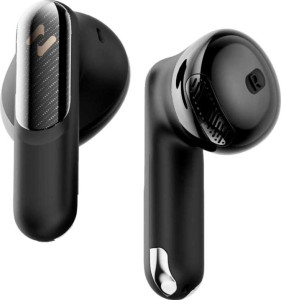
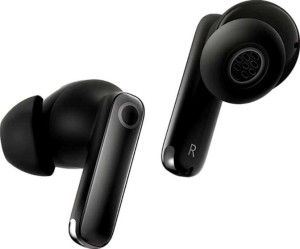
Havit Space NC02T
Haylou HQ5

Havit Space NC02T Haylou HQ5

Overview

Welcome to our detailed spec comparison between the Havit Space NC02T and the Haylou HQ5 — two compact, wireless in-ear earbuds competing in the same space with some notable distinctions. Both offer active noise cancellation, fast charging, and Bluetooth 6 connectivity, yet they diverge in areas like driver size, battery endurance, and codec support. Read on to see how every specification stacks up before making your decision.

Common Features

  • Both products use an in-ear fit.
  • Both products are wireless with no wires or cables.
  • Neither product is a neckband earbud design.
  • Neither product includes wingtips.
  • Neither product features RGB lighting.
  • Both products have stereo speakers.
  • Neither product includes a UV light.
  • Neither product has a display.
  • Both products support active noise cancellation (ANC).
  • Both products offer passive noise reduction.
  • The lowest frequency on both products is 20 Hz.
  • The highest frequency on both products is 20000 Hz.
  • Neither product supports Dolby Atmos.
  • Neither product supports Dirac Virtuo.
  • Neither product uses a neodymium magnet.
  • Both products have a charge time of 2 hours.
  • Both products have a battery power of 30 mAh.
  • Neither product supports wireless charging.
  • Neither product has a solar power battery.
  • Both products have a battery level indicator.
  • Both products have a rechargeable battery.
  • Neither product supports fast pairing.
  • Both products have a USB Type-C connector.
  • Both products use Bluetooth version 6.
  • Neither product supports LDAC.
  • Neither product supports LDHC.
  • Neither product supports Bluetooth LE Audio.
  • Neither product supports aptX Adaptive.
  • Neither product supports aptX Low Latency.
  • Both products have an ambient sound mode.
  • Neither product has in/on-ear detection.
  • Neither product has a find device feature.
  • Both products support fast charging.
  • Neither product can read notifications.
  • Both products have a mute function.
  • Both products can be used as a headset.
  • Both products have a control panel placed on the device.
  • Both products have a noise-canceling microphone.

Main Differences

  • Weight is 8.6 g on Havit Space NC02T and 8 g on Haylou HQ5.
  • Driver unit size is 13 mm on Havit Space NC02T and 10 mm on Haylou HQ5.
  • Spatial audio support is present on Havit Space NC02T but not available on Haylou HQ5.
  • Battery life is 6.5 hours on Havit Space NC02T and 6 hours on Haylou HQ5.
  • Battery life of the charging case is 19.5 hours on Havit Space NC02T and 16 hours on Haylou HQ5.
  • Charging case battery power is 400 mAh on Havit Space NC02T and 320 mAh on Haylou HQ5.
  • AAC support is present on Haylou HQ5 but not available on Havit Space NC02T.
Specs Comparison
Havit Space NC02T

Havit Space NC02T

Haylou HQ5

Haylou HQ5

Design:
Fit In-ear In-ear
weight 8.6 g 8 g
has no wires or cables
are neckband earbuds
wingtips included
has RGB lighting
has stereo speakers
has UV light
Has a display

Both the Havit Space NC02T and the Haylou HQ5 share an almost identical design profile: true wireless, in-ear fit with no neckband, no wingtips, and no RGB lighting or display. For users, this means a straightforward, minimalist earbud experience on both sides — neither product leans into flashy aesthetics or extra accessories.

The only measurable design differentiator is weight. The HQ5 comes in at 8 g per earbud, while the NC02T is marginally heavier at 8.6 g. In absolute terms, a 0.6 g difference is negligible for most users, but for extended listening sessions, slightly lighter earbuds can reduce ear fatigue over time. The edge here goes to the Haylou HQ5, though in practice the gap is unlikely to be perceptible to the vast majority of wearers.

Overall, these two earbuds are effectively tied on design. They target the same use case — a clean, cable-free in-ear form factor — and differ only in a barely noticeable weight margin. Neither product offers a distinctive design advantage beyond that single spec.

Sound quality:
has active noise cancellation (ANC)
has passive noise reduction
driver unit size 13 mm 10 mm
lowest frequency 20 Hz 20 Hz
highest frequency 20000 Hz 20000 Hz
supports spatial audio
has Dolby Atmos
has Dirac Virtuo
has a neodymium magnet

At the core of any earbud's sound profile is its driver, and here the two products diverge. The Havit Space NC02T uses a 13 mm driver, compared to the 10 mm unit in the Haylou HQ5. A larger driver generally moves more air, which can translate to fuller bass response and greater overall loudness headroom — though driver size alone does not guarantee superior tuning. Still, the NC02T holds a structural advantage on paper for users who prioritize low-end presence.

Both earbuds share an identical frequency range of 20 Hz to 20,000 Hz, covering the full spectrum of human hearing, and both combine active noise cancellation with passive noise reduction — a meaningful pairing that addresses noise isolation at both a physical and algorithmic level. Neither supports Dolby Atmos or Dirac Virtuo, so proprietary spatial audio processing is off the table for both.

The deciding factor in this category is the NC02T's support for spatial audio, a feature absent on the HQ5. Spatial audio processing creates a wider, more three-dimensional soundstage — particularly noticeable with compatible content like movies or games. Combined with its larger driver, the Havit Space NC02T holds a clear edge in sound quality features over the Haylou HQ5.

Power:
Battery life 6.5 hours 6 hours
Battery life of charging case 19.5 hours 16 hours
charge time 2 hours 2 hours
battery power 30 mAh 30 mAh
battery power (charging case) 400mAh 320mAh
has wireless charging
Has a solar power battery
has a battery level indicator
has a rechargeable battery

Earbud battery life is best understood as a total system — the earbuds themselves plus the recharging capacity of their case. On the earbud side, the Havit Space NC02T offers 6.5 hours per charge versus 6 hours for the Haylou HQ5, a modest but real difference for users who stretch listening sessions through a full workday without reaching for the case.

Where the gap widens is in case capacity. The NC02T's case holds 400 mAh and delivers 19.5 hours of total combined playback, while the HQ5's 320 mAh case caps out at 16 hours total. That 3.5-hour difference in combined endurance is meaningful for travelers or commuters who cannot recharge daily — it represents roughly half an additional top-up cycle. Both cases share the same 2-hour charge time and identical 30 mAh earbud batteries, so the NC02T's advantage comes entirely from its more capacious case.

Neither product supports wireless charging, which would have been a convenience differentiator. Overall, the Havit Space NC02T takes a clear edge in this category, offering longer per-session endurance and meaningfully greater total battery reserve — an advantage that compounds over the course of a long trip or heavy-use day.

Connectivity:
has fast pairing
Has USB Type-C
Bluetooth version 6 6
has LDAC
has LDHC
has Bluetooth LE Audio
has aptX Adaptive
has aptX Low Latency
has aptX HD
has aptX
has aptX Lossless
has aptX Voice
has Auracast
maximum Bluetooth range 10 m 10 m
supports Bluetooth pairing using NFC
Can be used wirelessly
has AAC

On the connectivity front, the Havit Space NC02T and Haylou HQ5 are remarkably similar — both run on Bluetooth 6, share a 10 m maximum range, charge via USB-C, and lack advanced codecs like LDAC, aptX, or LE Audio. For the vast majority of users, this means an equivalent wireless experience: stable modern Bluetooth with standard range and no premium high-resolution audio pipeline on either side.

The lone differentiator is the HQ5's support for AAC. While AAC is not a lossless or high-resolution codec, it is a meaningful step above the default SBC baseline — particularly for Apple device users, where AAC is natively prioritized and tends to deliver noticeably cleaner audio transmission with lower compression artifacts. On the NC02T, the absence of AAC means audio will fall back to SBC regardless of the source device, which represents a subtle but real quality ceiling in wireless audio throughput.

The Haylou HQ5 takes a narrow but genuine edge here. For Android users the gap may be barely perceptible, but for iPhone users in particular, AAC support translates directly to a better-quality wireless signal. It is a small win, but in an otherwise identical connectivity profile, it is the deciding factor.

Features:
release date September 2025 May 2025
has ambient sound mode
has in/on-ear detection
has find device feature
Supports fast charging
can read notifications
has a mute function
can be used as a headset
control panel placed on a device
Has voice prompts
travel bag is included
Has an in-line control panel
Has a temperature sensor
Has a built-in camera remote control function

Across the entire features category, the Havit Space NC02T and Haylou HQ5 are an exact match — every single specification is identical. Both support ambient sound mode, fast charging, a mute function, on-device controls, and voice prompts. Both can function as a headset for calls, and both include a travel bag in the box.

Notably, neither earbud offers in/on-ear detection or a find-device feature — two conveniences increasingly common in this segment. The absence of ear detection means audio will not automatically pause when an earbud is removed, which can be a minor daily friction point. The lack of a find-device feature may matter to users prone to misplacing their earbuds. But since both products share these omissions equally, they do not factor into a relative comparison.

This is a clean tie. There is no basis in the provided specs to give either product an edge here — the feature sets are carbon copies of each other, and the decision between the two will need to rest on other specification groups.

Microphone:
has a noise-canceling microphone

With only a single data point available for this category, the comparison is straightforward: both the Havit Space NC02T and the Haylou HQ5 feature a noise-canceling microphone. This is a meaningful baseline to share — mic noise cancellation filters out ambient sound during calls, which noticeably improves call clarity in noisy environments like commutes, offices, or busy streets.

This is a complete tie. The provided specs offer no further microphone detail — such as the number of microphone elements or beamforming technology — to differentiate the two products, so neither holds an advantage in this category based on the available data.

Comparison Summary & Verdict

After examining every spec, the Havit Space NC02T and Haylou HQ5 share a strong common foundation — ANC, passive noise reduction, fast charging, and a mute function — but differ in meaningful ways. The Havit Space NC02T stands out with its larger 13 mm driver, spatial audio support, and superior battery endurance of 6.5 hours plus a 400 mAh charging case delivering 19.5 hours of total playback. The Haylou HQ5, on the other hand, is the slightly lighter option at 8 g and uniquely offers AAC codec support, which benefits Apple device users seeking better audio streaming quality. Choose based on your priorities: immersive sound staging and battery longevity, or a lighter fit with AAC compatibility.

Havit Space NC02T
Buy Havit Space NC02T if...

Buy the Havit Space NC02T if you want a larger driver for richer sound, spatial audio support, and the longest possible battery life from both the earbuds and charging case.

Haylou HQ5
Buy Haylou HQ5 if...

Buy the Haylou HQ5 if you prefer a slightly lighter earbud and need AAC codec support for higher-quality audio streaming, particularly with Apple devices.