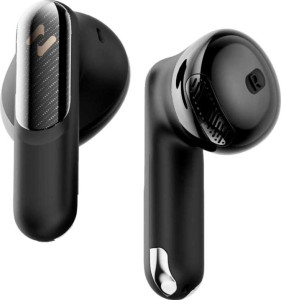
Havit Space NC02T
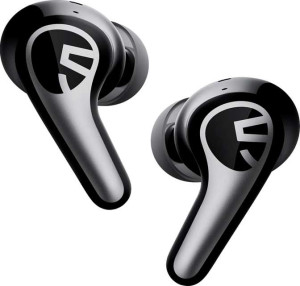
Soundpeats C30

Havit Space NC02T Soundpeats C30

Overview

When choosing between the Havit Space NC02T and the Soundpeats C30, buyers are faced with two capable true wireless earbuds that share a strong foundation — including active noise cancellation, ambient sound mode, and Bluetooth 6 — yet diverge in meaningful ways. This comparison digs into the key battlegrounds: battery endurance, audio codec support, frequency range, and spatial audio capabilities, helping you identify which set of earbuds truly fits your listening habits and lifestyle.

Common Features

  • Both the Havit Space NC02T and Soundpeats C30 are in-ear earbuds.
  • Neither the Havit Space NC02T nor the Soundpeats C30 uses wires or cables.
  • Neither product is a neckband-style earbud.
  • Wingtips are not included with either the Havit Space NC02T or the Soundpeats C30.
  • RGB lighting is not present on either the Havit Space NC02T or the Soundpeats C30.
  • Both the Havit Space NC02T and Soundpeats C30 feature stereo speakers.
  • A UV light is not available on either the Havit Space NC02T or the Soundpeats C30.
  • Neither the Havit Space NC02T nor the Soundpeats C30 has a display.
  • Both the Havit Space NC02T and Soundpeats C30 support active noise cancellation (ANC).
  • Both products offer passive noise reduction.
  • The lowest frequency on both the Havit Space NC02T and Soundpeats C30 is 20 Hz.
  • Dolby Atmos is not supported on either the Havit Space NC02T or the Soundpeats C30.
  • A neodymium magnet is not used in either the Havit Space NC02T or the Soundpeats C30.
  • Both the Havit Space NC02T and Soundpeats C30 have a charge time of 2 hours.
  • Wireless charging is not available on either the Havit Space NC02T or the Soundpeats C30.
  • Both products include a battery level indicator.
  • Both the Havit Space NC02T and Soundpeats C30 have a rechargeable battery.
  • Both products use Bluetooth version 6.
  • USB Type-C is present on both the Havit Space NC02T and Soundpeats C30.
  • Both the Havit Space NC02T and Soundpeats C30 support fast charging.
  • An ambient sound mode is available on both the Havit Space NC02T and Soundpeats C30.
  • In-ear or on-ear detection is not available on either product.
  • A find device feature is not present on either the Havit Space NC02T or the Soundpeats C30.
  • Neither the Havit Space NC02T nor the Soundpeats C30 can read notifications aloud.
  • A built-in translator is not available on either the Havit Space NC02T or the Soundpeats C30.
  • Both products include a mute function.
  • Both the Havit Space NC02T and Soundpeats C30 can be used as a headset.
  • Both products feature a noise-canceling microphone.

Main Differences

  • The driver unit size is 13 mm on the Havit Space NC02T and 12 mm on the Soundpeats C30.
  • The highest frequency reaches 20000 Hz on the Havit Space NC02T and 40000 Hz on the Soundpeats C30.
  • Spatial audio support is present on the Havit Space NC02T but not available on the Soundpeats C30.
  • The impedance is 16 Ohms on the Havit Space NC02T and 18 Ohms on the Soundpeats C30.
  • Battery life is 6.5 hours on the Havit Space NC02T and 10 hours on the Soundpeats C30.
  • The battery life of the charging case is 19.5 hours on the Havit Space NC02T and 42 hours on the Soundpeats C30.
  • LDAC support is present on the Soundpeats C30 but not available on the Havit Space NC02T.
  • AAC support is present on the Soundpeats C30 but not available on the Havit Space NC02T.
Specs Comparison
Havit Space NC02T

Havit Space NC02T

Soundpeats C30

Soundpeats C30

Design:
Fit In-ear In-ear
has no wires or cables
are neckband earbuds
wingtips included
has RGB lighting
has stereo speakers
has UV light
Has a display

In terms of design, the Havit Space NC02T and the Soundpeats C30 are virtually identical across every measured attribute. Both use an in-ear fit, are fully wireless with no cables or neckband, omit wingtips, and feature stereo speakers without any RGB lighting, UV light, or a display.

Because there are no differentiating design specs between the two, this category results in a complete tie. Neither product offers a design feature that the other lacks, meaning your choice between them should be driven by other spec groups such as audio performance, battery life, or connectivity.

Sound quality:
has active noise cancellation (ANC)
has passive noise reduction
driver unit size 13 mm 12 mm
lowest frequency 20 Hz 20 Hz
highest frequency 20000 Hz 40000 Hz
supports spatial audio
has Dolby Atmos
has Dirac Virtuo
impedance 16 Ohms 18 Ohms
has a neodymium magnet

Both earbuds share a solid noise-isolation foundation, offering active noise cancellation alongside passive noise reduction. Driver size is nearly identical — 13 mm on the NC02T versus 12 mm on the C30 — a difference too small to be meaningful on its own. Where the two begin to diverge is at the upper end of the frequency range: the C30 reaches up to 40,000 Hz compared to the NC02T's 20,000 Hz. While human hearing tops out around 20 kHz, the extended range on the C30 can contribute to a more spacious, detailed sound at the top of the audible spectrum in practice.

On the other hand, the NC02T counters with support for spatial audio, which the C30 lacks entirely. Spatial audio processing creates a more immersive, three-dimensional soundstage — a tangible benefit for movies, gaming, and certain music genres. The NC02T also carries a marginally lower impedance of 16 Ohms versus 18 Ohms, meaning it requires slightly less power to drive, though the real-world difference at this scale is negligible for typical mobile use.

This group is closely contested, but the deciding factors come down to use case. The Soundpeats C30 has a measurable edge in raw frequency extension, while the Havit Space NC02T offers spatial audio support — a feature that meaningfully enriches immersive listening. For users who prioritize cinematic or gaming audio, the NC02T holds the advantage here.

Power:
Battery life 6.5 hours 10 hours
Battery life of charging case 19.5 hours 42 hours
charge time 2 hours 2 hours
has wireless charging
Has a solar power battery
has a battery level indicator
has a rechargeable battery

Battery life is where these two earbuds part ways most dramatically. The Soundpeats C30 delivers 10 hours of continuous playback per charge, while the Havit Space NC02T manages only 6.5 hours — a gap of 3.5 hours that becomes very noticeable during long travel days, extended work sessions, or back-to-back commutes. The case tells a similar story: the C30's case extends total listening time to 42 hours, compared to 19.5 hours for the NC02T. That means the C30 can last more than twice as long before you need to find a wall outlet.

The two products are evenly matched where it counts less: both share a 2-hour charge time, neither supports wireless charging, and both include a battery level indicator so you are never caught off guard. The absence of wireless charging on both means there is no premium convenience feature to tip the scales on that front.

The Soundpeats C30 holds a clear and substantial edge in this category. For users who frequently go extended periods without access to charging — whether traveling, commuting, or working long shifts — the C30's significantly larger battery reserves make it the more practical choice by a wide margin.

Connectivity:
has fast pairing
Has USB Type-C
Bluetooth version 6 6
has LDAC
has LDHC
has Bluetooth LE Audio
has aptX Adaptive
has aptX Low Latency
has aptX HD
has aptX
has aptX Lossless
has aptX Voice
has Auracast
maximum Bluetooth range 10 m 10 m
supports Bluetooth pairing using NFC
Can be used wirelessly
has AAC

At the foundation, these two earbuds are well-matched: both run on Bluetooth 6, share an identical 10 m maximum range, charge via USB-C, and operate fully wirelessly. Neither supports fast pairing or NFC, so the out-of-box connection experience is comparable on both sides.

The meaningful separation comes down to audio codec support. The Soundpeats C30 supports both LDAC and AAC, while the Havit Space NC02T supports neither. LDAC is Sony's high-resolution wireless codec capable of transmitting up to three times more data than standard Bluetooth audio — on compatible Android devices, this translates to a noticeably richer, more detailed sound. AAC, meanwhile, is the preferred codec for Apple devices, ensuring higher-quality audio on iPhones and iPads. The NC02T's absence of both codecs means it falls back to the baseline SBC transmission regardless of the source device.

The Soundpeats C30 takes a clear edge in connectivity. Codec support is not a niche specification — it directly affects audio fidelity for a large portion of users, particularly those on Android or Apple ecosystems. For listeners who want to extract the most from high-quality streaming services, the C30's codec advantages are a practical and relevant differentiator.

Features:
release date September 2025 November 2025
has ambient sound mode
has in/on-ear detection
has find device feature
Supports fast charging
can read notifications
Has a built-in translator
has a mute function
can be used as a headset
control panel placed on a device
Has voice prompts
travel bag is included
Has an in-line control panel
Has a temperature sensor
Has a built-in camera remote control function

Across every feature in this category, the Havit Space NC02T and Soundpeats C30 are a perfect match. Both offer ambient sound mode for situational awareness, a mute function, on-device controls, and voice prompts — a practical set of daily-use features that covers the essentials without excess.

A few shared inclusions are worth noting for their real-world value. Both earbuds support fast charging, which helps offset downtime during the day, and both ship with a travel bag — a small but appreciated addition for users who commute or travel frequently. Headset functionality is also present on both, making them equally viable for calls and conferencing.

With no spec in this group differing between the two products, this category is a complete tie. Neither the NC02T nor the C30 holds a feature advantage here, and the decision between them should rest on the differentiators found in other categories such as sound quality, battery life, or connectivity.

Microphone:
has a noise-canceling microphone

Microphone specs are straightforward here: both the Havit Space NC02T and the Soundpeats C30 include a noise-canceling microphone. This is a meaningful baseline feature for anyone who regularly takes calls in noisy environments — public transit, open offices, or busy streets — as it helps isolate the speaker's voice and reduce background interference for the person on the other end.

With only a single shared data point available for this category, there is nothing to separate the two products. This group is a complete tie, and call quality comparisons between the NC02T and C30 will need to be informed by hands-on testing rather than spec sheet differences.

Comparison Summary & Verdict

After examining every specification, both earbuds prove to be well-rounded options, but each shines in a different context. The Havit Space NC02T stands out with its support for spatial audio and a slightly larger 13 mm driver, making it a compelling pick for listeners who value an immersive, three-dimensional soundstage. The Soundpeats C30, on the other hand, takes a clear lead in endurance, offering 10 hours of battery life and an impressive 42-hour charging case, alongside a wider frequency range up to 40000 Hz and support for both LDAC and AAC codecs — features that appeal to audiophiles and frequent travelers who prioritize high-fidelity wireless audio and all-day reliability.

Havit Space NC02T
Buy Havit Space NC02T if...

Buy the Havit Space NC02T if spatial audio support is important to you and you prefer a slightly larger driver for a broader soundstage experience.

Soundpeats C30
Buy Soundpeats C30 if...

Buy the Soundpeats C30 if you need longer battery life, superior codec support with LDAC and AAC, and a wider frequency response for higher-fidelity audio.