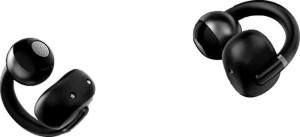
Haylou Airfree
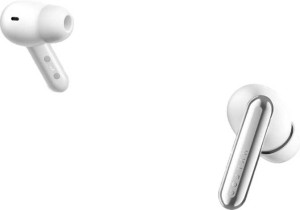
Haylou Mori Pro

Haylou Airfree Haylou Mori Pro

Overview

Welcome to our detailed specification comparison between the Haylou Airfree and the Haylou Mori Pro. Both earbuds share a wireless, cable-free design with Bluetooth 5.4, active noise cancellation, and an 8-hour battery life, but they take notably different approaches when it comes to fit style, audio features, and microphone configuration. Whether you value an open-ear experience with spatial audio or a more traditional in-ear seal with passive noise reduction, this comparison will help you decide which model is the right fit for your lifestyle.

Common Features

  • Both products have no wires or cables.
  • Neither product is a neckband earbud design.
  • Neither product includes wingtips.
  • Neither product has RGB lighting.
  • Both products have stereo speakers.
  • Neither product has a UV light.
  • Both products support active noise cancellation (ANC).
  • Both products have a lowest frequency of 20 Hz.
  • Both products have a highest frequency of 20000 Hz.
  • Neither product supports Dolby Atmos.
  • Neither product supports Dirac Virtuo.
  • Neither product has a neodymium magnet.
  • Both products have a battery life of 8 hours.
  • Both products have a charge time of 1.5 hours.
  • Neither product supports wireless charging.
  • Neither product has a solar power battery.
  • Both products have a battery level indicator.
  • Both products have a rechargeable battery.
  • Neither product supports fast pairing.
  • Both products have USB Type-C.
  • Both products use Bluetooth version 5.4.
  • Neither product supports LDAC.
  • Neither product supports LDHC.
  • Neither product supports Bluetooth LE Audio.
  • Neither product supports aptX Adaptive.
  • Neither product supports aptX Low Latency.
  • Both products have an ambient sound mode.
  • Neither product has in/on-ear detection.
  • Neither product has a find device feature.
  • Both products support fast charging.
  • Neither product can read notifications.
  • Both products have a mute function.
  • Both products can be used as a headset.
  • Both products have a control panel placed on the device.
  • Both products have a noise-canceling microphone.

Main Differences

  • Fit type is open-ear on Haylou Airfree and in-ear on Haylou Mori Pro.
  • Passive noise reduction is not available on Haylou Airfree but is present on Haylou Mori Pro.
  • Spatial audio is supported on Haylou Airfree but not available on Haylou Mori Pro.
  • Battery life of the charging case is 20 hours on Haylou Airfree and 27 hours on Haylou Mori Pro.
  • Battery power is 40 mAh on Haylou Airfree and 35 mAh on Haylou Mori Pro.
  • Charging case battery power is 350 mAh on Haylou Airfree and 400 mAh on Haylou Mori Pro.
  • Number of microphones is 4 on Haylou Airfree and 6 on Haylou Mori Pro.
Specs Comparison
Haylou Airfree

Haylou Airfree

Haylou Mori Pro

Haylou Mori Pro

Design:
Fit Open-ear In-ear
has no wires or cables
are neckband earbuds
wingtips included
has RGB lighting
has stereo speakers
has UV light

The most significant design difference between these two earbuds lies in their fit style. The Haylou Airfree uses an open-ear design, meaning the drivers sit outside the ear canal rather than inside it. This allows ambient sound to pass through freely, making it a better fit for users who prioritize situational awareness — such as during outdoor workouts or commutes — at the cost of sound isolation and bass response. The Haylou Mori Pro, by contrast, uses a traditional in-ear fit, where ear tips seal the canal to deliver improved passive noise isolation and a more immersive audio experience.

Beyond fit, both products share a nearly identical design profile: both are fully wireless with no cables or neckband, neither includes wingtips for extra ear stability, and neither features RGB lighting or UV light. Both also support stereo playback. These shared traits mean the choice between them comes down almost entirely to that one fundamental ergonomic and acoustic decision — open-ear versus in-ear.

The Mori Pro holds a clear edge for users seeking better sound isolation and audio immersion, while the Airfree is the more suitable pick for those who need to stay aware of their surroundings. Neither design is objectively superior — it is a use-case distinction rather than a quality gap.

Sound quality:
has active noise cancellation (ANC)
has passive noise reduction
lowest frequency 20 Hz 20 Hz
highest frequency 20000 Hz 20000 Hz
supports spatial audio
has Dolby Atmos
has Dirac Virtuo
has a neodymium magnet

Both earbuds cover the standard 20 Hz–20,000 Hz audible frequency range and both include active noise cancellation (ANC), so at a baseline level they are evenly matched on the fundamentals. The meaningful split emerges when you look at how each product handles noise isolation beyond ANC. The Mori Pro also benefits from passive noise reduction — a byproduct of its in-ear seal — which works in tandem with ANC to block a wider range of ambient noise, particularly higher-frequency sounds that ANC alone handles less efficiently. The Airfree, with its open-ear design, offers no passive noise reduction, so its ANC is doing all the heavy lifting in noisy environments with inherently less effectiveness.

Where the Airfree strikes back is with spatial audio support, a feature absent on the Mori Pro. Spatial audio creates a more three-dimensional, immersive soundstage — particularly noticeable when watching video content or gaming — by simulating directional sound cues. This is a meaningful advantage for entertainment-focused listeners.

Overall, the Mori Pro has the edge for noise isolation and everyday listening in loud environments, thanks to its layered ANC-plus-passive approach. The Airfree is the stronger pick for immersive media consumption where spatial audio makes a tangible difference. The ″better″ choice depends squarely on whether noise blocking or soundstage depth is the user's priority.

Power:
Battery life 8 hours 8 hours
Battery life of charging case 20 hours 27 hours
charge time 1.5 hours 1.5 hours
battery power 40 mAh 35 mAh
battery power (charging case) 350mAh 400mAh
has wireless charging
Has a solar power battery
has a battery level indicator
has a rechargeable battery

Earbud battery life is identical across both models at 8 hours per charge, and both replenish fully in 1.5 hours — a dead heat on the metrics that matter most for daily use. The divergence appears at the case level. The Mori Pro case carries a larger 400 mAh cell delivering 27 hours of total combined playback, while the Airfree case offers 350 mAh and 20 hours total. In practice, that 7-hour gap means the Mori Pro can squeeze in roughly one additional full earbud charge cycle before needing a wall outlet — a meaningful difference for travelers or users who go several days between charges.

Neither product supports wireless charging, which is a notable omission at this tier, and both include a battery level indicator — a small but practical convenience that prevents unexpected shutdowns. The individual earbud cells are close in capacity (40 mAh vs 35 mAh for Airfree and Mori Pro respectively), and given that real-world playback time is identical, the Airfree appears to squeeze slightly more efficiency out of its marginally larger cell.

The Mori Pro takes a clear edge in this category purely on case endurance. For users who prioritize going longer between charges — whether traveling, commuting, or simply charging infrequently — the Mori Pro's higher-capacity case makes it the more practical choice.

Connectivity:
has fast pairing
Has USB Type-C
Bluetooth version 5.4 5.4
has LDAC
has LDHC
has Bluetooth LE Audio
has aptX Adaptive
has aptX Low Latency
has aptX HD
has aptX
has aptX Lossless
has aptX Voice
has Auracast
maximum Bluetooth range 10 m 10 m
supports Bluetooth pairing using NFC
Can be used wirelessly
has AAC

Connectivity is a straight tie here — every single spec in this category is identical between the Haylou Airfree and the Haylou Mori Pro. Both run on Bluetooth 5.4, the same modern standard that brings improved connection stability, lower power consumption, and reduced latency compared to older versions. Both cap out at a 10 m wireless range, which is typical for earbuds and sufficient for everyday use within the same room as the source device.

Neither model supports advanced audio codecs — no LDAC, aptX, AAC, or any of their variants — which means audio is transmitted over standard SBC by default. For most listeners in typical environments this is unlikely to be noticeable, but audiophiles seeking high-resolution wireless audio will find both options equally limiting. The absence of Bluetooth LE Audio and Auracast also means neither earbud can tap into next-generation multi-device broadcast features that are beginning to appear in premium competitors.

Given the complete parity across every data point, this category is a dead tie. Neither product offers a connectivity advantage over the other, and the decision between them should rest entirely on the differentiators found in other spec groups.

Features:
release date January 2025 January 2025
has ambient sound mode
has in/on-ear detection
has find device feature
Supports fast charging
can read notifications
has a mute function
can be used as a headset
control panel placed on a device
Has voice prompts
travel bag is included
Has an in-line control panel
Has a temperature sensor
Has a built-in camera remote control function

Much like connectivity, the features category reveals complete parity between the two earbuds — every spec listed is identical. Both support ambient sound mode, which lets external audio pass through so users can stay aware of their surroundings without removing the earbuds. Both also offer fast charging, a genuinely useful convenience that can restore meaningful playback time from a short plug-in session.

On the usability side, both models include on-device controls, voice prompts, a mute function, and headset capability for calls — a well-rounded everyday feature set. The inclusion of a travel bag on both is a minor but appreciated practical touch. Notably, neither model offers in-ear detection, which means audio will not automatically pause when an earbud is removed — a small but real usability gap compared to more premium options.

With zero differentiators across this entire category, the verdict is another complete tie. Users evaluating these two products should look to the Design, Sound Quality, and Power categories — where real differences exist — to guide their final decision.

Microphone:
number of microphones 4 6
has a noise-canceling microphone

Both earbuds feature noise-canceling microphones, so call quality benefits from active voice isolation on either model. The meaningful distinction is microphone count: the Haylou Airfree carries 4 microphones, while the Mori Pro steps up to 6 microphones. In microphone array design, more physical mics generally allow for more precise beamforming — the process of isolating the speaker's voice and suppressing surrounding noise from multiple directions simultaneously. The Mori Pro's additional two mics give its algorithms more spatial data to work with, which can translate to cleaner voice pickup in windy or crowded environments.

The Mori Pro holds a clear edge in this category. While both products offer noise-canceling mic capability, the higher microphone count gives the Mori Pro a structural advantage for call clarity and voice isolation that the Airfree cannot match on paper. For users who frequently take calls in noisy settings, this difference is worth factoring in.

Comparison Summary & Verdict

After examining the full spec sheet, both the Haylou Airfree and the Haylou Mori Pro prove to be capable wireless earbuds that share a strong foundation, including ANC, Bluetooth 5.4, fast charging, and an identical 8-hour playback time. Where they diverge is meaningful: the Haylou Airfree suits listeners who prefer an open-ear fit with spatial audio support, making it a compelling choice for those who want situational awareness without sacrificing immersive sound. The Haylou Mori Pro, on the other hand, is better suited to users who prioritize passive noise reduction, a larger charging case battery of 400 mAh for extended top-ups, and a more robust 6-microphone setup for clearer calls. Your ideal choice comes down to fit preference and how you plan to use your earbuds day to day.

Haylou Airfree
Buy Haylou Airfree if...

Buy the Haylou Airfree if you prefer an open-ear fit and want spatial audio support for a more immersive listening experience.

Haylou Mori Pro
Buy Haylou Mori Pro if...

Buy the Haylou Mori Pro if you need passive noise reduction, a larger charging case battery, and a superior 6-microphone setup for calls.