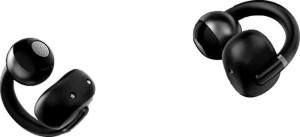
Haylou Airfree
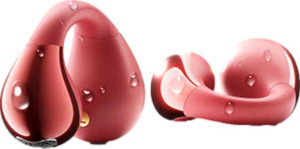
QCY Crossky C30S

Haylou Airfree QCY Crossky C30S

Overview

Welcome to our in-depth specification comparison between the Haylou Airfree and the QCY Crossky C30S, two open-ear true wireless earbuds that share a surprisingly common foundation yet diverge in some meaningful ways. In this head-to-head, we put their audio codec support, battery performance, and key features like active noise cancellation and ambient sound mode under the microscope to help you determine which pair is the right fit for your lifestyle.

Common Features

  • Both products feature an open-ear fit.
  • Neither product has wires or cables.
  • Neither product is a neckband earbud design.
  • Neither product includes wingtips.
  • Neither product has RGB lighting.
  • Both products have stereo speakers.
  • Neither product has a UV light.
  • Neither product offers passive noise reduction.
  • Both products have a lowest frequency of 20 Hz and a highest frequency of 20000 Hz.
  • Spatial audio is supported on both products.
  • Neither product has Dolby Atmos.
  • Neither product has Dirac Virtuo.
  • Neither product has a neodymium magnet.
  • Neither product supports wireless charging.
  • Neither product has a solar power battery.
  • Both products have a battery level indicator.
  • Both products have a rechargeable battery.
  • Neither product supports fast pairing.
  • Both products feature a USB Type-C connection.
  • Neither product supports LDHC, Bluetooth LE Audio, aptX Adaptive, aptX Low Latency, aptX HD, or aptX.
  • Neither product has in/on-ear detection.
  • Both products support fast charging.
  • Neither product can read notifications.
  • Both products have a mute function.
  • Both products can be used as a headset.
  • Both products have a control panel placed on the device.
  • Both products have voice prompts.
  • A travel bag is included with both products.
  • Both products have 4 microphones.
  • Both products have a noise-canceling microphone.

Main Differences

  • Active noise cancellation (ANC) is available on Haylou Airfree but not on QCY Crossky C30S.
  • Battery life is 8 hours on Haylou Airfree and 6 hours on QCY Crossky C30S.
  • Battery life of the charging case is 20 hours on Haylou Airfree and 34 hours on QCY Crossky C30S.
  • Charge time is 1.5 hours on Haylou Airfree and 2 hours on QCY Crossky C30S.
  • Battery power is 40 mAh on Haylou Airfree and 32 mAh on QCY Crossky C30S.
  • Charging case battery power is 350 mAh on Haylou Airfree and 460 mAh on QCY Crossky C30S.
  • Bluetooth version is 5.4 on Haylou Airfree and 6 on QCY Crossky C30S.
  • LDAC support is present on QCY Crossky C30S but not available on Haylou Airfree.
  • AAC support is present on QCY Crossky C30S but not available on Haylou Airfree.
  • Ambient sound mode is available on Haylou Airfree but not on QCY Crossky C30S.
Specs Comparison
Haylou Airfree

Haylou Airfree

QCY Crossky C30S

QCY Crossky C30S

Design:
Fit Open-ear Open-ear
has no wires or cables
are neckband earbuds
wingtips included
has RGB lighting
has stereo speakers
has UV light

In terms of design, the Haylou Airfree and the QCY Crossky C30S are essentially identical on paper. Both adopt an open-ear fit, are fully wireless with no cables or neckband, omit wingtips, skip RGB lighting, and deliver stereo sound — leaving no distinguishing factor between them based on the provided specs.

The open-ear form factor is worth noting for both: it allows ambient sound to pass through naturally, making these earbuds better suited for outdoor activities or situations where situational awareness matters, compared to in-ear or over-ear alternatives. Neither model adds extras like UV light or decorative lighting, suggesting a focus on functional minimalism over flashy aesthetics.

Based strictly on the Design specs provided, these two products are evenly matched — there is no differentiator that gives either a clear edge. Buyers choosing between them on design alone will need to look to other spec groups, such as audio performance or battery life, to find meaningful differences.

Sound quality:
has active noise cancellation (ANC)
has passive noise reduction
lowest frequency 20 Hz 20 Hz
highest frequency 20000 Hz 20000 Hz
supports spatial audio
has Dolby Atmos
has Dirac Virtuo
has a neodymium magnet

The most meaningful differentiator in this category is Active Noise Cancellation: the Haylou Airfree includes it, while the QCY Crossky C30S does not. For open-ear earbuds, ANC is a nuanced feature — it is primarily used here to reduce wind noise or attenuate specific ambient frequencies rather than deliver the deep isolation you would expect from in-ear ANC. Still, its presence on the Airfree provides a tangible real-world advantage in noisy outdoor environments.

Where the two converge, both cover the full standard audible range of 20 Hz to 20,000 Hz and both support spatial audio — meaning neither is at a disadvantage in terms of frequency breadth or immersive sound staging. The absence of neodymium magnets, Dolby Atmos, and Dirac Virtuo on both models keeps them on equal footing for premium audio processing features.

Overall, the Haylou Airfree holds a clear edge in this group solely due to its ANC capability. For users who frequently listen outdoors or in moderately noisy settings, that single difference is practically significant enough to tip the scales in its favor.

Power:
Battery life 8 hours 6 hours
Battery life of charging case 20 hours 34 hours
charge time 1.5 hours 2 hours
battery power 40 mAh 32 mAh
battery power (charging case) 350mAh 460mAh
has wireless charging
Has a solar power battery
has a battery level indicator
has a rechargeable battery

Battery performance here involves a genuine trade-off rather than a clear winner on all fronts. The Haylou Airfree delivers 8 hours of earbud playtime per charge versus 6 hours on the QCY Crossky C30S — a meaningful gap for uninterrupted daily use. The Airfree also charges faster at 1.5 hours compared to the C30S's 2 hours, making it more convenient for quick top-ups.

Flip the perspective to total endurance, though, and the C30S takes over. Its case packs 460 mAh and extends total listening time to 40 hours combined, while the Airfree's 350 mAh case adds only 20 hours of case-supplied charge, for a 28 hours total. For travelers or users who go extended periods without access to a power outlet, the C30S's case reservoir is a significant practical advantage.

Choosing between them depends on usage pattern: the Airfree suits users who prioritize longer single sessions and faster recharging, while the C30S is the stronger pick for those who value maximum all-day, multi-day endurance without frequent cable access. On balance, if total longevity is the priority metric, the QCY Crossky C30S holds the edge in this group.

Connectivity:
has fast pairing
Has USB Type-C
Bluetooth version 5.4 6
has LDAC
has LDHC
has Bluetooth LE Audio
has aptX Adaptive
has aptX Low Latency
has aptX HD
has aptX
has aptX Lossless
has aptX Voice
has Auracast
maximum Bluetooth range 10 m 10 m
supports Bluetooth pairing using NFC
Can be used wirelessly
has AAC

Two differences stand out immediately in this group. The QCY Crossky C30S runs on Bluetooth 6, a newer standard compared to the Bluetooth 5.4 on the Haylou Airfree. In practice, Bluetooth 6 brings improvements in connection precision and efficiency, which can translate to more stable links and better handling of interference in crowded wireless environments.

Codec support further widens the gap. The C30S includes both LDAC and AAC, while the Airfree lists neither. LDAC is particularly notable — it transmits audio at up to three times the bitrate of standard SBC, enabling near-lossless wireless audio quality when paired with a compatible source device. AAC adds relevance for Apple device users, where it typically outperforms SBC in perceived audio fidelity. The Airfree, lacking both, is limited to SBC by default, which is the baseline and lowest-quality Bluetooth audio codec.

With the same 10 m range and shared USB-C charging on both sides, those two points are a wash. But on the strength of a newer Bluetooth version and meaningfully richer codec support, the QCY Crossky C30S holds a clear connectivity advantage — especially for users who prioritize audio streaming quality.

Features:
release date January 2025 July 2025
has ambient sound mode
has in/on-ear detection
Supports fast charging
can read notifications
has a mute function
can be used as a headset
control panel placed on a device
Has voice prompts
travel bag is included
Has an in-line control panel
Has a temperature sensor
Has a built-in camera remote control function

Across most features, these two earbuds are remarkably aligned — fast charging, mute, headset functionality, on-device controls, voice prompts, and a included travel bag all appear on both. The single spec that separates them is ambient sound mode, which the Haylou Airfree supports and the QCY Crossky C30S does not.

For open-ear earbuds, ambient sound mode may seem redundant at first glance — the open design already lets environmental sound through passively. However, an active ambient mode typically uses microphones to amplify or process surrounding audio more deliberately, which can be useful in specific scenarios such as hearing conversation more clearly or enhancing awareness of low-volume environmental cues. Its absence on the C30S is a minor but real functional gap.

Given how closely matched the rest of the feature set is, the Haylou Airfree takes a narrow edge in this group on the strength of its ambient sound mode alone. It is not a dramatic advantage, but for users who want more active control over their listening environment, it is the more versatile option here.

Microphone:
number of microphones 4 4
has a noise-canceling microphone

Both the Haylou Airfree and the QCY Crossky C30S are identically equipped here: 4 microphones each, both with noise-canceling mic technology. A quad-mic setup is a meaningful specification for call quality — more microphones allow for better beamforming and wind or background noise rejection, which is especially relevant for open-ear earbuds that lack physical isolation from the environment.

Noise-canceling microphone processing on both models further reinforces that call clarity is a shared design priority, helping to suppress ambient interference so the speaker's voice comes through cleanly on the other end — a practical benefit for calls in busy or outdoor settings.

With no differences whatsoever between the two on these specs, this group is a complete tie. Users prioritizing headset or call performance will find no reason to choose one over the other based on microphone specs alone.

Comparison Summary & Verdict

After a thorough look at both products, it is clear that the Haylou Airfree and the QCY Crossky C30S serve slightly different listener profiles despite sharing the same open-ear form factor. The Haylou Airfree stands out with its active noise cancellation, ambient sound mode, longer per-charge earbud battery life of 8 hours, and faster 1.5-hour charge time, making it the stronger pick for commuters and those who want more control over their listening environment. The QCY Crossky C30S, on the other hand, counters with the more modern Bluetooth 6, support for LDAC and AAC codecs for higher-fidelity wireless audio, and a significantly larger charging case battery of 460 mAh that delivers an impressive 34 hours of total backup — ideal for audiophiles and heavy travelers who prioritize audio quality and extended use between cable top-ups.

Haylou Airfree
Buy Haylou Airfree if...

Buy the Haylou Airfree if you want active noise cancellation and an ambient sound mode, along with longer earbud battery life and faster charging times.

QCY Crossky C30S
Buy QCY Crossky C30S if...

Buy the QCY Crossky C30S if you prioritize high-fidelity audio through LDAC and AAC codec support, a newer Bluetooth 6 connection, and a larger charging case battery for extended use.