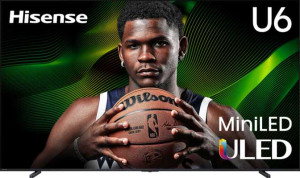
Hisense 100U65QF 100"
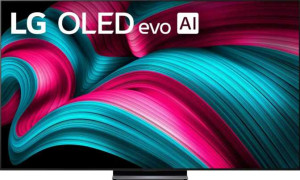
LG OLED83C5PUA 83"

Hisense 100U65QF 100" LG OLED83C5PUA 83"

Overview

Welcome to our detailed spec comparison between the Hisense 100U65QF 100″ and the LG OLED83C5PUA 83″. These two premium large-screen TVs take very different technological approaches, pitting a massive Mini-LED LCD panel against LG's renowned OLED display technology. Beyond picture quality, this comparison digs into key areas like refresh rate, connectivity, audio capabilities, and real-world usability to help you decide which screen best fits your living room and viewing habits.

Common Features

  • Both TVs offer 4K (UHD) display resolution at 3840 x 2160 px.
  • Both TVs display 1070 million colors at a 10-bit color depth.
  • HDR10 support is available on both products.
  • Dolby Vision support is available on both products.
  • HLG support is available on both products.
  • An anti-reflection coating is present on both products.
  • Both TVs have Bluetooth connectivity.
  • Both TVs use HDMI 2.1 and include 4 HDMI ports.
  • Both TVs support Wi-Fi and include one RJ45 ethernet port.
  • Miracast support is available on both products.
  • Neither TV has an external memory slot or a VGA connector.
  • AMD FreeSync and AMD FreeSync Premium adaptive synchronization are supported on both TVs.
  • Dolby Digital support is available on both products.
  • Digital Out support is available on both products.
  • Dolby Atmos and Dolby Audio are supported on both products.
  • Both TVs feature stereo speakers and a subwoofer.
  • SRS TheaterSound HD is not available on either product.
  • Dolby Virtual support is not available on either product.
  • Both TVs support VESA mounting.
  • AirPlay, built-in smart TV, Google Assistant compatibility, Alexa compatibility, remote smartphone support, and USB recording are all available on both products.
  • Neither TV supports Apple HomeKit or Siri, and neither has a rechargeable remote control.

Main Differences

  • The display type is LED-backlit LCD with Mini-LED on the Hisense 100U65QF 100″ and OLED/AMOLED on the LG OLED83C5PUA 83″.
  • The screen size is 99.5″ on the Hisense 100U65QF 100″ and 83.5″ on the LG OLED83C5PUA 83″.
  • Pixel density is 44 ppi on the Hisense 100U65QF 100″ and 53 ppi on the LG OLED83C5PUA 83″.
  • The refresh rate is 144Hz on the Hisense 100U65QF 100″ and 120Hz on the LG OLED83C5PUA 83″.
  • HDR10+ support is available on the Hisense 100U65QF 100″ but not on the LG OLED83C5PUA 83″.
  • Nvidia G-Sync adaptive synchronization is supported on the LG OLED83C5PUA 83″ but not on the Hisense 100U65QF 100″.
  • Wi-Fi 6E (802.11ax) support is available on the LG OLED83C5PUA 83″ but not on the Hisense 100U65QF 100″, which supports up to Wi-Fi 6.
  • Bluetooth version is 5.2 on the Hisense 100U65QF 100″ and 5.3 on the LG OLED83C5PUA 83″.
  • The number of USB ports is 2 on the Hisense 100U65QF 100″ and 3 on the LG OLED83C5PUA 83″.
  • A 3.5 mm audio jack socket is present on the Hisense 100U65QF 100″ but not on the LG OLED83C5PUA 83″.
  • Dolby Digital Plus support is available on the Hisense 100U65QF 100″ but not on the LG OLED83C5PUA 83″.
  • Width is 2230.1 mm on the Hisense 100U65QF 100″ and 1841.5 mm on the LG OLED83C5PUA 83″.
  • Weight is 63503 g on the Hisense 100U65QF 100″ and 33022 g on the LG OLED83C5PUA 83″.
  • Thickness is 81.3 mm on the Hisense 100U65QF 100″ and 53.3 mm on the LG OLED83C5PUA 83″.
  • Height is 1282.7 mm on the Hisense 100U65QF 100″ and 1054.1 mm on the LG OLED83C5PUA 83″.
  • Volume is 232562.655651 cm³ on the Hisense 100U65QF 100″ and 103461.970495 cm³ on the LG OLED83C5PUA 83″.
  • Maximum operating temperature is 35 °C on the Hisense 100U65QF 100″ and 40 °C on the LG OLED83C5PUA 83″.
  • Minimum operating temperature is 5 °C on the Hisense 100U65QF 100″ and 0 °C on the LG OLED83C5PUA 83″.
  • Annual power consumption is 500 kWh on the Hisense 100U65QF 100″ and 410 kWh on the LG OLED83C5PUA 83″.
Specs Comparison
Hisense 100U65QF 100"

Hisense 100U65QF 100"

LG OLED83C5PUA 83"

LG OLED83C5PUA 83"

Display:
display resolution 4K (UHD) 4K (UHD)
Display type LED-backlit, LCD, Mini-LED OLED/AMOLED
screen size 99.5" 83.5"
resolution 3840 x 2160 px 3840 x 2160 px
pixel density 44 ppi 53 ppi
display colors 1070 million 1070 million
bit depth 10-bit 10-bit
refresh rate 144Hz 120Hz
supports HDR10
supports HDR10+
supports Dolby Vision
supports HLG
Adaptive synchronization AMD FreeSync, AMD FreeSync Premium Nvidia G-Sync, AMD FreeSync, AMD FreeSync Premium
has anti-reflection coating
has an ambient light sensor
maximum horizontal viewing angle 178º 178º
maximum vertical viewing angle 178º 178º

The most fundamental difference here is panel technology. The Hisense 100U65QF uses a Mini-LED LCD panel, while the LG OLED83C5PUA uses OLED. In practical terms, OLED produces perfect blacks and near-infinite contrast by switching individual pixels off entirely, whereas Mini-LED relies on local dimming zones to approximate this — a gap that remains meaningful in dark-room viewing. However, the Hisense counters with a substantially larger canvas at 99.5″ versus 83.5″, which dominates immersion in large living spaces. Both panels share the same 4K resolution and 10-bit color depth, but the LG's smaller screen yields a noticeably higher pixel density of 53 ppi versus 44 ppi, meaning text and fine detail appear slightly sharper up close.

On motion and HDR, the Hisense pulls ahead in two specific areas. Its 144Hz refresh rate outpaces the LG's 120Hz, a difference that matters primarily for gaming and fast-motion content, reducing judder and enabling higher frame-rate input. It also supports HDR10+, the dynamic metadata format that LG's OLED lacks — though in practice, Dolby Vision (supported by both) is more widely available on streaming platforms and delivers comparable scene-by-scene tone mapping. For adaptive sync, both cover AMD FreeSync Premium, but the LG adds Nvidia G-Sync compatibility, giving it broader coverage for PC gamers with Nvidia GPUs.

There is no single winner here — the right choice depends entirely on use case. The LG OLED83C5PUA holds a clear edge in pure picture quality for cinephiles prioritizing contrast and black levels, and its G-Sync support makes it more versatile for PC gaming. The Hisense 100U65QF wins on raw screen real estate, higher refresh rate, and HDR10+ support, making it the stronger choice for viewers who prioritize size and gaming fluidity over absolute contrast performance.
Connectivity:
Has Bluetooth
HDMI version HDMI 2.1 HDMI 2.1
HDMI ports 4 4
supports Wi-Fi
Wi-Fi version Wi-Fi 4 (802.11n), Wi-Fi 5 (802.11ac), Wi-Fi 6 (802.11ax) Wi-Fi 4 (802.11n), Wi-Fi 5 (802.11ac), Wi-Fi 6 (802.11ax), Wi-Fi 6E (802.11ax)
Bluetooth version 5.2 5.3
USB ports 2 3
RJ45 ports 1 1
supports Miracast
has a socket for a 3.5 mm audio jack
has an external memory slot
has a VGA connector
has a DVI connector

Both TVs share a strong connectivity foundation — 4 HDMI 2.1 ports, a wired Ethernet jack, Wi-Fi, Bluetooth, and Miracast are common to both, meaning neither is disadvantaged for core source connections or wireless casting. Where differences emerge is in the finer details of each spec. The LG OLED83C5PUA supports Wi-Fi 6E, extending Wi-Fi 6 into the 6 GHz band, which reduces congestion in dense wireless environments and offers lower latency — a tangible benefit in households with many connected devices. The Hisense tops out at Wi-Fi 6, which is still capable but cannot access that less-crowded 6 GHz spectrum.

On Bluetooth, the LG runs version 5.3 versus the Hisense's 5.2 — a minor generational step that brings marginal improvements in connection efficiency and reliability, though the practical day-to-day difference is negligible for typical TV use cases like wireless headphones or soundbars. More meaningfully, the LG adds a third USB port (3 vs. 2), which provides extra flexibility for simultaneously connecting storage drives, service dongles, or other peripherals without needing a hub. Conversely, the Hisense 100U65QF includes a 3.5mm audio jack that the LG omits entirely — a straightforward win for users who want to plug in wired headphones directly without an adapter or Bluetooth pairing.

Connectivity overall leans in the LG OLED83C5PUA's favor, with Wi-Fi 6E, a newer Bluetooth revision, and an additional USB port giving it a modest but consistent edge for future-proofing and device flexibility. The Hisense's 3.5mm jack is a meaningful point for wired-headphone users, but it is not enough to shift the overall balance. Users in busy wireless environments or those who juggle multiple USB peripherals will find the LG's connectivity spec sheet more accommodating.

Audio:
supports Dolby Digital
supports Digital Out
supports Dolby Digital Plus
has SRS TheaterSound HD
has stereo speakers
has Dolby Atmos
has Dolby Audio
supports Dolby Virtual
has a subwoofer
has DTS:X
HDMI ARC / eARC HDMI ARC, HDMI eARC HDMI ARC, HDMI eARC

Audio capabilities are remarkably well-matched across these two TVs. Both include stereo speakers, a built-in subwoofer, Dolby Atmos, DTS:X, and HDMI ARC plus eARC — covering the full range of modern immersive audio formats and ensuring seamless passthrough to external soundbars or AV receivers. For the vast majority of users, this shared foundation means neither TV is at a meaningful disadvantage for everyday streaming, gaming, or home theater use.

The one differentiator the provided specs reveal is Dolby Digital Plus support, which the Hisense 100U65QF includes and the LG OLED83C5PUA does not. Dolby Digital Plus is an enhanced compression format used by streaming platforms to deliver higher-bitrate audio with greater dynamic range than standard Dolby Digital — and importantly, it serves as the transport layer for Dolby Atmos over streaming services. Its absence on the LG is worth noting, though both TVs do support Dolby Atmos, so the practical impact depends on specific content delivery methods.

Overall, the Hisense 100U65QF holds a narrow edge in this group solely due to Dolby Digital Plus support. Outside of that single distinction, the audio spec sets are identical, and users planning to pair either TV with a dedicated soundbar or receiver will find the shared eARC port handles high-quality audio passthrough equally well on both.

Design:
width 2230.1 mm 1841.5 mm
weight 63503 g 33022 g
thickness 81.3 mm 53.3 mm
height 1282.7 mm 1054.1 mm
volume 232562.655651 cm³ 103461.970495 cm³
Supports VESA mount
maximum operating temperature 35 °C 40 °C
lowest potential operating temperature 5 °C 0 °C

The scale difference between these two TVs is substantial enough to be a deciding factor on its own. At 63.5 kg and over 2230 mm wide, the Hisense 100U65QF is a serious logistical undertaking — installation will realistically require multiple people and careful planning around wall reinforcement or stand placement. The LG OLED83C5PUA, by contrast, weighs just 33 kg and spans 1841.5 mm, making it far more manageable for a standard two-person installation. The Hisense's volume is more than double that of the LG, which translates directly into how much the TV dominates a room physically, not just visually.

Thickness tells a similarly clear story. The Hisense measures 81.3 mm deep — a figure typical of LCD panels with full backlighting arrays — while the LG's OLED construction brings it down to 53.3 mm. That nearly 30 mm difference is noticeable when wall-mounting, as the Hisense will protrude significantly more from the wall surface. Both support VESA mounting, so the option exists for either TV, but the LG will sit considerably flatter in practice.

On operating temperature range, the LG OLED83C5PUA holds a modest advantage, rated down to 0 °C versus the Hisense's 5 °C lower limit and up to 40 °C versus 35 °C — a wider envelope that offers slightly more flexibility in non-climate-controlled environments. Overall, the LG OLED83C5PUA has a clear design edge: it is dramatically lighter, thinner, and more compact, making placement, mounting, and handling considerably less demanding without any compromise to VESA compatibility.

Features:
release date April 2025 March 2025
has AirPlay
has built-in smart TV
compatible with Google Assistant
works with Alexa
works with Siri/Apple HomeKit
supports a remote smartphone
has a rechargeable remote control
supports USB recording
standby power consumption 0.5W 0.5W
has a search browser
has a sleep timer
has a child lock
annual power consumption 500 kWh 410 kWh
warranty period 1 years 1 years
has voice commands

Across the smart TV feature set, these two televisions are essentially identical. Both support AirPlay, Google Assistant, Alexa, smartphone remote control, USB recording, and the full suite of convenience features like sleep timer, child lock, and voice commands. Neither supports Apple HomeKit, and both share the same 0.5W standby power draw. For buyers weighing ecosystem compatibility or smart platform capabilities, the provided specs offer no basis for differentiation — they are evenly matched on every feature listed.

The one meaningful distinction is annual power consumption: the Hisense 100U65QF is rated at 500 kWh per year, while the LG OLED83C5PUA comes in at 410 kWh. That 90 kWh gap translates to a tangible difference in running costs over time — at average electricity rates, this amounts to a noticeable annual saving in favor of the LG. Given that the Hisense has a significantly larger screen, some consumption difference is expected, but the figure is still worth factoring into the total cost of ownership calculation.

This group is essentially a tie on features, with the LG OLED83C5PUA claiming the only quantifiable edge through its lower annual energy consumption. Buyers who use their TV heavily will find that gap compounds meaningfully over the lifespan of the set, even if neither product distinguishes itself on smart functionality alone.

Comparison Summary & Verdict

After examining the full spec sheet, it is clear that both TVs are high-end performers built for different kinds of buyers. The Hisense 100U65QF 100″ is the go-to choice if sheer screen presence matters most: its near-100-inch Mini-LED panel with a 144Hz refresh rate and HDR10+ support makes it a compelling pick for sports fans, gamers seeking high frame rates, and home-cinema enthusiasts who want an immersive, cinema-scale experience. On the other hand, the LG OLED83C5PUA 83″ appeals to viewers who prioritize absolute picture quality — its OLED panel delivers superior pixel density and perfect blacks, while its lower annual power consumption of 410 kWh, slimmer profile, and support for Nvidia G-Sync and Wi-Fi 6E make it the more refined, future-ready option for discerning home theater and gaming setups alike.

Hisense 100U65QF 100
Buy Hisense 100U65QF 100" if...

Buy the Hisense 100U65QF 100″ if you want the largest possible screen with a blazing 144Hz refresh rate, HDR10+ support, and a Dolby Digital Plus-capable audio setup at a grand cinematic scale.

LG OLED83C5PUA 83
Buy LG OLED83C5PUA 83" if...

Buy the LG OLED83C5PUA 83″ if you prioritize superior OLED picture quality, lower power consumption, Nvidia G-Sync compatibility, and cutting-edge Wi-Fi 6E connectivity in a slimmer, lighter design.