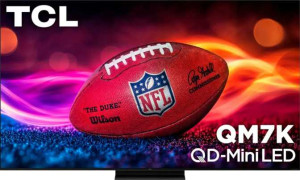
Both the Hisense 100U75QG and the TCL 98QM7K share the same fundamental display architecture — QLED Mini-LED LCD panels with a native 4K (3840 x 2160) resolution, 10-bit color depth, and 1.07 billion colors. They also match on HDR support, covering HDR10, HDR10+, Dolby Vision, and HLG, meaning neither has a content-compatibility advantage. Both include anti-reflection coatings and ambient light sensors, and both offer wide 178° viewing angles in both axes — solid for large living rooms with varied seating positions.
The most meaningful differentiator between these two giants is the refresh rate: the Hisense reaches 165Hz versus the TCL's 144Hz. In practice, both far exceed the 60Hz of standard broadcast content, but for PC gaming or next-gen console titles that can push high frame rates, the Hisense's ceiling provides a tangible edge in motion fluidity and input responsiveness. Both support the full AMD FreeSync Premium Pro suite for variable refresh rate gaming, so the advantage is specifically in that raw upper ceiling. The screen size gap — 99.5″ for the Hisense versus 97.5″ for the TCL — is a marginal 2 inches and will be imperceptible in everyday use, and the pixel density is essentially identical at 44 vs 45 ppi.
For the vast majority of users — movie watchers, sports fans, and casual viewers — these two displays are effectively evenly matched on every spec that matters. The Hisense 100U75QG holds a narrow edge strictly for high-framerate gaming, thanks to its higher 165Hz refresh rate, but if gaming is not a priority, the display specs alone do not give either TV a decisive advantage.