Hisense 100U75QG 100"
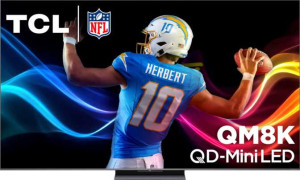
TCL 98QM8K 98"

Hisense 100U75QG 100" TCL 98QM8K 98"

Common Features

  • Both products have a 4K (UHD) display resolution.
  • Both products feature QLED, LED-backlit, LCD, and Mini-LED display types.
  • Both products support HDR10.
  • Both products support HDR10+.
  • Both products support Dolby Vision.
  • Both products have a 3840 x 2160 px resolution.
  • Both products offer 1070 million display colors.
  • Both products have a 10-bit bit depth.
  • Both products support Bluetooth connectivity.
  • Both products have HDMI 2.1 ports.
  • Both products have 4 HDMI ports.
  • Both products support Wi-Fi.
  • Both products have 2 USB ports.
  • Both products have 1 RJ45 port.
  • Both products support Miracast.
  • Neither product has an external memory slot.
  • Both products support Dolby Digital.
  • Both products support Dolby Digital Plus.
  • Both products have stereo speakers.
  • Both products support Dolby Atmos.

Main Differences

  • The screen size is 99.5″ on Hisense 100U75QG 100″ and 97.5″ on TCL 98QM8K 98″.
  • The pixel density is 44 ppi on Hisense 100U75QG 100″ and 45 ppi on TCL 98QM8K 98″.
  • The refresh rate is 165Hz on Hisense 100U75QG 100″ and 144Hz on TCL 98QM8K 98″.
  • The Wi-Fi version is Wi-Fi 4 (802.11n), Wi-Fi 5 (802.11ac), Wi-Fi 6 (802.11ax), Wi-Fi 6E (802.11ax) on Hisense 100U75QG 100″ and Wi-Fi 4 (802.11n), Wi-Fi 5 (802.11ac) on TCL 98QM8K 98″.
  • The Bluetooth version is 5.3 on Hisense 100U75QG 100″ and 5.4 on TCL 98QM8K 98″.
  • The Hisense 100U75QG 100″ has a socket for a 3.5 mm audio jack, while TCL 98QM8K 98″ does not.
  • The width is 2230.1 mm on Hisense 100U75QG 100″ and 2179.3 mm on TCL 98QM8K 98″.
  • The weight is 63503 g on Hisense 100U75QG 100″ and 56001 g on TCL 98QM8K 98″.
  • The thickness is 81.3 mm on Hisense 100U75QG 100″ and 54.1 mm on TCL 98QM8K 98″.
  • The height is 1282.7 mm on Hisense 100U75QG 100″ and 1235.9 mm on TCL 98QM8K 98″.
  • The volume is 232562.655651 cm³ on Hisense 100U75QG 100″ and 145712.770667 cm³ on TCL 98QM8K 98″.
  • The warranty period is 2 years on Hisense 100U75QG 100″ and 1 year on TCL 98QM8K 98″.
Specs Comparison
Hisense 100U75QG 100"

Hisense 100U75QG 100"

TCL 98QM8K 98"

TCL 98QM8K 98"

Display:
display resolution 4K (UHD) 4K (UHD)
Display type QLED, LED-backlit, LCD, Mini-LED QLED, LED-backlit, LCD, Mini-LED
screen size 99.5" 97.5"
resolution 3840 x 2160 px 3840 x 2160 px
pixel density 44 ppi 45 ppi
display colors 1070 million 1070 million
bit depth 10-bit 10-bit
refresh rate 165Hz 144Hz
supports HDR10
supports HDR10+
supports Dolby Vision
supports HLG
Adaptive synchronization AMD FreeSync, AMD FreeSync Premium, AMD FreeSync Premium Pro AMD FreeSync, AMD FreeSync Premium, AMD FreeSync Premium Pro
has anti-reflection coating
has an ambient light sensor
maximum horizontal viewing angle 178º 178º
maximum vertical viewing angle 178º 178º

Both the Hisense 100U75QG and TCL 98QM8K offer a 4K (UHD) resolution with the same display resolution of 3840 x 2160 px, ensuring sharp and clear images. The Hisense model has a slightly larger screen size at 99.5″ compared to the TCL's 97.5″. Despite the size difference, both displays are QLED, LED-backlit, LCD, and Mini-LED types, providing vibrant colors and high-quality images.

The Hisense has a pixel density of 44 ppi, while the TCL is slightly higher at 45 ppi, indicating a marginally sharper image on the TCL. Both models support 1070 million display colors and feature a 10-bit color depth for smooth gradation. As for the refresh rate, the Hisense supports 165Hz, while the TCL supports 144Hz, which may result in a smoother visual experience on the Hisense for fast-moving content.

Both products support a wide range of HDR formats including HDR10, HDR10+, Dolby Vision, and HLG. They also both include AMD FreeSync, FreeSync Premium, and FreeSync Premium Pro for reduced screen tearing. Other similarities include the presence of anti-reflection coating, an ambient light sensor, and the same maximum horizontal and vertical viewing angles of 178º. The only significant difference is the pixel density and screen size, with the Hisense offering a slightly larger display and the TCL offering a marginally sharper image due to its higher pixel density.

Connectivity:
Has Bluetooth
HDMI version HDMI 2.1 HDMI 2.1
HDMI ports 4 4
supports Wi-Fi
Wi-Fi version Wi-Fi 4 (802.11n), Wi-Fi 5 (802.11ac), Wi-Fi 6 (802.11ax), Wi-Fi 6E (802.11ax) Wi-Fi 4 (802.11n), Wi-Fi 5 (802.11ac)
Bluetooth version 5.3 5.4
USB ports 2 2
RJ45 ports 1 1
supports Miracast
has a socket for a 3.5 mm audio jack
has an external memory slot
has a VGA connector
has a DVI connector

The Hisense 100U75QG and TCL 98QM8K both offer a solid set of connectivity features. Both models support Bluetooth, with the Hisense using Bluetooth version 5.3 and the TCL using Bluetooth 5.4, indicating a slight difference in their Bluetooth versions. Both also feature HDMI 2.1, with 4 HDMI ports, ensuring compatibility with high-bandwidth devices like gaming consoles and high-definition media players.

For Wi-Fi connectivity, the Hisense supports multiple versions: Wi-Fi 4 (802.11n), Wi-Fi 5 (802.11ac), Wi-Fi 6 (802.11ax), and Wi-Fi 6E (802.11ax), providing excellent flexibility and future-proofing. In comparison, the TCL only supports Wi-Fi 4, Wi-Fi 5, and Wi-Fi 6, omitting Wi-Fi 6E. Both products have 2 USB ports, an RJ45 port for Ethernet, and support Miracast for wireless screen sharing.

In terms of additional ports, the Hisense model includes a 3.5 mm audio jack, which the TCL lacks. Neither model has an external memory slot, VGA connector, or DVI connector. Overall, while the connectivity specs are similar, the Hisense offers slightly more advanced Wi-Fi support and the added convenience of a 3.5 mm audio jack, while the TCL benefits from the slightly newer Bluetooth version.

Audio:
supports Dolby Digital
supports Digital Out
supports Dolby Digital Plus
has SRS TheaterSound HD
has stereo speakers
has Dolby Atmos
has Dolby Audio
supports Dolby Virtual
has a subwoofer
has DTS:X
HDMI ARC / eARC HDMI ARC, HDMI eARC HDMI ARC, HDMI eARC

Both the Hisense 100U75QG and TCL 98QM8K offer robust audio features, with nearly identical specifications. Both support Dolby Digital, Dolby Digital Plus, and Digital Out, ensuring high-quality sound processing and output. Additionally, both models come equipped with stereo speakers, Dolby Atmos, and Dolby Audio for an immersive audio experience, along with DTS:X support for advanced sound processing.

Neither model includes SRS TheaterSound HD, but both have a subwoofer to enhance bass performance. Neither supports Dolby Virtual audio, though this doesn't affect their overall surround sound capabilities, given their support for Dolby Atmos and DTS:X. For audio connectivity, both models offer HDMI ARC and HDMI eARC, making them compatible with a variety of sound systems.

Overall, the audio specifications are identical across both products, offering a strong set of features designed to deliver high-quality sound, including advanced surround sound formats like Dolby Atmos and DTS:X.

Design:
width 2230.1 mm 2179.3 mm
weight 63503 g 56001 g
thickness 81.3 mm 54.1 mm
height 1282.7 mm 1235.9 mm
volume 232562.655651 cm³ 145712.770667 cm³
Supports VESA mount
maximum operating temperature 35 °C 35 °C
lowest potential operating temperature 5 °C 5 °C

The Hisense 100U75QG and TCL 98QM8K have notable differences in their physical design. The Hisense model is wider, measuring 2230.1 mm, compared to the TCL's 2179.3 mm. The Hisense is also taller, with a height of 1282.7 mm, while the TCL stands at 1235.9 mm. The Hisense is heavier as well, weighing 63503 g, while the TCL is lighter at 56001 g.

In terms of thickness, the Hisense is thicker, with a depth of 81.3 mm, whereas the TCL has a thinner profile at 54.1 mm. Additionally, the volume of the Hisense is larger, at 232562.655651 cm³, compared to the TCL’s 145712.770667 cm³.

Both models support VESA mounting, and they share the same operating temperature range, with a maximum of 35 °C and a minimum of 5 °C. While the two models differ in size and weight, their design features are quite similar overall.

Features:
release date April 2025 May 2025
has AirPlay
has built-in smart TV
compatible with Google Assistant
works with Alexa
works with Siri/Apple HomeKit
supports a remote smartphone
has a rechargeable remote control
supports USB recording
standby power consumption 0.5W 0.5W
has a search browser
has a sleep timer
has a child lock
warranty period 2 years 1 years
has voice commands

Both the Hisense 100U75QG and TCL 98QM8K come with a range of smart features, with many specifications matching across the two models. Both support AirPlay, have built-in smart TV functionality, and are compatible with Google Assistant and Alexa. Neither model works with Siri/Apple HomeKit, but both support remote smartphone control, voice commands, and USB recording.

The Hisense model offers a longer warranty period of 2 years, while the TCL comes with a 1-year warranty. Both TVs have a standby power consumption of 0.5W, a search browser, a sleep timer, and a child lock feature, ensuring convenience and safety for users.

Other than the warranty period, the features of both products are identical, providing a similar smart TV experience with robust functionality, including voice control, smartphone compatibility, and energy-efficient standby power consumption.

Comparison Summary

This is a specification comparison between the Hisense 100U75QG 100″ and the TCL 98QM8K 98″. Both models feature a 4K UHD display resolution, support HDR10, HDR10+, and Dolby Vision, and include Dolby Atmos audio. However, the Hisense 100U75QG 100″ has a larger screen size at 99.5″, compared to the TCL 98QM8K 98″ at 97.5″. Additionally, the Hisense model offers a higher refresh rate of 165Hz, while the TCL model has 144Hz. The Hisense 100U75QG 100″ also has more advanced Wi-Fi capabilities, supporting Wi-Fi 6 and Wi-Fi 6E, while the TCL model supports only Wi-Fi 5. The warranty period is longer on the Hisense model, at 2 years, compared to 1 year on the TCL model.