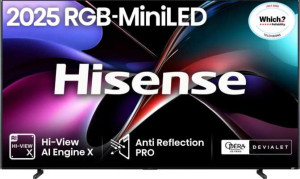
Hisense 116UX 116"
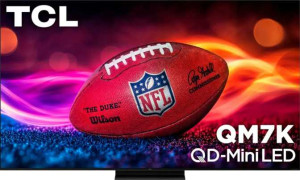
TCL 115QM7K 115"

Hisense 116UX 116" TCL 115QM7K 115"

Overview

Welcome to our in-depth specification face-off between the Hisense 116UX 116″ and the TCL 115QM7K 115″, two of the most ambitious large-screen televisions on the market. Both sets share a stunning 4K Mini-LED panel, full HDR support including Dolby Vision, and a rich smart TV feature set — but beneath those shared foundations lie meaningful differences in refresh rate and adaptive sync, wireless connectivity, port count, and physical design that could sway your decision significantly.

Common Features

  • Both televisions have a 4K (UHD) display resolution of 3840 x 2160 px.
  • Both televisions have a pixel density of 38 ppi.
  • Both televisions support 1070 million display colors at 10-bit depth.
  • HDR10 support is available on both products.
  • HDR10+ support is available on both products.
  • Dolby Vision support is available on both products.
  • Both televisions use LED-backlit LCD panels with Mini-LED technology.
  • Bluetooth connectivity is available on both products.
  • Both televisions feature HDMI 2.1 ports.
  • Wi-Fi support is available on both products.
  • Both televisions include 2 USB ports and 1 RJ45 port.
  • Miracast support is available on both products.
  • Both televisions include a 3.5 mm audio jack socket.
  • Neither television has an external memory slot.
  • Dolby Digital and Dolby Digital Plus support is available on both products.
  • Digital Out support is available on both products.
  • Dolby Atmos and Dolby Audio are available on both products.
  • Stereo speakers are present on both televisions.
  • SRS TheaterSound HD is not available on either product.
  • Both televisions support VESA mounting.
  • Chromecast built-in is available on both products.
  • AirPlay support is available on both products.
  • Both televisions have a built-in smart TV platform.
  • Google Assistant compatibility is available on both products.
  • Alexa compatibility is available on both products.
  • Neither television is compatible with Siri or Apple HomeKit.
  • Remote smartphone control is supported on both products.
  • Neither television includes a rechargeable remote control.

Main Differences

  • The refresh rate is 165Hz on the Hisense 116UX 116″ and 144Hz on the TCL 115QM7K 115″.
  • The screen size is 115.5″ on the Hisense 116UX 116″ and 114.5″ on the TCL 115QM7K 115″.
  • Adaptive synchronization includes Nvidia G-Sync, AMD FreeSync, AMD FreeSync Premium, and AMD FreeSync Premium Pro on the Hisense 116UX 116″, while the TCL 115QM7K 115″ supports only AMD FreeSync, AMD FreeSync Premium, and AMD FreeSync Premium Pro.
  • The Hisense 116UX 116″ has 3 HDMI ports, while the TCL 115QM7K 115″ has 4 HDMI ports.
  • Wi-Fi versions include Wi-Fi 4, Wi-Fi 5, Wi-Fi 6, and Wi-Fi 6E on the Hisense 116UX 116″, while the TCL 115QM7K 115″ supports only Wi-Fi 4 and Wi-Fi 5.
  • The Bluetooth version is 5.3 on the Hisense 116UX 116″ and 5.4 on the TCL 115QM7K 115″.
  • The width is 2631.4 mm on the Hisense 116UX 116″ and 2565.9 mm on the TCL 115QM7K 115″.
  • The height is 1488.4 mm on the Hisense 116UX 116″ and 1470.9 mm on the TCL 115QM7K 115″.
  • The thickness is 40.6 mm on the Hisense 116UX 116″ and 56.9 mm on the TCL 115QM7K 115″.
  • The weight is 108499 g on the Hisense 116UX 116″ and 99799 g on the TCL 115QM7K 115″.
  • The volume is 159012.975856 cm³ on the Hisense 116UX 116″ and 214750.973439 cm³ on the TCL 115QM7K 115″.
  • The warranty period is 2 years on the Hisense 116UX 116″ and 1 year on the TCL 115QM7K 115″.
Specs Comparison
Hisense 116UX 116"

Hisense 116UX 116"

TCL 115QM7K 115"

TCL 115QM7K 115"

Display:
display resolution 4K (UHD) 4K (UHD)
Display type Mini-LED, LED-backlit, LCD QLED, LED-backlit, LCD, Mini-LED
screen size 115.5" 114.5"
resolution 3840 x 2160 px 3840 x 2160 px
pixel density 38 ppi 38 ppi
display colors 1070 million 1070 million
bit depth 10-bit 10-bit
refresh rate 165Hz 144Hz
supports HDR10
supports HDR10+
supports Dolby Vision
supports HLG
Adaptive synchronization Nvidia G-Sync, AMD FreeSync, AMD FreeSync Premium, AMD FreeSync Premium Pro AMD FreeSync, AMD FreeSync Premium, AMD FreeSync Premium Pro
has anti-reflection coating
has an ambient light sensor
maximum horizontal viewing angle 178º 178º
maximum vertical viewing angle 178º 178º

Both the Hisense 116UX and the TCL 115QM7K share the same foundational display DNA: 4K (3840 x 2160) resolution at 38 ppi, 10-bit color depth rendering 1.07 billion colors, and full support for every major HDR format — HDR10, HDR10+, Dolby Vision, and HLG. At these sizes, the pixel density is identical, meaning neither panel has a sharpness advantage over the other. Both also feature anti-reflection coatings and ambient light sensors, plus the same wide 178° horizontal and vertical viewing angles, making them equally well-suited for large-room setups where viewers are spread across the seating area.

The most meaningful display differentiator is the refresh rate. The Hisense 116UX runs at 165Hz versus the TCL's 144Hz — a gap that matters most for gaming and fast-motion content. A higher refresh rate translates to smoother motion cadence and lower perceived blur during rapid on-screen movement. Compounding this advantage, the Hisense also supports Nvidia G-Sync alongside the full AMD FreeSync Premium Pro stack, while the TCL 115QM7K is limited to AMD FreeSync Premium Pro only. For PC gamers with an Nvidia GPU, this is a significant practical difference — G-Sync compatibility ensures tear-free, stutter-free output without needing to rely on software workarounds. On the panel technology side, TCL positions its display as QLED + Mini-LED, adding a quantum dot layer for potentially wider color volume, while Hisense relies on Mini-LED backlighting alone — though color output figures are identical in the provided specs.

Overall, the Hisense 116UX holds a clear edge in the display category for performance-oriented users, driven by its higher 165Hz refresh rate and broader adaptive sync support including G-Sync. The TCL 115QM7K is competitive in every other respect and may appeal to those invested in the AMD ecosystem, but for users who prioritize gaming fluidity or Nvidia GPU compatibility, the Hisense is the stronger choice based strictly on these specs.
Connectivity:
Has Bluetooth
HDMI version HDMI 2.1 HDMI 2.1
HDMI ports 3 4
supports Wi-Fi
Wi-Fi version Wi-Fi 4 (802.11n), Wi-Fi 5 (802.11ac), Wi-Fi 6 (802.11ax), Wi-Fi 6E (802.11ax) Wi-Fi 4 (802.11n), Wi-Fi 5 (802.11ac)
Bluetooth version 5.3 5.4
USB ports 2 2
RJ45 ports 1 1
supports Miracast
has a socket for a 3.5 mm audio jack
has an external memory slot
has a VGA connector
has a DVI connector

Wired connectivity is nearly identical between the two sets, with one notable exception: the TCL 115QM7K offers 4 HDMI 2.1 ports versus 3 on the Hisense 116UX. Since both use HDMI 2.1, full 4K/120fps and 48Gbps bandwidth is available on every port regardless — but that extra port on the TCL is a practical win for users juggling multiple high-end sources like a gaming console, streaming device, soundbar, and Blu-ray player simultaneously, eliminating the need for an HDMI switch. USB port count and the inclusion of a dedicated Ethernet (RJ45) jack are identical across both.

Where the Hisense pulls ahead is wireless. It supports Wi-Fi 6E (802.11ax) in addition to Wi-Fi 4 and 5, while the TCL 115QM7K tops out at Wi-Fi 5 (802.11ac). Wi-Fi 6E opens access to the 6GHz band — a less congested spectrum that delivers meaningfully lower latency and more stable throughput in environments with many competing wireless devices. For a TV used in a dense apartment building or a smart home with dozens of connected gadgets, this is a tangible real-world difference. On Bluetooth, the TCL edges slightly ahead at version 5.4 versus the Hisense′s 5.3, though the practical gap between these two adjacent versions — marginally improved connection reliability — is minor for typical TV use cases like wireless headphones or keyboards.

Connectivity here is a split decision. The TCL 115QM7K has the port advantage with its fourth HDMI input, making it the better fit for source-heavy setups. But the Hisense 116UX holds the wireless edge thanks to Wi-Fi 6E support, which is the more future-proof and performance-relevant differentiator for streaming and smart home integration. Which advantage matters more depends entirely on how the TV will be used.

Audio:
supports Dolby Digital
supports Digital Out
supports Dolby Digital Plus
has SRS TheaterSound HD
has stereo speakers
has Dolby Atmos
has Dolby Audio
supports Dolby Virtual
has a subwoofer
has DTS:X
HDMI ARC / eARC HDMI ARC, HDMI eARC HDMI ARC, HDMI eARC

Across every audio specification provided, the Hisense 116UX and the TCL 115QM7K are an exact match. Both ship with built-in stereo speakers and a subwoofer, support the full Dolby suite — including Dolby Atmos, Dolby Audio, Dolby Digital, and Dolby Digital Plus — and also carry DTS:X for object-based surround decoding from DTS-encoded content. For users who rely on the TV′s built-in audio, the subwoofer inclusion on both sets is worth noting: it adds low-frequency reinforcement that standalone soundbars often require a separate unit to achieve.

On the external audio side, both televisions offer HDMI ARC and eARC, which is the current standard for connecting a soundbar or AV receiver over HDMI with full lossless audio passthrough. eARC in particular is essential for sending Dolby Atmos TrueHD or DTS:X bitstreams to a capable external audio system — and both sets support it equally. Digital Out is also present on both for legacy optical connections.

Audio is a complete tie. There is no differentiating factor in this category based on the provided specs — every format, every feature, and every output option is shared identically between the two TVs. A buyer prioritizing audio capabilities should look to other specification groups to inform their decision.

Design:
width 2631.4 mm 2565.9 mm
weight 108499 g 99799 g
thickness 40.6 mm 56.9 mm
height 1488.4 mm 1470.9 mm
volume 159012.975856 cm³ 214750.973439 cm³
Supports VESA mount

At these sizes, neither TV is easy to move or install alone — but the differences in physical form factor are meaningful. The TCL 115QM7K is lighter at approximately 99.8 kg compared to the Hisense 116UX at roughly 108.5 kg, a gap of nearly 9 kg. For a TV requiring professional installation or wall mounting, that difference translates directly into handling complexity and the load rating required from a wall mount bracket.

The more striking contrast, however, is in thickness. The Hisense measures just 40.6 mm deep, while the TCL comes in at 56.9 mm — about 40% thicker. This is reflected in the volume figures: despite having a larger screen, the Hisense occupies considerably less total volume than the TCL. In practical terms, a slimmer profile means the Hisense will sit closer to the wall when mounted and present a more streamlined appearance in the room. The Hisense is also marginally wider and taller due to its slightly larger screen diagonal, which is expected.

Design-wise, the Hisense 116UX holds the advantage in profile, being significantly thinner and more wall-mount-friendly in terms of depth. The TCL 115QM7K is easier to handle and install due to its lower weight. Both support VESA mounting equally. The right choice here depends on priorities: if aesthetics and wall proximity matter most, the Hisense wins; if ease of installation and reduced structural load are the concern, the TCL has the edge.

Features:
release date July 2025 March 2025
has Chromecast built-in
has AirPlay
has built-in smart TV
compatible with Google Assistant
works with Alexa
works with Siri/Apple HomeKit
supports a remote smartphone
has a rechargeable remote control
supports USB recording
standby power consumption 0.5W 0.5W
has a search browser
has a sleep timer
has a child lock
warranty period 2 years 1 years
has voice commands

Feature parity between these two televisions is remarkably high. Both run a built-in smart TV platform with Chromecast built-in, AirPlay, Google Assistant, and Alexa support, covering the full range of mainstream voice and casting ecosystems — the only notable absence on both is Apple HomeKit/Siri integration. USB recording, smartphone remote control, sleep timer, child lock, and a 0.5W standby power draw are also shared identically, making either set equally capable as a smart home entertainment hub.

With virtually every feature matched, the single differentiating factor in this category is the warranty period. The Hisense 116UX includes a 2-year warranty, while the TCL 115QM7K covers only 1 year. On a flagship-tier display of this size and price, warranty length is far from a trivial detail — an extended coverage window reduces financial exposure on a product where panel or component repairs can be extremely costly. Two years of manufacturer protection versus one is a concrete, quantifiable advantage.

The Hisense 116UX earns the edge in this category solely on the strength of its 2-year warranty. Everything else is identical. For buyers factoring long-term ownership risk into their decision — which at this screen size and investment level is a reasonable consideration — that extra year of coverage meaningfully tips the balance toward the Hisense.

Comparison Summary & Verdict

After reviewing every specification, both televisions are genuinely impressive large-format displays that share the same 4K resolution, HDR10, HDR10+, Dolby Vision, and a full smart platform with Chromecast, AirPlay, and voice assistant support. However, the Hisense 116UX 116″ stands out for gamers and power users thanks to its 165Hz refresh rate, additional Nvidia G-Sync compatibility, faster Wi-Fi 6E connectivity, and a notably longer 2-year warranty — all in a slimmer 40.6 mm chassis. The TCL 115QM7K 115″, meanwhile, counters with a fourth HDMI 2.1 port, the latest Bluetooth 5.4, and a lighter overall weight, making it a compelling choice for home theater enthusiasts who run multiple source devices simultaneously and value a more manageable physical footprint.

Hisense 116UX 116
Buy Hisense 116UX 116" if...

Buy the Hisense 116UX 116″ if you want the highest refresh rate at 165Hz with Nvidia G-Sync support, Wi-Fi 6E connectivity, and the added peace of mind of a 2-year warranty.

TCL 115QM7K 115
Buy TCL 115QM7K 115" if...

Buy the TCL 115QM7K 115″ if you need four HDMI 2.1 ports for multiple source devices and prefer a lighter television with the latest Bluetooth 5.4.