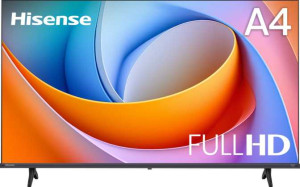
Hisense 32A4NF 32"
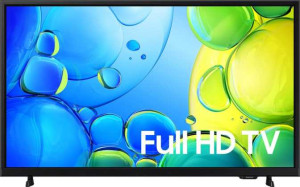
Samsung UN32F6000FFXZA 32"

Hisense 32A4NF 32" Samsung UN32F6000FFXZA 32"

Overview

Choosing between two 32-inch Full HD LED TVs is rarely simple, and the face-off between the Hisense 32A4NF 32″ and the Samsung UN32F6000FFXZA 32″ is no exception. Both sets share a strong common ground of 1080p resolution, smart TV capabilities, Dolby Audio, and Bluetooth, yet they diverge in meaningful ways around HDR support, connectivity options, and audio flexibility that could tip the scales depending on your setup and priorities.

Common Features

  • Both TVs have a 1080p (Full HD) display resolution.
  • Both use an LED-backlit LCD display type.
  • Both share a resolution of 1920 x 1080 px.
  • Both support 1670 million display colors with 8-bit depth.
  • Both have a 60Hz refresh rate.
  • Dolby Vision support is not available on either product.
  • HLG support is not available on either product.
  • Bluetooth is present on both products.
  • Both support Wi-Fi 4 (802.11n) and Wi-Fi 5 (802.11ac).
  • Both have 1 USB port.
  • Miracast support is available on both products.
  • Neither product has an external memory slot.
  • Neither product has a VGA or DVI connector.
  • Both have stereo speakers.
  • SRS TheaterSound HD is not available on either product.
  • Dolby Atmos is not available on either product.
  • Both support Dolby Audio.
  • Dolby Virtual support is not available on either product.
  • Neither product has a subwoofer.
  • Both feature HDMI ARC and HDMI eARC.
  • Both support VESA mounting.
  • AirPlay is available on both products.
  • Both have a built-in smart TV platform.
  • Google Assistant compatibility is present on both products.
  • Alexa support is available on both products.
  • Siri and Apple HomeKit are not supported on either product.
  • Both support remote smartphone control.
  • Neither product has a rechargeable remote control.
  • USB recording is supported on both products.

Main Differences

  • Screen size is 31.5″ on Hisense 32A4NF 32″ and 32″ on Samsung UN32F6000FFXZA 32″.
  • Pixel density is 70 ppi on Hisense 32A4NF 32″ and 69 ppi on Samsung UN32F6000FFXZA 32″.
  • HDR10 support is present on Samsung UN32F6000FFXZA 32″ but not available on Hisense 32A4NF 32″.
  • HDR10+ support is present on Samsung UN32F6000FFXZA 32″ but not available on Hisense 32A4NF 32″.
  • An ambient light sensor is present on Hisense 32A4NF 32″ but not available on Samsung UN32F6000FFXZA 32″.
  • HDMI version is 1.4 on Hisense 32A4NF 32″ and 2.0 on Samsung UN32F6000FFXZA 32″.
  • HDMI port count is 3 on Hisense 32A4NF 32″ and 2 on Samsung UN32F6000FFXZA 32″.
  • Wi-Fi connectivity is present on Samsung UN32F6000FFXZA 32″ but not available on Hisense 32A4NF 32″.
  • An RJ45 (Ethernet) port is present on Samsung UN32F6000FFXZA 32″ but absent on Hisense 32A4NF 32″.
  • A 3.5mm audio jack is present on Hisense 32A4NF 32″ but not available on Samsung UN32F6000FFXZA 32″.
  • Audio output power is 2 x 6W on Hisense 32A4NF 32″ and 2 x 5W on Samsung UN32F6000FFXZA 32″.
  • Digital audio output support is present on Hisense 32A4NF 32″ but not available on Samsung UN32F6000FFXZA 32″.
  • Width is 721.4 mm on Hisense 32A4NF 32″ and 734.1 mm on Samsung UN32F6000FFXZA 32″.
  • Weight is 3493 g on Hisense 32A4NF 32″ and 3856 g on Samsung UN32F6000FFXZA 32″.
  • Thickness is 78.7 mm on Hisense 32A4NF 32″ and 73.7 mm on Samsung UN32F6000FFXZA 32″.
  • Height is 426.7 mm on Hisense 32A4NF 32″ and 439.4 mm on Samsung UN32F6000FFXZA 32″.
  • Volume is 24225.54 cm³ on Hisense 32A4NF 32″ and 23772.93 cm³ on Samsung UN32F6000FFXZA 32″.
  • Operating power consumption is 50W on Hisense 32A4NF 32″ and 45W on Samsung UN32F6000FFXZA 32″.
Specs Comparison
Hisense 32A4NF 32"

Hisense 32A4NF 32"

Samsung UN32F6000FFXZA 32"

Samsung UN32F6000FFXZA 32"

Display:
display resolution 1080p (Full HD) 1080p (Full HD)
Display type LED-backlit, LCD LED-backlit, LCD
screen size 31.5" 32"
resolution 1920 x 1080 px 1920 x 1080 px
pixel density 70 ppi 69 ppi
display colors 1670 million 1670 million
bit depth 8-bit 8-bit
refresh rate 60Hz 60Hz
supports HDR10
supports HDR10+
supports Dolby Vision
supports HLG
Adaptive synchronization None None
has anti-reflection coating
has an ambient light sensor
maximum horizontal viewing angle 178º 178º
maximum vertical viewing angle 178º 178º

At their core, the Hisense 32A4NF and Samsung UN32F6000FFXZA share an almost identical display foundation: both are LED-backlit LCD panels running at 1920 x 1080 resolution, a 60Hz refresh rate, 8-bit color depth rendering 1.67 billion colors, and wide 178° viewing angles in both directions. At 32 inches, the pixel density difference — 70 ppi on the Hisense versus 69 ppi on the Samsung — is completely imperceptible in practice. Neither panel offers adaptive sync, Dolby Vision, or HLG, so those shared omissions do not factor into the decision.

The most meaningful differentiator is HDR support. The Samsung carries both HDR10 and HDR10+, while the Hisense supports neither. In practical terms, HDR10 allows compatible content — from streaming services and Blu-ray — to display a broader range of brightness and contrast than standard dynamic range. HDR10+ goes further by applying scene-by-scene tone mapping for more precise highlight and shadow detail. On a 32-inch 1080p screen the impact is modest compared to larger or higher-resolution panels, but it is a real, tangible advantage for users who stream HDR content regularly. The Hisense, by contrast, will display that same content in SDR only.

The Hisense counters with one practical perk the Samsung lacks: an ambient light sensor, which automatically adjusts backlight brightness to match room lighting conditions — useful for reducing eye strain across varied environments. Both screens include an anti-reflection coating. Overall, the Samsung UN32F6000FFXZA holds a clear edge for display quality due to its HDR10 and HDR10+ support, which the Hisense simply cannot match; the Hisense′s ambient light sensor is a convenience feature that does not offset that gap for most users.
Connectivity:
Has Bluetooth
HDMI version HDMI 1.4 HDMI 2.0
HDMI ports 3 2
supports Wi-Fi
Wi-Fi version Wi-Fi 4 (802.11n), Wi-Fi 5 (802.11ac) Wi-Fi 4 (802.11n), Wi-Fi 5 (802.11ac)
USB ports 1 1
RJ45 ports 0 1
supports Miracast
has a socket for a 3.5 mm audio jack
has an external memory slot
has a VGA connector
has a DVI connector

The HDMI situation is one of the more consequential trade-offs between these two TVs. The Hisense 32A4NF offers three HDMI 1.4 ports, while the Samsung UN32F6000FFXZA provides only two HDMI 2.0 ports. HDMI 2.0 supports bandwidth up to 18 Gbps — enough for 4K HDR signals — whereas HDMI 1.4 tops out at 10.2 Gbps. On a 1080p TV this bandwidth gap is largely academic, since neither set will be driving 4K content anyway. However, the Hisense′s extra port is genuinely useful for users juggling multiple sources like a games console, streaming stick, and soundbar simultaneously, without needing a switch.

Wireless connectivity tells a different story. The Samsung includes built-in Wi-Fi (supporting both Wi-Fi 4 and Wi-Fi 5) alongside a dedicated RJ45 ethernet port, giving users flexibility to connect via whichever network method suits their setup. The Hisense lists Wi-Fi versions in the data but marks Wi-Fi support as NO, which means those entries do not represent functional wireless capability on this model — a significant practical limitation for cord-free placement. The Samsung′s ethernet port is also a meaningful bonus for users who prefer a stable wired connection for streaming.

Both sets share Bluetooth, a single USB port, Miracast support, and the absence of legacy video inputs like VGA or DVI. One minor point worth noting: the Hisense includes a 3.5mm audio jack for headphones, which the Samsung omits — a small but real advantage for private listening without additional adapters. On balance, the Samsung holds the connectivity edge thanks to its functional built-in Wi-Fi and ethernet port, which dramatically expand placement flexibility; the Hisense′s extra HDMI port is a partial offset, but the absence of wireless capability is a meaningful limitation.

Audio:
audio output power 2 x 6W 2 x 5W
supports Digital Out
has SRS TheaterSound HD
has stereo speakers
has Dolby Atmos
has Dolby Audio
supports Dolby Virtual
has a subwoofer
HDMI ARC / eARC HDMI ARC, HDMI eARC HDMI ARC, HDMI eARC

Both TVs field stereo speaker systems with Dolby Audio processing and identical ARC/eARC support, so the shared baseline is respectable for a 32-inch class set. The most tangible difference is raw output power: the Hisense 32A4NF delivers 2 x 6W versus the Samsung UN32F6000FFXZA′s 2 x 5W. That 2W gap per channel won't transform the listening experience, but marginally higher headroom can translate to slightly cleaner sound at higher volumes before distortion sets in — a minor but real advantage in a bedroom or kitchen-sized room.

Where the Hisense pulls ahead more meaningfully is in external audio routing. It supports Digital Out, which allows the TV to pass audio to an external DAC, AV receiver, or soundbar via optical cable — a widely used and reliable connection type. The Samsung omits this entirely, meaning users who want to upgrade their audio setup are limited to HDMI ARC/eARC or Bluetooth. For anyone planning to pair the TV with older audio equipment that lacks HDMI ARC, that missing optical output on the Samsung is a genuine inconvenience.

Neither set includes a subwoofer, Dolby Atmos, or any virtual surround processing, so the ceiling for built-in audio is similar on both. Still, the Hisense holds a clear edge here — its higher output wattage and Digital Out support give it more versatility both as a standalone speaker system and as a hub in a wider audio setup.

Design:
width 721.4 mm 734.1 mm
weight 3493 g 3856 g
thickness 78.7 mm 73.7 mm
height 426.7 mm 439.4 mm
volume 24225.542606 cm³ 23772.932898 cm³
Supports VESA mount

Physically, these two TVs are closely matched — both mount via VESA and occupy a similar footprint — but a few numbers stand out on closer inspection. The Hisense 32A4NF is lighter at 3,493 g compared to the Samsung UN32F6000FFXZA′s 3,856 g, a difference of roughly 360 g. That gap matters most during installation: a lighter panel is noticeably easier to handle solo when wall-mounting or repositioning, and puts marginally less stress on a wall bracket over time.

The Samsung is slightly wider and taller — 734.1 mm wide versus 721.4 mm — which is consistent with its marginally larger advertised screen size of 32″ against the Hisense′s actual 31.5″ panel. The Hisense, however, is thicker at 78.7 mm versus the Samsung′s 73.7 mm. That 5 mm difference is unlikely to be noticeable in a typical living room setup, though it could matter in tight wall-mount configurations where depth clearance is limited.

Neither design specification presents a dramatic advantage, but on balance the Hisense holds a modest edge in this category: its lower weight makes handling easier, and its smaller overall footprint gives it slightly more flexibility for tighter spaces. The Samsung′s slimmer profile is a partial counter, but the weight difference is the more practically impactful of the two distinctions.

Features:
release date March 2025 March 2025
has AirPlay
has built-in smart TV
compatible with Google Assistant
works with Alexa
works with Siri/Apple HomeKit
supports a remote smartphone
has a rechargeable remote control
supports USB recording
operating power consumption 50W 45W
standby power consumption 0.5W 0.5W
has a search browser
has a sleep timer
has a child lock
has voice commands

Remarkably, the feature sets of these two TVs are almost entirely identical. Both carry a built-in smart TV platform, AirPlay, Google Assistant, Alexa, smartphone remote support, USB recording, voice commands, a sleep timer, child lock, and a search browser. Neither supports Apple HomeKit/Siri or offers a rechargeable remote. For a buyer prioritizing smart features and ecosystem compatibility, this is essentially a dead heat — the day-to-day experience from a software and convenience standpoint would be indistinguishable.

The sole differentiator in this category is power consumption. The Hisense 32A4NF draws 50W during operation versus the Samsung UN32F6000FFXZA′s 45W. That 5W gap is modest in absolute terms, but over thousands of hours of use it adds up — roughly 5 kWh extra per 1,000 hours on the Hisense, which translates to a small but measurable difference on an electricity bill over years of ownership. Standby consumption is identical at 0.5W for both.

Given how closely matched these two TVs are across every feature, the Samsung holds a narrow edge in this group solely due to its lower operating power draw. It is not a headline differentiator, but for an energy-conscious buyer, consistent savings over the lifespan of the TV are worth acknowledging — especially when nothing else in this feature category separates the two.

Comparison Summary & Verdict

Having examined every specification, both televisions deliver a capable 1080p viewing experience, but each targets a different kind of buyer. The Samsung UN32F6000FFXZA 32″ pulls ahead for picture enthusiasts thanks to its HDR10 and HDR10+ support, and it also wins on networking with built-in Wi-Fi, a dedicated Ethernet port, and the modern HDMI 2.0 standard. The Hisense 32A4NF 32″ counters with three HDMI ports versus two, a 3.5mm audio jack, digital audio output for external sound equipment, a slightly stronger 2x6W speaker system, and a useful ambient light sensor for adaptive comfort. It is also lighter and narrower, which may matter in tighter spaces. Neither set is universally superior; the right choice depends firmly on whether richer HDR visuals or broader audio and port flexibility matters more to you.

Hisense 32A4NF 32
Buy Hisense 32A4NF 32" if...

Buy the Hisense 32A4NF 32″ if you need three HDMI ports, a 3.5mm audio jack, or a digital audio output for connecting external sound equipment, and appreciate an ambient light sensor for comfortable everyday viewing.

Samsung UN32F6000FFXZA 32
Buy Samsung UN32F6000FFXZA 32" if...

Buy the Samsung UN32F6000FFXZA 32″ if HDR10 and HDR10+ picture quality are a priority, or if you rely on built-in Wi-Fi and a wired Ethernet port for a flexible and stable network connection.