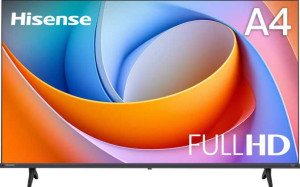
Hisense 40A4NF 40"
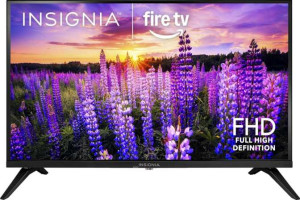
Insignia NS-40F401NA26 40"

Hisense 40A4NF 40" Insignia NS-40F401NA26 40"

Overview

When comparing the Hisense 40A4NF 40″ and the Insignia NS-40F401NA26 40″, it quickly becomes clear that these two Full HD televisions share a remarkably similar foundation — same screen size, same resolution, and a common set of smart TV capabilities. Yet meaningful distinctions emerge when examining their connectivity configurations and smart assistant ecosystems, revealing that each model makes deliberate trade-offs that could strongly favour one type of buyer over another.

Common Features

  • Both products have a 1080p (Full HD) display resolution.
  • Both use an LED-backlit LCD display type.
  • Both have a screen size of 39.5″.
  • Both have a resolution of 1920 x 1080 px.
  • Both have a pixel density of 56 ppi.
  • Both support 1670 million display colors with an 8-bit bit depth.
  • Both have a 60Hz refresh rate.
  • Both support Bluetooth 5.
  • Bluetooth connectivity is available on both products.
  • Both support Wi-Fi 4 (802.11n) and Wi-Fi 5 (802.11ac).
  • Both have 1 USB port.
  • Miracast support is available on both products.
  • A 3.5 mm audio jack is present on both products.
  • Neither product has an external memory slot.
  • Neither product has a VGA connector.
  • Digital Out support is available on both products.
  • SRS TheaterSound HD is not available on either product.
  • Stereo speakers are present on both products.
  • Dolby Atmos is not available on either product.
  • Dolby Audio support is available on both products.
  • Dolby Virtual support is not available on either product.
  • Neither product has a subwoofer.
  • DTS:X support is available on both products.
  • Both products support VESA mounting.
  • AirPlay support is available on both products.
  • Both products have a built-in smart TV platform.
  • Both products work with Alexa.
  • Neither product works with Siri or Apple HomeKit.
  • Remote smartphone control is supported on both products.
  • Neither product has a rechargeable remote control.
  • USB recording is supported on both products.
  • Both products have a standby power consumption of 0.5W.

Main Differences

  • An ambient light sensor is present on the Hisense 40A4NF 40″ but not available on the Insignia NS-40F401NA26 40″.
  • The Hisense 40A4NF 40″ has 3 HDMI ports, while the Insignia NS-40F401NA26 40″ has 2 HDMI ports.
  • Built-in Wi-Fi support is present on the Insignia NS-40F401NA26 40″ but not available on the Hisense 40A4NF 40″.
  • The Insignia NS-40F401NA26 40″ has 1 RJ45 (Ethernet) port, while the Hisense 40A4NF 40″ has none.
  • The Hisense 40A4NF 40″ supports both HDMI ARC and HDMI eARC, while the Insignia NS-40F401NA26 40″ supports HDMI ARC only.
  • The width is 899.2 mm on the Hisense 40A4NF 40″ and 894.1 mm on the Insignia NS-40F401NA26 40″.
  • The weight is 4808 g on the Hisense 40A4NF 40″ and 4581 g on the Insignia NS-40F401NA26 40″.
  • The thickness is 78.7 mm on the Hisense 40A4NF 40″ and 71.1 mm on the Insignia NS-40F401NA26 40″.
  • The height is 510.5 mm on the Hisense 40A4NF 40″ and 508 mm on the Insignia NS-40F401NA26 40″.
  • The volume is 36126.57 cm³ on the Hisense 40A4NF 40″ and 32293.82 cm³ on the Insignia NS-40F401NA26 40″.
  • Google Assistant compatibility is present on the Hisense 40A4NF 40″ but not available on the Insignia NS-40F401NA26 40″.
Specs Comparison
Hisense 40A4NF 40"

Hisense 40A4NF 40"

Insignia NS-40F401NA26 40"

Insignia NS-40F401NA26 40"

Display:
display resolution 1080p (Full HD) 1080p (Full HD)
Display type LED-backlit, LCD LED-backlit, LCD
screen size 39.5" 39.5"
resolution 1920 x 1080 px 1920 x 1080 px
pixel density 56 ppi 56 ppi
display colors 1670 million 1670 million
bit depth 8-bit 8-bit
refresh rate 60Hz 60Hz
supports HDR10
supports HDR10+
supports Dolby Vision
supports HLG
Adaptive synchronization None None
has anti-reflection coating
has an ambient light sensor
maximum horizontal viewing angle 178º 178º
maximum vertical viewing angle 178º 178º

The Hisense 40A4NF and the Insignia NS-40F401NA26 share an almost identical display foundation: both are 39.5″ LED-backlit LCD panels running at 1920 x 1080 (Full HD), with the same 56 ppi pixel density, 8-bit color depth rendering 1.67 billion colors, a 60Hz refresh rate, and wide 178° viewing angles in both directions. Neither panel supports any HDR format — no HDR10, HDR10+, Dolby Vision, or HLG — and neither offers adaptive sync. In practical terms, this means both sets deliver a standard SDR picture with no dynamic range enhancement, which is typical for budget 40″ televisions in this class.

The single differentiating display feature is the ambient light sensor, present on the Hisense but absent on the Insignia. In real-world use, this sensor automatically adjusts screen brightness based on the lighting conditions in your room — a genuinely useful quality-of-life feature that helps maintain comfortable viewing in both bright and dark environments without manual intervention. Both TVs also include an anti-reflection coating, which helps manage glare in well-lit rooms regardless of that sensor difference.

Overall, these two displays are functionally near-identical, and neither holds a meaningful advantage in picture capability. However, the Hisense 40A4NF earns a narrow edge in this category solely due to its ambient light sensor, which adds a layer of viewing comfort the Insignia cannot match.

Connectivity:
Has Bluetooth
HDMI ports 3 2
supports Wi-Fi
Wi-Fi version Wi-Fi 4 (802.11n), Wi-Fi 5 (802.11ac) Wi-Fi 4 (802.11n), Wi-Fi 5 (802.11ac)
Bluetooth version 5 5
USB ports 1 1
RJ45 ports 0 1
supports Miracast
has a socket for a 3.5 mm audio jack
has an external memory slot
has a VGA connector
has a DVI connector

Connectivity is where these two TVs diverge most noticeably. The most consequential difference is wireless networking: the Insignia NS-40F401NA26 supports Wi-Fi (both 802.11n and 802.11ac), while the Hisense 40A4NF does not. For a smart TV, the absence of built-in Wi-Fi is a significant limitation — it means the Hisense depends entirely on a physical cable connection or an external streaming device to access any internet-based content. The Insignia also adds a dedicated RJ45 Ethernet port, giving it the flexibility of either a wired or wireless network connection, which is ideal for users who prioritize streaming stability.

The Hisense counters with one notable hardware advantage: 3 HDMI ports versus the Insignia's 2. In a typical living room setup with a game console, soundbar, and streaming stick all competing for inputs, that extra HDMI port removes the need for a switcher and simplifies cable management meaningfully. Both TVs are otherwise aligned on shared peripherals — one USB port, Bluetooth 5, Miracast screen mirroring, and a 3.5mm audio jack — so neither holds an edge there.

On balance, the Insignia NS-40F401NA26 holds a clear connectivity advantage for most users. Built-in Wi-Fi plus Ethernet is simply more versatile and future-proof than relying solely on wired HDMI sources or external adapters. The Hisense's extra HDMI port is a genuine convenience, but it does not compensate for the absence of wireless networking in an era where smart TV functionality is largely network-dependent.

Audio:
supports Digital Out
has SRS TheaterSound HD
has stereo speakers
has Dolby Atmos
has Dolby Audio
supports Dolby Virtual
has a subwoofer
has DTS:X
HDMI ARC / eARC HDMI ARC, HDMI eARC HDMI ARC

Audio capabilities are nearly identical across these two TVs, with both offering Dolby Audio, DTS:X, stereo speakers, and digital audio output — a solid but unremarkable feature set for budget 40″ sets. Neither supports Dolby Atmos or a subwoofer, so on-board sound performance is expected to be comparable between the two.

The one meaningful distinction is in soundbar and external audio integration. The Hisense 40A4NF supports both HDMI ARC and eARC, while the Insignia is limited to HDMI ARC only. This matters if you plan to connect a higher-end soundbar: eARC (enhanced Audio Return Channel) carries significantly more bandwidth than standard ARC, enabling uncompressed audio formats like Dolby TrueHD and DTS-HD Master Audio to pass through to a compatible soundbar. Standard ARC, by contrast, is limited to compressed formats. For users with a premium audio setup, this difference is real and audible.

The Hisense 40A4NF takes a clear edge in this category. If you rely solely on the TV's built-in speakers, both sets are evenly matched. But for anyone pairing their TV with a modern soundbar, the Hisense's eARC support unlocks a noticeably higher audio ceiling that the Insignia simply cannot reach.

Design:
width 899.2 mm 894.1 mm
weight 4808 g 4581 g
thickness 78.7 mm 71.1 mm
height 510.5 mm 508 mm
volume 36126.57392 cm³ 32293.81908 cm³
Supports VESA mount

At the same screen size, these two TVs are dimensionally close but not identical. The Insignia NS-40F401NA26 is notably slimmer at 71.1 mm deep compared to the Hisense's 78.7 mm, and it also comes in lighter at 4581 g versus 4808 g for the Hisense — a difference of roughly 227 g. While neither gap is dramatic, the Insignia's reduced depth gives it a slightly more modern profile, and the lower weight makes solo mounting or repositioning marginally easier in practice.

Both TVs support VESA mounting, so wall installation is an option for either. Their footprints are nearly equivalent in width and height, meaning shelf or entertainment unit fit will be effectively the same for both. The Hisense's larger overall volume — a direct consequence of its greater depth — is the main physical trade-off, and it is unlikely to be a deciding factor unless cabinet depth is a hard constraint.

The Insignia holds a modest edge in design: it is the slimmer and lighter of the two, which translates to easier handling and a slightly cleaner wall-mounted appearance. That said, the differences are incremental rather than transformative, and neither TV is likely to stand out significantly in a typical living room setup.

Features:
release date March 2025 May 2025
has AirPlay
has built-in smart TV
compatible with Google Assistant
works with Alexa
works with Siri/Apple HomeKit
supports a remote smartphone
has a rechargeable remote control
supports USB recording
standby power consumption 0.5W 0.5W
has a search browser
has a sleep timer
has a child lock
warranty period 1 years 1 years
has voice commands

Across the broad features landscape, these two smart TVs are remarkably well-matched. Both offer built-in smart TV platforms, AirPlay, Alexa integration, smartphone remote control, USB recording, voice commands, and practical utilities like a sleep timer and child lock — all at an identical 0.5W standby consumption and covered by the same 1-year warranty. For the vast majority of everyday use cases, the feature sets are interchangeable.

The sole differentiator is Google Assistant compatibility, which the Hisense 40A4NF supports and the Insignia does not. In practical terms, this matters most to users already embedded in the Google ecosystem — those using Google Home, Android devices, or Nest smart home products. With Google Assistant, the Hisense can be integrated into broader smart home routines, respond to voice queries beyond basic TV controls, and interact with other Assistant-enabled devices. The Insignia, limited to Alexa, covers similar ground for Amazon ecosystem users but cannot bridge to the Google side.

The Hisense 40A4NF takes a narrow edge here thanks to its Google Assistant support, which broadens its smart home compatibility beyond what the Insignia can offer. For users invested in Amazon's ecosystem, the gap is largely irrelevant — but for anyone with Google-centric devices at home, the Hisense is the more versatile choice.

Comparison Summary & Verdict

Both the Hisense 40A4NF 40″ and the Insignia NS-40F401NA26 40″ deliver a solid 1080p Full HD experience with Dolby Audio, DTS:X, AirPlay, and Alexa support — making either a capable choice for everyday home entertainment. Where they diverge is in the details. The Hisense 40A4NF 40″ edges ahead with three HDMI ports, HDMI eARC for premium audio equipment, an ambient light sensor for automatic picture adjustment, and Google Assistant compatibility — a compelling package for users with multiple connected devices and a Google-centric smart home. The Insignia NS-40F401NA26 40″ counters with built-in Wi-Fi, a dedicated RJ45 Ethernet port for a stable wired connection, and a noticeably slimmer and lighter build — benefits that will appeal to those who value network reliability and a more space-conscious design. Choose based on which connectivity strengths align with your setup.

Hisense 40A4NF 40
Buy Hisense 40A4NF 40" if...

Choose the Hisense 40A4NF 40″ if you need three HDMI ports, want HDMI eARC for high-quality audio passthrough, or rely on Google Assistant as part of your smart home ecosystem.

Insignia NS-40F401NA26 40
Buy Insignia NS-40F401NA26 40" if...

Choose the Insignia NS-40F401NA26 40″ if you prefer a dedicated Ethernet port for a stable wired connection, want built-in Wi-Fi, or favour a slimmer and lighter television design.