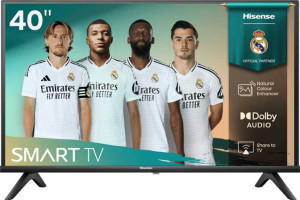
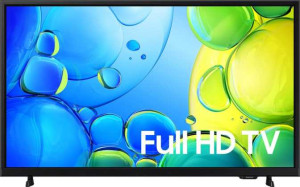
Both the Hisense 40A4Q and the Samsung UN32F6000FFXZA share the same foundational display DNA: 1080p Full HD resolution on an LED-backlit LCD panel, with identical 8-bit color depth, 1670 million displayable colors, a 60Hz refresh rate, and wide 178° viewing angles in both directions. Neither supports Dolby Vision or HLG, and neither offers adaptive synchronization, so on those fronts they are evenly matched.
The most meaningful divergence lies in two areas. First, screen size versus pixel density: the Hisense delivers a larger 40″ image, but at a lower 55 ppi, which means individual pixels are slightly more visible up close compared to the Samsung′s 32″ panel at 69 ppi. In practical terms, the Samsung′s higher pixel density produces a marginally sharper image at typical close viewing distances, while the Hisense trades that sharpness for a more immersive screen area. Second, and more decisively, the Samsung supports both HDR10 and HDR10+, while the Hisense supports neither. HDR10+ in particular enables dynamic metadata, meaning brightness and contrast are optimized scene-by-scene rather than using a single static tone map — a real and visible improvement for compatible content.
Overall, the Samsung UN32F6000FFXZA holds a clear edge in display quality thanks to its HDR10 and HDR10+ support, which adds a meaningful dimension of contrast and highlight detail that the Hisense simply cannot reproduce. The Hisense counters only with its larger screen size, which may matter more for living-room distance viewing. If picture quality is the priority, the Samsung wins this group; if screen real estate is the deciding factor, the Hisense has the advantage.