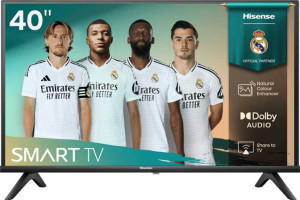
Hisense 40A4Q 40"
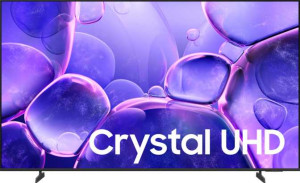
Samsung UN85U8000FF 85"

Hisense 40A4Q 40" Samsung UN85U8000FF 85"

Common Features

  • Both products have LED-backlit, LCD displays.
  • Both products have a 60Hz refresh rate.
  • Neither product supports Dolby Vision.
  • Both products have anti-reflection coatings.
  • Both products have a maximum horizontal viewing angle of 178º.
  • Both products have a maximum vertical viewing angle of 178º.
  • Both products support Wi-Fi.
  • Both products have 1 USB port.
  • Both products have 1 RJ45 port.
  • Both products support Miracast.
  • Both products do not have an external memory slot.
  • Both products do not have a VGA connector.
  • Both products do not have a DVI connector.
  • Both products support Dolby Digital.
  • Both products support Digital Out.
  • Both products have stereo speakers.
  • Both products support Dolby Audio.
  • Both products have HDMI ARC and HDMI eARC.
  • Both products support VESA mount.
  • Both products have built-in smart TV functionality.

Main Differences

  • The display resolution on Hisense 40A4Q 40″ is 1080p (Full HD) while the Samsung UN85U8000FF 85″ has a 4K (UHD) resolution.
  • The screen size of Hisense 40A4Q 40″ is 40″ while the Samsung UN85U8000FF 85″ has a screen size of 84.5″.
  • The resolution of Hisense 40A4Q 40″ is 1920 x 1080 px, while the resolution of Samsung UN85U8000FF 85″ is 3840 x 2160 px.
  • The pixel density of Hisense 40A4Q 40″ is 55 ppi, while the pixel density of Samsung UN85U8000FF 85″ is 52 ppi.
  • The display colors on Hisense 40A4Q 40″ are 1670 million, while the Samsung UN85U8000FF 85″ has 1070 million display colors.
  • The bit depth of Hisense 40A4Q 40″ is 8-bit, while the bit depth of Samsung UN85U8000FF 85″ is 10-bit.
  • HDR10 support is not available on Hisense 40A4Q 40″ but is available on Samsung UN85U8000FF 85″.
  • HDR10+ support is not available on Hisense 40A4Q 40″ but is available on Samsung UN85U8000FF 85″.
  • HLG support is not available on Hisense 40A4Q 40″ but is available on Samsung UN85U8000FF 85″.
  • Hisense 40A4Q 40″ does not have an ambient light sensor, while Samsung UN85U8000FF 85″ does.
  • Bluetooth is not available on Hisense 40A4Q 40″ but is available on Samsung UN85U8000FF 85″.
  • The HDMI version on Hisense 40A4Q 40″ is HDMI 1.4, while the HDMI version on Samsung UN85U8000FF 85″ is HDMI 2.1.
  • Hisense 40A4Q 40″ has 2 HDMI ports, while Samsung UN85U8000FF 85″ has 3 HDMI ports.
  • The Wi-Fi version on Hisense 40A4Q 40″ is Wi-Fi 4 (802.11n), while the Wi-Fi version on Samsung UN85U8000FF 85″ supports both Wi-Fi 4 (802.11n) and Wi-Fi 5 (802.11ac).
  • Hisense 40A4Q 40″ has a socket for a 3.5 mm audio jack, while Samsung UN85U8000FF 85″ does not.
  • The audio output power on Hisense 40A4Q 40″ is 2 x 7W, while the audio output power on Samsung UN85U8000FF 85″ is 2 x 10W.
  • The weight of Hisense 40A4Q 40″ is 5500 g, while the weight of Samsung UN85U8000FF 85″ is 29200 g.
  • The thickness of Hisense 40A4Q 40″ is 85 mm, while the thickness of Samsung UN85U8000FF 85″ is 77 mm.
  • The height of Hisense 40A4Q 40″ is 515 mm, while the height of Samsung UN85U8000FF 85″ is 1083.5 mm.
  • The volume of Hisense 40A4Q 40″ is 39397.5 cm³, while the volume of Samsung UN85U8000FF 85″ is 157673.41205 cm³.
  • The operating power consumption of Hisense 40A4Q 40″ is 74W, while the operating power consumption of Samsung UN85U8000FF 85″ is 218W.
  • The warranty period for Hisense 40A4Q 40″ is 3 years, while the warranty period for Samsung UN85U8000FF 85″ is 1 year.
Specs Comparison
Hisense 40A4Q 40"

Hisense 40A4Q 40"

Samsung UN85U8000FF 85"

Samsung UN85U8000FF 85"

Display:
display resolution 1080p (Full HD) 4K (UHD)
Display type LED-backlit, LCD LED-backlit, LCD
screen size 40" 84.5"
resolution 1920 x 1080 px 3840 x 2160 px
pixel density 55 ppi 52 ppi
display colors 1670 million 1070 million
bit depth 8-bit 10-bit
refresh rate 60Hz 60Hz
supports HDR10
supports HDR10+
supports Dolby Vision
supports HLG
has anti-reflection coating
has an ambient light sensor
maximum horizontal viewing angle 178º 178º
maximum vertical viewing angle 178º 178º

The Hisense 40A4Q 40″ features a 1080p (Full HD) display resolution, while the Samsung UN85U8000FF 85″ offers a higher 4K (UHD) resolution. The Hisense has a resolution of 1920 x 1080 px, which provides a pixel density of 55 ppi, whereas the Samsung's 3840 x 2160 px resolution results in a slightly lower pixel density of 52 ppi. Both displays use LED-backlit LCD technology, ensuring vibrant visuals, but the Samsung model supports additional HDR formats including HDR10, HDR10+, and HLG, while the Hisense does not support any HDR formats.

In terms of display size, the Hisense measures 40″, while the Samsung is significantly larger at 84.5″. The Samsung also boasts a higher 10-bit bit depth compared to the Hisense's 8-bit, which may result in more color gradation. Speaking of colors, the Hisense offers 1670 million display colors, whereas the Samsung displays 1070 million. Both products support a maximum horizontal and vertical viewing angle of 178º, ensuring consistent image quality from various angles.

Both displays feature anti-reflection coatings, but the Samsung additionally includes an ambient light sensor, which the Hisense lacks. In terms of refresh rate, both products are equipped with a 60Hz refresh rate, providing smooth performance for most uses, though neither supports higher refresh rates or advanced motion handling.

Connectivity:
Has Bluetooth
HDMI version HDMI 1.4 HDMI 2.1
HDMI ports 2 3
supports Wi-Fi
Wi-Fi version Wi-Fi 4 (802.11n) Wi-Fi 4 (802.11n), Wi-Fi 5 (802.11ac)
USB ports 1 1
RJ45 ports 1 1
supports Miracast
has a socket for a 3.5 mm audio jack
has an external memory slot
has a VGA connector
has a DVI connector

The Hisense 40A4Q 40″ does not include Bluetooth support, while the Samsung UN85U8000FF 85″ does have Bluetooth functionality. Both models feature HDMI ports, but the Hisense offers two HDMI 1.4 ports, while the Samsung has three HDMI 2.1 ports, allowing for higher bandwidth and better compatibility with modern devices. Both products support Wi-Fi, but the Samsung supports both Wi-Fi 4 (802.11n) and Wi-Fi 5 (802.11ac), while the Hisense only supports Wi-Fi 4 (802.11n).

In terms of USB ports, both TVs come with one USB port. For wired connections, both feature an RJ45 port for Ethernet. The Hisense includes a socket for a 3.5 mm audio jack, while the Samsung does not. Both models support Miracast for wireless screen mirroring, making it easy to stream content from compatible devices.

Neither product includes an external memory slot, nor do they feature VGA or DVI connectors, which limits certain types of legacy device connections. Overall, while both offer solid connectivity options, the Samsung provides more advanced HDMI and Wi-Fi capabilities, as well as Bluetooth support, which the Hisense lacks.

Audio:
supports Dolby Digital
audio output power 2 x 7W 2 x 10W
supports Digital Out
has SRS TheaterSound HD
has stereo speakers
has Dolby Audio
supports Dolby Virtual
has a subwoofer
HDMI ARC / eARC HDMI ARC, HDMI eARC HDMI ARC, HDMI eARC

The Hisense 40A4Q 40″ and Samsung UN85U8000FF 85″ both support Dolby Digital audio and have stereo speakers, delivering a similar audio experience in terms of basic sound capabilities. However, the Samsung offers slightly more audio output power with 2 x 10W compared to the Hisense's 2 x 7W. Both models support Digital Out for external audio systems.

Neither model includes SRS TheaterSound HD, Dolby Virtual, or a subwoofer, which means both TVs rely on their built-in speakers for sound output. Both TVs also feature Dolby Audio for improved sound quality, though neither offers advanced audio features like Dolby Atmos or other surround sound technologies.

Both models support HDMI ARC and HDMI eARC, allowing for easy connection to compatible external audio devices like soundbars or AV receivers for a better audio experience, should you need one.

Design:
width 900 mm 1889.9 mm
weight 5500 g 29200 g
thickness 85 mm 77 mm
height 515 mm 1083.5 mm
volume 39397.5 cm³ 157673.41205 cm³
Supports VESA mount

The Hisense 40A4Q 40″ has a compact design with a width of 900 mm, height of 515 mm, and a thickness of 85 mm, making it smaller and lighter at 5500 g. In comparison, the Samsung UN85U8000FF 85″ is significantly larger, measuring 1889.9 mm in width, 1083.5 mm in height, and 77 mm in thickness. The Samsung is much heavier, weighing 29200 g, and has a considerably larger volume of 157673.41205 cm³ compared to the Hisense's 39397.5 cm³.

Both models support VESA mounting, allowing for flexible wall-mounting options. Despite the difference in size and weight, both products offer the same mounting compatibility, ensuring they can be easily integrated into most setups.

Overall, the Hisense 40A4Q 40″ is more compact and lightweight, while the Samsung UN85U8000FF 85″ offers a much larger presence, making it more suitable for larger spaces or for those seeking a bigger display.

Features:
release date April 2025 March 2025
has AirPlay
has built-in smart TV
works with Siri/Apple HomeKit
supports a remote smartphone
has a rechargeable remote control
supports USB recording
operating power consumption 74W 218W
standby power consumption 0.5W 0.5W
has a search browser
has a sleep timer
has a child lock
warranty period 3 years 1 years

The Hisense 40A4Q 40″ does not support AirPlay, while the Samsung UN85U8000FF 85″ does. Both models feature built-in smart TV functionality, support remote smartphone control, and offer USB recording capabilities. Neither TV includes a rechargeable remote control, though both support features like a search browser, sleep timer, and child lock. The Hisense offers a 3-year warranty period, while the Samsung provides a 1-year warranty.

In terms of power consumption, the Hisense has a lower operating power consumption of 74W compared to the Samsung’s 218W. Both models have the same standby power consumption of 0.5W.

Overall, while both products offer a solid set of smart features, the Samsung stands out with AirPlay support and a higher power consumption, while the Hisense offers a longer warranty period.

Comparison Summary

This is a specification comparison between Hisense 40A4Q 40″ and Samsung UN85U8000FF 85″. Both models have a 60Hz refresh rate, LED-backlit, LCD displays, and support Wi-Fi. The Samsung UN85U8000FF 85″ offers a 4K (UHD) resolution, whereas the Hisense 40A4Q 40″ has a 1080p (Full HD) resolution. The Hisense 40A4Q 40″ has 2 HDMI ports and a 7W audio output, while the Samsung UN85U8000FF 85″ has 3 HDMI ports and 10W audio output. The Samsung UN85U8000FF 85″ also supports HDR10, HDR10+, and HLG, which are not available on the Hisense 40A4Q 40″.