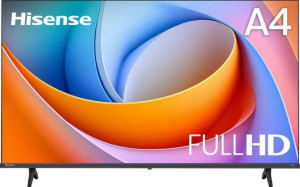
Hisense 43A4NF 43"
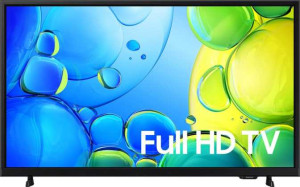
Samsung UN32F6000FFXZA 32"

Hisense 43A4NF 43" Samsung UN32F6000FFXZA 32"

Overview

Welcome to our in-depth spec comparison between the Hisense 43A4NF 43″ and the Samsung UN32F6000FFXZA 32″ — two Full HD smart TVs that share a surprising amount of common ground yet diverge in meaningful ways. From screen size and HDR capabilities to connectivity options and audio output, this side-by-side breakdown will help you identify which TV best suits your living room and viewing habits.

Common Features

  • Both TVs share a 1080p (Full HD) display resolution.
  • Both TVs use an LED-backlit LCD display type.
  • Both TVs have a native resolution of 1920 x 1080 px.
  • Both TVs reproduce 1670 million display colors.
  • Both TVs have an 8-bit color bit depth.
  • Both TVs have a 60Hz refresh rate.
  • Dolby Vision support is not available on either TV.
  • HLG support is not available on either TV.
  • Bluetooth is available on both TVs.
  • Both TVs support Wi-Fi 4 (802.11n) and Wi-Fi 5 (802.11ac).
  • Both TVs have 1 USB port.
  • Miracast support is available on both TVs.
  • Neither TV has an external memory slot.
  • Neither TV has a VGA connector.
  • Neither TV has a DVI connector.
  • Neither TV features SRS TheaterSound HD.
  • Both TVs have stereo speakers.
  • Dolby Atmos is not available on either TV.
  • Both TVs feature Dolby Audio.
  • Dolby Virtual support is not available on either TV.
  • Neither TV has a subwoofer.
  • Both TVs support HDMI ARC and HDMI eARC.
  • Both TVs support VESA mounting.
  • AirPlay is available on both TVs.
  • Both TVs have a built-in smart TV platform.
  • Google Assistant compatibility is present on both TVs.
  • Both TVs work with Alexa.
  • Siri and Apple HomeKit compatibility is not available on either TV.
  • Both TVs support remote smartphone control.
  • Neither TV has a rechargeable remote control.
  • USB recording is supported on both TVs.

Main Differences

  • Screen size is 42.5″ on Hisense 43A4NF 43″ and 32″ on Samsung UN32F6000FFXZA 32″.
  • Pixel density is 52 ppi on Hisense 43A4NF 43″ and 69 ppi on Samsung UN32F6000FFXZA 32″.
  • HDR10 support is present on Samsung UN32F6000FFXZA 32″ but not available on Hisense 43A4NF 43″.
  • HDR10+ support is present on Samsung UN32F6000FFXZA 32″ but not available on Hisense 43A4NF 43″.
  • An ambient light sensor is present on Hisense 43A4NF 43″ but not available on Samsung UN32F6000FFXZA 32″.
  • HDMI version is 1.4 on Hisense 43A4NF 43″ and 2.0 on Samsung UN32F6000FFXZA 32″.
  • HDMI ports number 3 on Hisense 43A4NF 43″ and 2 on Samsung UN32F6000FFXZA 32″.
  • Wi-Fi connectivity is available on Samsung UN32F6000FFXZA 32″ but not on Hisense 43A4NF 43″.
  • An RJ45 (Ethernet) port is present on Samsung UN32F6000FFXZA 32″ but absent on Hisense 43A4NF 43″.
  • A 3.5 mm audio jack socket is present on Hisense 43A4NF 43″ but not on Samsung UN32F6000FFXZA 32″.
  • Audio output power is 2 x 7W on Hisense 43A4NF 43″ and 2 x 5W on Samsung UN32F6000FFXZA 32″.
  • Digital Out support is available on Hisense 43A4NF 43″ but not on Samsung UN32F6000FFXZA 32″.
  • Width is 960.1 mm on Hisense 43A4NF 43″ and 734.1 mm on Samsung UN32F6000FFXZA 32″.
  • Weight is 5488 g on Hisense 43A4NF 43″ and 3856 g on Samsung UN32F6000FFXZA 32″.
  • Thickness is 76.2 mm on Hisense 43A4NF 43″ and 73.7 mm on Samsung UN32F6000FFXZA 32″.
  • Height is 558.8 mm on Hisense 43A4NF 43″ and 439.4 mm on Samsung UN32F6000FFXZA 32″.
  • Volume is 40881.595656 cm³ on Hisense 43A4NF 43″ and 23772.932898 cm³ on Samsung UN32F6000FFXZA 32″.
  • Operating power consumption is 75W on Hisense 43A4NF 43″ and 45W on Samsung UN32F6000FFXZA 32″.
Specs Comparison
Hisense 43A4NF 43"

Hisense 43A4NF 43"

Samsung UN32F6000FFXZA 32"

Samsung UN32F6000FFXZA 32"

Display:
display resolution 1080p (Full HD) 1080p (Full HD)
Display type LED-backlit, LCD LED-backlit, LCD
screen size 42.5" 32"
resolution 1920 x 1080 px 1920 x 1080 px
pixel density 52 ppi 69 ppi
display colors 1670 million 1670 million
bit depth 8-bit 8-bit
refresh rate 60Hz 60Hz
supports HDR10
supports HDR10+
supports Dolby Vision
supports HLG
Adaptive synchronization None None
has anti-reflection coating
has an ambient light sensor
maximum horizontal viewing angle 178º 178º
maximum vertical viewing angle 178º 178º

Both the Hisense 43A4NF and the Samsung UN32F6000FFXZA share the same fundamental panel architecture — LED-backlit LCD with a 1920 x 1080 resolution, 8-bit color depth rendering 1.67 billion colors, a 60Hz refresh rate, and identical 178º horizontal and vertical viewing angles. For everyday TV watching, these shared traits mean both screens will produce broadly similar image quality in terms of color volume and motion handling at the base level.

The most meaningful differentiator is HDR support. The Samsung carries both HDR10 and HDR10+ certification, while the Hisense supports neither. In practice, HDR-enabled content — increasingly common on streaming platforms — can display a wider range of brightness and contrast when the panel supports it, even if the underlying LCD technology limits peak HDR performance. On the Hisense, that same content will be tone-mapped to SDR, losing highlight detail. On the flip side, the Hisense includes an ambient light sensor, which automatically adjusts backlight intensity based on room lighting — a convenience and eye-comfort feature the Samsung lacks. The Hisense also has a larger physical footprint at 42.5″ versus 32″, and because both panels run the same resolution, the Samsung achieves a noticeably sharper 69 ppi compared to the Hisense's 52 ppi — a difference most viewers will perceive as crisper text and finer detail up close.

On display specs, the Samsung holds the edge for content quality thanks to its HDR10/HDR10+ support and higher pixel density. The Hisense counters with a significantly larger screen and an ambient light sensor, but neither of those offsets the absence of any HDR capability in an era where it is becoming a baseline expectation for streaming content.

Connectivity:
Has Bluetooth
HDMI version HDMI 1.4 HDMI 2.0
HDMI ports 3 2
supports Wi-Fi
Wi-Fi version Wi-Fi 4 (802.11n), Wi-Fi 5 (802.11ac) Wi-Fi 4 (802.11n), Wi-Fi 5 (802.11ac)
USB ports 1 1
RJ45 ports 0 1
supports Miracast
has a socket for a 3.5 mm audio jack
has an external memory slot
has a VGA connector
has a DVI connector

Wired connectivity splits in an interesting way between these two. The Hisense 43A4NF offers 3 HDMI ports versus the Samsung's 2, which is a practical win for users with multiple console, streaming box, or soundbar connections — avoiding the need for an HDMI switch. However, the Samsung counters with HDMI 2.0, a newer standard than the Hisense's HDMI 1.4. While both TVs top out at 1080p60 — well within HDMI 1.4's bandwidth — HDMI 2.0 offers headroom for higher-bandwidth signals and broader device compatibility going forward. The Samsung also includes an RJ45 (Ethernet) port, giving it a wired network option the Hisense entirely lacks.

On wireless, the gap widens further. The Samsung supports Wi-Fi (dual-band, up to Wi-Fi 5), while the Hisense lists no Wi-Fi support at all — a significant limitation for a modern TV, as it rules out any network-dependent smart features or wireless streaming without an external device. The Hisense does include a 3.5mm audio jack, useful for plugging in headphones directly, which the Samsung omits. Both share Bluetooth, one USB port, and Miracast support, making those categories a wash.

The Samsung holds a clear connectivity advantage overall. The combination of Wi-Fi, a wired Ethernet port, and HDMI 2.0 makes it considerably more versatile in a connected home environment. The Hisense's extra HDMI port and headphone jack are useful perks, but the absence of any built-in Wi-Fi is a hard limitation that most users in 2024 will find difficult to overlook.
Audio:
audio output power 2 x 7W 2 x 5W
supports Digital Out
has SRS TheaterSound HD
has stereo speakers
has Dolby Atmos
has Dolby Audio
supports Dolby Virtual
has a subwoofer
HDMI ARC / eARC HDMI ARC, HDMI eARC HDMI ARC, HDMI eARC

At their core, both TVs deliver stereo sound with Dolby Audio processing and identical HDMI ARC/eARC support — meaning either can pass audio to an external soundbar or AV receiver cleanly through a single HDMI cable. Neither includes a subwoofer or Dolby Atmos, so the built-in audio experience on both is solidly mid-range at best.

Where the Hisense 43A4NF pulls ahead is in raw output power: its 2 x 7W configuration delivers noticeably more headroom than the Samsung's 2 x 5W. In practical terms, that 40% power advantage translates to the Hisense being able to fill a larger room more comfortably without distortion at higher volumes. The Hisense also includes a Digital Out port, adding a second convenient path to external audio equipment — particularly useful for older soundbars or AV receivers that rely on optical input rather than HDMI ARC.

The Hisense takes a clear edge in this category. More amplifier power and an additional Digital Out connection make it the more capable and flexible option for audio, whether you are relying on the built-in speakers or routing sound to external hardware.

Design:
width 960.1 mm 734.1 mm
weight 5488 g 3856 g
thickness 76.2 mm 73.7 mm
height 558.8 mm 439.4 mm
volume 40881.595656 cm³ 23772.932898 cm³
Supports VESA mount

The size difference between these two TVs is substantial and intentional — the Hisense 43A4NF is a larger-class panel and its physical dimensions reflect that. At 960.1 x 558.8 mm and a volume of roughly 40,882 cm³, it occupies nearly twice the physical space of the Samsung UN32F6000FFXZA, which measures a much more compact 734.1 x 439.4 mm with a volume of around 23,773 cm³. For placement purposes, the Samsung is considerably easier to fit into tighter spaces — a small bedroom, kitchen counter, or dorm setup — while the Hisense demands a more dedicated viewing area.

Weight follows the same pattern: the Hisense comes in at 5,488 g versus the Samsung's 3,856 g, a difference of over 1.6 kg. That gap matters most during installation — wall-mounting the Hisense will require verifying that the mount and wall can handle the additional load, while the lighter Samsung is easier to reposition or mount solo. Depth is nearly identical at 76.2 mm vs 73.7 mm, so neither has a meaningful edge in how slim they sit against a wall. Both support VESA mounting, keeping installation options equal on that front.

There is no outright winner here — the right choice depends entirely on context. The Samsung's smaller footprint and lower weight make it the more practical option for constrained spaces and easier handling. The Hisense's larger frame is expected given its screen size and is not a design flaw, but buyers should plan their space accordingly before purchasing.

Features:
release date March 2025 March 2025
has AirPlay
has built-in smart TV
compatible with Google Assistant
works with Alexa
works with Siri/Apple HomeKit
supports a remote smartphone
has a rechargeable remote control
supports USB recording
operating power consumption 75W 45W
standby power consumption 0.5W 0.5W
has a search browser
has a sleep timer
has a child lock
has voice commands

Across the smart feature set, these two TVs are remarkably well-matched. Both carry built-in smart TV platforms with AirPlay, Google Assistant, Alexa, smartphone remote support, USB recording, voice commands, and a web browser. Neither supports Apple HomeKit or Siri, and neither ships with a rechargeable remote. For day-to-day usability, buyers can expect an essentially identical feature experience from both screens.

The one meaningful differentiator in this category is power consumption. The Hisense 43A4NF draws 75W during operation compared to the Samsung's 45W — a 67% higher draw. Over extended daily use, that gap compounds: assuming five hours of viewing per day, the Hisense would consume roughly 137 kWh more per year than the Samsung. Standby consumption is identical at 0.5W for both, so the difference is entirely in active use. The Hisense's larger panel size naturally explains much of this gap, but it is a real-world cost consideration nonetheless.

As a feature set, this category is essentially a tie — both TVs offer the same smart capabilities with no functional gaps between them. The Samsung's lower operating wattage is the only differentiator, giving it a modest but tangible edge for energy-conscious buyers or those who log heavy viewing hours.

Comparison Summary & Verdict

Both the Hisense 43A4NF 43″ and the Samsung UN32F6000FFXZA 32″ deliver 1080p Full HD resolution at 60Hz with smart TV platforms, AirPlay, Alexa, and Google Assistant support. However, their key differences point each toward a distinct audience. The Hisense stands out with its larger 42.5-inch screen, three HDMI ports, a 3.5 mm audio jack, Digital Out support, and more powerful 2×7W speakers — making it the better fit for a dedicated living room setup. The Samsung, on the other hand, edges ahead with HDR10 and HDR10+ support, a higher pixel density of 69 ppi, built-in Wi-Fi, an Ethernet port, and a newer HDMI 2.0 standard — making it ideal for users who prioritize image quality and wired network stability in a compact form factor.

Hisense 43A4NF 43
Buy Hisense 43A4NF 43" if...

Buy the Hisense 43A4NF 43″ if you want a larger screen with more HDMI ports, a 3.5 mm audio jack, Digital Out support, and stronger speaker output for a full living room experience.

Samsung UN32F6000FFXZA 32
Buy Samsung UN32F6000FFXZA 32" if...

Buy the Samsung UN32F6000FFXZA 32″ if HDR10 and HDR10+ image quality, a sharper pixel density, built-in Wi-Fi, and a wired Ethernet connection are your top priorities.