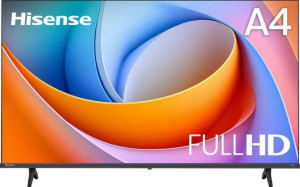
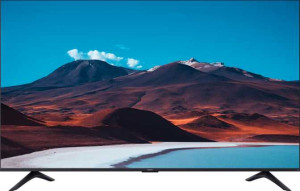
The single most defining difference here is resolution. The Hisense 43A4NF offers 1080p Full HD at a pixel density of 52 ppi, while the Xiaomi TV F 2026 delivers a full 4K UHD panel at 102 ppi — nearly double the sharpness. On a 43-inch screen, 4K produces noticeably crisper text, finer detail in textures, and a cleaner overall image, especially when viewed at typical living-room distances of 1.5–2 meters. The panel technology also differs: the Xiaomi uses QLED (quantum dot enhancement over LCD), which typically yields a wider color gamut and higher brightness compared to the Hisense′s standard LED-backlit LCD.
Color handling tells a nuanced story. The Hisense spec claims 1670 million colors via an 8-bit panel, which in practice means it is using dithering or FRC to simulate that range rather than addressing each shade natively. The Xiaomi, by contrast, uses a true 10-bit panel with 1.07 billion colors — a genuine native figure. In real-world viewing, 10-bit panels render gradients (skies, skin tones, sunsets) more smoothly, without the subtle banding that 8-bit panels can show. On the HDR front, the Xiaomi supports HDR10 and HLG, meaning it can display high-dynamic-range content from streaming platforms and broadcast sources respectively. The Hisense supports no HDR formats at all, so HDR-encoded content will simply be tone-mapped down to SDR — a meaningful omission at this price tier.
Both TVs share a 60Hz refresh rate, identical 178° viewing angles in both axes, anti-reflection coating, and an ambient light sensor — so neither has an edge in motion handling, off-axis consistency, or glare management. Overall, the Xiaomi TV F 2026 holds a clear and substantial advantage in this group: its 4K resolution, QLED panel, native 10-bit color depth, and HDR support (HDR10 + HLG) collectively represent a meaningfully higher display tier than the Hisense′s 1080p, standard LED, 8-bit, SDR-only screen.