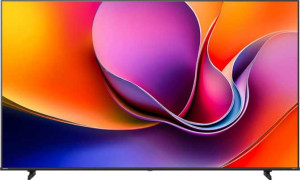
Hisense 43A6Q 43"
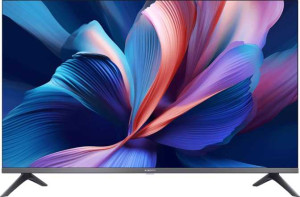
Xiaomi TV A Pro 2026 43"

Hisense 43A6Q 43" Xiaomi TV A Pro 2026 43"

Overview

Welcome to our in-depth spec comparison between the Hisense 43A6Q 43″ and the Xiaomi TV A Pro 2026 43″. Both 43-inch 4K TVs share a strong common foundation — from 60Hz refresh rates and HDR10 support to Dolby Audio and smart platform features — yet they diverge meaningfully on key fronts like display technology, audio output, smart assistant compatibility, and warranty coverage. Read on to find out which of these two living-room contenders best fits your needs.

Common Features

  • Both TVs have a 43″ screen size.
  • Both TVs offer 4K UHD resolution at 3840 x 2160 px.
  • Both TVs have a pixel density of 102 ppi.
  • Both TVs support 1070 million display colors with a 10-bit bit depth.
  • Both TVs have a 60Hz refresh rate.
  • HDR10 support is available on both TVs.
  • Both TVs use LED-backlit LCD display technology as a base.
  • Both TVs have Bluetooth 5 and Wi-Fi support including Wi-Fi 4 and Wi-Fi 5.
  • Both TVs have 3 HDMI 2.1 ports and 1 RJ45 port.
  • Miracast support is available on both TVs.
  • Both TVs support stereo speakers and Dolby Audio.
  • DTS:X support is available on both TVs.
  • Neither TV includes Dolby Atmos or a subwoofer.
  • Digital Out support is available on both TVs.
  • SRS TheaterSound HD is not available on either TV.
  • Dolby Virtual support is not available on either TV.
  • Both TVs are VESA mount compatible.
  • Both TVs have AirPlay, a built-in smart TV platform, and Google Assistant compatibility.
  • Neither TV works with Siri or Apple HomeKit.
  • Both TVs support USB recording and remote smartphone control, and consume 75W of operating power.

Main Differences

  • The Xiaomi TV A Pro 2026 43″ uses a QLED panel in addition to LED-backlit LCD, while the Hisense 43A6Q 43″ uses LED-backlit LCD only.
  • Dolby Vision support is present on the Hisense 43A6Q 43″ but not available on the Xiaomi TV A Pro 2026 43″.
  • The Hisense 43A6Q 43″ has 2 USB ports, while the Xiaomi TV A Pro 2026 43″ has only 1 USB port.
  • Audio output power is 2 x 7W on the Hisense 43A6Q 43″ and 2 x 10W on the Xiaomi TV A Pro 2026 43″.
  • Width is 963 mm on the Hisense 43A6Q 43″ and 957 mm on the Xiaomi TV A Pro 2026 43″.
  • Height is 560 mm on the Hisense 43A6Q 43″ and 563 mm on the Xiaomi TV A Pro 2026 43″.
  • Thickness is 74 mm on the Hisense 43A6Q 43″ and 72 mm on the Xiaomi TV A Pro 2026 43″.
  • Weight is 6900 g on the Hisense 43A6Q 43″ and 6000 g on the Xiaomi TV A Pro 2026 43″.
  • Volume is 39906.72 cm³ on the Hisense 43A6Q 43″ and 38792.952 cm³ on the Xiaomi TV A Pro 2026 43″.
  • Maximum operating temperature is 35 °C on the Hisense 43A6Q 43″ and 40 °C on the Xiaomi TV A Pro 2026 43″.
  • Lowest operating temperature is 5 °C on the Hisense 43A6Q 43″ and 0 °C on the Xiaomi TV A Pro 2026 43″.
  • Alexa support is present on the Hisense 43A6Q 43″ but not available on the Xiaomi TV A Pro 2026 43″.
  • Warranty period is 3 years on the Hisense 43A6Q 43″ and 1 year on the Xiaomi TV A Pro 2026 43″.
Specs Comparison
Hisense 43A6Q 43"

Hisense 43A6Q 43"

Xiaomi TV A Pro 2026 43"

Xiaomi TV A Pro 2026 43"

Display:
display resolution 4K (UHD) 4K (UHD)
Display type LED-backlit, LCD QLED, LED-backlit, LCD
screen size 43" 43"
resolution 3840 x 2160 px 3840 x 2160 px
pixel density 102 ppi 102 ppi
display colors 1070 million 1070 million
bit depth 10-bit 10-bit
refresh rate 60Hz 60Hz
supports HDR10
supports HDR10+
supports Dolby Vision
supports HLG
has anti-reflection coating
has an ambient light sensor
maximum horizontal viewing angle 178º 178º
maximum vertical viewing angle 178º 178º

Both the Hisense 43A6Q and the Xiaomi TV A Pro 2026 share the same core display fundamentals: a 43″ 4K (3840 x 2160) panel at 102 ppi, 10-bit color depth rendering 1.07 billion colors, a 60Hz refresh rate, and identical 178º viewing angles in both axes. In day-to-day use, these shared specs mean the two TVs will look comparably sharp from most seating positions and handle standard content in a very similar way.

The first meaningful differentiator is panel technology. The Xiaomi TV A Pro 2026 uses a QLED layer on top of its LED-backlit LCD, which typically translates to a wider color gamut and higher peak brightness compared to a conventional LED-LCD like the Hisense. This can make colors appear more vivid and saturated in well-lit rooms, though actual real-world gains depend on implementation quality. The second differentiator is HDR ecosystem support: the Hisense 43A6Q supports Dolby Vision, while the Xiaomi does not. Dolby Vision is a dynamic, scene-by-scene HDR format found on a large share of premium streaming content from Netflix, Apple TV+, and Disney+, so its absence on the Xiaomi is a tangible limitation for HDR-conscious viewers. Both sets support HDR10, HDR10+, and HLG, covering the remaining major formats.

On balance, neither TV has a clean sweep. The Xiaomi TV A Pro 2026 holds an edge in color technology thanks to its QLED panel, but the Hisense 43A6Q counters with Dolby Vision support, which matters more for users who stream a lot of HDR content. Buyers who prioritize vibrant color performance in bright environments should lean toward the Xiaomi; those who want the broadest HDR format compatibility — especially Dolby Vision — will find the Hisense the stronger choice.
Connectivity:
Has Bluetooth
HDMI version HDMI 2.1 HDMI 2.1
HDMI ports 3 3
supports Wi-Fi
Wi-Fi version Wi-Fi 4 (802.11n), Wi-Fi 5 (802.11ac) Wi-Fi 4 (802.11n), Wi-Fi 5 (802.11ac)
Bluetooth version 5 5
USB ports 2 1
RJ45 ports 1 1
supports Miracast
has a socket for a 3.5 mm audio jack
has an external memory slot
has a VGA connector
DVB standards DVB-T, DVB-T2, DVB-C, DVB-S, DVB-S2 DVB-T, DVB-T2, DVB-C, DVB-S, DVB-S2
has a DVI connector

The connectivity picture between these two TVs is largely identical: both offer HDMI 2.1 across three ports, a shared Wi-Fi stack of Wi-Fi 4 and Wi-Fi 5, Bluetooth 5, one Ethernet port, Miracast screen mirroring, and a 3.5mm audio jack. HDMI 2.1 is a meaningful shared strength — it supports 4K at high frame rates and features like Variable Refresh Rate, which benefits gaming use cases beyond what HDMI 2.0 could handle.

The sole differentiator in this group is USB port count. The Hisense 43A6Q provides 2 USB ports, while the Xiaomi TV A Pro 2026 offers just 1. In practice, this matters for users who want to simultaneously connect multiple peripherals — a USB drive for local media playback alongside a USB-powered device, for example — without reaching for a hub. It is a modest but genuinely practical advantage.

Overall, the Hisense 43A6Q holds a slight edge in connectivity purely due to its extra USB port. The wireless and wired fundamentals are a dead heat, so for users who rarely use USB peripherals, the gap is negligible. Those who regularly plug in external drives or other accessories will find the Hisense the more convenient option day to day.

Audio:
audio output power 2 x 7W 2 x 10W
supports Digital Out
has SRS TheaterSound HD
has stereo speakers
has Dolby Atmos
has Dolby Audio
supports Dolby Virtual
has a subwoofer
has DTS:X
HDMI ARC / eARC HDMI ARC, HDMI eARC HDMI ARC, HDMI eARC

Audio is where these two TVs come closest to a tie, sharing stereo speakers, Dolby Audio, DTS:X, Digital Out, and both HDMI ARC and eARC — the latter being particularly useful for connecting a soundbar with a single cable while passing through high-quality audio formats. The only number that separates them is raw output power: the Xiaomi TV A Pro 2026 delivers 2 x 10W, versus 2 x 7W on the Hisense 43A6Q.

That 3W-per-channel gap translates to a modest but real-world noticeable difference in maximum volume and headroom, especially in larger or noisier rooms. The Xiaomi can get louder before distortion sets in, which matters during action sequences or when watching without a soundbar. That said, neither TV reaches the output levels that would make built-in speakers genuinely satisfying for critical listening — the shared absence of a subwoofer and Dolby Atmos means both are equally limited in bass depth and spatial audio.

Given the otherwise identical audio feature sets, the Xiaomi TV A Pro 2026 has a clear, if narrow, edge in this group purely on the strength of its higher speaker output. For users planning to pair the TV with an external soundbar, the difference becomes irrelevant — but for those relying solely on built-in audio, the Xiaomi will simply play louder with more headroom.

Design:
width 963 mm 957 mm
weight 6900 g 6000 g
thickness 74 mm 72 mm
height 560 mm 563 mm
volume 39906.72 cm³ 38792.952 cm³
Supports VESA mount
maximum operating temperature 35 °C 40 °C
lowest potential operating temperature 5 °C 0 °C

At the same 43″ screen size, the physical footprints of these two TVs are nearly indistinguishable — within 6mm of each other in width and 3mm in thickness. For wall mounting or fitting into an entertainment unit, neither will behave meaningfully differently. Both support VESA mounting, so installation flexibility is equally matched.

Where a real gap emerges is weight. The Xiaomi TV A Pro 2026 weighs 6000g, compared to 6900g for the Hisense 43A6Q — a 900g difference. That roughly 13% reduction is noticeable during installation, particularly when wall-mounting solo, and marginally reduces stress on mounting hardware over time. The operating temperature range is also worth flagging for specific use cases: the Xiaomi tolerates conditions from 0°C to 40°C, while the Hisense is rated for 5°C to 35°C. This means the Xiaomi is the safer choice for installations in garages, sunrooms, or any environment prone to temperature extremes.

The Xiaomi TV A Pro 2026 holds the edge in this group on two counts — it is lighter and operates across a broader temperature range. For typical living room installations neither factor is critical, but for anyone mounting the TV themselves or placing it in a thermally variable room, the Xiaomi presents a practical advantage.

Features:
release date April 2025 April 2025
has AirPlay
has built-in smart TV
compatible with Google Assistant
works with Alexa
works with Siri/Apple HomeKit
supports a remote smartphone
has a rechargeable remote control
supports USB recording
operating power consumption 75W 75W
standby power consumption 0.5W 0.5W
has a search browser
has a sleep timer
has a child lock
warranty period 3 years 1 years
has voice commands

Functionally, these two TVs are well-matched on smart features: both run a built-in smart TV platform, support AirPlay, Google Assistant, voice commands, smartphone remote control, USB recording, and the everyday conveniences of a sleep timer and child lock. Power consumption is identical at 75W operating and 0.5W in standby, so neither has a running-cost advantage.

Two specs separate them meaningfully. First, the Hisense 43A6Q supports Amazon Alexa, while the Xiaomi does not. For households already embedded in the Alexa ecosystem — smart lights, thermostats, routines — this is a genuine convenience, allowing the TV to act as a voice control hub rather than an isolated device. Second, and arguably more impactful financially, the Hisense comes with a 3-year warranty versus just 1 year on the Xiaomi TV A Pro 2026. A TV is a long-term purchase, and three years of manufacturer coverage provides substantially more protection against defects without any additional cost.

The Hisense 43A6Q holds a clear edge in this group. Alexa compatibility broadens its smart home integration, but the triple-length warranty is the more universally valuable advantage — it applies regardless of which voice ecosystem a buyer uses and directly reduces long-term ownership risk.

Comparison Summary & Verdict

After a thorough side-by-side review, both TVs deliver solid 4K picture quality with identical resolution, refresh rate, and HDR10 support. However, their differences reveal two distinct value propositions. The Hisense 43A6Q 43″ stands out with Dolby Vision support, an extra USB port, a longer 3-year warranty, and Alexa compatibility — making it the stronger choice for buyers who want a more complete smart home ecosystem and greater long-term peace of mind. On the other hand, the Xiaomi TV A Pro 2026 43″ counters with a QLED panel for potentially richer colors, a higher 20W total audio output, a lighter and slightly more compact build, and a broader operating temperature range — appealing to those who prioritize picture vibrancy and sound performance in their everyday viewing experience.

Hisense 43A6Q 43
Buy Hisense 43A6Q 43" if...

Buy the Hisense 43A6Q 43″ if you value Dolby Vision support, Alexa smart home integration, more USB ports, and the added security of a 3-year warranty.

Xiaomi TV A Pro 2026 43
Buy Xiaomi TV A Pro 2026 43" if...

Buy the Xiaomi TV A Pro 2026 43″ if you want a QLED display with potentially richer colors, stronger 20W audio output, and a lighter, more compact design.