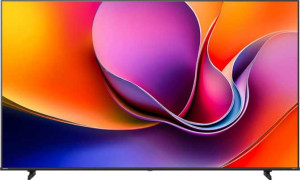
Hisense 43A6Q 43"
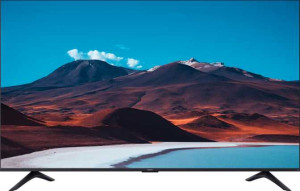
Xiaomi TV F 2026 43"

Hisense 43A6Q 43" Xiaomi TV F 2026 43"

Overview

When choosing between the Hisense 43A6Q 43″ and the Xiaomi TV F 2026 43″, shoppers are faced with two capable 43-inch 4K TVs that share a surprisingly strong foundation — yet diverge in some meaningful ways. From HDR format support to panel technology, audio output, and build design, this comparison digs into the details that matter most to home cinema enthusiasts and everyday viewers alike.

Common Features

  • Both TVs have a 43″ screen size.
  • Both TVs offer 4K UHD resolution at 3840 x 2160 px.
  • Both TVs have a pixel density of 102 ppi.
  • Both TVs support a 10-bit color depth.
  • Both TVs display 1070 million colors.
  • Both TVs have a 60Hz refresh rate.
  • Both TVs support HDR10.
  • Both TVs support Bluetooth 5.
  • Both TVs include Wi-Fi 4 (802.11n) and Wi-Fi 5 (802.11ac) connectivity.
  • Both TVs have 3 HDMI 2.1 ports.
  • Both TVs include 1 RJ45 port.
  • Both TVs support Miracast.
  • Both TVs have stereo speakers.
  • Both TVs support Dolby Audio.
  • Both TVs include DTS:X audio.
  • Dolby Atmos is not available on either TV.
  • Both TVs support digital audio output.
  • Both TVs support VESA mounting.
  • Both TVs have AirPlay support.
  • Both TVs are compatible with Google Assistant and Amazon Alexa.
  • Neither TV works with Siri or Apple HomeKit.
  • Both TVs support USB recording.
  • Both TVs have a built-in smart TV platform.
  • Both TVs support remote control via smartphone.
  • Neither TV has a rechargeable remote control.

Main Differences

  • The display panel on Xiaomi TV F 2026 43″ is QLED LED-backlit LCD, while the Hisense 43A6Q 43″ uses a standard LED-backlit LCD panel.
  • HDR10+ support is present on Hisense 43A6Q 43″ but not available on Xiaomi TV F 2026 43″.
  • Dolby Vision support is present on Hisense 43A6Q 43″ but not available on Xiaomi TV F 2026 43″.
  • USB ports: Hisense 43A6Q 43″ has 2 and Xiaomi TV F 2026 43″ has 1.
  • Audio output power is 2 x 7W on Hisense 43A6Q 43″ and 2 x 10W on Xiaomi TV F 2026 43″.
  • Width is 963 mm on Hisense 43A6Q 43″ and 957 mm on Xiaomi TV F 2026 43″.
  • Height is 560 mm on Hisense 43A6Q 43″ and 563 mm on Xiaomi TV F 2026 43″.
  • Thickness is 74 mm on Hisense 43A6Q 43″ and 72 mm on Xiaomi TV F 2026 43″.
  • Weight is 6900 g on Hisense 43A6Q 43″ and 6000 g on Xiaomi TV F 2026 43″.
  • Volume is 39906.72 cm³ on Hisense 43A6Q 43″ and 38792.952 cm³ on Xiaomi TV F 2026 43″.
  • Maximum operating temperature is 35 °C on Hisense 43A6Q 43″ and 40 °C on Xiaomi TV F 2026 43″.
  • Lowest operating temperature is 5 °C on Hisense 43A6Q 43″ and 0 °C on Xiaomi TV F 2026 43″.
  • Warranty period is 3 years on Hisense 43A6Q 43″ and 1 year on Xiaomi TV F 2026 43″.
Specs Comparison
Hisense 43A6Q 43"

Hisense 43A6Q 43"

Xiaomi TV F 2026 43"

Xiaomi TV F 2026 43"

Display:
display resolution 4K (UHD) 4K (UHD)
Display type LED-backlit, LCD QLED, LED-backlit, LCD
screen size 43" 43"
resolution 3840 x 2160 px 3840 x 2160 px
pixel density 102 ppi 102 ppi
display colors 1070 million 1070 million
bit depth 10-bit 10-bit
refresh rate 60Hz 60Hz
supports HDR10
supports HDR10+
supports Dolby Vision
supports HLG
has anti-reflection coating
has an ambient light sensor
maximum horizontal viewing angle 178º 178º
maximum vertical viewing angle 178º 178º

Both the Hisense 43A6Q and the Xiaomi TV F 2026 share the same foundational display specs: a 43″ 4K (3840 x 2160) panel at 102 ppi, a 10-bit color pipeline capable of rendering 1.07 billion colors, a 60Hz refresh rate, and identical 178º viewing angles in both directions. For everyday 4K content, this common ground means neither TV has a structural resolution or color-depth advantage over the other out of the box.

The most meaningful panel-level difference is the Xiaomi's use of QLED technology, which adds a quantum dot layer to the LED-backlit LCD stack. In theory, this can push color volume and peak brightness higher than a conventional LED LCD. However, the HDR format support tells a more nuanced story: the Hisense covers HDR10, HDR10+, Dolby Vision, and HLG, while the Xiaomi covers only HDR10 and HLG, missing both HDR10+ and Dolby Vision. Dolby Vision in particular is the premium HDR format used by Netflix, Disney+, and Apple TV+, delivering scene-by-scene tone mapping that standard HDR10 cannot match. The absence of these formats on the Xiaomi means that even if its QLED panel can physically display more color, it will not receive the optimized metadata signals that make premium HDR content genuinely pop.

On balance, the Hisense 43A6Q holds a clear edge in this group. Its broader HDR format compatibility — especially Dolby Vision — has a more tangible real-world impact on streaming content quality than the QLED panel advantage the Xiaomi brings. Users who regularly watch content from major streaming platforms will consistently benefit from the Hisense's richer HDR ecosystem, making it the stronger choice from a display standpoint based strictly on the provided specifications.
Connectivity:
Has Bluetooth
HDMI version HDMI 2.1 HDMI 2.1
HDMI ports 3 3
supports Wi-Fi
Wi-Fi version Wi-Fi 4 (802.11n), Wi-Fi 5 (802.11ac) Wi-Fi 4 (802.11n), Wi-Fi 5 (802.11ac)
Bluetooth version 5 5
USB ports 2 1
RJ45 ports 1 1
supports Miracast
has a socket for a 3.5 mm audio jack
has an external memory slot
has a VGA connector
DVB standards DVB-T, DVB-T2, DVB-C, DVB-S, DVB-S2 DVB-T, DVB-T2, DVB-C, DVB-S, DVB-S2
has a DVI connector

The connectivity profiles of the Hisense 43A6Q and the Xiaomi TV F 2026 are nearly identical across most categories. Both arrive with 3 HDMI 2.1 ports, an RJ45 Ethernet port, Wi-Fi 5, Bluetooth 5, Miracast support, and a 3.5mm audio jack — a well-rounded set of connections that comfortably covers game consoles, soundbars, streaming sticks, and wired network setups without compromise.

The single concrete differentiator in this group is the USB port count: the Hisense provides 2 USB ports versus the Xiaomi's 1. In practice, this matters more than it might seem. A second USB port means you can simultaneously connect a USB storage drive and a USB-powered device — such as a streaming dongle or a keyboard for smart TV navigation — without needing a hub. For users who rely on local media playback alongside other USB peripherals, the Hisense's extra port removes a friction point the Xiaomi does not.

Overall, the Hisense 43A6Q has a narrow but practical edge in this group, solely due to its additional USB port. Every other connectivity spec is a straight tie between the two TVs, so the Xiaomi is not meaningfully disadvantaged for users whose USB needs are modest — but for anyone managing multiple peripherals, the Hisense is the more convenient choice.

Audio:
audio output power 2 x 7W 2 x 10W
supports Digital Out
has SRS TheaterSound HD
has stereo speakers
has Dolby Atmos
has Dolby Audio
supports Dolby Virtual
has a subwoofer
has DTS:X
HDMI ARC / eARC HDMI ARC, HDMI eARC HDMI ARC, HDMI eARC

Strip away the brand names and the audio feature lists of these two TVs are virtually identical: stereo speakers, Dolby Audio, DTS:X, Digital Out, and both HDMI ARC and eARC on each. The ARC/eARC combination is worth noting — eARC in particular supports high-bandwidth audio formats over a single HDMI cable, making it straightforward to connect a capable soundbar without any signal quality compromise.

The one spec that separates them is raw output power. The Xiaomi TV F 2026 delivers 2 x 10W versus the Hisense 43A6Q's 2 x 7W — a 43% per-channel advantage. On a 43″ screen in a typical living room, this gap is perceptible: the Xiaomi can reach higher volume levels before distortion sets in, and it generally handles dynamic audio peaks — action sequences, live sports — with more headroom. Neither TV has a subwoofer, so low-end reproduction will be limited on both, but the Xiaomi's extra wattage at least gives the mid and upper registers more room to breathe.

For built-in speaker performance, the Xiaomi TV F 2026 holds a clear edge in this group on the strength of its higher output power alone. That said, users planning to pair either TV with an external soundbar will find the gap largely irrelevant, since both offer the same eARC support and audio format compatibility — making them equally well-equipped for an upgraded audio setup.

Design:
width 963 mm 957 mm
weight 6900 g 6000 g
thickness 74 mm 72 mm
height 560 mm 563 mm
volume 39906.72 cm³ 38792.952 cm³
Supports VESA mount
maximum operating temperature 35 °C 40 °C
lowest potential operating temperature 5 °C 0 °C

Physically, these two 43″ TVs occupy nearly the same footprint — within 6mm of each other in width and 3mm in height — making placement and furniture compatibility essentially a non-issue for either. Both support VESA mounting, so wall installation is an option on each without any adapter workarounds.

Where the Xiaomi pulls ahead is weight. At 6000g, it is 900g lighter than the Hisense's 6900g — a difference of roughly 13%. That margin is noticeable during installation, particularly for solo wall-mounting, where every kilogram of saved weight reduces strain and the risk of misalignment. For stand-mounted use on a TV unit it matters less, but the Xiaomi's lower mass is a consistent convenience advantage regardless of setup.

The operating temperature range adds another dimension worth considering for non-standard installations. The Xiaomi tolerates conditions from 0°C to 40°C, while the Hisense is rated for 5°C to 35°C — a narrower window on both ends. For TVs destined for a conservatory, garage, or any space that gets cold in winter or warm in summer, the Xiaomi's broader thermal tolerance is a practical advantage. Overall, the Xiaomi TV F 2026 has a clear edge in this group, combining a meaningfully lighter build with a more flexible operating temperature range.

Features:
release date April 2025 September 2025
has AirPlay
has built-in smart TV
compatible with Google Assistant
works with Alexa
works with Siri/Apple HomeKit
supports a remote smartphone
has a rechargeable remote control
supports USB recording
operating power consumption 75W 75W
standby power consumption 0.5W 0.5W
has a search browser
has a sleep timer
has a child lock
warranty period 3 years 1 years
has voice commands

From a smart features standpoint, these two TVs are carbon copies of each other. Both run a built-in smart TV platform with Google Assistant and Alexa voice control, support AirPlay, allow smartphone remote control, and include USB recording — a useful feature for capturing live broadcast content directly to an external drive. Neither supports Apple HomeKit/Siri integration, and both draw an identical 75W during operation and just 0.5W on standby, meaning running costs over time will be indistinguishable.

Given that every feature and power spec is matched exactly, the only meaningful differentiator in this group is the warranty period. The Hisense 43A6Q covers three years, while the Xiaomi TV F 2026 offers just one. For a product category where panel and backlight issues can surface in the second or third year of use, a three-year warranty is a substantive form of long-term value — not just a number. It translates directly into reduced financial risk and fewer potential out-of-pocket repair costs over the ownership period.

With every other spec in this group tied, the Hisense 43A6Q holds a clear edge here on warranty alone. Three years of manufacturer coverage versus one is a meaningful commitment that tips this category decisively in the Hisense's favor, particularly for buyers who prioritize peace of mind over the full ownership cycle.

Comparison Summary & Verdict

Both TVs deliver a solid 4K UHD experience at 60Hz with shared support for HDR10, Dolby Audio, DTS:X, AirPlay, and Google Assistant, making either a competent choice for a modern living room. However, the key differentiators are clear: the Hisense 43A6Q 43″ stands out with its broader HDR format coverage — including HDR10+ and Dolby Vision — along with an extra USB port and a reassuring 3-year warranty, making it ideal for home theatre fans who want premium content compatibility and long-term peace of mind. The Xiaomi TV F 2026 43″, on the other hand, counters with a QLED panel for potentially richer colours, slightly louder 2×10W speakers, a lighter and more compact chassis, and a higher maximum operating temperature tolerance — appealing to buyers who prioritise picture vibrancy, sleek aesthetics, and a more budget-conscious package.

Hisense 43A6Q 43
Buy Hisense 43A6Q 43" if...

Buy the Hisense 43A6Q 43″ if you want the widest HDR format support with HDR10+and Dolby Vision, need two USB ports, and value a longer 3-year warranty for added peace of mind.

Xiaomi TV F 2026 43
Buy Xiaomi TV F 2026 43" if...

Buy the Xiaomi TV F 2026 43″ if you prefer a QLED panel for vibrant colours, want slightly more powerful 2×10W speakers, and favour a lighter, more compact design.