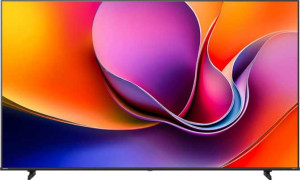
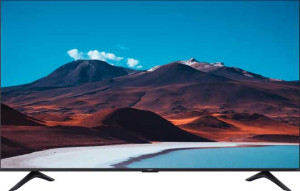
Both the Hisense 43A6Q and the Xiaomi TV F 2026 50″ share the same 4K UHD (3840 x 2160) resolution, 10-bit color depth, 1070 million colors, and a 60Hz refresh rate — meaning neither has a motion-handling edge over the other, and both are capable of rendering wide color gradients without banding. The shared anti-reflection coating and ambient light sensor further level the playing field for everyday living room use.
Where the two diverge meaningfully is in panel technology and HDR ecosystem support. The Xiaomi uses a QLED panel, which typically delivers higher peak brightness and more saturated colors compared to the standard LED-backlit LCD in the Hisense. However, the Hisense punches back hard on HDR: it supports HDR10, HDR10+, Dolby Vision, and HLG, while the Xiaomi is limited to HDR10 and HLG only — lacking both HDR10+ and Dolby Vision. In practice, Dolby Vision is the dominant premium HDR format on streaming platforms like Netflix and Apple TV+, so its absence on the Xiaomi is a real-world limitation for HDR content quality, regardless of the QLED panel's brightness potential.
The size difference also comes with a pixel density trade-off: the Hisense's smaller 43″ screen yields 102 ppi versus the Xiaomi's 88 ppi at 50″ — meaning the Hisense will appear sharper up close, while the Xiaomi is better suited to larger rooms with greater viewing distances. Overall, the Hisense 43A6Q holds a clear edge in display versatility thanks to its full HDR format support, making it the stronger choice for HDR content consumption despite its smaller screen.