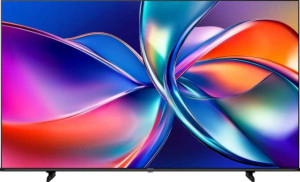
Both the Hisense 43E7Q and the Samsung QN43LS03FAF share the same fundamental display architecture — QLED, LED-backlit LCD panels at 4K (3840 x 2160) resolution with 10-bit color depth and 1070 million colors. Their screen sizes are virtually identical (43″ vs 42.5″), pixel densities differ by just 2 ppi (102 vs 104), and both offer identical 178° viewing angles, anti-reflection coatings, and ambient light sensors. For everyday picture quality fundamentals, these two are essentially on par.
The most consequential difference in this group is refresh rate: the Hisense is capped at 60Hz, while the Samsung delivers 144Hz. In practice, 144Hz means significantly smoother motion handling — fast sports, action films, and especially gaming all benefit from reduced motion blur and judder. For a living-room TV used primarily for cinematic content, 60Hz is adequate, but the Samsung's advantage here is substantial and real-world-noticeable. Countering that, the Hisense supports Dolby Vision while the Samsung does not. Dolby Vision is a more dynamic and widely authored HDR format than HDR10+, and its absence on the Samsung means some streaming content will fall back to a less optimized HDR profile.
Taken together, the Samsung QN43LS03FAF holds a clear edge for motion performance and gaming use cases thanks to its 144Hz panel, while the Hisense 43E7Q has a meaningful advantage in HDR format coverage with Dolby Vision support. The right choice depends on use case: the Samsung wins for smooth motion and gaming; the Hisense wins for HDR content breadth from streaming services that master in Dolby Vision.